
Published Date: May 14, 2026 | Last Updated: Jun 30, 2026
Written by: Emma Cyrus, Senior Copy, Content & Editorial Writer
Reviewed by: Sanjay Joshi, Senior Interior Designer at FCI London
Edited by: Zoona Sikander, Head of Content
Estimated Reading Time: 13 minutes
TL;DR: Recliner sofas promise ultimate relaxation but come with rather significant drawbacks that many homeowners discover only after purchase. From their voracious appetite for space and limited seating capacity to maintenance complexities and formal setting incompatibility, these mechanised marvels require careful consideration beyond their initial comfort appeal. This guide examines the genuine problems with recliner sofas - covering manual, electric, and power-lift variants - alongside a practical dimension guide, fabric and material comparison, and an honest assessment of whether a designer recliner is truly worth the investment for your home.
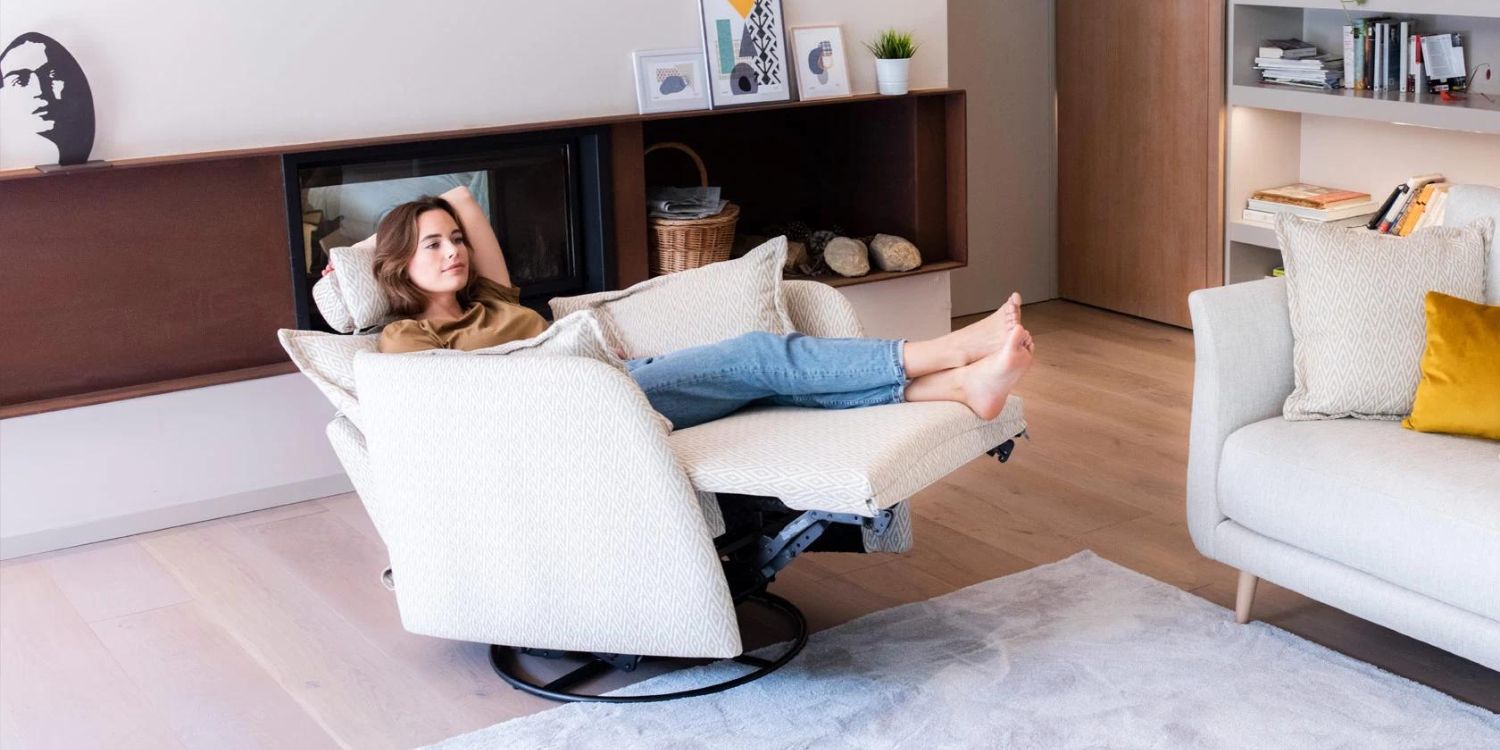
Table of Contents
If you're considering whether recliner sofas are good - or genuinely worth the investment - this expert guide is for you. We've examined the full spectrum of reclining seating, from entry-level manual models to the best recliner armchairs UK makers and European designers produce, to help you decide with confidence rather than regret.
Recliner sofas occupy a peculiar position in the world of luxury interiors, simultaneously coveted for their promise of ultimate relaxation and quietly cursed by those who've lived with their less charming realities. After three decades of guiding discerning London clients through furniture decisions, I've observed a telling pattern: the initial enchantment with these mechanised marvels often gives way to a more complex relationship.
The truth is, while recliner sofas have evolved considerably from their rather utilitarian origins, they bring with them a collection of practical challenges that even the most sophisticated models struggle to overcome. Understanding these limitations before you invest isn't pessimistic; it's simply prudent design thinking that will serve your interiors far better in the long run.
The conversation about recliners transcends simple comfort considerations. We're examining how these pieces function within the broader ecosystem of your home - their impact on spatial flow, design coherence, and long-term satisfaction. Understanding these limitations enables you to make informed decisions that serve both your immediate comfort needs and your broader design aspirations.
Let's delve into the potential limitations of recliner sofas and examine how these might impact your comfort, aesthetic preferences, and budget considerations.
One of the most significant drawbacks of recliner sofas is their restricted seating capacity. When compared to conventional sofas, luxury sofas with reclining functionality typically accommodate fewer people - a trade-off explored in depth in our London luxury sofa guide due to their substantial dimensions and integrated reclining mechanisms.
This limitation becomes particularly noticeable when entertaining guests or accommodating larger families who wish to gather together. The spacious individual seats that make recliners so wonderfully comfortable also mean fewer people can sit on a single piece of furniture.
To put this in practical terms: a standard three-seat traditional sofa typically spans 210-230cm and seats three adults comfortably. A comparable three-seat recliner sofa often runs to 260-290cm - yet the individual seat volumes are so generously proportioned that a fourth person would be quite unwelcome. In 2026, with open-plan living very much the norm in Mayfair and Marylebone apartment conversions, this reduction in seating density is a genuine spatial penalty worth calculating before purchase.
Recliner sofas are notoriously weighty and often quite substantial in size, which presents challenges when attempting to relocate or reconfigure them without assistance. The integrated reclining mechanism adds considerable weight and bulk, making these pieces significantly less manoeuvrable than their traditional counterparts.
If you're someone who delights in periodically refreshing your space by rearranging furniture or if you anticipate relocating in the near future, a recliner sofa might prove rather cumbersome. It's crucial to evaluate the mobility requirements of your furniture before committing to a purchase, particularly if you foresee the need for frequent repositioning.
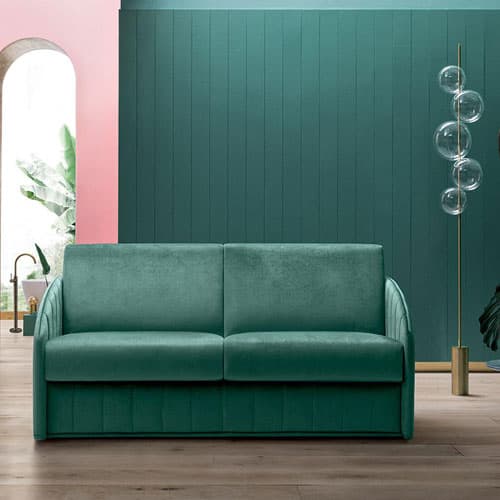
At FCI London, we offer an extensive range of luxury seating options that you can explore, each designed to accommodate different spatial dimensions and lifestyle requirements. For those concerned about mobility, a small recliner sofa might offer the perfect compromise between comfort and practicality. A recliner sofa bed combines the comfort of a reclining sofa with the functionality of a fold-out bed, perfect for small spaces.
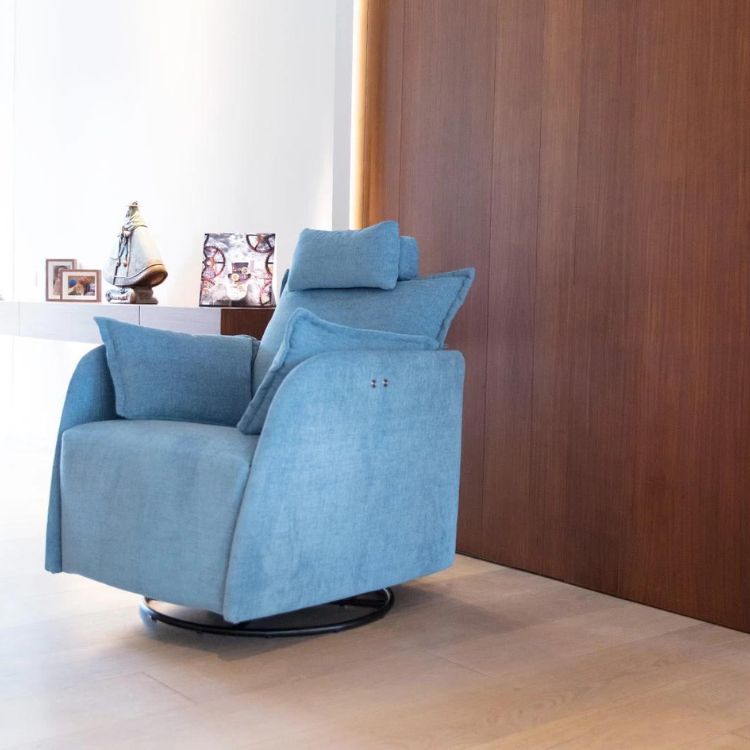
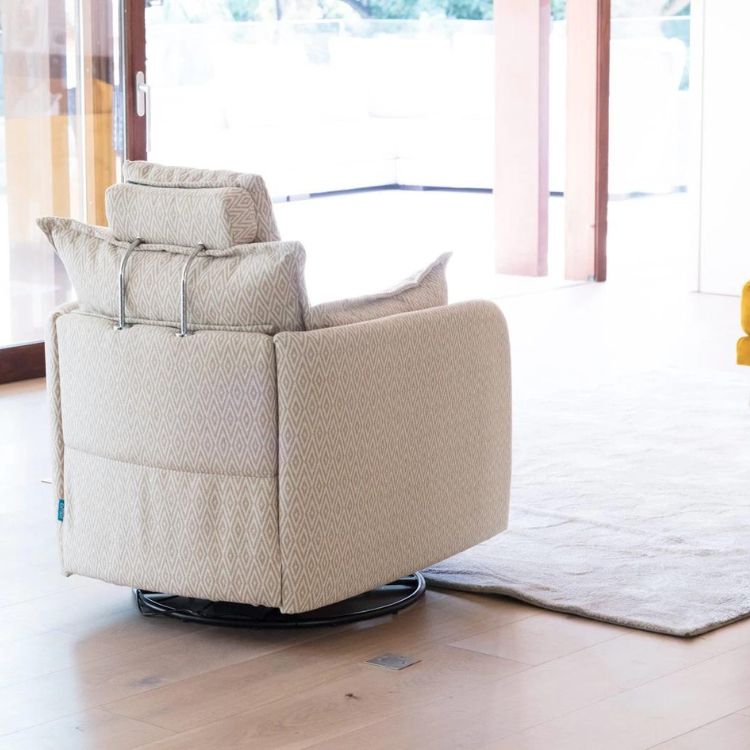
Recliner sofas often prioritise mechanical functionality over design refinement, resulting in inherent aesthetic compromises that can struggle to align with sophisticated interior schemes. However, they may strike a discordant note in more formal settings, such as a sophisticated drawing room or reception area.
The reclining mechanism, while wonderfully practical, can sometimes detract from the elegant silhouette that more formal spaces often demand. The casual nature of a reclining chair or electric reclining sofa might clash with the refined ambience you're striving to create in certain rooms of your home.
Additionally, the substantial footprint of a recliner sofa can overwhelm smaller formal spaces, creating a sense of clutter and imbalance. When selecting a sofa for a formal setting, it's imperative to choose a design that harmonises with the overall style and atmosphere of the room.
If you're determined to incorporate a recliner into a more formal setting, we recommend considering the Tw207 Recliner by Sitting Benz. Its contemporary design language and sophisticated neutral palette will elevate any space, striking that delicate balance between comfort and refinement.
Another potential limitation of recliner sofas is that they may not deliver adequate support for all individuals. While the built-in reclining mechanism offers exceptional comfort for many, it doesn't necessarily suit everyone's physical requirements.
For those with specific back concerns, for instance, you might require seating that provides more targeted support to the lumbar region than a standard recliner can offer. Similarly, individuals with mobility challenges might encounter difficulties when attempting to get in and out of a recliner sofa, particularly if the seat is positioned too low or if the reclining angle is excessively steep.
If you or family members have specific health or mobility considerations, selecting seating that accommodates these needs becomes paramount. A recliner sofa may not represent the optimal choice unless it satisfies all the necessary criteria to create a comfortable and accessible seating experience for everyone in your household.
It is worth noting here that power-lift recliner armchairs - a category that has grown considerably in quality and design sophistication since 2024 - can address the mobility access concern rather effectively. Several of the best recliner armchair UK suppliers now offer power-lift models upholstered in premium leather and performance fabrics, with seat heights that lift the occupant to a near-standing position, making independent use genuinely manageable for those with limited mobility.
The most significant disadvantage of recliner sofas manifests in their voracious appetite for space. Unlike traditional seating that maintains consistent spatial requirements, recliners need additional clearance space to accommodate the backwards movement when fully extended. This spatial demand can be particularly challenging in compact living environments.
Most homeowners calculate space requirements based on the sofa's closed dimensions - a fundamental error. The operational envelope includes not only the extended footrest but also the tilted back position, which projects further than most anticipate. Failing to account for this additional clearance can result in damaged walls or an inability to fully utilise the reclining functionality.
For those with spatial constraints, a small recliner sofa might offer a more practical solution, providing the comfort of reclining functionality without overwhelming your living space. Our design consultants can help you determine the precise measurements needed to ensure your recliner functions optimally within your specific room configuration.
As a rule of thumb used by our design team: wall-hugger recliners require a minimum of 15-20cm clearance to the wall when closed. Standard recliners require 45-60cm. Electric wall-away recliners may need 90cm or more. These are not suggestions - they are functional minimums below which the mechanism either cannot operate or will damage the wall.
The complexity of reclining mechanisms introduces multiple failure points that traditional furniture simply doesn't possess. Unlike traditional sofas, recliners contain moving parts that may require periodic adjustment, lubrication, or even replacement over time.
The reclining mechanism, particularly in an electric reclining sofa, represents a potential point of failure that simply doesn't exist in conventional seating options. While high-quality recliners are engineered for durability, the reality remains that any mechanical system will eventually require some form of maintenance or repair.
Additionally, the upholstery around moving parts tends to experience more significant wear than static areas, potentially leading to premature fabric deterioration in these high-stress regions. When selecting a recliner sofa, it's worth considering the quality of both the mechanism and the upholstery to ensure longevity and continued performance.
In 2026, the expected lifespan of a premium electric recliner mechanism sits between 15,000 and 20,000 cycles, which for a household using the mechanism twice daily equates to roughly 20 to 27 years. Budget mechanisms, by contrast, are often rated at 5,000-8,000 cycles. The disparity is considerable, and the repair costs at the lower end are rarely worthwhile. A designer recliner with a certified, high-cycle mechanism is, in this respect, genuinely better value over time than its more economical counterparts.
One of the most overlooked disadvantages of recliners concerns their impact on social interaction within the home. The deeply reclined position, whilst comfortable for individual relaxation, creates physical and psychological barriers to conversation and group activities.
The low, reclined position places the user at a different eye level than those seated on conventional furniture. This height differential can make group conversations feel awkward and may inadvertently signal disengagement from social interaction. In formal entertaining situations, fully reclined guests can appear inappropriately casual.
Recliners optimise for passive activities, television viewing, reading, or napping, rather than active social engagement. Whilst this suits individual relaxation, it may not serve households that prioritise dynamic social spaces or frequent entertaining.
The forward-facing orientation of most recliners creates directional seating arrangements that can fragment conversation groups. Unlike modular seating that can facilitate face-to-face interaction, recliners typically orient users toward a single focal point, limiting the flexibility of social arrangements.
Key Takeaway: The problems with recliner sofas are most acutely felt in social settings - the mechanism designed for individual comfort can quietly undermine the collective ease of a well-planned living space. At FCI London, we assess spatial flow and social dynamics alongside ergonomic specifications, ensuring any reclining option recommended genuinely serves your lifestyle rather than merely accommodating one member of the household.
One question our design consultants field rather frequently is whether the type of reclining mechanism matters as much as the quality of the piece itself. The honest answer is: yes, rather significantly. Choosing the wrong mechanism for your lifestyle produces the same frustration as buying the wrong sofa entirely. The table below sets out the key distinctions clearly.
| Feature | Manual Recliner | Electric Recliner | Power-Lift Recliner |
|---|---|---|---|
| Mechanism | Push-back or side-lever operated | Motorised via handset or USB control | Motorised seat lifts occupant to standing position |
| Wall Clearance Required | 45-60cm (standard); 15-20cm (wall-hugger) | 45-90cm depending on model | 60-90cm; forward-moving lifts can reduce this |
| Typical Weight | 55-90kg per seat unit | 80-130kg per seat unit | 90-150kg per seat unit |
| Mechanism Cycle Rating (premium) | 20,000+ cycles | 15,000-20,000 cycles | 10,000-15,000 cycles |
| Best For | Households wanting simplicity and lower maintenance | Home cinema rooms; frequent, effortless reclining | Occupants with limited mobility or joint concerns |
| Maintenance Complexity | Low - no electrical components | Medium - motor and wiring require occasional servicing | Medium-high - motor plus lift mechanism |
| Approximate Entry-Level Price (2026) | From £800 per seat | From £1,400 per seat | From £1,800 per seat |
| Design Range | Widest - most designer recliners and recliner armchairs are manual | Broad - increasingly available in refined silhouettes | Narrower - functional design often takes priority |
| Notable Brands at FCI London | Sitting Benz, Porada | Natuzzi, Gamma, Leolux | Specialist power-lift suppliers; ask our design team for current availability |
Key Takeaway: The mechanism is not an afterthought - it shapes every practical dimension of living with a recliner, from how much wall clearance you'll sacrifice to how often a technician will need to visit. Manual variants offer the widest selection of designer recliner and best recliner armchair models, while electric and power-lift options excel in specific use cases. Our consultants will help you match mechanism type to room configuration and lifestyle - it's rather more consequential than most buyers anticipate.
In my experience, spatial miscalculation is the most common and entirely preventable cause of recliner disappointment. Clients arrive at the showroom having measured their sofa in its closed position, only to discover months later that fully reclining requires an acrobatic manoeuvre or, worse, leaves a footrest pressed against the skirting board. The table below provides working guidelines used by our design team for matching recliner configurations to room dimensions - treating the operational envelope, not the closed footprint, as the governing measurement.
| Room Size | Floor Area | Recommended Configuration | Max Sofa Width (Closed) | Wall Clearance Required | Notes |
|---|---|---|---|---|---|
| Compact | Up to 16m² | Single recliner armchair or 2-seat wall-hugger | Up to 160cm | 15-20cm (wall-hugger essential) | Standard recliners are not recommended; a best recliner armchair UK model is a more sensible choice here |
| Small-Medium | 16-25m² | 2-seat recliner sofa or recliner armchair + 2-seat non-recliner | Up to 200cm | 45cm minimum | Mixed seating approach often more versatile; prioritise a designer recliner armchair over a full sofa |
| Medium | 25-35m² | 3-seat recliner sofa or 2+2 configuration | Up to 240cm | 45-60cm | Most electric recliner sofas sit comfortably at this scale; room for coffee table at 45-50cm from sofa front |
| Large | 35-50m² | 3-seat + recliner armchair, or modular recliner configuration | Up to 300cm | 60cm | Corner recliner configurations work well at this scale; home cinema layouts are viable |
| Grand | 50m² and above | Full modular recliner suite or multiple recliner armchairs | No practical limit | 90cm+ recommended for electric and power-lift | Zone planning becomes essential; recliner seating area should be treated as a distinct room within a room |
Key Takeaway: The dimension guide above should be treated as a starting point rather than an absolute prescription - room shape, doorway widths, and ceiling heights all influence the final specification. What it establishes clearly is that recliner sofas are genuinely unsuitable for compact rooms without a wall-hugger mechanism, and that the best recliner armchair solution for smaller London spaces is frequently a single, well-chosen recliner armchair rather than a full reclining sofa. Our design consultants carry out spatial assessments as a standard part of any showroom consultation - it's rather helpful to have a professional eye before you commit.
Material selection for a recliner sofa is a more nuanced decision than for a static piece, because the upholstery must perform across a far wider range of movement. The stress points around the mechanism, the seat hinge, and the footrest fold are all areas where inferior fabrics fail prematurely. For a broader treatment of how different fabrics perform under everyday household use, our guide to sofa fabrics for family living is rather helpful context. The following comparison covers the primary upholstery categories our team would consider for a reclining piece in a luxury residential context.
| Material | Durability on Recliners | Comfort | Maintenance | Formal Settings | FCI Assessment |
|---|---|---|---|---|---|
| Full-Grain Leather | Excellent - flexes without cracking at quality tanneries | Excellent; warm in winter, cool in summer over time | Low - wipe clean, condition annually | Very good - ages beautifully | Our first recommendation for a designer recliner or best recliner armchair. Full-grain leather from quality European tanneries is the benchmark for longevity at flex points. |
| Semi-Aniline Leather | Very good - protective finish adds resilience | Very good | Low to medium | Good | Excellent practical choice; resists spills better than full-grain while retaining a natural feel. |
| Bonded / Faux Leather | Poor - peels and splits at flex points within 3-5 years | Adequate initially | Medium - deteriorates visibly | Poor | Not specified at FCI London. The false economy is particularly pronounced on recliner mechanisms. |
| High-Performance Fabric | Very good - rated to 100,000+ Martindale rubs | Excellent; breathable year-round | Medium - professional cleaning advised | Excellent - wide palette suits any scheme | Increasingly the choice for formal rooms where leather feels too casual. Ask about Natuzzi fabric grades. |
| Velvet | Fair - crushing at fold points is a risk | Excellent initially | High - pile traps debris; professional cleaning required | Very good aesthetically | Appealing but risky on recliners. Best reserved for occasional-use pieces or armchair recliners with limited mechanism movement. |
| Microfibre / Suede Effect | Good - withstands flexing well | Good; soft handle | Medium - marks easily, specialist clean needed | Fair to good | A refreshingly competent mid-tier option; performs better than its price point suggests on quality frames. |
Key Takeaway: Full-grain leather remains the most forgiving material for recliner upholstery precisely because it ages with use rather than deteriorating from it - the patina at a mechanism fold point tells a story rather than signalling a failure. High-performance fabrics are an equally valid choice for formal rooms. What to avoid categorically is bonded leather, which will fail at the flex points of any reclining mechanism within a few years of regular use, regardless of how well the frame is built.
When deciding between a recliner sofa and a traditional sofa, it's important to weigh the key differences in comfort, style, and functionality.
Whether you prioritise versatile comfort or classic styling, understanding these differences will help guide you towards the most suitable sofa for your space and lifestyle. If the firmness and support question is still unresolved, our piece on whether it is better to buy a firm sofa addresses that dimension directly.
Key Takeaway: The recliner versus traditional sofa decision hinges on whether mechanical comfort outweighs spatial flexibility and aesthetic versatility in your specific circumstances. At FCI London, we cut through marketing rhetoric to assess which option genuinely serves your lifestyle - functionality and design cohesion matter equally in truly successful interiors.
Are recliner sofas worth it? Are recliner sofas good for everyday use? These are questions our consultants address daily, and the honest answer is: it depends entirely on how clearly you have assessed the trade-offs. If you are also weighing up budget considerations, our guide on how much to spend on a sofa provides a useful financial framework before you commit. The summary below consolidates the key considerations.
Pros
Cons
Key Takeaway: Recliner sofas reward careful planning and penalise impulsive purchase decisions more severely than almost any other category of living room furniture. The best recliners - whether a full sofa or a recliner armchair - is invariably the one selected after a spatial assessment, a mechanism comparison, and an honest conversation about how the room is actually used. That conversation is one our team is rather well practised at.
Q. Are recliner sofas worth it for a formally decorated living room?
They can be, provided the model is selected with the room's design language in mind rather than comfort alone. The problems with recliner sofas in formal settings are largely aesthetic - the mechanism creates visual bulk that disrupts clean silhouettes. However, a refined designer recliner such as the Tw207 by Sitting Benz integrates into formal schemes with considerably more grace than standard catalogue options. Our design consultants can identify further models from FCI's range that strike the right balance between comfort and refinement for your specific scheme.
Q. What is the difference between the best recliner armchair and a recliner sofa - and which suits smaller rooms?
A recliner armchair - a single-seat reclining unit - requires considerably less clearance and floor space than a multi-seat recliner sofa, making it the more sensible choice for rooms under 25 square metres. For clients with joint or mobility concerns, a stressless recliner - one engineered specifically for continuous lumbar support across reclining positions - is worth prioritising over a standard model at any size. The best recliner armchair UK options at this scale are those with wall-hugger mechanisms, which require as little as 15cm of wall clearance rather than the 45-90cm demanded by standard models. In compact spaces, pairing a high-quality recliner armchair with a non-reclining two-seat sofa produces a more flexible and spatially efficient arrangement than a full recliner sofa configuration.
Q. How do I know if a recliner sofa is genuinely good quality, and what should I look for in 2026?
Four indicators separate quality from compromise: mechanism cycle rating (premium electric recliners should carry a minimum 15,000-cycle certification); frame construction (kiln-dried hardwood or steel-reinforced bases rather than engineered wood composites); upholstery grade at flex points (full-grain or semi-aniline leather, or a minimum 80,000 Martindale-rated performance fabric); and spring or suspension system (eight-way hand-tied springs or sinuous spring systems rather than webbing alone). Brands such as Natuzzi, Gamma, and Leolux meet these criteria consistently.
Q. What are the most common problems with recliner sofas that clients report after purchase?
In our experience, the four most frequently cited problems with recliner sofas after purchase are: insufficient wall clearance - the operational footprint is rarely communicated clearly at point of sale; upholstery wear at mechanism fold points, particularly on bonded leather or low-grade fabrics; mechanism noise developing over time in lower-quality electric recliners; and the discovery that the sofa dominates the room socially, orienting the seating arrangement in a way that suits television viewing but fragments conversation. All four are preventable with thorough pre-purchase planning - which is precisely why we conduct spatial assessments as a standard part of our design consultation process.
Visit Our Showroom
Address & Hours:
FCI London, Rays House, North Circular Road, London, NW10 7XP
Monday - Saturday: 10am - 6pm
Sunday & Bank Holidays: 11am - 5pm
Contact Details:
Phone: +442081531235
Email: [email protected]
What to Bring:
While recliner sofas offer undeniable comfort and convenience, they also present certain potential disadvantages that warrant careful consideration before making your investment. From spatial requirements and seating capacity limitations to maintenance considerations and formal setting compatibility, these factors should inform your decision-making process. The addition of a practical dimension guide, mechanism comparison, and material assessment in this updated guide is intended to ensure that anyone asking whether recliner sofas are good - or worth it - arrives at an answer grounded in their actual circumstances rather than showroom enthusiasm. If you're contemplating a new sofa purchase and would value expert guidance on selecting the perfect piece for your home, I encourage you to visit our showroom or chat with our expert design team.
Customer Reviews
Chava Kahn (Customer)
"Service was personalised and excellent. Sanjay saw us through the process from start to end ensuring that we were happy with our choices. The delivery guys were amazing and went the extra mile."
Marzia Castelli (Customer)
"Loved my experience with FCI. Kamil and Chrissy have been amazing and took care of me and my needs. Everything went smooth with my sofa bed order, an excellent piece of design delivered very quickly from Italy. Really recommend!"
Przemyslaw Bilik (Customer)
"We purchased dining chairs and island chairs from this store, and we couldn't be happier. The quality is excellent, and everything arrived exactly on the date we were promised. Aziz explained everything clearly from the start and guided us through the whole process with ease. We highly recommend this store - great communication, great service, and fantastic products."
We help designers & clients transform mundane spaces into extraordinary ones.


Book a video consultation and we'll advise you on furniture, space planning, colour schemes and much more.
Book A ConsultationBook a visit to our stunning, multi award-winning, 30,000 sqft.
Over 700 brands under 1 roof.


Most Popular on FCI London: Fitted Wardrobes | Luxury Designer Rugs | Luxury Sofas | Luxury Furniture Store | Luxury Interior Designers | Luxury Bedroom Furniture | Luxury Modern Chairs | Luxury Coffee Tables | Luxury Designer Kitchens | Luxury TV Units | Luxury Dining Tables | Luxury Storage Solutions | Luxury Sideboards | Luxury Stools & Bar Stools | Luxury Bespoke Joinery | Luxury Modern Hallway Furniture | Furniture Showroom Appointment | Luxury Lighting | Modern Luxury Outdoor Furniture
Transparency isn’t a policy. It’s a principle.
Have a peek at what our clients really have to say.