
Published Date: May 11, 2026 | Last Updated: Jun 26, 2026
Written by: Emma Cyrus, Senior Copy, Content & Editorial Writer
Reviewed by: Cristina Chirila, Senior Interior Designer at FCI London
Edited by: Zoona Sikander, Head of Content
Estimated Reading Time: 7 minutes
TL;DR: Clients ask us the gaggenau vs miele question more often than almost any other in a kitchen consultation - and the honest answer is that neither brand loses. Gaggenau is the appliance of choice for those who approach cooking as a discipline; Miele is for those who want their kitchen to work brilliantly without demanding much in return. Having specified both across years of luxury kitchen projects at FCI London, our view is that the right answer lives in your brief, not in the spec sheet.
Table of Contents
If you're a homeowner in the middle of a kitchen redesign and can't quite decide between these two, this guide is for you - we've tried to be genuinely direct about the differences rather than flattering to both in equal measure. After years of working with Gaggenau and Miele side by side across bespoke kitchen projects at FCI London, we have a considered view, and we're happy to share it.
In the realm of home appliance manufacturers, Gaggenau and Miele stand out as preeminent brands, recognised for their commitment to excellence and quality. Each brand boasts distinctive qualities and characteristics and this article aims to elucidate the differences between the two.
The central objective of this article is to provide a comprehensive analysis and comparison of both brands, with particular emphasis on innovation, design, and sustainability. An exhaustive evaluation of the features and advantages of each brand's product portfolio, as well as the overall customer experience and support, is conducted.
By the end of this, you'll know which brand to choose, between Gaggenau and Miele.
In the world of appliances, impeccable performance is the hallmark of excellence. Discerning consumers demand appliances that operate with the utmost efficiency, efficacy, and precision to deliver stellar results every time.
Whether it's a refrigerator that keeps your food fresher for longer, a dishwasher that washes dishes immaculately, or an oven that cooks food to perfection, optimal performance is essential.
When it comes to performance, both Gaggenau and Miele are formidable contenders in the luxury appliance arena.
The distinction I find myself drawing most often in client consultations is this: Gaggenau performs like a professional kitchen that happens to live in your home. The induction zones respond with a precision that genuinely surprises people the first time they use them. The oven temperatures are stable in a way that matters if you're doing anything technically demanding - slow braises, patisserie, long fermentation bakes. Miele performs exceptionally well by any reasonable standard, but the design philosophy is different. It's built to be reliably excellent with less intervention from the cook - more automated, more forgiving, and arguably more suited to a household where the kitchen is used intensively but not obsessively. Neither is a compromise. They're simply written for different kinds of cooks.
Key Takeaway: The performance gap between these two brands is smaller than the internet would have you believe - but it is real, and it matters in specific scenarios. Gaggenau rewards clients who will actually use the precision it offers. Miele rewards those who want things to work brilliantly, quietly, and without fuss. The first question to ask is which kind of cook you are - miele or gaggenau will follow naturally from the answer.
In addition to performance, the outlook of home appliances is of paramount importance. After all, appliances should not only function well but also complement the decor of a home, elevating its overall ambience.
Aesthetically pleasing appliances with sleek and modern designs create an opulent and sophisticated atmosphere in any space.
Gaggenau and Miele have contrasting design philosophies. Gaggenau's appliances boast a sleek and modern layout that oozes luxury, elegance, and refinement. Both brands appliances are crafted with top-quality materials.
Miele's exquisite appliances boast a more traditional and timeless feel. With premium materials and manufacturing, this renowned brand boasts an impeccable design and striking finishes.
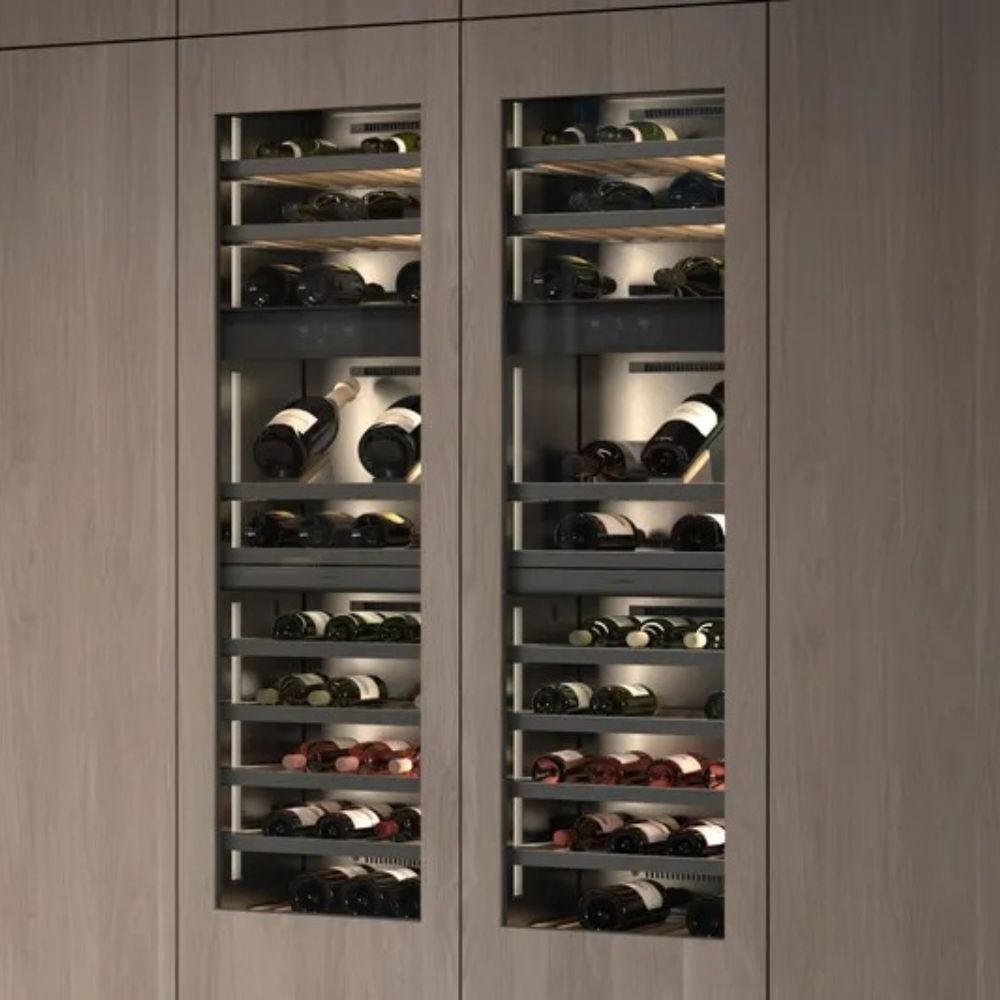
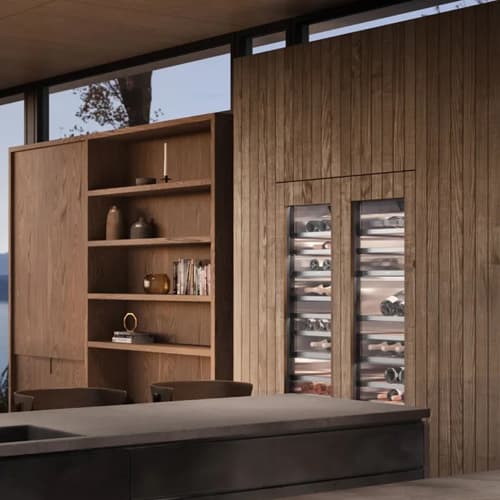
Gaggenau's 200 series wine coolers feature an understated and minimalist outlay that seamlessly integrates into any kitchen whereas Miele's KWT 2612 Vi features high-end, timeless designs.
Design is where the gaggenau vs miele conversation gets genuinely interesting, and where I find clients make their real decision - often before they've consciously admitted it.
Gaggenau's aesthetic is closer to architecture than product design. The dark glass, the minimal stainless controls, the flush integration - it disappears into a well-designed kitchen in the way that a cabinet face disappears into a wall. It asks the cabinetry and the space to do the talking, and rewards that restraint with something that looks quite extraordinary when done well.
Miele is warmer. It sits more comfortably alongside a broader range of kitchen styles without demanding that everything around it be equally considered. For certain briefs - particularly where the kitchen needs to feel liveable rather than architectural - that is actually the more intelligent choice.
Key Takeaway: If your kitchen is the kind where every surface, handle, and joint has been agonised over, Gaggenau will feel at home. If it's a kitchen that needs to work for a family, accommodate a range of interior decisions, and not make guests feel they've wandered into a Michelin-starred prep kitchen - Miele is rather sensible. One question I always ask clients at this stage: do you want the appliances to be noticed, or do you want the kitchen to be noticed? The answer usually settles it.
In today's world, where sustainability is of the utmost importance, appliances must reflect eco-friendliness in their pattern and manufacturing processes.
Consumers have become more environmentally conscious, making sustainability a critical factor in the appliance industry. Sustainable appliances not only promote energy efficiency but also contribute to a greener planet.
When it comes to sustainability, both Gaggenau and Miele have taken significant steps towards being eco-friendly.
Gaggenau is committed to sustainable manufacturing processes and materials, and they have incorporated renewable energy sources in their production facilities. Their products are constructed from recycled steel and glass, ensuring minimal environmental impact.
Likewise, Miele has implemented various sustainability initiatives, including reducing carbon emissions and water consumption in their manufacturing plants. Furthermore, they have a recycling program that ensures the end-of-life components of their appliances are recycled, preventing them from ending up in landfills.
Key Takeaway: Sustainability credentials at this level of manufacturing are genuinely substantive - not marketing copy. Both brands have made structural commitments to reducing environmental impact, and both back those commitments with auditable manufacturing practices. For clients who include environmental criteria in their brief, either brand will stand up to scrutiny.
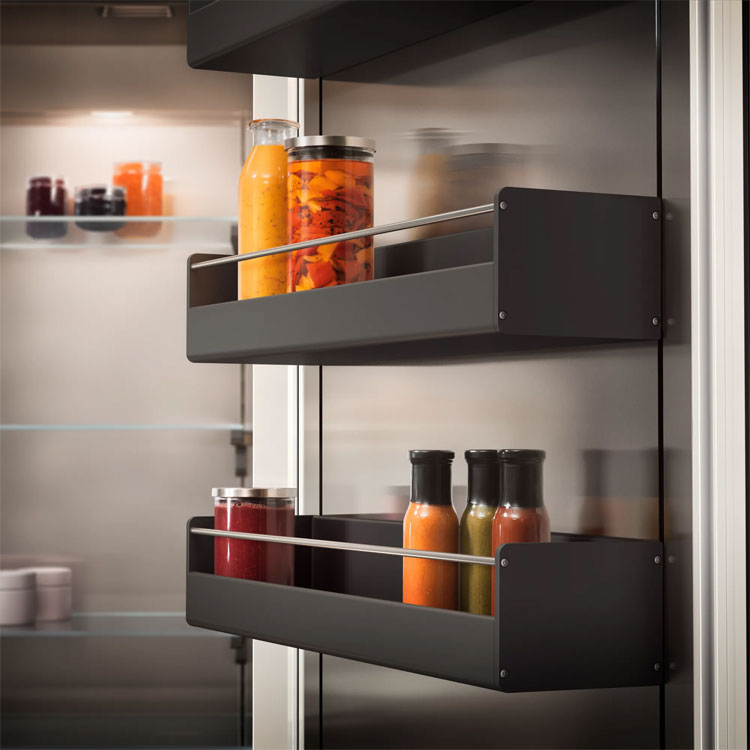
One of Gaggenau's exceptional sustainability efforts is evident in their Vario refrigerators. These modular refrigerators offer users the ability to customise their configuration according to their specific needs, reducing food waste and energy consumption.
They use energy-efficient components and natural refrigerants, which significantly decreases their carbon footprint. While Miele provides energy-efficient refrigerators, they do not match the level of customisation offered by Gaggenau's Vario refrigerators.
The Vario refrigeration system is one of those things that clients often overlook until I walk them through it - and then it becomes one of the most compelling arguments for Gaggenau. The logic is straightforward: if you only need a wine cabinet and a small fridge drawer in a particular zone of the kitchen, you specify exactly that. You're not running a larger appliance than the household actually needs, which reduces energy consumption without any behavioural change required from the client. It's rather elegant engineering, honestly.
Key Takeaway: Gaggenau's Vario system reframes refrigeration as something you configure rather than something you accommodate. For clients designing bespoke kitchens where every centimetre is considered, this level of modular flexibility is quite genuinely useful - both from a sustainability standpoint and a spatial planning one.
Miele's PerfectFresh zone, a chamber in the refrigerator that maintains a temperature of roughly 0°C and a humidity level of up to 90%, is one of their significant breakthroughs. This keeps food fresher for longer, lowering food waste and, eventually, conserving energy.
Miele has also created refrigerators that employ a novel vacuum-sealed insulation technique that is more efficient than typical insulation methods. This contributes to decreased energy use and greenhouse gas emissions.
PerfectFresh is one of those features that sounds incremental until a client actually uses it and stops throwing away wilted salads and softening herbs. The food longevity argument is genuine - keeping produce at that narrow temperature and humidity window makes a measurable difference to how long fresh ingredients remain usable. For households that cook regularly from fresh, this is not a marginal benefit.
Key Takeaway: Miele's sustainability approach is less architectural than Gaggenau's, but no less thoughtful. PerfectFresh and vacuum insulation are innovations with direct, daily impact - the kind of improvements that clients notice not on the spec sheet but in the rhythm of how they actually use their kitchen.
Innovation is an emblem of the appliance industry, and top manufacturers recognise its importance in meeting the needs of esteemed consumers.
By incorporating advanced technologies, styling elements, and features, innovative appliances elevate the overall experience of using them, making them more efficient, convenient, and reliable.
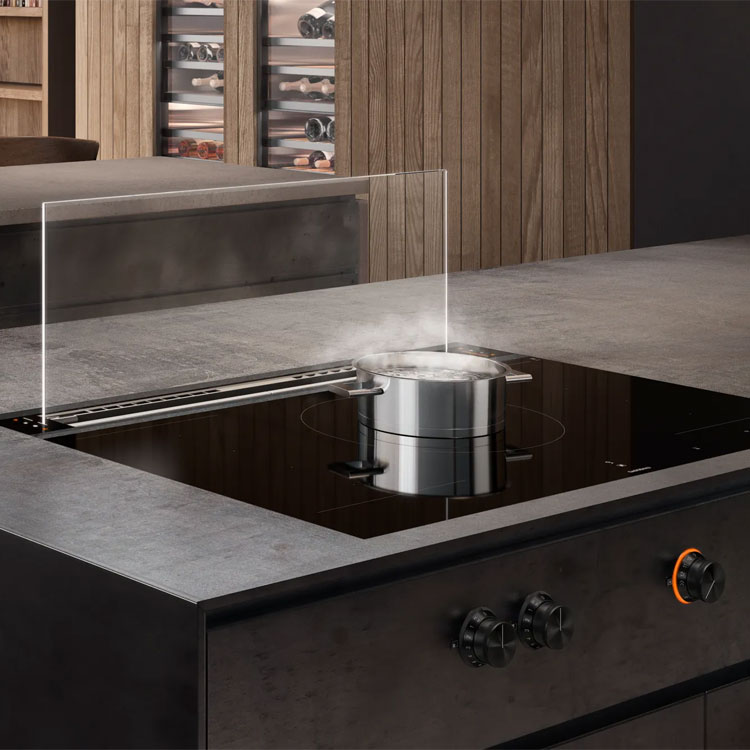
When it comes to innovation, Gaggenau stands out with its cutting-edge technology and unique product features:
Meanwhile, Miele has made strides in appliance innovation, with a focus on connectivity:
Miele's innovations in appliance connectivity prove their commitment to providing the utmost ease of use while Gaggenau's advancements allow for increased accessibility and a flawless experience.
What I find instructive about both brands' approach to connectivity is how it reflects their broader philosophy.
Gaggenau's Home Connect puts control in the hands of the user - you adjust, you override, you make decisions. Miele's connected ecosystem is more likely to make suggestions, automate selections, and flag things to you rather than waiting to be told what to do.
Neither approach is wrong.
But they do tell you something useful about which brand's kitchen you'll actually enjoy living in. If you're considering Gaggenau's steam oven range as part of this decision - which is worth doing, they're quite extraordinary - our guide to how much a Gaggenau steam oven costs covers the investment in honest detail.
Key Takeaway: Innovation at this level isn't about features for their own sake - it's about whether the technology makes the kitchen more responsive to the way you actually cook and live. Gaggenau innovates for the cook who wants more control; Miele innovates for the household that wants things handled intelligently. Both are refreshingly competent in their respective lanes.
When it comes to purchasing appliances, you cannot underestimate the importance of warranty and support. These factors act as a safeguard against any unforeseen circumstances, saving you from unnecessary stress, expenses, and time-consuming repairs.
In terms of warranty and support, Gaggenau and Miele are two leading brands that stand out from the rest.
Gaggenau's unrivalled customer support system offers a limited warranty of up to 5 years, ensuring that any issues related to materials or workmanship are covered, and the highly skilled customer service team is always available to provide quick assistance.
Miele offers a comprehensive warranty, although slightly shorter than Gaggenau, with a limited warranty of up to 2 years covering parts and labour for any manufacturing defects. They too have a dedicated customer service team that provides top-notch support and assistance to their customers.
Warranty length tends to be the detail clients undervalue during the excitement of specifying a new kitchen - and overvalue when something goes wrong two years later. Gaggenau's 5-year provision is genuinely meaningful at this price point. Miele's 2-year warranty is more standard for the category, but their UK service network is extensive and their response times are, in my experience, reliably good. For a whole-kitchen specification where you're committing to a significant investment, the after-sales infrastructure of both brands is worth factoring in alongside the product itself.
Key Takeaway: Gaggenau's 5-year warranty has a practical value that compounds the longer you own the appliances. Miele's support infrastructure is strong enough that the shorter warranty term rarely becomes a real-world problem. Either way, buying through a reputable showroom with an established relationship with both brands - rather than online or through a third party - remains the most sensible safeguard of all.
The is gaggenau better than miele question, when pressed to its practical conclusion, usually becomes a question about value - which is not the same thing as price.
Clients who arrive at FCI with a Gaggenau spec and a Miele spec side by side are often surprised that the gap is not where they expected it to be. Gaggenau's entry point is higher - a single oven will typically start around £3,000 and a full kitchen suite can represent a very considerable investment. But the modular Vario system means you're configuring exactly what you need rather than over-specifying to fit standard configurations. That changes the arithmetic considerably.
Miele offers an outstanding quality proposition at a somewhat lower entry point - and for clients who don't need the full depth of Gaggenau's professional-grade specification, it represents genuinely excellent value at the luxury end of the market. Both brands hold their value well, perform to a standard that most domestic kitchens will never fully test, and last long enough that the per-year cost of ownership looks rather reasonable when spread across a decade of daily use.
It is also worth noting that within Gaggenau's own range, the 400 and 200 series are quite different propositions. If you're navigating that decision alongside the broader brand comparison, our Gaggenau 400 vs 200 series guide is a useful companion read.
| Feature | Gaggenau | Miele |
|---|---|---|
| Entry-level oven (approx.) | £3,000+ | £1,200+ |
| Standard warranty | Up to 5 years | Up to 2 years |
| Modular / Vario configuration | Extensive - a core strength | Limited |
| Professional-grade cooking precision | Market-leading | Excellent |
| Smart connectivity | Home Connect - user-led control | Miele@home - intelligent automation |
| Design language | Architectural, minimal | Refined, versatile |
| Sustainable refrigeration | Vario modular system | PerfectFresh + vacuum insulation |
| Best suited to | Architectural kitchens, serious cooks | Family kitchens, varied interior styles |
At FCI London, we have a dedicated team of kitchen designers who work with both Gaggenau and Miele appliances across live projects - not theoretically, but in actual kitchens they've designed and installed. When you visit the showroom, you can browse our kitchen displays where both brands are integrated into real cabinetry and working at full specification. It's rather different from reading a comparison article, and we'd genuinely recommend it before making a decision at this level.
Key Takeaway: Price-per-feature comparisons can be misleading at this end of the market, because the value of an appliance like this isn't captured in the spec sheet alone - it's in the daily experience of using it, the longevity, and how well it integrates into the kitchen it lives in. The most useful thing you can do is see both brands in a properly designed kitchen environment before deciding. We can help with that.
Is Gaggenau better than Miele, or is this simply a different kind of appliance?
Both questions, really. Is gaggenau better than miele in absolute terms? No - and any designer who tells you otherwise is oversimplifying. Gaggenau is the stronger choice for clients who want professional cooking precision, architectural design integration, and the deepest possible level of specification control. Miele is the stronger choice for those who want outstanding reliability, intelligent automation, and a design language that works across a broader range of interior styles. The brand that suits your kitchen is the better brand for you.
Can Gaggenau and Miele appliances be mixed within the same kitchen?
It can be done, but I'd approach it carefully. Both brands have distinct visual identities, and mixing them without a coherent plan risks producing a kitchen that looks specified by two different people - which, in effect, it would be. There are scenarios where it makes sense: a client who wants Gaggenau's Vario refrigeration but prefers Miele's cooking suite, for instance. Our kitchen designers at FCI have navigated exactly this kind of brief and can advise on where it works and where it doesn't, based on your specific layout and cabinetry design.
What should I prioritise when comparing gaggenau or miele for a full kitchen specification?
Start with how you actually cook, not with what the brands claim. Then consider the design language of your kitchen - is it architectural and restrained, or warmer and more liveable? Then look at the full suite, not individual appliances in isolation, because both brands are designed to work as integrated systems and the experience of a whole Gaggenau or Miele kitchen is quite different from cherry-picking individual pieces. Our designers can help you work through this systematically - it's genuinely one of the more enjoyable parts of a kitchen consultation.
Does buying through a showroom like FCI London make a real difference compared to buying online?
Quite considerably, in my experience. Buying luxury appliances online means making a significant financial commitment based on photographs and marketing copy. Buying through a showroom means you can see the appliances integrated into real kitchen furniture, interact with working models, and have a proper conversation with someone who has actually specified these brands across dozens of projects. You also have a relationship with the showroom if something requires attention after installation - which matters more than most clients realise until they need it.
Visit Our Showroom
Address & Hours:
FCI London, Rays House, North Circular Road, London, NW10 7XP
Monday - Saturday: 10am - 6pm
Sunday & Bank Holidays: 11am - 5pm
Contact Details:
Phone: +442081531235
Email: [email protected]
What to Bring:
Gaggenau and Miele are both wonderful appliance brands with high-quality, innovative goods. While they all share a dedication to quality and sustainability, each brand has distinct characteristics and qualities that may appeal to various consumers. Individual interests and needs will ultimately determine which of these two brands is preferred. Consumers can be certain that regardless of the brand they pick, they are investing in a product that is made to last and developed with sustainability in mind. For over 35 years, FCI has been an illustrious leader in the interior design industry, offering bespoke and innovative home design solutions. We invite you to visit our luxurious London showroom and experience our personalised guidance service, where you will find inspiration and receive tailored recommendations. Connect with us via WhatsApp so we can help you create a fully integrated kitchen that suits your unique lifestyle and preferences.
Customer Reviews
Nedelia Martin (Customer)
"I discovered FCI London almost 5 years ago and I keep going back to them when I need to buy furniture. The team is fantastic - both the sales staff and the in-house designer were knowledgeable, helpful, and really took the time to understand my style."
Mike Jenkins (Design Professional)
"FCI, and Kasia in particular, provide an excellent service to design professionals and the trade. Their expertise, helpful 'can-do' approach, assistance and attention to detail is second-to-none."
Blair Sailes (Customer)
"Customer service was excellent and Sanjay and Andrei were very helpful in design and colour choices in your showroom. Overall a great experience and FCI are certainly on my radar for future purchases."
We help designers & clients transform mundane spaces into extraordinary ones.


Book a video consultation and we'll advise you on furniture, space planning, colour schemes and much more.
Book A ConsultationBook a visit to our stunning, multi award-winning, 30,000 sqft.
Over 700 brands under 1 roof.


Most Popular on FCI London: Fitted Wardrobes | Luxury Designer Rugs | Luxury Sofas | Luxury Furniture Store | Luxury Interior Designers | Luxury Bedroom Furniture | Luxury Modern Chairs | Luxury Coffee Tables | Luxury Designer Kitchens | Luxury TV Units | Luxury Dining Tables | Luxury Storage Solutions | Luxury Sideboards | Luxury Stools & Bar Stools | Luxury Bespoke Joinery | Luxury Modern Hallway Furniture | Furniture Showroom Appointment | Luxury Lighting | Modern Luxury Outdoor Furniture
Transparency isn’t a policy. It’s a principle.
Have a peek at what our clients really have to say.