
Published Date: Apr 28, 2026 | Last Updated: Jun 27, 2026
Written by: Emma Cyrus, Senior Copy, Content & Editorial Writer
Reviewed by: Monika Popescu, Senior Interior Designer at FCI London
Edited by: Zoona Sikander, Head of Content.
Estimated Reading Time: 5 minutes
TL;DR: Modular and sectional sofas are not the same thing - and the distinction matters more than most people realise when making a considered investment in a living space. Modular sofas are systems: independent pieces that can be arranged, rearranged, and added to over time. Sectional sofas are fixed formations - generous, cohesive, and designed to hold their shape. This guide explains the difference clearly, so you can match the right sofa to your room, your life, and your interior brief rather than simply going with whatever the showroom floor suggested first.
Table of Contents
If you're furnishing a principal living room in London or the Home Counties and want to make a genuinely informed choice between modular and sectional sofas, this blog is for you. We've worked with both sofa types across hundreds of projects - what follows is the honest version of what we've learned, not the brochure version.
The terms get used interchangeably so often that most people arrive in the showroom already slightly confused. It's not their fault - the industry hasn't exactly gone out of its way to clarify things. Both sofa types have genuine merit. Both have found their way into some extraordinary interiors. But they serve different purposes, suit different rooms, and reward different kinds of client. Understanding which one you actually are is, in my experience, the most useful thing you can do before you start looking.
In my experience, the confusion between these two terms costs people more time than it should - and occasionally more money, when someone buys the wrong thing and realises it six months later.
A modular sofa is essentially a system. The Peanut B Sofa by Bonaldo is a good example of what this looks like at its most refined: each piece is entirely independent, with its own frame, armrest, backrest, and seat. You can pull the whole configuration apart, rebuild it differently, add a piece, remove one, rotate the arrangement to suit a new room entirely. The sofa adapts to your life rather than the other way around.
A sectional sofa is a different proposition. It arrives in pre-determined sections - typically connecting to form an L-shape or U-shape - and those sections are designed to work together as a cohesive whole. There's some flexibility in how you orient it within a room, but the configuration itself is largely fixed. That's not a flaw. For many rooms and many clients, that certainty is precisely what makes it the better choice.
Both types have their own distinct advantages. The question is simply which set of advantages maps to your situation.
Key Takeaway: The clearest way I've found to explain it: a modular sofa is a system you build, and a sectional sofa is a piece you place. One rewards flexibility; the other rewards decisiveness. Both, when chosen correctly, are quite extraordinary in the right room.
Clients often expect these two sofa types to be more different than they actually are - and then, paradoxically, are surprised by the differences that do matter. Let me walk through both.
The common ground is real.
Both modular and sectional sofas offer a degree of customisation: modular through the ability to arrange and rearrange independent pieces, sectional through the range of configurations available at the point of purchase. Both come in a wide variety of materials - leather, fabric, performance textiles - and across a broad stylistic range. Both are well suited to generous living spaces, open-plan rooms, family rooms, and home cinema settings where a single compact sofa would feel inadequate. If you need significant seating presence in a room, either type can deliver it.
The differences, though, are where it gets interesting.
A modular sofa is composed of genuinely independent units - each structurally self-contained - which means the configuration is entirely in your hands.
A sectional is a connected system designed around a specific formation. Modular sofas tend toward a more contemporary, architectural aesthetic; sectionals span a wider stylistic range. And in terms of what happens five years from now - a new property, a redecorated room, a different way of living - the modular sofa has a significant advantage.
Ultimately, the choice will depend on how much flexibility you genuinely need and the aesthetic direction you're working toward. I find that clients who value adaptability tend to land on modular; clients who want a settled, defined presence in the room tend to prefer sectional. Both instincts are entirely reasonable.
Key Takeaway: The overlap between these two sofa types is real, but the differences are meaningful - particularly over time. A modular sofa is an investment in future flexibility. A sectional is an investment in immediate impact. Knowing which matters more to you is rather helpful before you start browsing.
Every sofa type involves trade-offs. The ones that tend to work best long-term are the ones where the client understood the trade-offs going in.
Sectional sofas are particularly well suited to households that entertain regularly or have a clearly defined, stable living space. The generous, cohesive seating they provide is difficult to replicate any other way, and for a room with a fixed layout and a clear purpose, the settled configuration is a strength rather than a limitation. The honest drawback is their footprint - a large sectional in an undersized room doesn't just look wrong, it changes how the room functions entirely. They also require more planning around circulation than most clients initially anticipate.
Modular sofas are at their most valuable when circumstances are likely to change - a growing family, a planned renovation, a second property, or simply a client who hasn't yet decided how they want to use a room. The ability to add pieces over time, or reconfigure without starting again, is genuinely useful rather than merely theoretical. The trade-off is that reconfiguration takes more effort than it sounds, and the full floor area required for all the modules should be mapped out carefully from the outset - the pieces have a habit of expanding to fill more space than originally planned.
The decision that holds up best over time, in my experience, is always the one made against the reality of how a room is actually used - not how it might ideally be used on a well-lit Tuesday afternoon.
Key Takeaway: Sectional sofas reward certainty - they perform best when the room is defined and the configuration doesn't need to change. Modular sofas reward foresight - they earn their value when life, rooms, or priorities shift. Both are excellent in the right context.
The first question I always ask a client isn't "what style do you like" - it's "draw me the room." Floor area, ceiling height, where the natural light comes from, whether there's a fireplace or a view that anchors the space. A sofa doesn't exist in isolation, and the ones that end up looking wrong almost always went wrong at this stage.
Size and shape of the room is the most important single factor. A sectional sofa needs sufficient floor area not just to fit, but to breathe - it should leave at least 90 cm of clear circulation space on the open sides, and ideally more - so it definitely not the best sofa for a small living room. A modular configuration can be more surgically fitted to an awkward or irregular room, which is one of the reasons I tend to recommend it for open-plan spaces where the seating zone needs to be defined rather than simply placed.
Beyond dimensions, consider how the room's character and the sofa's style interact.
Both modular and sectional sofas are available across a wide range of materials and finishes - leather, fabric, performance textiles - and the construction quality varies considerably between manufacturers. Frame construction, cushion density, and the quality of the upholstery are all worth examining closely, particularly for a piece that will see daily use over a decade or more.
Finally, think honestly about how the room is likely to change.
A growing family, a planned renovation, a second property - these are all reasons why a modular sofa's adaptability might prove more valuable over time than it appears on the day of purchase. I've had clients thank me for that conversation years later. I've also had clients who knew exactly what they wanted and were right to buy the sectional without hesitation.
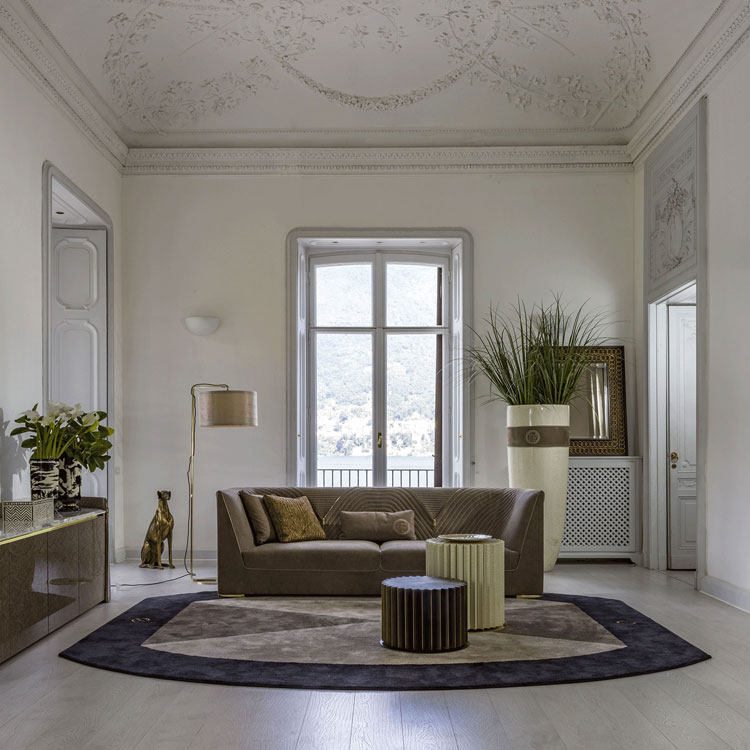
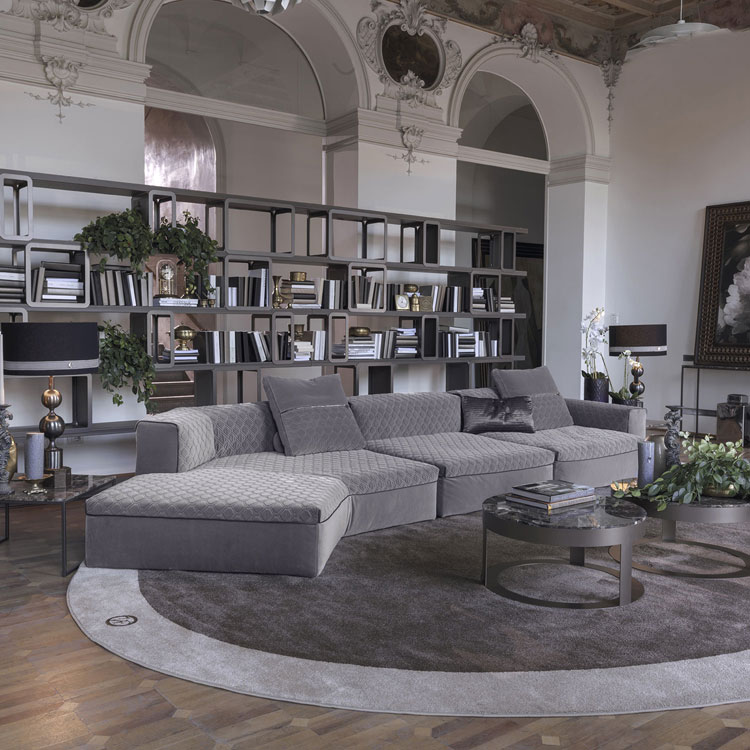
Key Takeaway: Room dimensions, lifestyle patterns, and the likelihood of future change are the three factors that tend to be most decisive in this choice. A showroom visit is genuinely useful here - seeing both sofa types at scale, in a furnished context, clarifies things that floor plans and photographs simply cannot.
I'll be direct about this, because it's a question that comes up in almost every conversation: modular sofas cost more. Not always dramatically, but consistently. And the reason is straightforward - each module is an independently engineered piece with its own frame, upholstery, and joinery. The flexibility you're paying for is real, and it's built into every component.
Modular sofas also allow you to start with a core configuration and add pieces over time, which can make the initial outlay feel more considered. A sectional sofa is typically purchased as a complete unit - the full cost is front-loaded, though the design and manufacturing process is generally more streamlined, which is reflected in the price.
One thing I always point out to clients thinking about cost: the relevant comparison is not the price tag today, but the value delivered over the life of the piece. A modular sofa that moves with you across two properties and three room layouts has a very different cost-per-year equation than one that looked right in a specific room and became redundant when that room changed. That calculation is worth doing before price becomes the deciding factor.
Key Takeaway: Modular sofas carry a higher upfront cost, but their adaptability can make that investment considerably more efficient over time. If your living arrangements are likely to evolve, the modular premium is often rather sensible - not extravagant.
Comfort is the word clients use when they mean several different things at once - and it's worth unpacking, because a sofa that scores well on one dimension can perform poorly on another.
Modular sofas offer a high degree of configurability, which means comfort can be genuinely tailored - deeper seats for lounging, shallower ones for more upright conversation, a chaise positioned to catch the light. The trade-off is that connection points between modules, if not well engineered, can introduce a slight discontinuity in the seating surface over time. On a well-made modular sofa from a reputable manufacturer, this is barely noticeable. On a cheaper one, it becomes apparent fairly quickly. This is one area where the quality of the brand matters considerably.
Sectional sofas tend to offer a more unified comfort experience - the seating surface is continuous, the cushioning is consistent across the piece, and features such as integrated storage, USB charging points, or pull-out sleeping surfaces are more commonly available in sectional form. For a dedicated media room or a family living space used heavily every day, that cohesion is genuinely valuable.
My honest view: the most comfortable sofa is almost always the one that fits the room well and suits how the space is actually used. A beautifully specified modular in the wrong configuration, or a sectional that's slightly too large for the room, will never feel quite right - regardless of how good the cushioning is.
Key Takeaway: Comfort is as much about fit - to the room, to the configuration, to the pattern of daily use - as it is about materials and cushion fill. The specifications matter, but they matter within the right context. Get the context right first.
Can a modular sofa work in a formal reception room, or does it inevitably feel too casual?
This is one I hear regularly, and the short answer is no - the perception of modular sofas as inherently informal is largely a hangover from earlier, less refined iterations of the format. Many of the finest European furniture houses now produce modular seating in structured silhouettes, close-tailored upholstery, and finishes that sit entirely at home in a formal drawing room. The key is in the selection: a low-profile modular with clean lines and a tailored fabric reads very differently from a deep, sprawling configuration with loose scatter cushions. One looks considered; the other looks comfortable. Both are valid - just in different rooms.
How do I know if my room is genuinely large enough for a sectional sofa?
The rule I use with clients is this: the sofa should leave at least 90 cm of clear floor space on its open sides for comfortable circulation, and the eye should be able to travel beyond it to another element in the room. If the sofa is the last thing you see before the wall, it's probably too large for the space. Bring accurate floor plan dimensions to any showroom consultation - it takes ten minutes and saves a great deal of trouble later. I'd also recommend marking out the footprint on the actual floor with masking tape before ordering. It's an unglamorous step, but it's rather useful.
What upholstery performs best on a modular sofa that sees daily use?
Performance fabrics with a high rub count and a tight weave hold up considerably better on modular sofas than loosely woven textiles, particularly at the connection points between modules where friction is greatest. Full-grain leather is also an excellent choice for daily use - it develops character over time rather than simply wearing, and it cleans easily. Semi-aniline leathers offer a balance of softness and durability that many clients find genuinely practical. What I'd steer away from, for a sofa in constant use, is a delicate bouclé or an open-weave fabric - beautiful in a showroom, less forgiving in real life.
Is it actually possible to add modules later, or is that more theoretical than practical?
It's genuinely possible - but with one important caveat that I always raise at the point of purchase. Manufacturers occasionally discontinue colourways, upholstery options, or even entire module types, which can make later additions difficult to match precisely. The value of a modular system depends entirely on its continued availability, so buying from a brand with a stable, long-running collection is actually one of the more important decisions in a modular purchase. It's worth asking the question directly before you commit: how long has this range been in production, and what's the manufacturer's track record on continuity?
Visit Our Showroom
Address & Hours:
FCI London, Rays House, North Circular Road, London, NW10 7XP
Monday - Saturday: 10am - 6pm
Sunday & Bank Holidays: 11am - 5pm
Contact Details:
Phone: +442081531235
Email: [email protected]
What to Bring:
Modular and sectional sofas are not interchangeable - and treating them as if they were is how people end up with a sofa that looks right on the day it arrives and quietly frustrates them for the next ten years. Modular sofas are systems built around adaptability: genuinely useful when rooms, properties, or lifestyles are likely to change. Sectional sofas are investments in presence and permanence: the right choice when the room is defined, the configuration is clear, and what you need is something that holds the space with authority. Both are available at FCI London across an extensive range of European manufacturers. The best way to choose between them is to see both at scale, in a properly furnished context, with someone who can ask the right questions. That's what our designers are here for - visit our showroom or get in touch to start the conversation.
Customer Reviews
"Loved my experience with FCI. Kamil and Chrissy have been amazing and took care of me and my needs. Everything went smooth with my sofa bed order, an excellent piece of design delivered very quickly from Italy. Really recommend!"
Marzia Castelli (Customer)
"I had an excellent experience with FCI. Their showroom offers an impressive selection of high-quality furniture and top international brands. The team provided outstanding service - knowledgeable, attentive, and genuinely helpful."
Zlata Rybchenko (Customer)
"A true one-stop shop for elegant Italian design. It's rare to find such a well-curated selection all in one place in North London. The team are knowledgeable and happy to advise, while still giving you space to browse at your own pace."
Elisa Foppa (Customer)
We help designers & clients transform mundane spaces into extraordinary ones.


Book a video consultation and we'll advise you on furniture, space planning, colour schemes and much more.
Book A ConsultationBook a visit to our stunning, multi award-winning, 30,000 sqft.
Over 700 brands under 1 roof.


Most Popular on FCI London: Fitted Wardrobes | Luxury Designer Rugs | Luxury Sofas | Luxury Furniture Store | Luxury Interior Designers | Luxury Bedroom Furniture | Luxury Modern Chairs | Luxury Coffee Tables | Luxury Designer Kitchens | Luxury TV Units | Luxury Dining Tables | Luxury Storage Solutions | Luxury Sideboards | Luxury Stools & Bar Stools | Luxury Bespoke Joinery | Luxury Modern Hallway Furniture | Furniture Showroom Appointment | Luxury Lighting | Modern Luxury Outdoor Furniture
Transparency isn’t a policy. It’s a principle.
Have a peek at what our clients really have to say.