
Published Date: Mar 25, 2026 | Last Updated: Jun 30, 2026
Written by: Emma Cyrus, Senior Copy, Content & Editorial Writer
Reviewed by: Perla Mignanelli, Senior Interior Designer at FCI London
Edited by: Zoona Sikander, Head of Content
Estimated Reading Time: 5 minutes
TL;DR - A 3 door wardrobe with drawers is one of the most quietly powerful design decisions in a luxury interior, contributing far more to the character of a room than its functional brief suggests. Designers return to this configuration not because it solves a storage problem, but because it resolves a design one. When specified with precision, it becomes the piece that holds the entire room together.
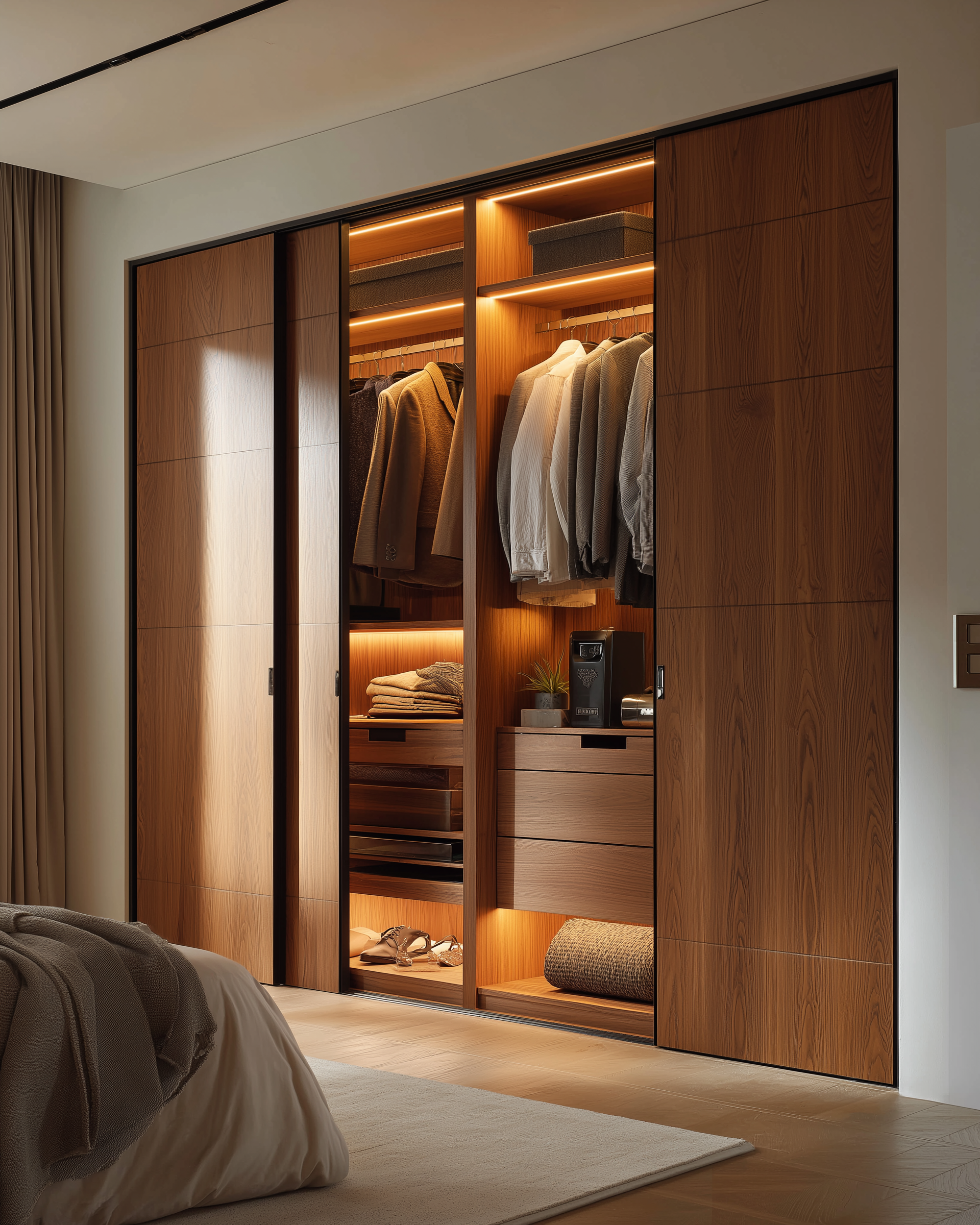
Table of Contents
There is a particular category of furniture that does not ask to be noticed.
It does not compete with the artwork, does not upstage the lighting, and does not announce its own presence the moment you enter the room.
And yet, when it is removed from the equation, something in the space immediately feels unresolved. The 3 door wardrobe with drawers belongs to this category, and understanding why designers return to it so consistently requires looking beyond what it stores and towards what it does.
This is a piece of furniture that, when specified correctly, quietly defines the spatial logic of a room. It establishes proportion, creates visual rhythm, and absorbs a significant portion of the room's practical requirements within a single, coherent form.
That combination is rarer than it appears, and it is precisely why it remains one of the most considered choices in luxury residential design.
Every room has what I would describe as a visual anchor, a piece or element that the rest of the composition organises itself around.
In a sitting room, this is often the sofa or a significant artwork. In a dining room, the table. In a bedroom, the bed assumes this role by default, but the wall it faces is equally important to the overall composition, and it is here that the 3 door wardrobe with drawers earns its place.
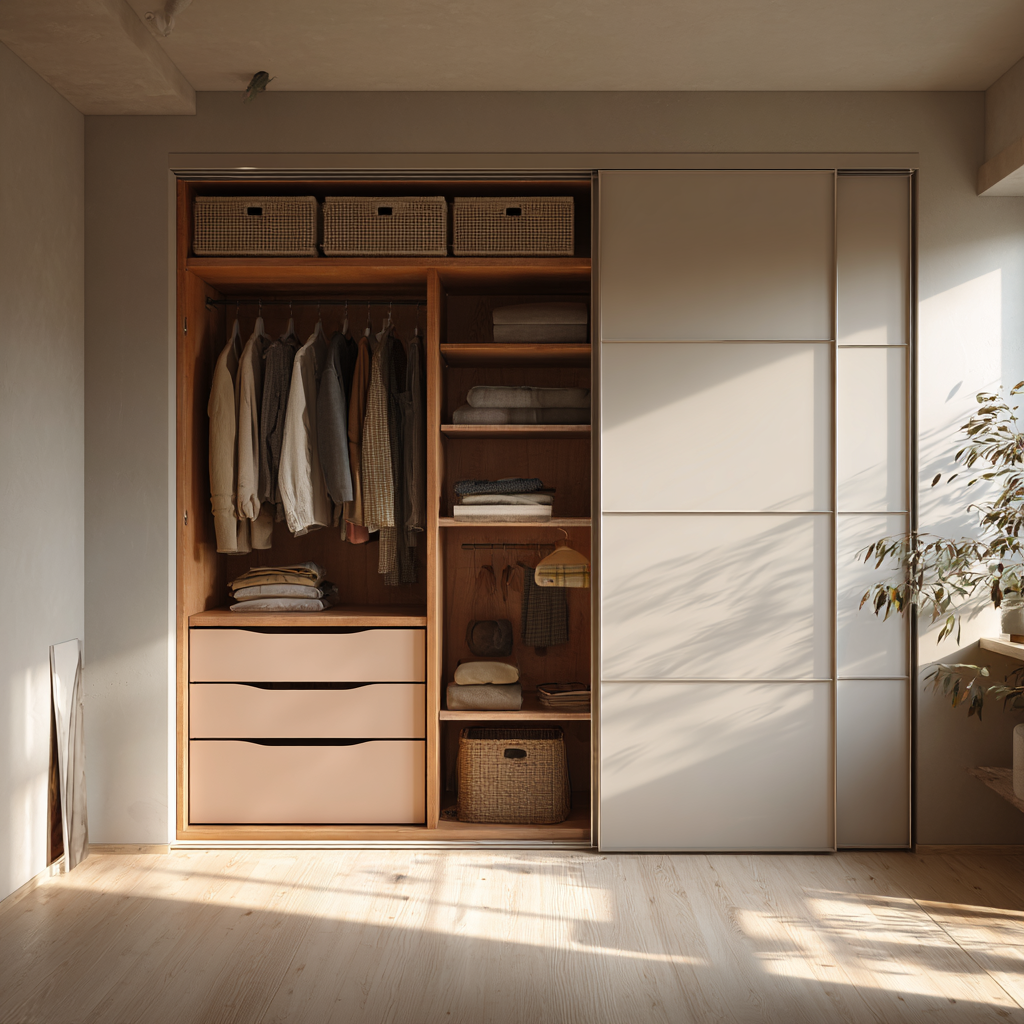
A three-door configuration occupies its wall with a sense of intention. The tripartite structure creates a rhythm, three vertical panels that the eye reads as considered rather than arbitrary.
It is wide enough to feel substantial, to give the wall a purpose, but not so wide that it becomes the entire room. In this sense, it functions rather like a well-proportioned bookcase in a library: a background element that is doing significant compositional work while appearing entirely at ease.
What the integrated drawer section adds is specificity. A fitted wardrobe without drawers is a uniform surface.
One with a drawer bay introduces a variation in the facade, a horizontal element that breaks the vertical rhythm and gives the piece a more architectural quality. This is not incidental. It is the detail that moves the piece from functional furniture into something that reads more like a built element, part of the room's structure rather than an addition to it.
The choice of three doors rather than two or four is worth examining, because it is not arbitrary.
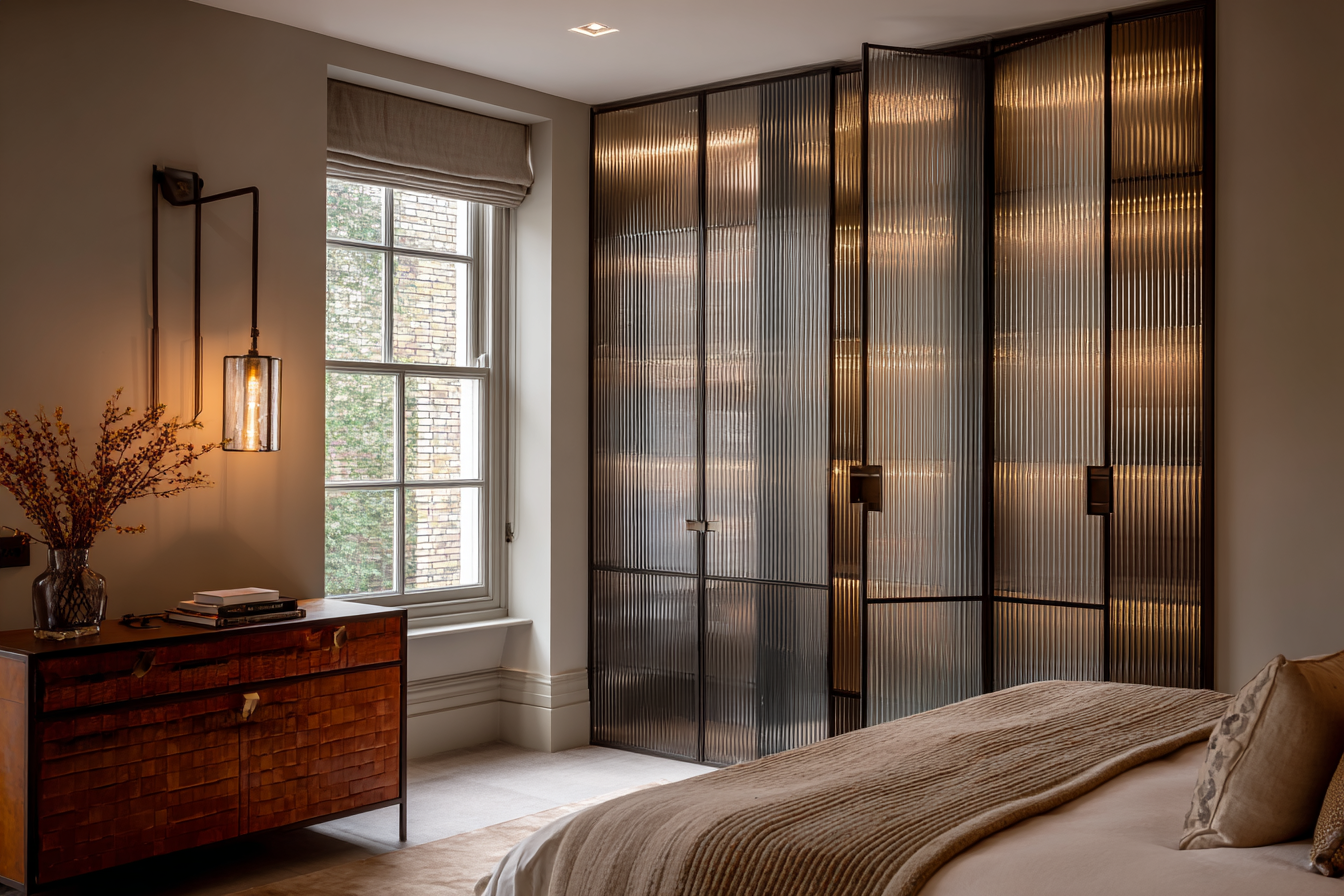
Two doors produce a wardrobe that can feel domestic in scale, adequate, but rarely commanding. Four or more doors risk tipping into something institutional, a row of panels that begins to read as a wall rather than a piece of furniture. Three doors occupy an interval that is, in most well-proportioned rooms, precisely right. The central door becomes a natural focal point, while the two flanking panels create symmetry without rigidity.
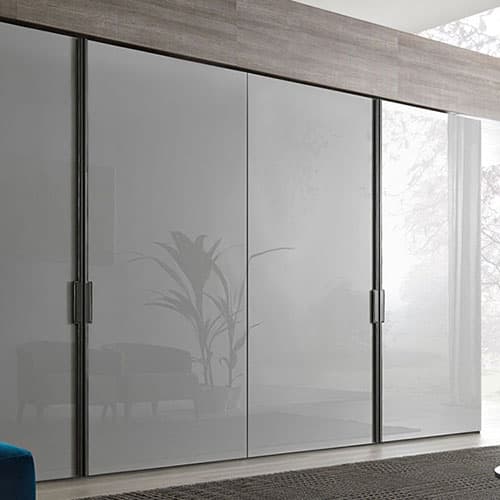
In a project I completed recently, the brief called for a master bedroom that felt composed without feeling cold. The architecture was generous, high ceilings and good natural light, but the room needed an element to anchor the far wall without closing it in. A three-door wardrobe in a pale, fluted glass finish with integrated drawer detailing did this with remarkable economy. It gave the wall weight and purpose, created a visual terminus for the room, and required nothing else on that surface to complete the composition.
That is the specific quality that makes this configuration so useful to designers working at the luxury end of the residential market. It resolves a significant portion of the room's compositional brief within a single specification decision.
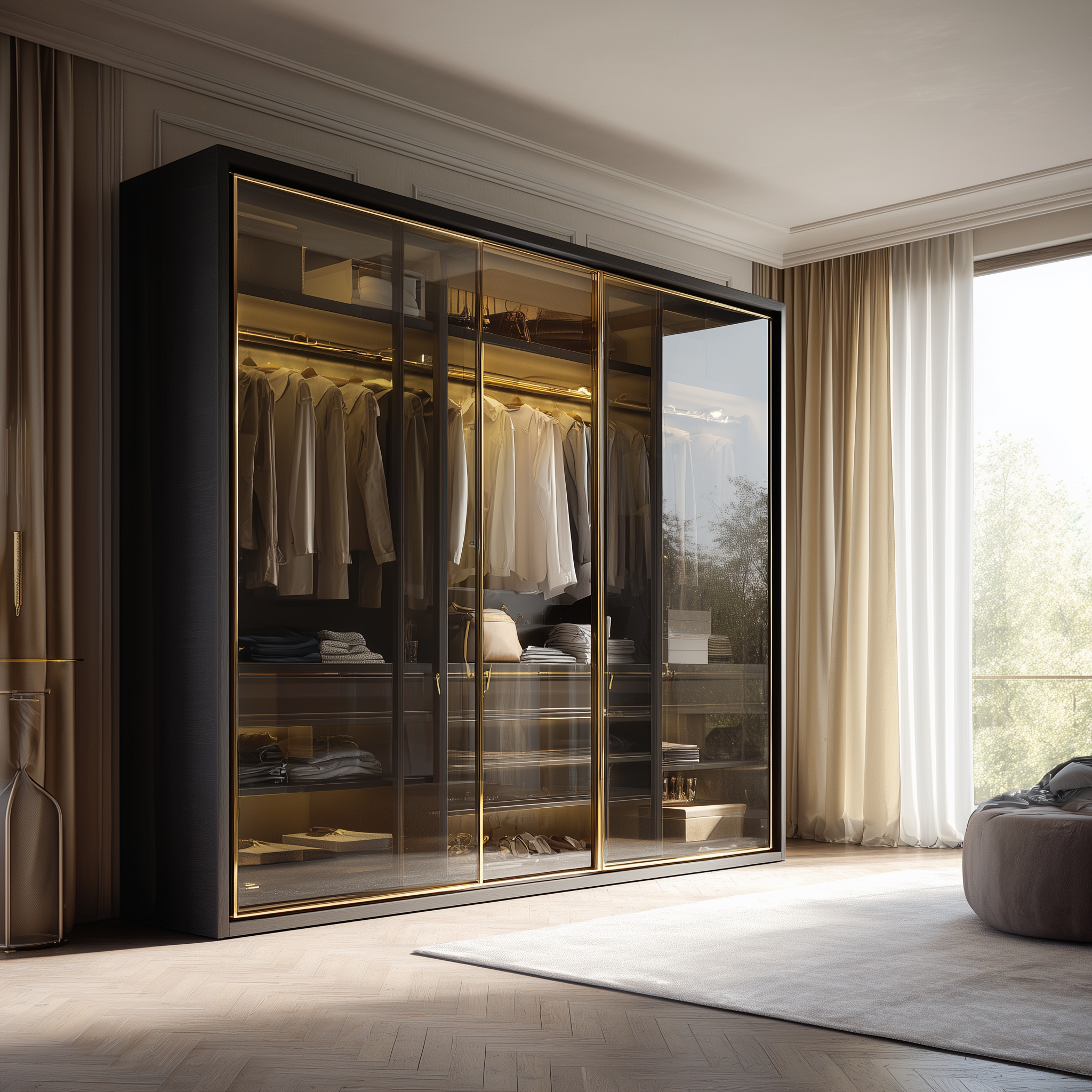
A 3 door wardrobe with drawers is, like all significant pieces of furniture, only as good as the decisions made about how it looks and what it is made from. And in a luxury interior, these decisions carry considerable weight.
The finish of the wardrobe exterior determines its relationship with every other surface in the room.
A high-gloss lacquer will catch and reflect light, contributing to a sense of luminosity and lending the piece a more contemporary character.
A matt finish in a deep tone, a warm slate, a charcoal, or a forest green, will recede into the room in a way that feels more architectural, allowing the room's other elements to breathe around it. Timber veneers introduce warmth and natural variation, connecting the piece to a broader material palette that might include wooden flooring, panelling, or furniture with a similar tonal range.
One consideration I always raise with clients is the relationship between the wardrobe's exterior finish and the room's light conditions. A north-facing room benefits from a finish that reflects what light there is, while a south-facing room with strong natural light can absorb a deeper, more saturated tone without the space feeling heavy.
This is not a complicated calculation, but it is one that significantly affects the final result.
The drawer section offers an additional opportunity for material dialogue. A contrast between the door panels and the drawer front, perhaps a different grain direction in a timber veneer, or a subtle tonal shift in a lacquered finish, introduces a level of detail that reads as intentional without being decorative in an overt sense.
It is the kind of detail that a visitor cannot necessarily name, but that contributes to the overall impression that the room has been put together with care.
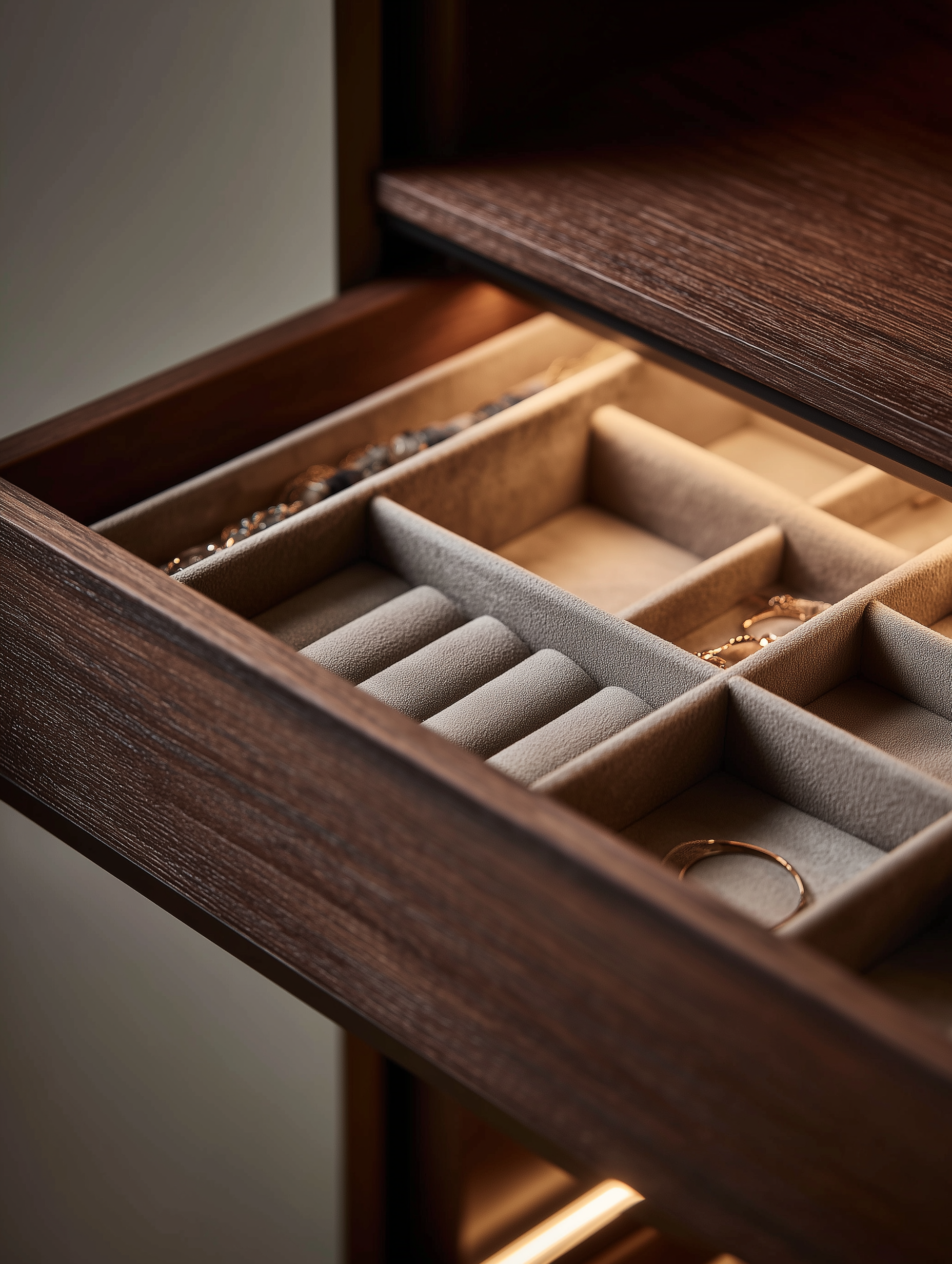
It would be straightforward to discuss the drawer section purely in terms of what it holds. But in the context of this piece, the drawers serve a design function that is at least as significant as their practical one.
A wardrobe facade composed entirely of vertical door panels is uniform in a way that can feel monotonous at scale. The introduction of a horizontal drawer bank interrupts that uniformity and gives the piece a more complex visual rhythm. This is a principle used throughout furniture design and architecture: the interruption of a repeated element creates interest, draws the eye, and suggests considered composition rather than default specification.
The proportional relationship between the drawer section and the door panels above or below it also matters considerably.
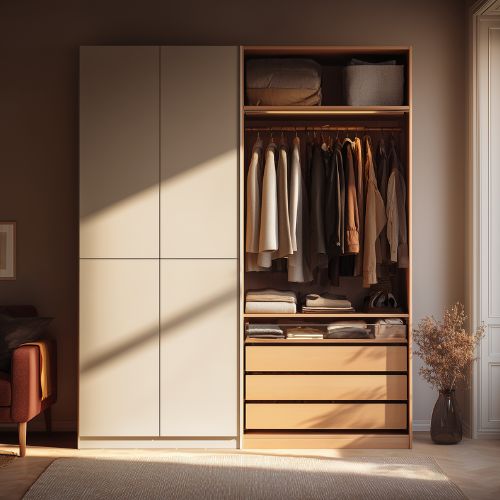
Drawers that are too shallow in height feel like an afterthought. Those that are correctly proportioned, typically with a combined drawer stack of somewhere between a third and a half the height of the overall piece, give the furniture a quality that reads as designed rather than assembled.
Hardware, too, plays a role that goes beyond the mechanical. The choice of handle or pull, its finish, its profile, and its scale, communicates a great deal about the wardrobe's overall character. A slender bar handle in brushed brass reads very differently from a recessed finger pull in a complementary finish to the door. Neither is inherently superior, but each sets a tone that should be consistent with the room's broader material language.
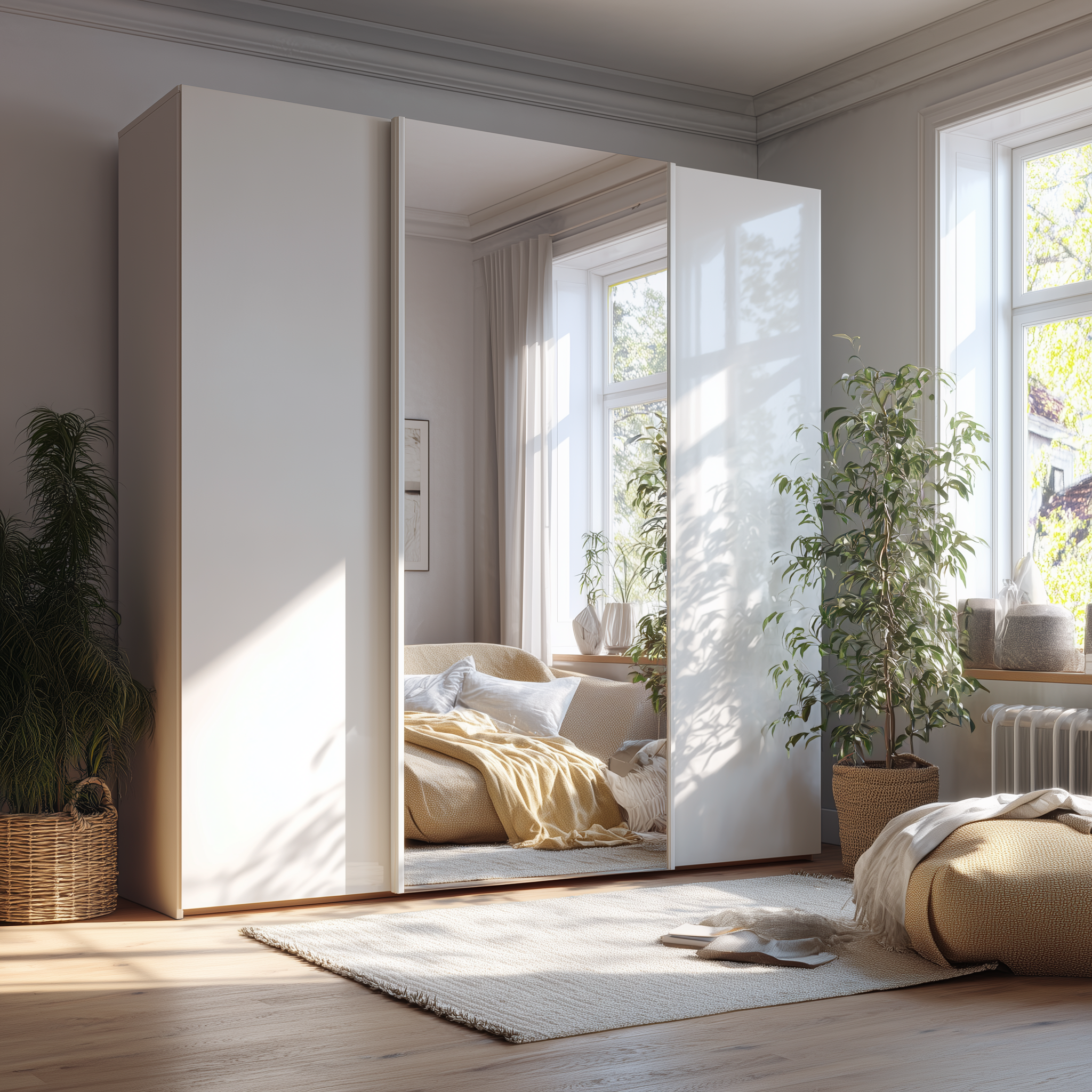
There is a point in the specification process of a luxury interior where the question of customisation versus standard becomes not a matter of preference but of logic. For a 3 door wardrobe with drawers, that point arrives relatively quickly.
Standard dimensions rarely correspond precisely to the proportions of a specific wall in a specific room. A wardrobe that does not reach the ceiling leaves a gap that accumulates visual disorder. One that is slightly too narrow for its wall creates an awkward void to one side. The mathematics of the room almost always demands a degree of customisation, and once that conversation begins, the range of what is possible tends to surprise even experienced clients.
This is where access to the right sources matters enormously. The finest European makers in this category offer a breadth of customisation that goes well beyond a choice of door colour.
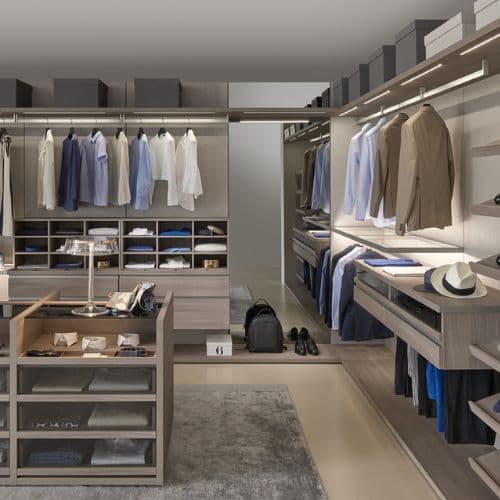
Exterior finishes can be specified across hundreds of lacquers, timber veneers, and material options, each with its own tonal and textural character. Interior configurations, drawer depths, hanging heights, pull-out accessories, and lining materials, can all be calibrated to the precise requirements of the room and its occupant. The result is a custom made wardrobe that has been resolved from the outside in, coherent at every level of detail.
What this also means, practically, is that the process of arriving at the right specification requires both access and knowledge.
Access to makers whose offer is genuinely broad, and the knowledge to navigate that offer in a way that serves the room rather than simply exhausting its possibilities. Working with a team that sources, manages, and delivers these pieces as part of a complete service removes the considerable complexity that would otherwise fall to the client or their designer.
Before committing to a configuration, there are several questions worth resolving, not about storage requirements, but about the room itself.
There is a reason that experienced designers, when asked to identify the decisions that most consistently elevate a luxury interior, rarely point to the obvious ones. It is rarely the statement light fitting or the striking fabric that defines whether a room truly works. More often, it is the pieces that resolved the room's structural logic quietly and completely, leaving everything else free to perform at its best.
The 3 door wardrobe with drawers, specified with precision and finished with attention to the room's specific requirements, is one of those pieces. It is not the most glamorous decision you will make in the course of designing a luxury interior. It may well be one of the most important.
If you are working through the specification of a significant interior project and would like to explore what a fully customised wardrobe could contribute to your particular brief, our design team at FCI is well placed to help.
We work with some of Europe's finest makers, managing the entire process from initial specification through to delivery and installation, which means the answer you arrive at will be the one your room actually calls for, and the process of getting there will not fall on your shoulders.
Visit Our Showroom
Address & Hours:
FCI London, Rays House, North Circular Road, London, NW10 7XP
Monday - Saturday: 10am - 6pm
Sunday & Bank Holidays: 11am - 5pm
Contact Details:
Phone: +442081531235
Email: [email protected]
What to Bring:
Customer Reviews
Valentina Simone
"Our experience with FCI London has been flawless. The table and chairs we purchased are of excellent quality, and there was a great variety to choose from. Monica and Perla helped both with the original purchase and the delivery."
Carol O'Regan
"Ricardo at FCI provided great customer service with his expertise and advice. The quality of the chairs and bar stools is excellent and fits in with our kitchen/diner well."
Nedelia Martin
"I discovered FCI London almost 5 years ago, and I keep going back to them when I need to buy furniture. The team is fantastic, both the sales staff and the in-house designer were knowledgeable, helpful, and really took the time to understand my style."
We help designers & clients transform mundane spaces into extraordinary ones.


Book a video consultation and we'll advise you on furniture, space planning, colour schemes and much more.
Book A ConsultationBook a visit to our stunning, multi award-winning, 30,000 sqft.
Over 700 brands under 1 roof.
Most Popular on FCI London: Fitted Wardrobes | Luxury Designer Rugs | Luxury Sofas | Luxury Furniture Store | Luxury Interior Designers | Luxury Bedroom Furniture | Luxury Modern Chairs | Luxury Coffee Tables | Luxury Designer Kitchens | Luxury TV Units | Luxury Dining Tables | Luxury Storage Solutions | Luxury Sideboards | Luxury Stools & Bar Stools | Luxury Bespoke Joinery | Luxury Modern Hallway Furniture | Furniture Showroom Appointment | Luxury Lighting | Modern Luxury Outdoor Furniture
Transparency isn’t a policy. It’s a principle.
Have a peek at what our clients really have to say.