
Published Date: Mar 24, 2026 | Last Updated: Jun 30, 2026
Written by: Emma Cyrus, Senior Copy, Content & Editorial Writer
Reviewed by: Aziz, Interior Architect at FCI London
Edited by: Zoona Sikander, Head of Content
Estimated Reading Time: 9 minutes
TL;DR: An over bed wardrobe transforms the most underused vertical space in your bedroom into a refined, built-in storage solution. Far from a compromise, it is one of 2026's most sought-after design moves for bedrooms where square footage is limited but standards are not.

Table of Contents
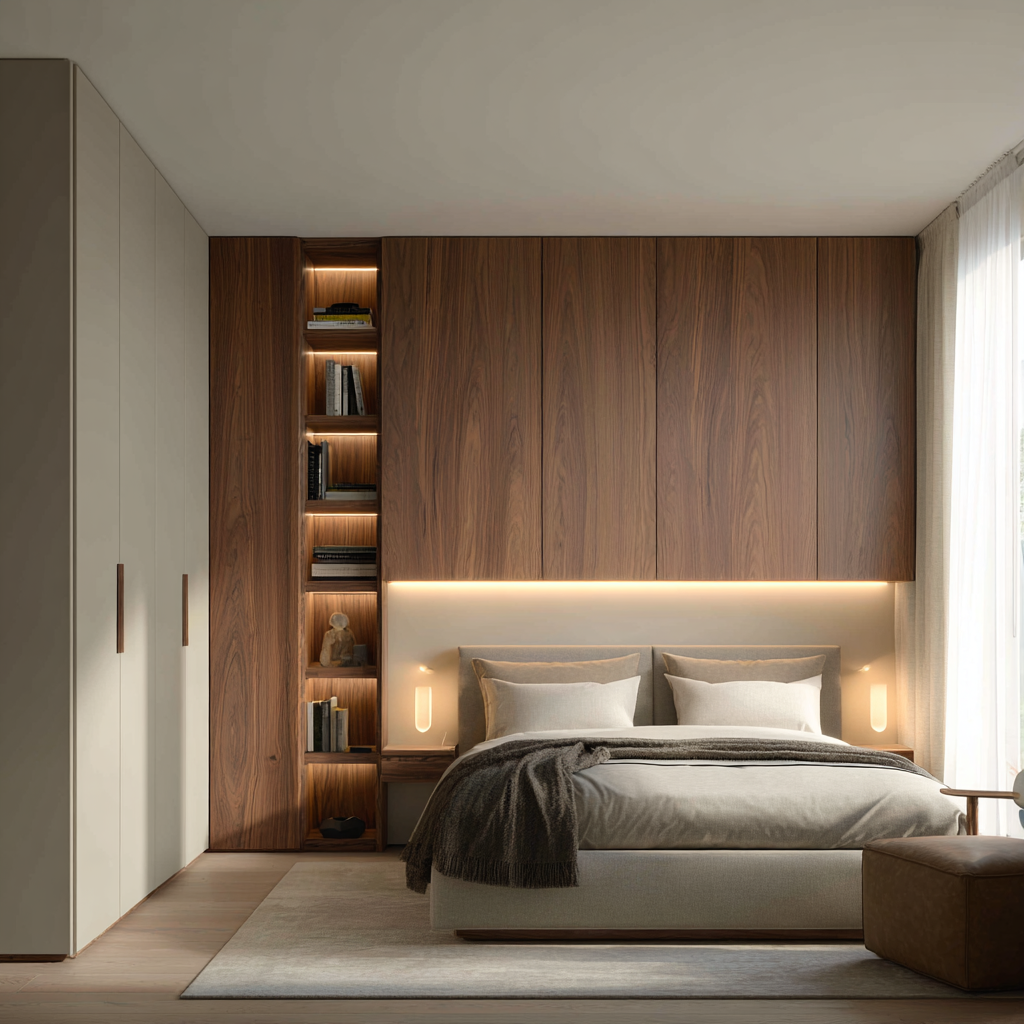
There is a particular frustration that comes with a beautiful home that has one awkward bedroom. Perhaps it is a guest suite in a Kensington townhouse, or a secondary room that was never designed with generous proportions in mind.
The instinct, almost universally, is to reach for a freestanding wardrobe, position it against the most convenient wall, and hope for the best. The result is predictable: a room that feels smaller, not larger, and storage that is technically adequate but aesthetically deflating.
In my experience working with clients on bedroom transformations, the over bed wardrobe is the solution that generates the most surprise and satisfaction in equal measure. The concept is straightforward. Storage is built into the wall space directly above the bed, running across the full width of the headboard wall and rising to ceiling height. The bed sits beneath, framed rather than crowded. The room breathes.
Key Takeaway: The most common small bedroom mistake is adding furniture to solve a storage problem. An over bed wardrobe removes that trade-off entirely by using space that would otherwise remain empty.
Consider the geometry of a typical bedroom. Floor space is contested. Wall space flanking the bed is often absorbed by bedside tables, reading lamps, and the inevitable accumulation of items that resist categorisation. But the wall above the bed, from headboard height to ceiling, is almost always left entirely bare.
In a room with standard 2.4 metre ceilings, that represents somewhere between 80 and 120 centimetres of untapped height running the full width of the bed. In rooms with higher ceilings, as is common in period properties, the opportunity is even more significant. An over bed wardrobe captures this space with precision, installing cabinetry that reads as a deliberate architectural feature rather than a storage solution bolted on as an afterthought.
The visual effect is equally important.
When cabinetry runs from wall to wall and floor to ceiling across the bed wall, it creates a sense of order and intentionality that a standalone wardrobe cannot replicate. The room feels designed rather than furnished.
Key Takeaway: The wall above your bed is the most consistently overlooked storage opportunity in residential design, and it is the one that delivers the cleanest aesthetic result when properly addressed.
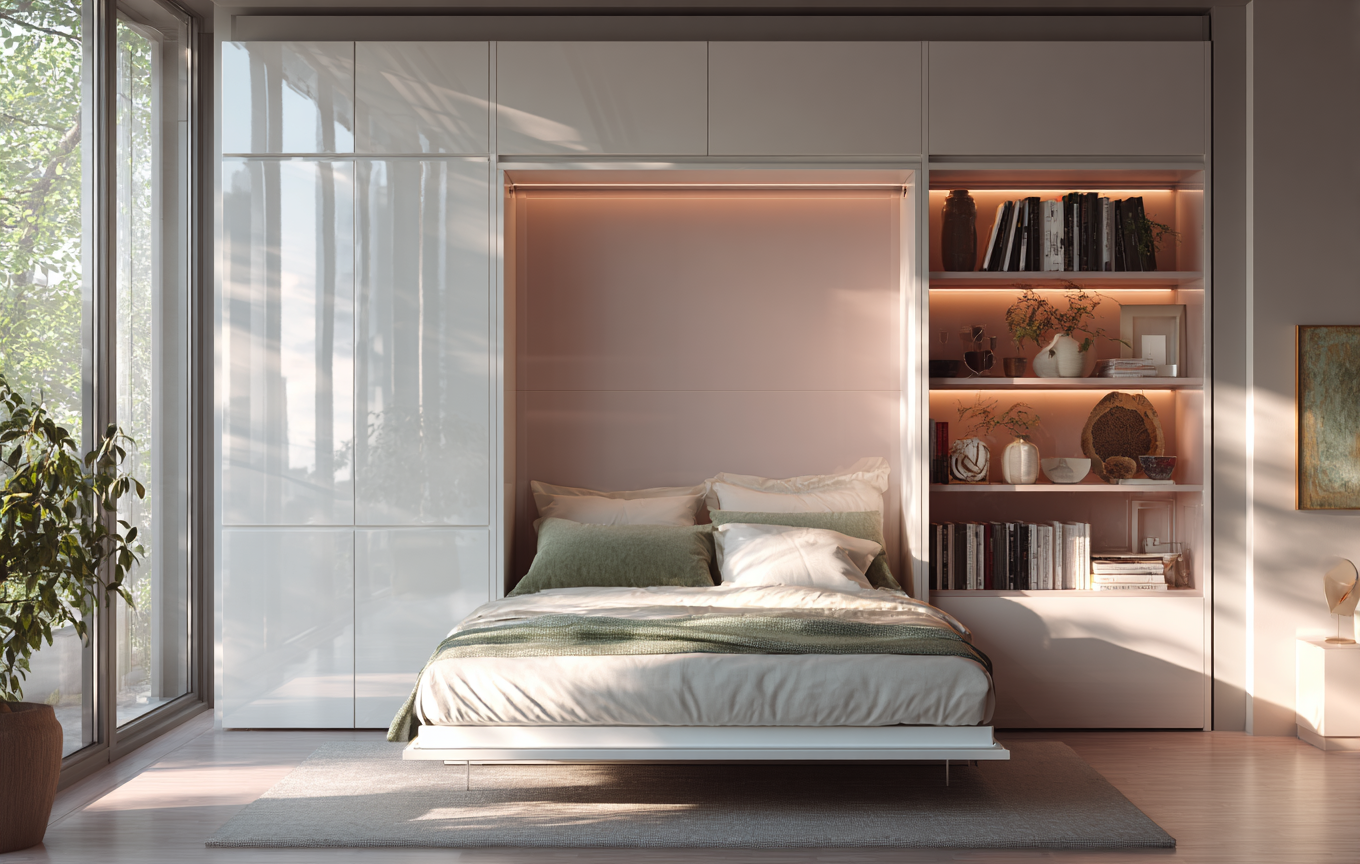
The designs gaining attention this year share several characteristics that distinguish them from earlier iterations of the concept.
Integration with the headboard. The most refined versions treat the bed and the overhead cabinetry as a single piece of furniture. A built-in upholstered headboard transitions seamlessly into the joinery above, creating what feels like a bespoke sleeping alcove. It is the bedroom equivalent of a fitted library, and it carries the same sense of considered permanence.
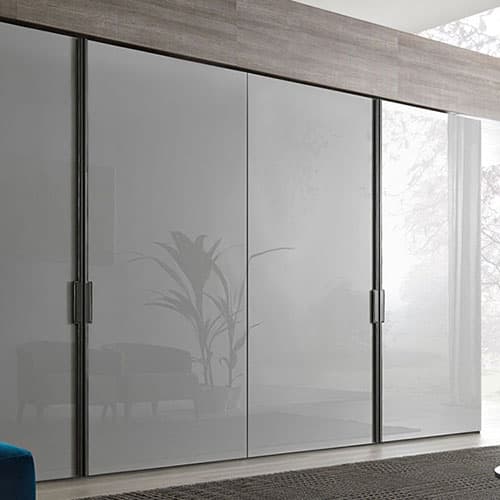
Handleless fronts and flush profiles. The dominant aesthetic in 2026 leans heavily toward cabinetry that recedes rather than announces itself. Push-to-open mechanisms, routed grip channels, or integrated aluminium profiles replace traditional handles, keeping the facade clean and uninterrupted. In lacquered finishes, particularly warm whites and deep charcoals, the effect is quietly spectacular.
Material continuity. The most successful installations carry the same material language throughout the room. Cabinetry that matches the flooring tone, or that picks up the colour of the soft furnishings, creates a cohesion that makes a room feel considerably larger than its dimensions suggest. One project I worked on recently used a pale oak veneer across both the over bed cabinetry and the bedside tables, with the flooring echoing the same tone. The room appeared almost seamless.
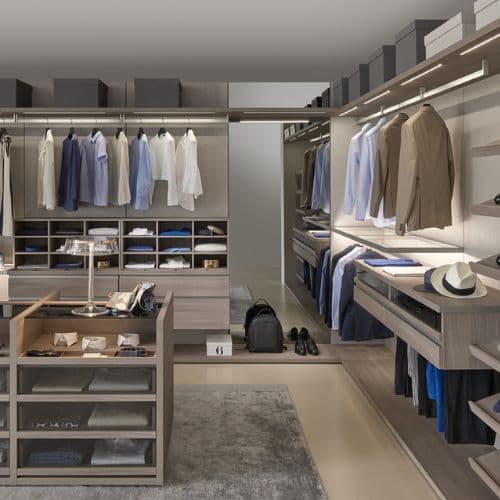
Considered interior organisation. This is where the practical gains are made. Behind those clean facades, the storage is divided thoughtfully: hanging sections for formal pieces, open shelving for folded items or display, and dedicated compartments for accessories. The difference between a wardrobe that works and one that simply exists is invariably in the quality of its internal planning.
Key Takeaway: The design details that define a successful over bed wardrobe in 2026 are integration, restraint, and material coherence. The storage solves the problem; the design ensures it elevates the room.
The two questions clients raise most consistently are access and light.
On access: it is a reasonable concern. Anything stored above head height requires retrieval. The solution is to plan your storage hierarchy deliberately. Items used daily live in the lower sections, accessible from a standing position. Seasonal clothing, spare linen, and archived items occupy the upper reaches. Pull-down rail systems, which are widely available and mechanically simple, can bring hanging rails within reach without any physical effort. For clients who prefer not to use mechanical aids, dedicating the upper section to flat storage, boxes, or items retrieved infrequently is an equally practical approach.
On light: over bed cabinetry does not, contrary to some concerns, make a room feel darker. When designed with recessed LED strips along the underside of the overhead unit, the cabinetry actually adds a layer of warm ambient lighting that a standard wardrobe across the room could never provide. That soft downward glow creates a sense of atmosphere in the evenings that most clients had not anticipated and immediately appreciate.
Key Takeaway: Practical concerns about access and lighting are entirely resolvable at the design stage. The key is to address them before joinery begins, not after.
Even well-intentioned projects fall short when certain fundamentals are overlooked.
Underestimating depth requirements. A hanging section needs a minimum internal depth of around 580 millimetres to accommodate clothing without compression. Shallow cabinetry above the bed may look proportionate but will fail functionally if this is not observed.
Ignoring ceiling services. Before any over bed installation, the position of any ceiling-mounted lighting, ventilation, or smoke detection must be accounted for. Relocating these is straightforward at the planning stage and significantly less so once cabinetry is in place.
Overlooking structural fixings. The wall behind your bed may not be a solid masonry surface. Stud walls, in particular, require careful consideration of fixing points to support cabinetry of any significant weight. A proper survey before briefing a joiner is not an optional step.
Treating it as a single unit rather than a composition. The finest installations consider the over bed wardrobe in relation to every other element in the room: bed dimensions, ceiling height, window placement, and the architecture of the space itself. A design that is calibrated to these specifics will always outperform one that is simply specified by dimension.
Key Takeaway: The details that are easiest to overlook at the brief stage are the ones most likely to compromise the finished result. Depth, fixings, and ceiling services deserve the same attention as the finish and configuration.
The conversation about bespoke versus standard solutions is one that comes up constantly in luxury residential design, and over bed wardrobes are no exception.
Off-the-shelf systems exist and, in certain contexts, perform well. They are predictable in delivery and reasonably straightforward to configure. What they cannot do is respond to the specific dimensions of your room, the particular ceiling height, the exact width of your bed wall, or the material language of your existing interior. For a room that demands precision, and most rooms do, bespoke joinery is not a luxury. It is the correct specification.
A well-briefed maker, working from accurate measurements and a clear design direction, will produce cabinetry that sits as though it was always there. That sense of inevitability, of a room that could not look any other way, is what separates a well-designed bedroom from a merely comfortable one.
Key Takeaway: Bespoke joinery pays for itself in spatial efficiency, visual coherence, and longevity. For a room where proportions matter, it is the only approach that fully resolves the brief.
If you are considering an over bed wardrobe for a bedroom that has never quite worked, the most useful first step is not to measure the wall or choose a finish. It is to think clearly about how the room is actually used, what needs to be stored, and what the room should feel like when you walk into it.
Those answers, combined with an understanding of the architecture you are working with, form the brief that a skilled designer or maker needs to produce something genuinely worthwhile. At FCI, our design consultants work through exactly this process with clients, moving from spatial analysis and storage planning through to material selection and finished specification. The result is a bedroom that functions with the precision of a well-organised workspace and feels like nothing of the sort.
If your bedroom is not delivering on either front, it may simply be that no one has yet looked at the wall above your bed.
Visit Our Showroom
Address & Hours:
FCI London, Rays House, North Circular Road, London, NW10 7XP
Monday - Saturday: 10am - 6pm
Sunday & Bank Holidays: 11am - 5pm
Contact Details:
Phone: +442081531235
Email: [email protected]
What to Bring:
Customer Reviews
Nedelia Martin
"I discovered FCI London almost five years ago and keep returning whenever I need new furniture. Their selection is fantastic, with great options for every room, including my kitchen. The staff and designers were attentive and knowledgeable, special thanks to Andrei, Rohan, and Sanjay for making everything seamless. Excellent quality, stylish designs, and consistently wonderful service. Highly recommend FCI London!"
Carol O’Regan
"Ricardo at FCI offered excellent service, guiding us through selection, ordering, and delivery with real expertise. We bought six dining chairs and three bar stools for our kitchen, and though the wait was long, the quality was outstanding. Everything fits perfectly and looks superb. We’ll definitely return to FCI for future furniture purchases. A truly professional and pleasant experience overall."
Natasha Grossman
"From start to finish, our experience at FCI was fantastic. We were searching for a new kitchen table and dining set, and Aziz offered exceptional care and attention throughout. His guidance helped us find furniture that perfectly complements our home. We’re thrilled with the result, beautiful, functional pieces that will be cherished in our kitchen for many years to come."
We help designers & clients transform mundane spaces into extraordinary ones.


Book a video consultation and we'll advise you on furniture, space planning, colour schemes and much more.
Book A ConsultationBook a visit to our stunning, multi award-winning, 30,000 sqft.
Over 700 brands under 1 roof.
Most Popular on FCI London: Fitted Wardrobes | Luxury Designer Rugs | Luxury Sofas | Luxury Furniture Store | Luxury Interior Designers | Luxury Bedroom Furniture | Luxury Modern Chairs | Luxury Coffee Tables | Luxury Designer Kitchens | Luxury TV Units | Luxury Dining Tables | Luxury Storage Solutions | Luxury Sideboards | Luxury Stools & Bar Stools | Luxury Bespoke Joinery | Luxury Modern Hallway Furniture | Furniture Showroom Appointment | Luxury Lighting | Modern Luxury Outdoor Furniture
Transparency isn’t a policy. It’s a principle.
Have a peek at what our clients really have to say.