
Published Date: Sep 03, 2025 | Last Updated: Jun 30, 2026
Written by: Emma Cyrus, Senior Copy, Content & Editorial Writer
Reviewed by: Monika Popescu, Senior Interior Designer at FCI London
Edited by: Zoona Sikander, Head of Content
Estimated Reading Time: 7 minutes
TLDR: When Google's mysterious Nano Banana image generator appeared on LMArena, the design community wondered whether it truly represented the future of interior visualisation. We put it head-to-head with ChatGPT and Sora using genuine luxury furniture pieces and detailed design briefs, discovering that whilst each tool has its strengths, realistic spatial understanding remains the decisive factor separating useful visualisation tools from those that simply arrange attractive elements without grasping how sophisticated spaces actually function.

Table of Contents
We've tested three leading AI image generators against genuine luxury furniture to answer one question: which produces visualisations worthy of high-end interior design presentations? For professionals working with discerning clients in London and the Home Counties, photorealistic accuracy isn't negotiable. Here's what actually delivers.
As an interior designer who's spent the better part of two decades perfecting the art of spatial composition, I find myself constantly evaluating new tools that promise to revolutionise our workflow. The latest buzz in the design community has been around Google's mysteriously named "Nano Banana" - officially known as Gemini 2.5 Flash Image - and whether it lives up to the considerable excitement.
Google's Nano Banana first surfaced anonymously on LMArena, where it started "blowing every other image generator out of the water" without any official announcement. The model has since been officially revealed as Google's "state-of-the-art image generation and editing model", claiming to offer "multi-image fusion, character consistency, and text-based editing" capabilities that could genuinely transform how we approach design visualisation.
The claims are certainly ambitious. But as any seasoned designer knows, there's often a considerable gap between marketing promises and real-world performance.
Key Takeaway: Google's Gemini 2.5 Flash Image emerged anonymously on LMArena with bold claims about multi-image fusion and character consistency. Marketing promises aside, seasoned designers know that real-world performance tells the proper story.
Naturally, I couldn't resist putting these tools through their paces with a proper design test. I gathered seven luxury furniture pieces - a sofa, coffee table, armchair, sideboard, side tables, floor lamp, and chandelier - and challenged three AI generators to create sophisticated interior compositions.
The competitors? Google's much-lauded Nano Banana, ChatGPT's image generation, and Sora from OpenAI. Each received identical prompts and product images to level the playing field.
For the first test, I provided this detailed brief:
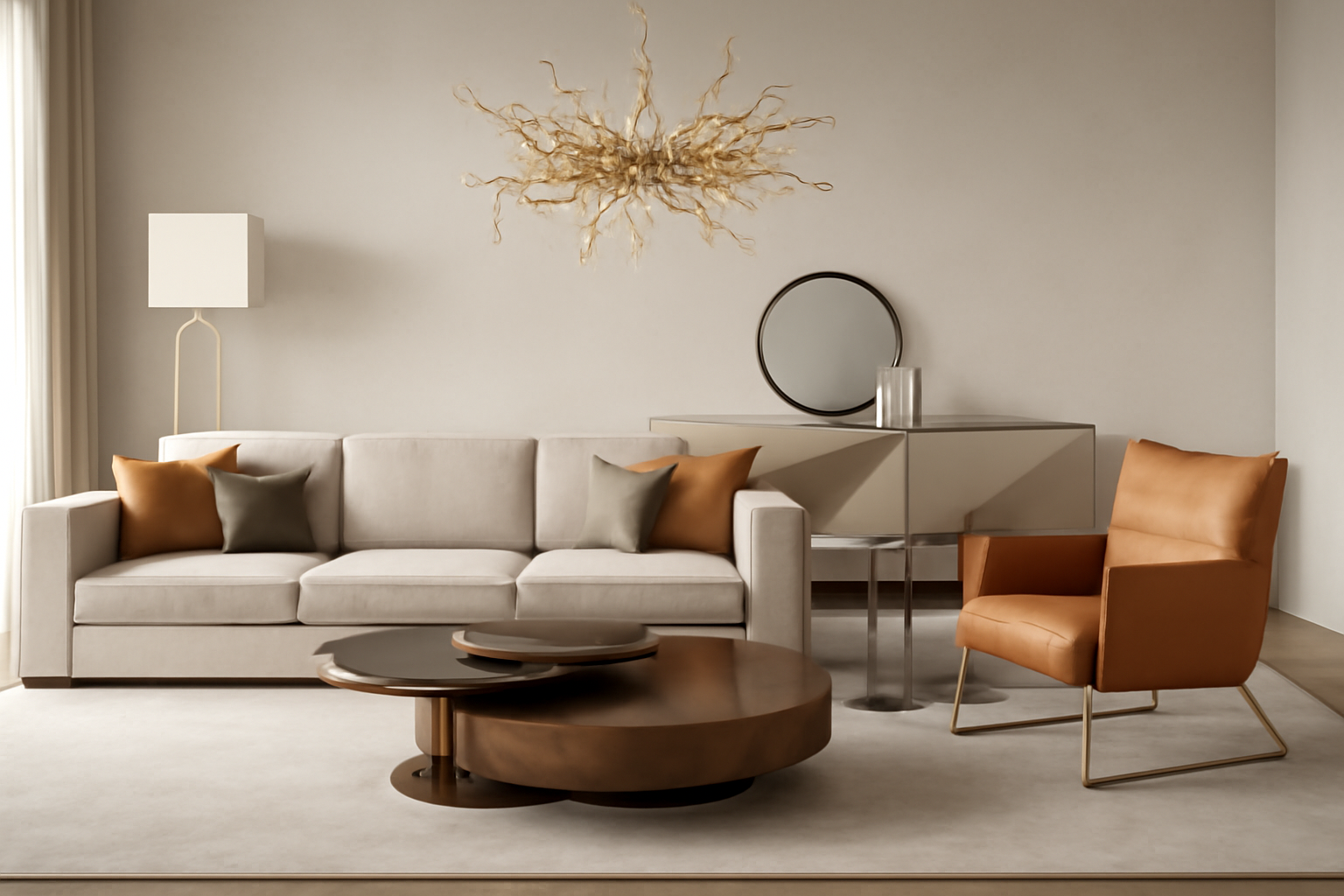
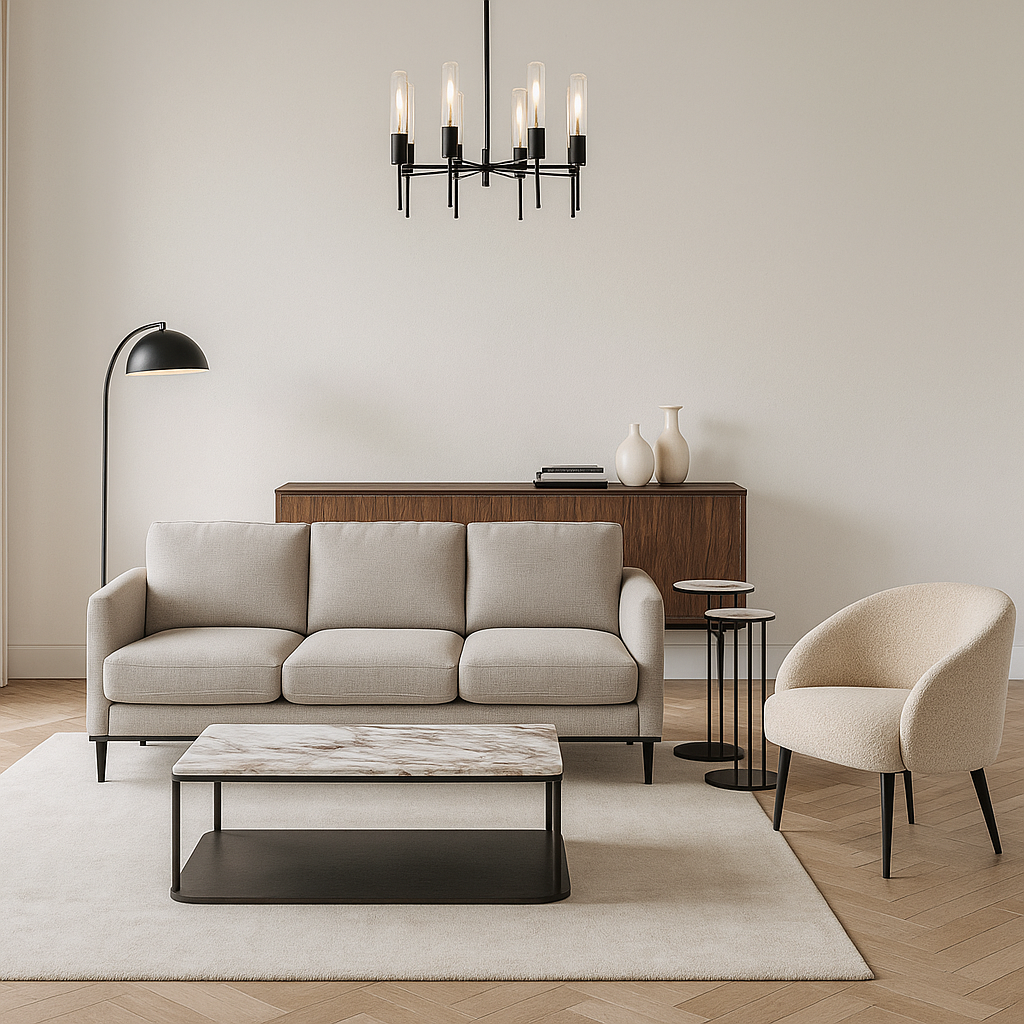
"Create a sophisticated modern living room interior. Use the provided product images exactly as they are: a sofa, coffee table, armchair, sideboard, side tables, a floor lamp, and a chandelier. Arrange them naturally as in a real living room: place the sofa as the central seating, with the coffee table in front and the armchair nearby for balance. Position the sideboard against the back wall, styled minimally. Place the side tables beside the sofa and armchair, and the floor lamp in a corner for warmth. Hang the chandelier overhead as the main light source. Ensure realistic proportions, soft natural daylight, and a cohesive high-end look, styled like a luxury interior magazine photo."
The results were rather telling. Sora delivered the most sophisticated composition - realistic proportions, proper spatial relationships, and that ineffable quality we call "magazine-worthy styling." The lighting felt natural, the furniture placement made practical sense, and the overall aesthetic had the polish one expects from high-end interiors.
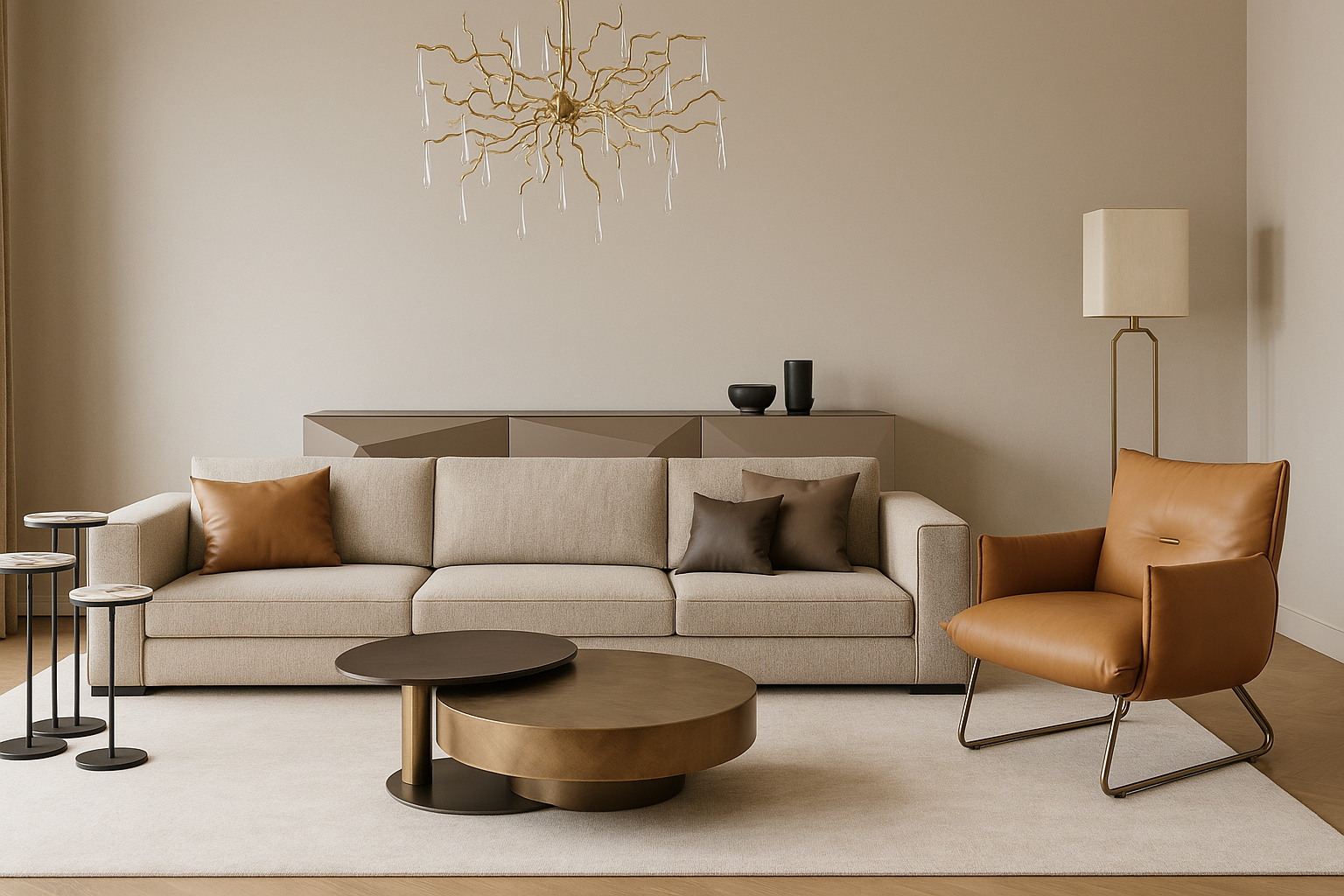
ChatGPT's effort was adequate but uninspiring - decent composition but lacking the refinement and realistic quality that separates amateur arrangements from professional design. The proportions felt slightly off, and the overall result lacked the sophisticated edge required for luxury interiors.
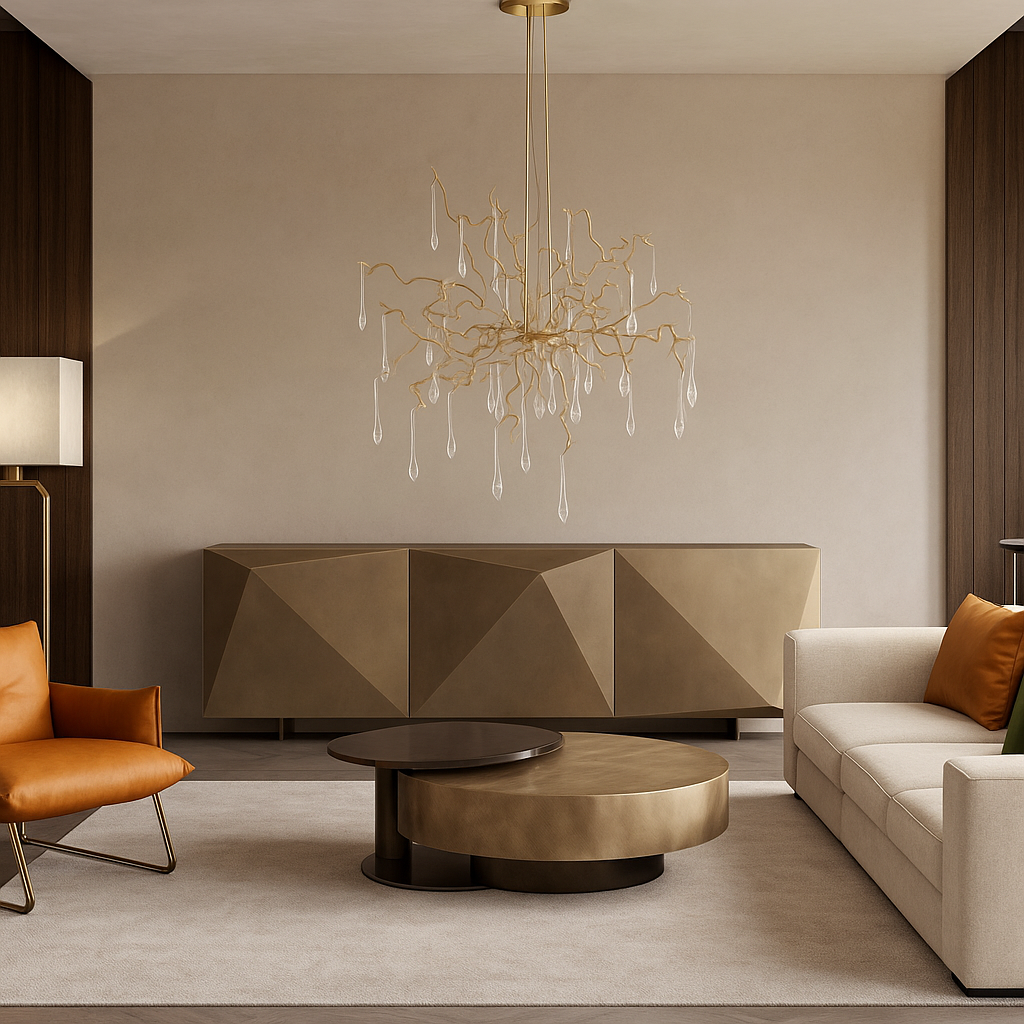
Nano Banana, despite its stellar reputation, took considerable liberties with my brief. Rather than respecting the specific products provided, it seemed to interpret them as mere suggestions, fundamentally altering most pieces. For a tool marketed on its precision, this felt like a significant misstep.
We decided to give Nano Banana another chance - perhaps the prompt got too long/complicated for it. So we tried again with this simple prompt 'Compile all products in the attached image to create a modern living room. Very high end interior design." Below is the result we got - once again, not too impressive. Another limitation of the tool is that so far there is no option to control the aspect ratio, unlike other tools like MidJourney or Sora.
Key Takeaway: Sora delivered magazine-worthy sophistication with realistic proportions and natural lighting, whilst Nano Banana took considerable liberties with the specified products. ChatGPT proved adequate but lacked the refinement essential for luxury interiors.
Determined to give Nano Banana another opportunity, I presented a second challenge focused on a single statement piece - a dining table - with this prompt:
"Create a 3D-rendered image of a luxurious open-plan dining room. The space should be modern and sophisticated, featuring high-end furniture and decor. Place the provided dining table as the centerpiece of the room, surrounded by elegant chairs. The room should have sleek, clean lines with neutral tones like beige, grey, and gold, accented by statement lighting, plush rugs, and stylish decor. The atmosphere should feel spacious and airy, with large windows allowing soft natural light to flood the room. The overall design should evoke a sense of luxury and refined taste."
Once again, Sora proved superior - delivering a realistic, beautifully proportioned space that genuinely captured the essence of luxury open-plan living. The lighting was exquisite, the materials felt authentic, and the overall composition had that coveted "designed rather than arranged" quality.
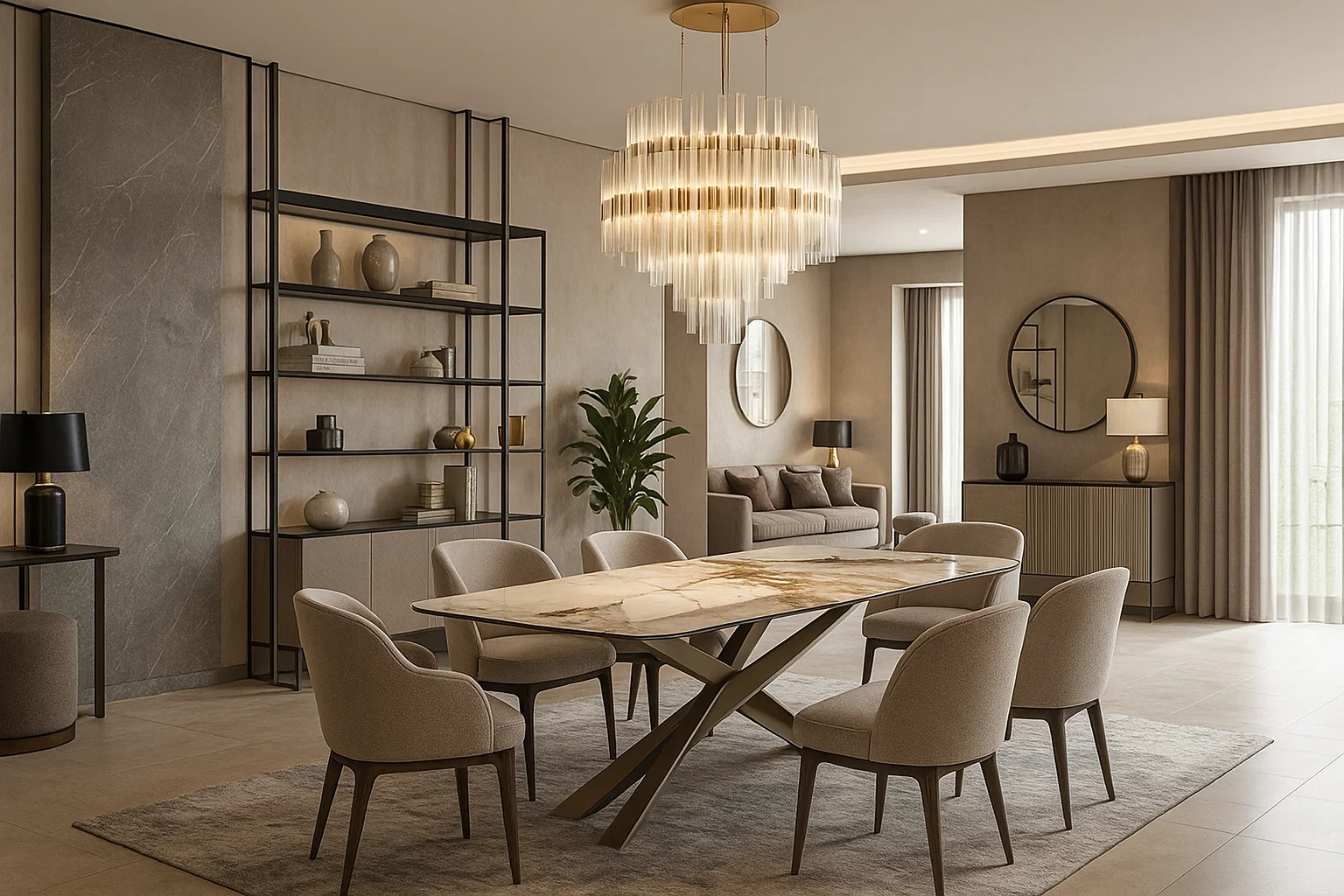
ChatGPT struggled with dimensional accuracy - chairs that looked more like design sketches than finished furniture, and proportions that would make any self-respecting space planner wince. The quality simply wasn't there for professional use.
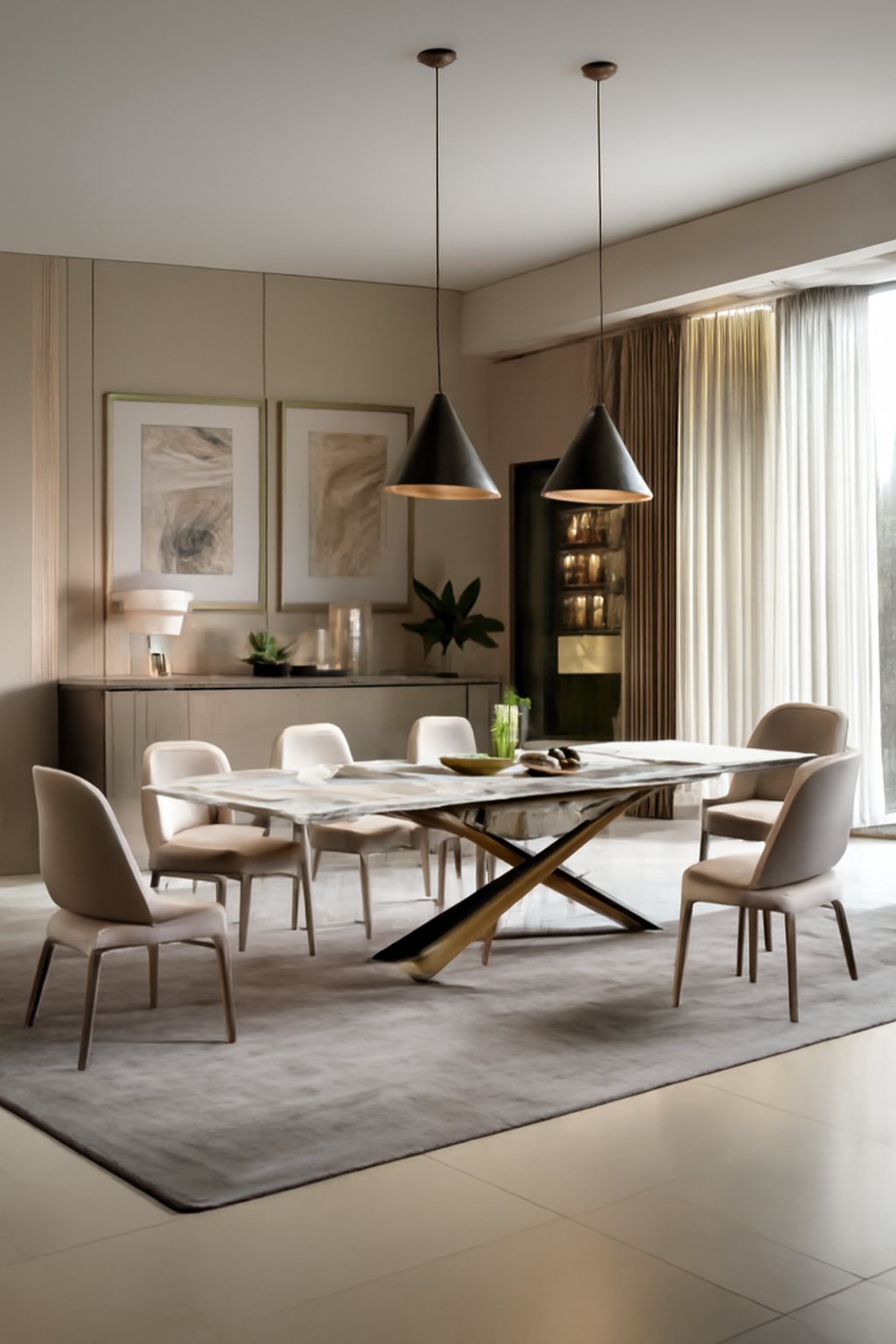
Nano Banana managed a decent attempt but missed crucial brief requirements - the "open-plan" concept seemed lost in translation, resulting in a more enclosed space that fundamentally misunderstood the spatial relationship I'd requested.
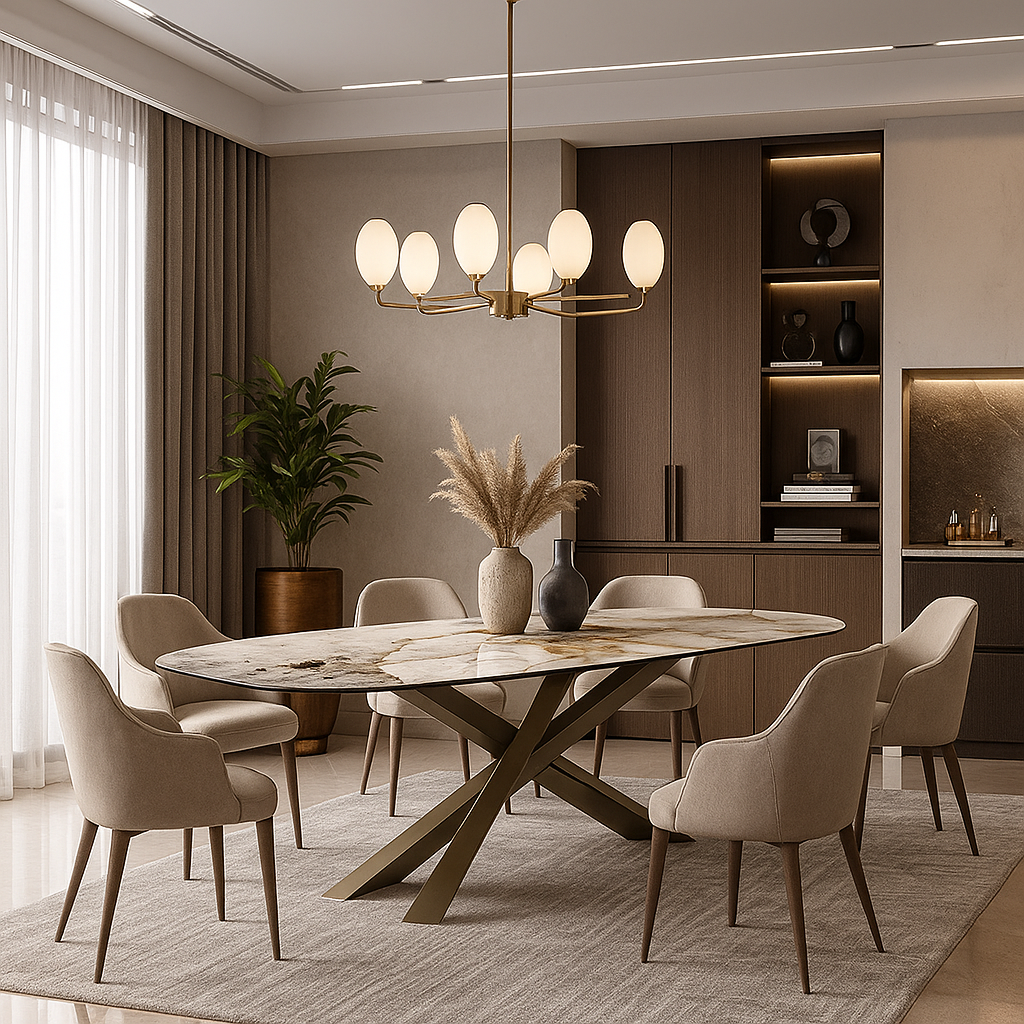
Key Takeaway: Sora again proved superior with exquisite lighting and authentic materials, capturing that coveted designed-rather-than-arranged quality. Nano Banana missed crucial brief requirements, fundamentally misunderstanding the open-plan concept requested.
From a pure design perspective, Sora emerged as the clear winner.
Its ability to understand spatial relationships, maintain realistic proportions, and deliver that polished, magazine-quality aesthetic made it the obvious choice for serious design work. The tool seems to grasp the nuanced differences between merely arranging furniture and actually designing a cohesive space.
However - and this is rather important - this isn't necessarily the end of the story for Nano Banana.
Google's tool offers character consistency and multi-image fusion capabilities that could prove invaluable for other aspects of design work. While it may stumble on precise furniture placement, its strength in maintaining design elements across multiple iterations could make it excellent for mood boards, style development, and client presentations.
Key Takeaway: Sora's understanding of spatial relationships and realistic proportions makes it the clear choice for serious design work. Nano Banana's character consistency capabilities suggest potential for mood boards once Google refines its spatial awareness.
What this testing revealed is that we're still in the early days of AI understanding sophisticated design principles. While these tools can certainly create visually appealing images, the nuanced understanding of how spaces actually function - the way light moves, how furniture relates to human movement, the subtle balance between form and function - remains elusive.
For now, Sora appears to be the most reliable choice when you need realistic, professionally-polished interior visualisations. But keep watching Nano Banana - Google's approach to character consistency and iterative design could evolve into something rather special once they sort out their spatial awareness.
The real question isn't whether AI will replace our design intuition - it's whether these tools can learn to enhance our creative process whilst respecting the fundamental principles that separate good design from mere decoration.
What's your experience with AI design tools? Have you found any that truly understand the difference between arranging furniture and creating a sophisticated interior space? Speaking of sophisticated interior spaces - if you're curious to see how the real thing compares to these digital interpretations, we'd love to welcome you to our London showroom. Because whilst AI might be getting rather clever, there's still nothing quite like experiencing exceptional design in person.
Key Takeaway: These tools create visually appealing images but still lack nuanced understanding of how sophisticated spaces actually function. The question isn't whether AI replaces design intuition, but whether it can enhance creative process whilst respecting fundamental design principles.
Which AI image generator is genuinely best for interior design visualisation?
Based on extensive testing with luxury furniture pieces, Sora currently leads for professional design work. It demonstrates superior understanding of spatial relationships, maintains realistic proportions consistently, and delivers that polished aesthetic essential for client presentations. Whilst Nano Banana shows promise for character consistency and ChatGPT handles basic concepts adequately, only Sora genuinely grasps the nuanced difference between arranging furniture and designing cohesive spaces.
Can AI tools understand complex interior design briefs accurately?
Rather mixed results, honestly. Our testing revealed that detailed briefs sometimes confuse rather than clarify - Nano Banana took considerable liberties with specific product requests, whilst simplified prompts didn't necessarily improve outcomes. Sora proved most reliable at interpreting sophisticated requirements, particularly understanding concepts like "open-plan living" or "magazine-worthy styling." The key appears to be finding the sweet spot between detailed direction and allowing the tool room to interpret design principles naturally.
Should interior designers worry about AI replacing their expertise?
Not particularly. Whilst these tools create visually appealing images, they still lack the nuanced understanding of how spaces actually function - the way light moves through rooms, how furniture relates to human movement patterns, the subtle balance between form and function. What AI offers is enhancement rather than replacement, particularly for client visualisations and concept development. The designers who thrive will be those who master these tools whilst maintaining the fundamental design principles that separate good spaces from mere decoration.
How does Nano Banana compare to other AI tools for furniture visualisation?
Google's Nano Banana demonstrates impressive character consistency and multi-image fusion capabilities, making it potentially excellent for mood boards and style development. However, it struggles with precise furniture placement and spatial relationships compared to Sora. The tool's current limitation in aspect ratio control also proves frustrating. Whilst it may not excel at realistic room layouts presently, its iterative design capabilities suggest considerable potential once Google refines its spatial awareness.
Address & Hours:
FCI London, Rays House, North Circular Road, London, NW10 7XP
Monday - Saturday: 10am - 6pm
Sunday & Bank Holidays: 11am - 5pm
Contact Details:
Phone: +442081531235
Email: [email protected]
What to Bring:
Whilst AI visualisation tools show genuine promise, the gap between attractive arrangement and sophisticated spatial design remains considerable. Sora currently leads for professional work, though Nano Banana's iterative capabilities suggest intriguing possibilities once refined. The real value lies not in replacement but enhancement, with the most successful designers being those who master these tools whilst maintaining the fundamental principles that separate exceptional spaces from mere decoration.
"I had an excellent experience with FCI. Their showroom offers an impressive selection of high-quality furniture and top international brands. The team provided outstanding service - knowledgeable, attentive, and genuinely helpful."
- Zlata Rybchenko
"I discovered FCI London almost 5 years ago, and I keep going back to them when I need to buy furniture. The team is fantastic - both the sales staff and the in-house designer were knowledgeable, helpful, and really took the time to understand my style."
- Nedelia Martin
"FCI, and Kasia in particular, provide an excellent service to design professionals and the trade. Their expertise, helpful 'can-do' approach, assistance and attention to detail are second-to-none."
- Mike Jenkins
We help designers & clients transform mundane spaces into extraordinary ones.

Book a video consultation and we'll advise you on furniture, space planning, colour schemes and much more.
Book A ConsultationBook a visit to our stunning, multi award-winning, 30,000 sqft.
Over 700 brands under 1 roof.
Most Popular on FCI London: Fitted Wardrobes | Luxury Designer Rugs | Luxury Sofas | Luxury Furniture Store | Luxury Interior Designers | Luxury Bedroom Furniture | Luxury Modern Chairs | Luxury Coffee Tables | Luxury Designer Kitchens | Luxury TV Units | Luxury Dining Tables | Luxury Storage Solutions | Luxury Sideboards | Luxury Stools & Bar Stools | Luxury Bespoke Joinery | Luxury Modern Hallway Furniture | Furniture Showroom Appointment | Luxury Lighting | Modern Luxury Outdoor Furniture
Transparency isn’t a policy. It’s a principle.
Have a peek at what our clients really have to say.