
Published Date: Jun 27, 2026
Written by: Emma Cyrus, Senior Copy, Content & Editorial Writer
Reviewed by: Saran Razzaq, Senior Interior Designer at FCI London
Edited by: Zoona Sikander, Head of Content
Estimated Reading Time: 9 minutes
TL;DR: Modern fitted wardrobes in 2026 are defined by five principles that most suppliers still overlook: genuine architectural integration, internal flexibility that adapts as life changes, honest material choices over surface-level trends, the 70/30 hanging-to-folded ratio, and thoughtful lighting and technology. Quality takes 12 to 16 weeks and costs between £6,000 and £22,000 depending on specification. The makers worth commissioning are the ones who ask difficult questions before proposing anything at all.
Table of Contents
If you're undertaking a bedroom renovation in London or the Home Counties and refuse to settle for storage that merely functions rather than genuinely enhances the room, this expert guide is for you. Property developers specifying built-in storage for high-end developments will also find the cost frameworks and quality benchmarks invaluable. We've analysed the five principles that define the best modern fitted wardrobes - solutions that deliver the architectural permanence your project truly deserves.
We've specified fitted wardrobes for over three hundred bedrooms in the past decade. The difference between a wardrobe that quietly enhances a room and one that announces its presence (and not in a good way) comes down to five principles that most suppliers still don't understand.
At FCI London, we've watched the market shift from ornate freestanding armoires to sleek built-in systems that treat storage as architecture, not furniture. The best modern fitted wardrobes disappear into the room while working harder than anything their Victorian predecessors could manage.
This guide serves homeowners undertaking bedroom renovations who refuse to compromise on quality or longevity. Property developers specifying built-in storage for high-end developments will find the cost breakdowns useful. Interior designers sourcing bespoke solutions for clients who expect furniture to last decades will appreciate the technical standards we outline.
If you're looking for the cheapest possible solution, this isn't your guide.
Key Takeaway: This guide is written for those treating bedroom storage as a long-term investment rather than a short-term fix. If permanence, quality, and adaptability matter to you, read on.
Quality fitted wardrobes take 12 to 16 weeks from final design approval to installation. Anything promised in under eight weeks should raise questions about whether the work is genuinely bespoke.
The most common spending mistake? Overspending on external finishes while accepting cheap hinges, drawer runners, and internal fittings. A £6,000 wardrobe with £2 hinges will annoy you twice daily for years.
The biggest regret we hear? Choosing a system that can't adapt when storage needs change. Your wardrobe requirements at 35 differ from those at 55. The best systems accommodate that reality.
Key Takeaway: Lead time is a quality signal in itself. Use it as a filter - and always scrutinise the hardware specification as carefully as the finish samples.
Modern fitted wardrobes don't sit against walls. They become the wall.
Flush door faces align perfectly with surrounding plasterwork. Shadow gaps (typically 10mm) create clean separation between joinery and ceiling or floor without visible trim. Coplanar doors sit in the same plane as the carcass face, eliminating the stepped look of overlay doors.
Handleless designs dominate modern specifications. Push-to-open mechanisms, integrated finger pulls routed into door edges, or continuous aluminum profiles deliver the clean lines that characterize contemporary British interiors. When we specify modern fitted wardrobes around bed configurations, this integration becomes critical because the joinery frames the sleeping area.
Ceiling-height installation creates architectural presence and eliminates dust-gathering gaps. Properly detailed plinths that match skirting profiles make built-in wardrobes look like original architecture, not added furniture.
Key Takeaway: The telling detail is in the gap - or rather, the absence of one. When joinery meets ceiling and wall without visible trim or capping, you're looking at a maker who understands what architectural integration actually means.
A beautiful wardrobe that doesn't work for your actual clothes is expensive sculpture.
The best systems feature adjustable shelving on tool-free clips, modular drawer inserts that reconfigure without carpentry, and hanging rails that move vertically to accommodate different garment lengths. We specify drawer systems where individual dividers slide and lock into any position.
Quality modern fitted wardrobes include pull-out trouser racks, tilt-out laundry bins, and jewelry drawers as modular components you can add or remove as needs change. The carcass should be a flexible framework, not a fixed set of assumptions.
Soft-close mechanisms on every door and drawer aren't luxury features in 2026. They're baseline expectations. Blum, Hettich, or Grass hardware indicates serious quality. Unbranded mechanisms suggest cost-cutting that will haunt you.
Key Takeaway: Ask any prospective maker to show you what changes after installation without calling a carpenter. If the answer is very little, that's rather telling.
Oak and walnut veneered over quality plywood cores will outlast and outperform wrapped MDF every time.
Modern oak fitted wardrobes bring warmth to contemporary schemes without traditional fussiness. The grain provides visual interest that plain painted surfaces lack. Modern white fitted wardrobes work beautifully in smaller bedrooms, but specify painted tulipwood or birch ply, not foil-wrapped chipboard that chips at the first impact.
Modern grey fitted wardrobes suit urban contemporary interiors, but the quality difference between spray-finished hardwood and vinyl wrap becomes obvious within months. Real wood accepts touch-ups and repairs. Wrapped surfaces don't.
Sustainable sourcing matters to 2026 buyers. FSC-certified timber, formaldehyde-free adhesives, and water-based finishes aren't optional extras. They're standard practice among makers who plan to be in business in ten years.
Key Takeaway: Run a fingertip along any door edge the maker shows you. Veneer on quality ply feels solid and consistent. Foil wrap on chipboard gives itself away immediately - and will continue to do so at every corner and impact point for years to come.
What is the 70/30 rule for wardrobe? It's the ratio of hanging space to folded storage that actually works in British bedrooms.
Seventy percent of your wardrobe should accommodate hanging garments (shirts, dresses, trousers, jackets). Thirty percent handles folded items (knitwear, t-shirts, accessories). This ratio reflects how most people actually dress and what garments last longest when properly stored.
Most standard wardrobes get this backwards, providing excessive shelving and inadequate hanging rails. When we design modern bedroom fitted wardrobes, we start with hanging requirements and build folded storage around them.
Double-height hanging (short items above and below) maximizes space efficiency. Full-height hanging for dresses and coats should occupy roughly one-third of the total width.
Key Takeaway: Before agreeing to any internal layout, do a quick audit of your existing wardrobe. Count hanging items versus folded. The result is usually rather clarifying - and almost always confirms the 70/30 principle.
Motion-sensor LED strips that illuminate when doors open aren't luxury anymore. They're practical necessities in walk-in wardrobes and deep cupboards where overhead room lighting never reaches properly.
Integrated charging stations for phones and tablets inside wardrobes keep bedrooms clutter-free. Discreet cable management channels prevent the tangled mess that ruins clean interiors.
Humidity control matters more than most buyers realize. Cedar lining or humidity-sensing ventilation protects natural fibers and leather in climates where British homes swing between damp winters and dry summers.
Key Takeaway: Lighting is where many otherwise excellent wardrobes disappoint. Specify it in the original brief - retrofitting LED strips to finished joinery is possible, but it's rarely as neat as building it in from the start.
How much on average does a fitted wardrobe cost? Expect to invest between £1,200 and £12,000 depending on size, specification, and maker.
Budget tier (£1,200 to £2,500) typically means standard carcasses adapted to your measurements, MDF construction, basic hardware, and limited internal flexibility. These work for guest bedrooms or short-term solutions.
Mid-range (£3,000 to £6,000) represents the sweet spot for quality. You'll get genuine customization, quality veneers or paint finishes, branded soft-close hardware, and modular internal systems. Most of our clients find this range delivers excellent value for bedrooms they'll use for a decade or more.
Premium bespoke (£6,000+) brings hand-finished joinery, exotic timbers, fully custom internal configurations, and lifetime structural guarantees. For primary suites in high-value properties, this investment makes sense.
Installation typically adds 15 to 20 percent to material costs. Site surveys, design consultations, and project management should be included, not charged separately.
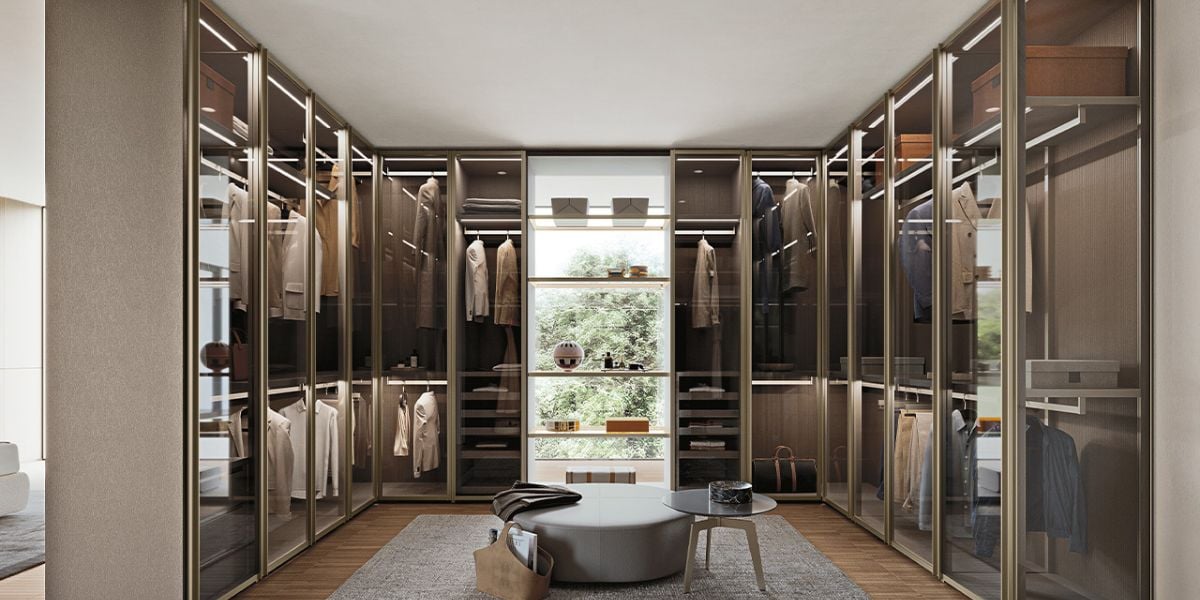
Key Takeaway: The mid-range tier is where most of our clients land - and where the value-to-quality ratio is genuinely strongest. The budget tier is defensible for secondary bedrooms; the premium tier earns its cost in primary suites and high-value properties where storage is a selling point.
What are the latest trends in wardrobe design? Handleless minimalism dominates, but with more warmth than the stark white boxes of the previous decade.
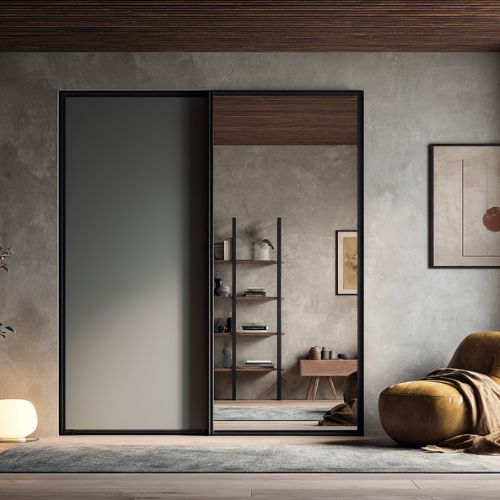
Modern grey fitted wardrobes in mid-tones (not cold blue-greys) suit contemporary schemes beautifully. They provide neutral backdrop without the clinical feel of pure white. Pair with brass or bronze internal fittings for subtle luxury.
Modern white fitted wardrobes still work for space-challenged bedrooms where light reflection matters. Specify warm whites (not brilliant white) to avoid the sterile look. A modern white double wardrobe with drawers serves guest bedrooms perfectly when internal flexibility isn't critical.
How to make fitted wardrobes look more modern? Remove handles, extend to ceiling height, align door faces flush with walls, and integrate lighting. Traditional wardrobes become contemporary through proportion and detail, not just finish color.
Key Takeaway: The warmth shift is real and worth following. Cold white and blue-grey have had their moment. Mid-tone naturals - warm oak, greige, soft white - photograph well, age gracefully, and suit the British light far more honestly.
Makers who won't show you hinge specifications are hiding quality shortcuts. Insist on seeing the actual hardware, not just finish samples.
Quotes without site surveys indicate template pricing, not genuine customization. Proper makers need to see the space, check walls for plumb, and understand how you'll use the wardrobe.
Suspiciously short lead times (under eight weeks) suggest the work isn't truly bespoke. Quality joinery takes time.
Warranties under five years signal a maker who doesn't expect their work to last. Ten-year guarantees on carcasses and lifetime guarantees on joinery indicate proper confidence.
Key Takeaway: A maker worth commissioning welcomes scrutiny. If asking to see hinge specifications or a site survey process is met with hesitation, take that as rather useful information about how the rest of the project will go.
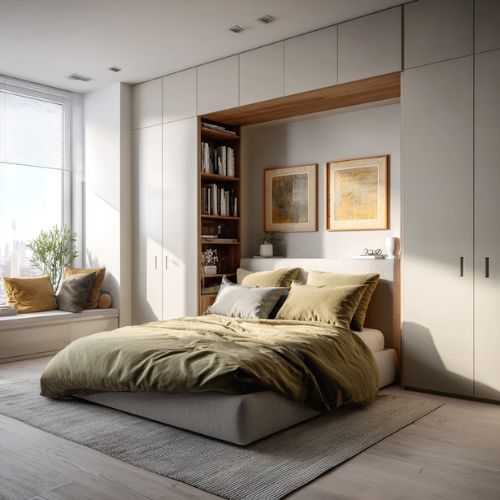
For compact bedrooms, modern fitted wardrobes around bed maximise space that freestanding furniture wastes. Floor-to-ceiling units flanking the bed create architectural symmetry while providing substantial storage.
Guest bedrooms benefit from a modern white double wardrobe with drawers. Simple, clean, and accommodating for visitors with varying storage needs.
Primary suites deserve floor-to-ceiling oak systems with full internal flexibility. This is where you dress daily. The investment pays back in quality of life.
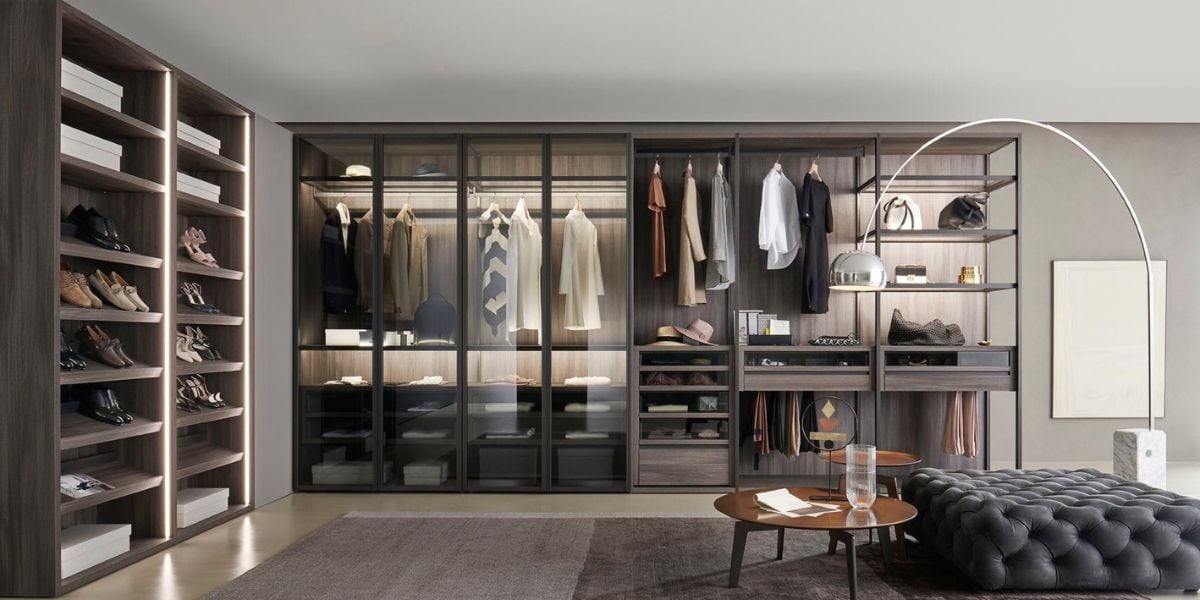
Key Takeaway: Match specification to usage frequency. A guest bedroom wardrobe that looks good and functions adequately is perfectly sensible. A primary suite wardrobe that merely looks good is a daily frustration - and rather a waste of what is typically the most used piece of joinery in the house.
If you're renovating a period property, choose oak or walnut with traditional proportions executed in modern silhouettes. The warmth suits older architecture while clean lines keep the look contemporary.
If you're furnishing a new build, opt for handleless grey or white systems with maximum internal flexibility. Modern construction suits modern joinery without stylistic conflict.
If budget is tight, invest in quality carcasses and branded hardware first. Upgrade internal accessories (pull-out racks, specialized drawers) later when finances allow. The bones matter most.
The wardrobes you choose will frame your morning routine for decades. Specify them as carefully as you would kitchen joinery, because they're equally permanent and equally important to daily life. Most suppliers will happily sell you mediocre solutions. The makers worth finding are the ones who ask difficult questions about how you actually live before they propose anything at all.
Key Takeaway: The decision framework maps neatly to the architecture you're working within. Period properties reward warmth and grain; new builds absorb handleless minimalism effortlessly. When in doubt, start with the bones - carcass and hardware quality - and build from there.
Q. What is the 70/30 rule for wardrobe?
The 70/30 rule recommends 70 percent hanging space and 30 percent folded storage. This ratio reflects how most people actually use wardrobes and what keeps garments in best condition. Hanging prevents creasing in shirts, dresses, and tailored items. Folded storage suits knitwear and casual pieces.
Q. How much on average does a fitted wardrobe cost?
Quality fitted wardrobes in the UK cost between £3,000 and £6,000 for a standard double bedroom. Budget options start around £1,200 but sacrifice material quality and internal flexibility. Premium bespoke systems exceed £7,000 and include hand-finished joinery and lifetime guarantees.
Q. What are the latest trends in wardrobe design?
Handleless doors, ceiling-height installation, integrated LED lighting, and modular internal systems define 2026 wardrobe design. Material trends favour natural oak and walnut veneers over stark white finishes. Sustainability certifications and formaldehyde-free construction are now expected, not optional.
Q. How to make fitted wardrobes look more modern?
Remove handles and install push-to-open mechanisms. Extend wardrobes to ceiling height rather than stopping at standard furniture dimensions. Align door faces flush with surrounding walls using shadow gaps. Integrate LED lighting inside cupboards. Choose contemporary proportions - wider doors, fewer divisions - over traditional panelled styles.
Q. Do modern fitted wardrobes add property value?
Quality fitted wardrobes add measurable value in bedrooms where storage is otherwise limited. Estate agents report that well-designed built-in storage influences buyer decisions, particularly in period properties where closet space is minimal. Poor-quality fitted wardrobes can detract from value if they look dated or restrict layout flexibility.
Visit Our Showroom
Address & Hours:
FCI London, Rays House, North Circular Road, London, NW10 7XP
Monday - Saturday: 10am - 6pm
Sunday & Bank Holidays: 11am - 5pm
Contact Details:
Phone: +442081531235
Email: [email protected]
What to Bring:
Modern fitted wardrobes done well are rather extraordinary things - permanent, adaptable, and quietly transformative. The five rules outlined here separate the makers worth commissioning from the ones who'll deliver a box that looks adequate on day one and disappoints for the decade that follows. If you're ready to specify storage that genuinely earns its place in the room, visit us at FCI London or get in touch - we're genuinely happy to ask the difficult questions first.
Customer Reviews
Linda Nobilio (Customer)
"We had inbuilt furniture done in three bedrooms by FCI London and honestly, we couldn't be happier with the results. The quality of their work is just next level. The furniture is solid, beautifully made."
Nedelia Martin (Customer)
"I discovered FCI London almost 5 years ago and I keep going back to them when I need to buy furniture. The team is fantastic - both the sales staff and the in-house designer were knowledgeable, helpful, and really took the time to understand my style."
Chava Kahn (Customer)
"Service was personalised and excellent. Sanjay saw us through the process from start to end ensuring that we were happy with our choices. The delivery guys were amazing and went the extra mile."
We help designers & clients transform mundane spaces into extraordinary ones.


Book a video consultation and we'll advise you on furniture, space planning, colour schemes and much more.
Book A ConsultationBook a visit to our stunning, multi award-winning, 30,000 sqft.
Over 700 brands under 1 roof.
Most Popular on FCI London: Fitted Wardrobes | Luxury Designer Rugs | Luxury Sofas | Luxury Furniture Store | Luxury Interior Designers | Luxury Bedroom Furniture | Luxury Modern Chairs | Luxury Coffee Tables | Luxury Designer Kitchens | Luxury TV Units | Luxury Dining Tables | Luxury Storage Solutions | Luxury Sideboards | Luxury Stools & Bar Stools | Luxury Bespoke Joinery | Luxury Modern Hallway Furniture | Furniture Showroom Appointment | Luxury Lighting | Modern Luxury Outdoor Furniture
Transparency isn’t a policy. It’s a principle.
Have a peek at what our clients really have to say.