
Published Date: Jan 02, 2026 | Last Updated: Jun 30, 2026
Written by: Emma Cyrus, Senior Copy, Content & Editorial Writer
Reviewed by: Andrei Lee, Senior Interior Designer at FCI London
Edited by: Zoona Sikander, Head of Content
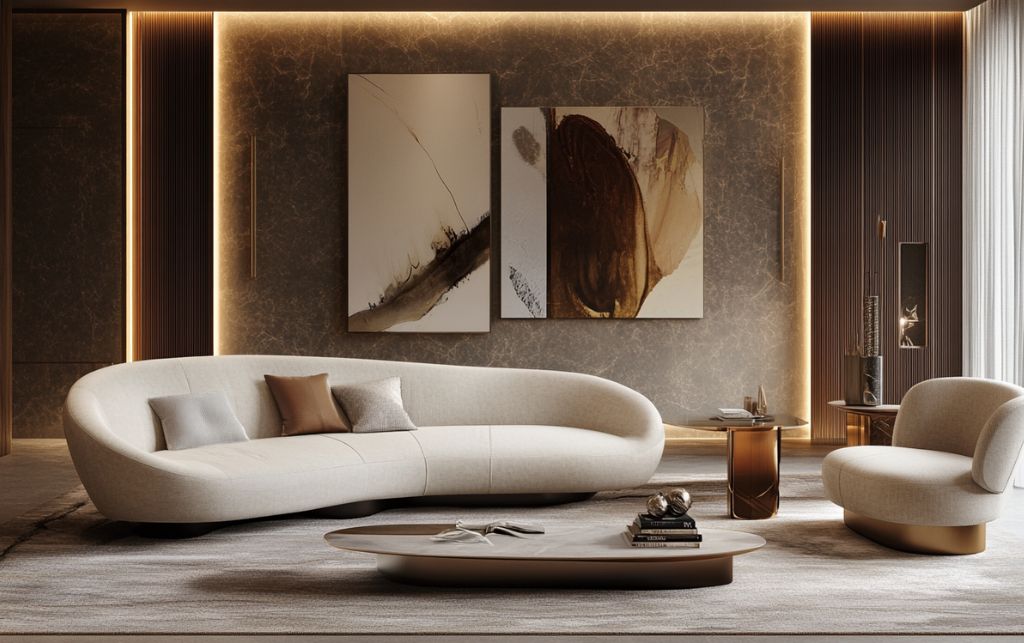
Luxury interiors are not about excess, but about intention and refinement. From curated furnishings to ambient lighting, every detail in luxury interior design is tailored for timeless appeal. As we navigate 2025, the most compelling living room interior design ideas centre on creating spaces that adapt to our evolving lifestyles whilst maintaining the timeless elegance that defines truly exceptional homes.
Having worked with discerning clients across London and beyond, I've witnessed how the right approach to living room spaces' interior design can fundamentally alter how you experience your home. The difference between a room that merely functions and one that truly transforms your daily life often comes down to understanding a few key principles that most overlook.
Table of Contents
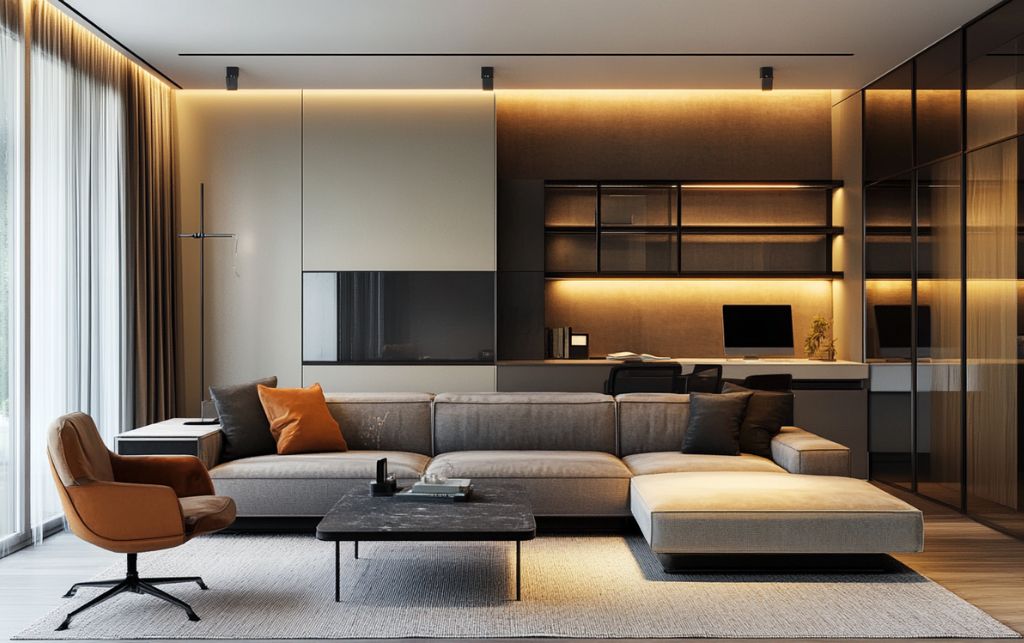
Before considering any interior design ideas for living room spaces, we must first understand what this room actually needs to accomplish. The most successful transformations begin with honest assessment rather than aesthetic impulse.
Your living room likely serves multiple functions throughout the day - morning coffee contemplation, afternoon work calls, evening entertainment, and perhaps late-night reading. Each of these activities requires different lighting, seating arrangements, and spatial considerations. The modern living room interior design approach acknowledges this complexity rather than forcing a single aesthetic vision.
Consider how you actually use the space versus how you imagine using it. Many clients initially request formal seating arrangements that look magnificent but prove impractical for their lifestyle. The most transformative simple living room interior design solutions often involve rethinking the fundamental layout to support real-world usage patterns.
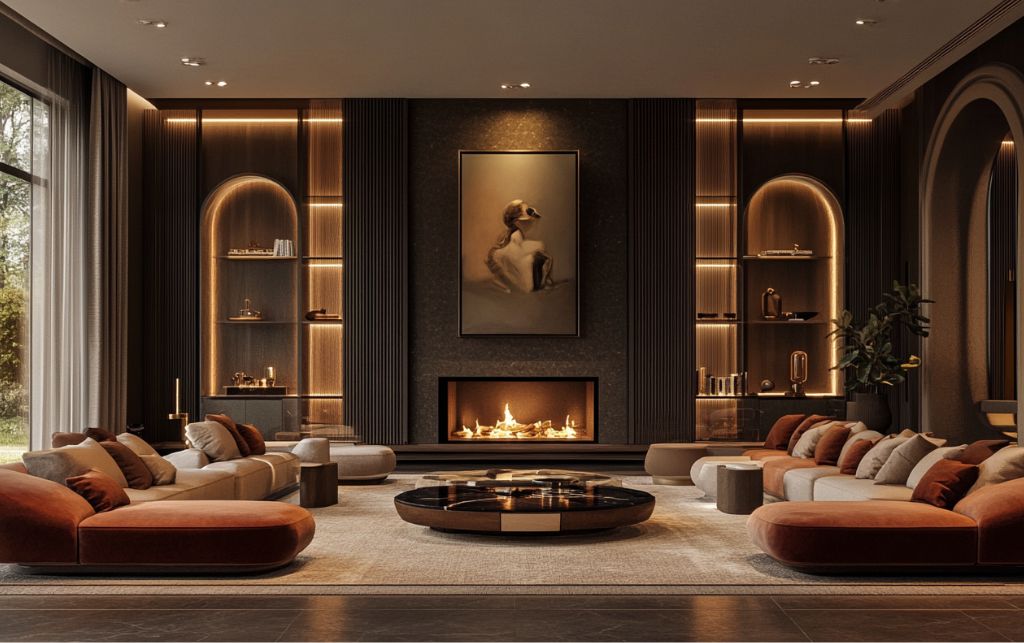
The most impactful living room interior design ideas revolve around establishing clear spatial hierarchy. This means understanding which areas of your room should command attention and which should recede into elegant supporting roles.
Start by identifying your room's natural focal point - perhaps a fireplace, significant artwork, or architectural feature. Everything else should either complement or deliberately contrast with this anchor point. In a recent Chelsea townhouse project, we discovered that the client's prized piano, positioned awkwardly in a corner, became the room's true centre when we arranged seating to acknowledge its presence rather than ignore it.
Consider the sightlines from your primary entrance. The view that greets you as you enter should feel both welcoming and intriguing. This doesn't require expensive interventions - often it's simply about repositioning existing furniture to create more compelling visual relationships.
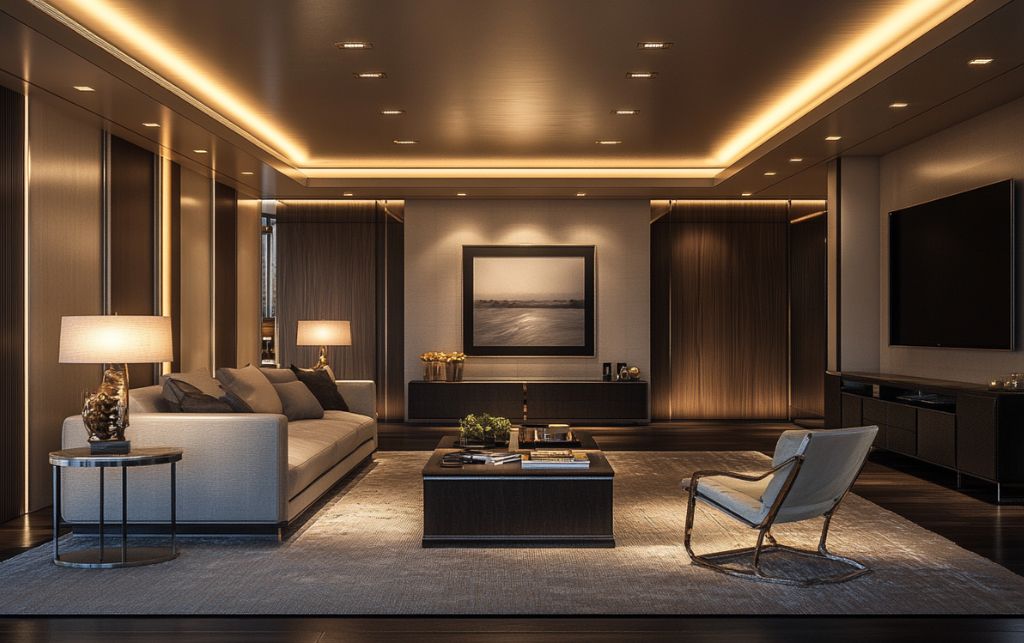
Lighting transforms spaces more dramatically than any other single element, yet it's consistently underestimated in living room interior design. The harsh reality is that beautiful furniture arranged under poor lighting will never achieve its potential.
Layer your lighting thoughtfully. Ambient lighting provides general illumination, task lighting serves specific activities, and accent lighting creates atmosphere. The magic happens in the interplay between these layers. Consider installing dimmer switches on all circuits - this single upgrade allows you to adjust your room's mood from energising morning brightness to intimate evening ambiance.
Pay particular attention to lighting placement. Table lamps positioned at seated eye level create flattering illumination for conversation, whilst uplighting bounced off ceilings provides gentle ambient glow. Avoid the common mistake of relying solely on overhead fixtures, which can create an institutional feel rather than the warm sophistication you're seeking.
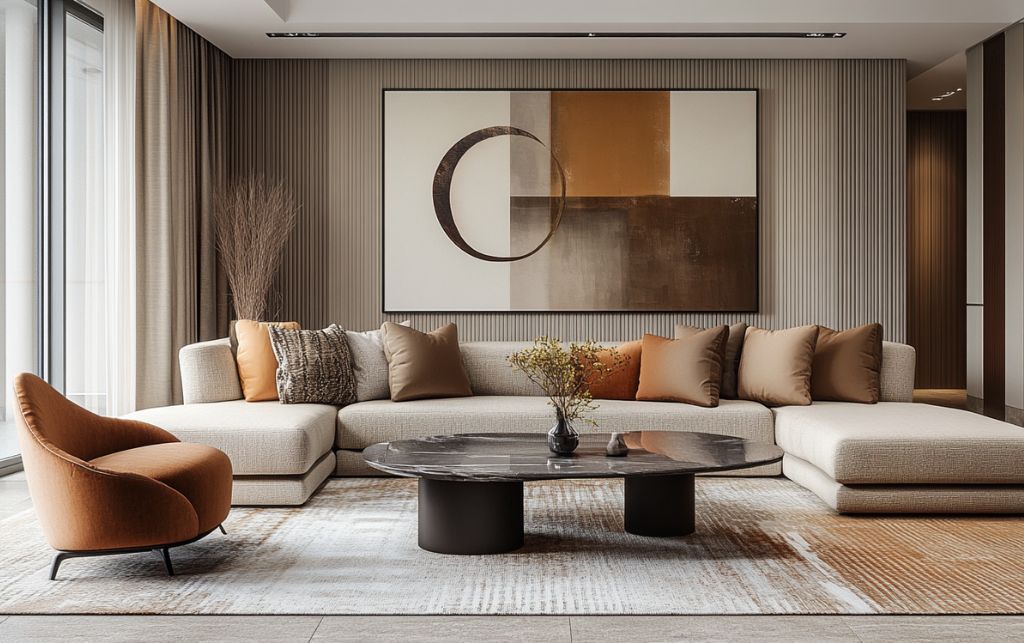
The most successful modern living room interior design approaches colour strategically rather than decoratively. Colours affect our psychological response to spaces in measurable ways, influencing everything from perceived temperature to energy levels.
Warm neutrals - sophisticated greys, refined beiges, and subtle earth tones - provide a sophisticated backdrop that allows other elements to shine. These aren't boring choices; they're strategic ones that create flexibility for seasonal changes and evolving tastes.
Consider the psychological impact of your choices. Cooler tones can make spaces feel larger and more serene, while warmer tones create intimacy and comfort. The key is understanding what emotional response you want your living room to evoke and selecting colours that support rather than undermine this goal.
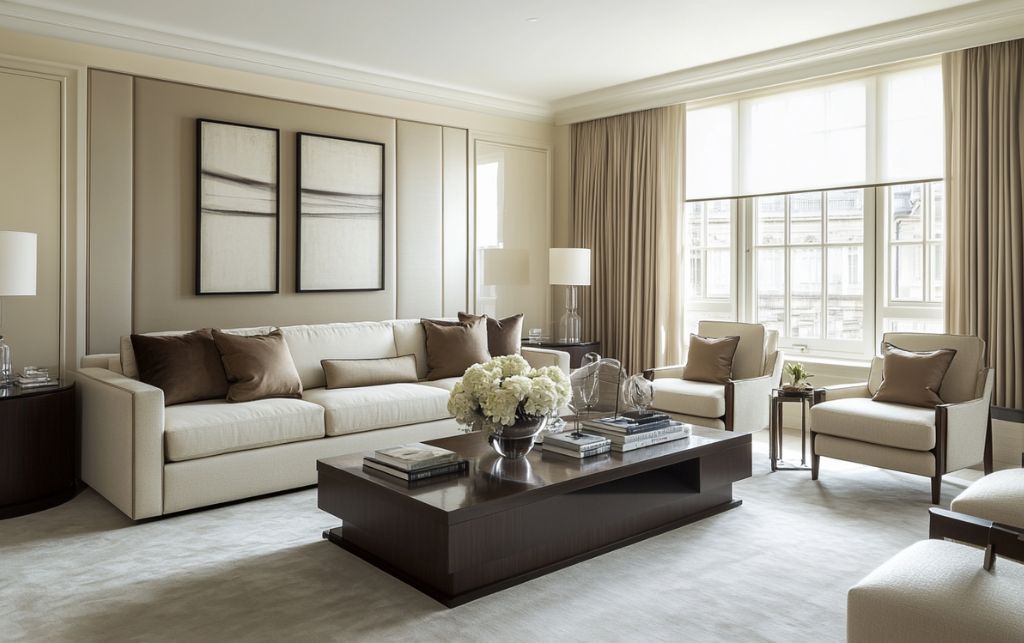
An experienced interior designer brings clarity to your vision while enhancing its practicality. A skilled interior designer doesn't impose - they interpret your needs through expert spatial and aesthetic strategies.
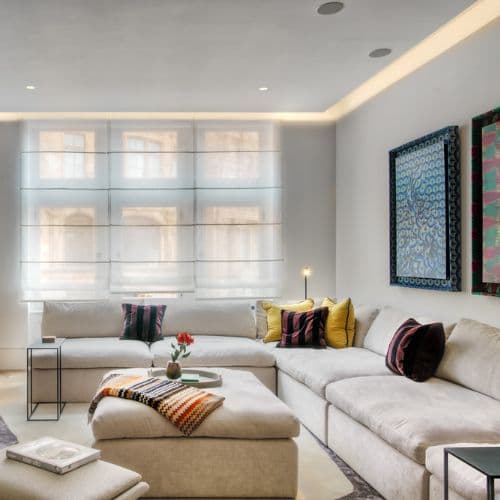
Invest in fewer, better pieces. A single exceptional sofa will transform your room more effectively than multiple mediocre seating options. Consider scale carefully - oversized furniture in smaller rooms can feel imposing, whilst undersized pieces in large spaces appear lost and insignificant.
Think about furniture relationships. Pieces should relate to each other in terms of style, scale, and colour temperature. This doesn't mean everything must match, but rather that each element should feel purposefully chosen to contribute to the overall composition.
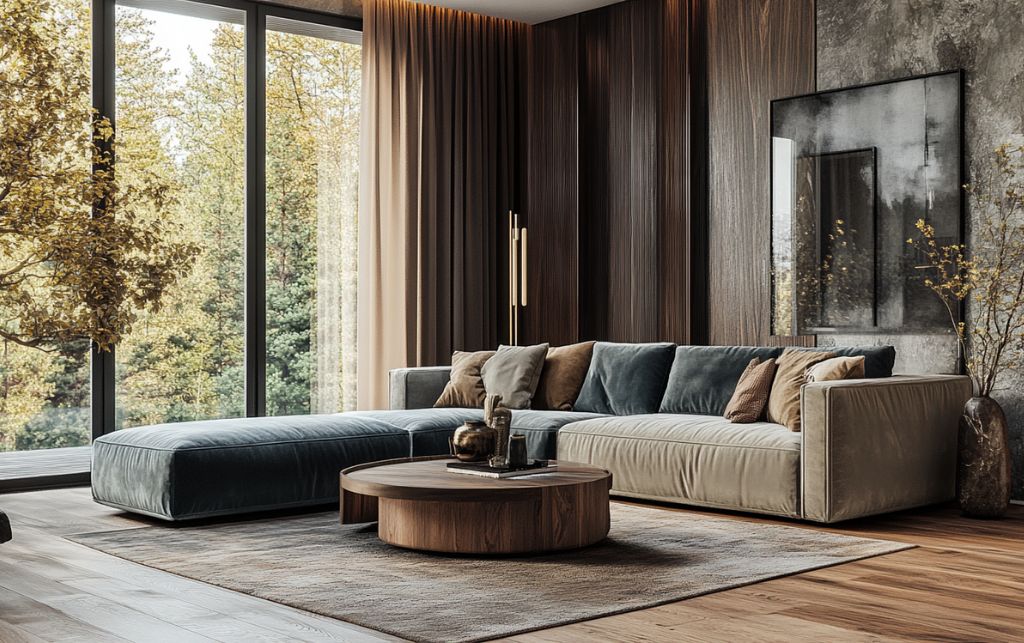
The most sophisticated living room interior design ideas incorporate varied textures to create visual and tactile interest. Smooth surfaces need rough counterpoints, hard materials require soft contrasts, and uniform textures benefit from irregular companions.
Consider the interplay between your major surfaces - flooring, walls, and window treatments - and how furniture and accessories can create pleasing contrasts. A silk velvet sofa against natural linen curtains, for instance, creates sophisticated tension that elevates both elements.
Natural materials bring warmth and authenticity to spaces. Wood, stone, natural fibres, and metals each contribute unique characteristics that synthetic alternatives struggle to replicate. The key is combining these materials thoughtfully rather than randomly.
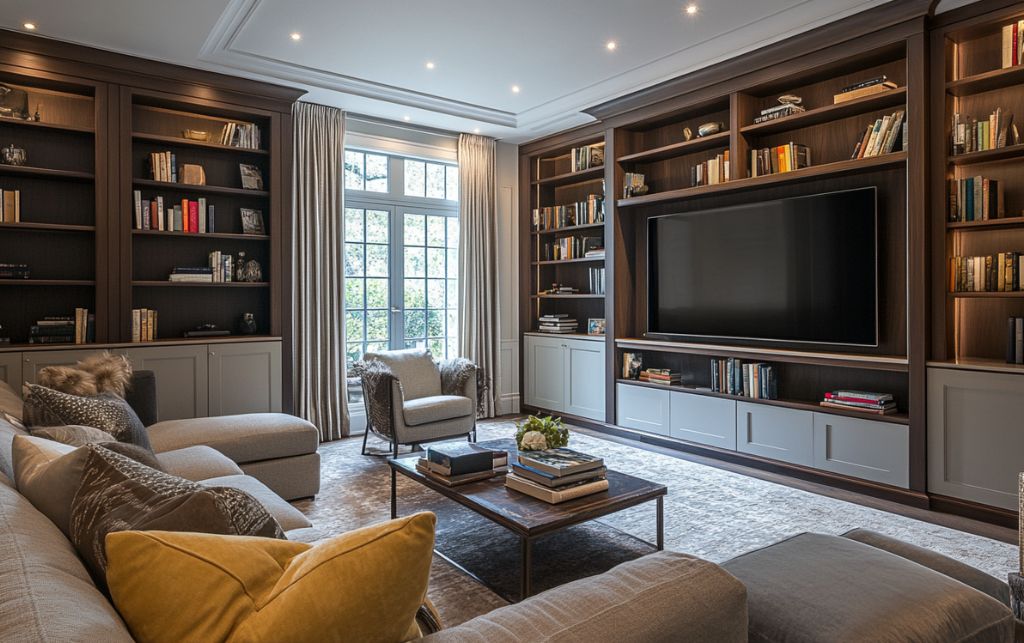
Clutter remains the enemy of sophisticated design, yet storage solutions often feel like afterthoughts in living room interior design. The most effective approach integrates storage seamlessly into the overall design scheme.
Built-in solutions, whilst requiring greater initial investment, provide the most elegant long-term results. Custom cabinetry can be designed to disappear into wall architecture, whilst still providing ample storage for books, media equipment, and the inevitable accumulation of daily life.
Consider dual-purpose furniture - ottomans with hidden storage, console tables with drawers, or coffee tables with shelving. These pieces serve multiple functions without compromising aesthetic integrity.
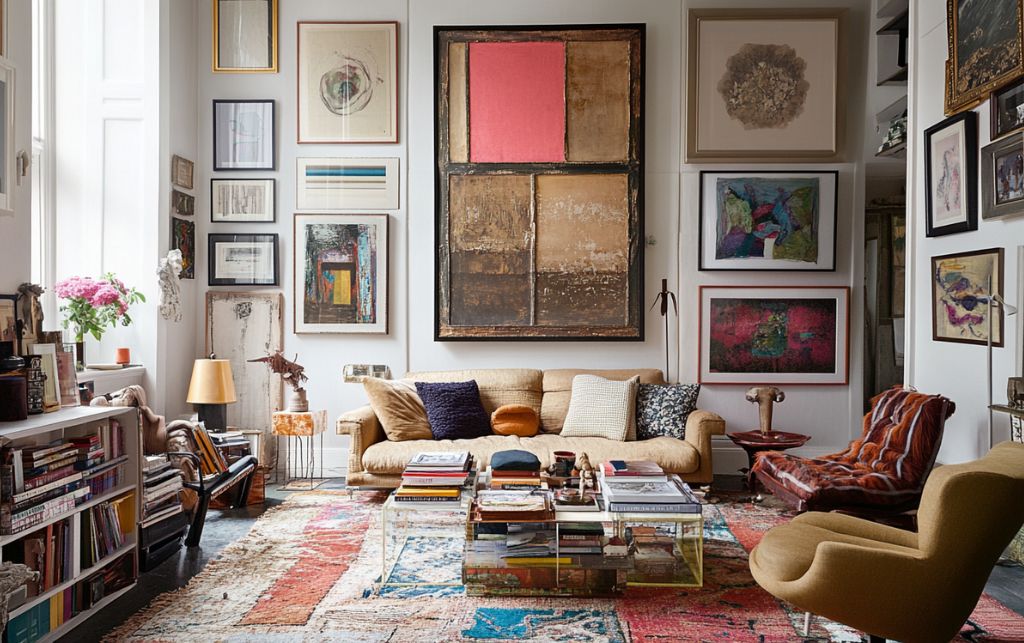
The challenge in contemporary living room interior design lies in creating spaces that feel distinctly yours whilst maintaining visual coherence. Personal objects and collections can enhance rather than detract from sophisticated design when approached thoughtfully.
Group similar items together rather than scattering them throughout the room. A collection of books, artwork, or decorative objects gains impact when thoughtfully arranged rather than randomly distributed. Consider the principle of odd numbers - groupings of three or five objects typically feel more natural than even-numbered arrangements.
Rotate seasonal elements to keep your space feeling fresh without major renovation. Changing cushions, throws, or artwork allows you to adapt your room's personality whilst maintaining its fundamental structure.
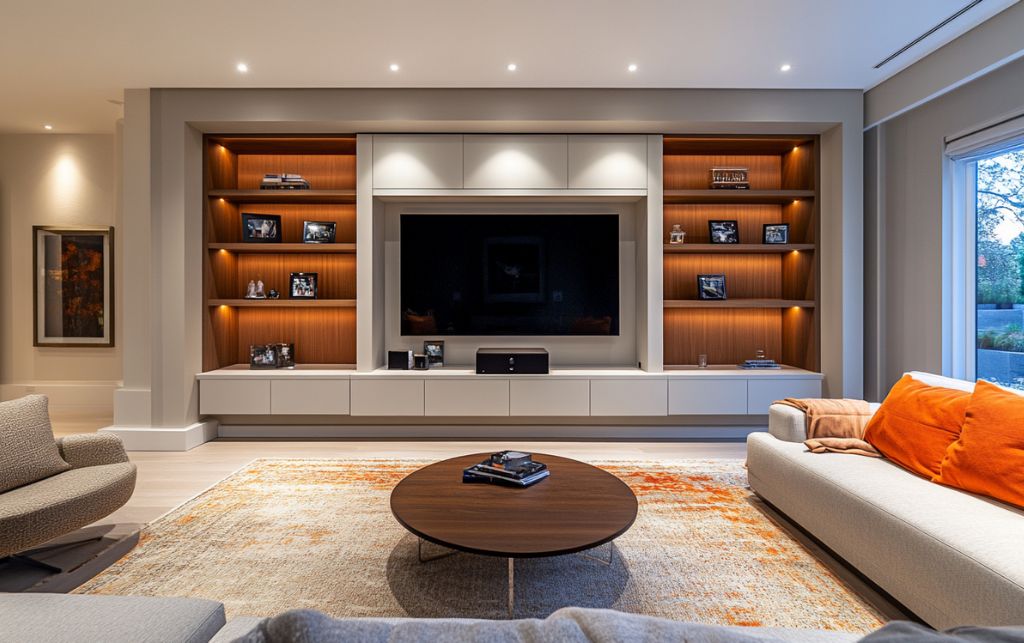
Modern living rooms must accommodate technology without being dominated by it. The most successful simple living room interior design solutions integrate necessary technology seamlessly into the overall aesthetic.
Plan for cable management early in the design process. Visible cables instantly undermine sophisticated design, yet they're often addressed as an afterthought. Consider built-in cable channels, strategically placed outlets, and furniture designed to conceal necessary connections.
Balance screen size with room proportions. Oversized televisions can overwhelm elegant spaces, whilst undersized screens frustrate practical usage. The key is finding the sweet spot that serves your lifestyle without dominating your design.
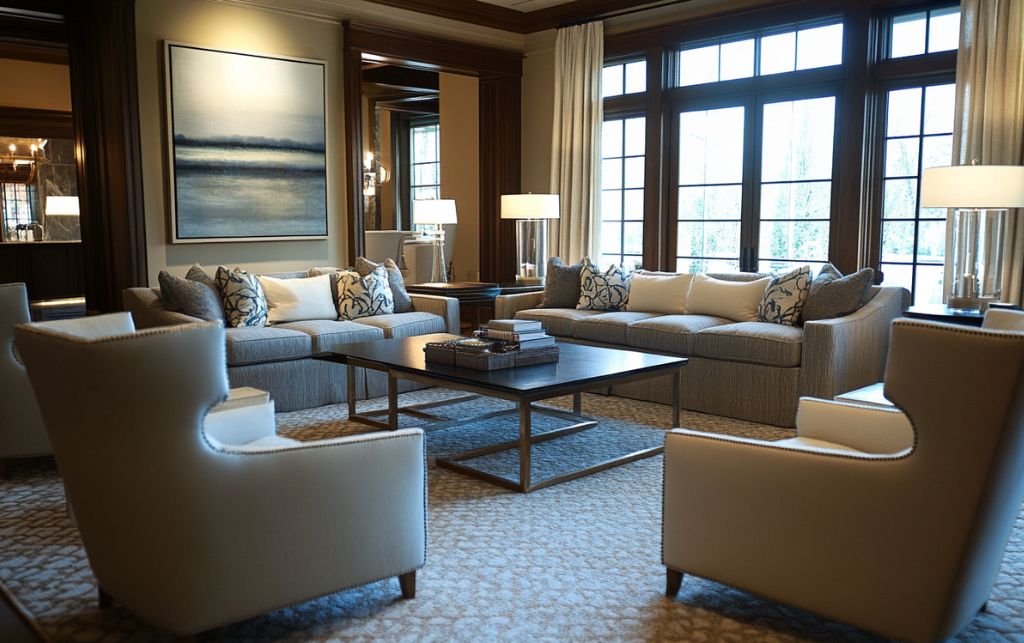
The most transformative living room interior design ideas often involve rethinking how seating arrangements facilitate human connection. Formal arrangements that look impressive in photographs may prove impractical for actual conversation.
Consider multiple seating groupings rather than a single large arrangement. Smaller groupings feel more intimate and allow for different types of interaction. A primary seating area for general conversation, perhaps supplemented by a secondary reading nook or window seat, provides flexibility for different activities and group sizes.
Ensure seating pieces relate to each other spatially. Chairs positioned too far apart inhibit conversation, whilst those placed too close feel cramped. The ideal distance allows for comfortable conversation without raising voices.
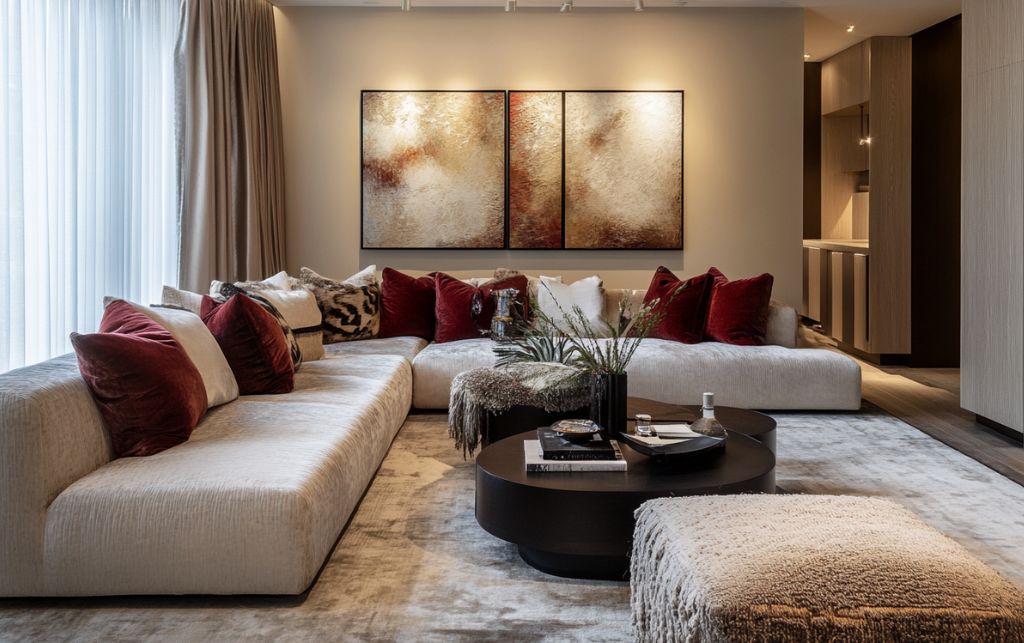
The final layer of successful living room interior design involves those finishing touches that transform a well-planned space into a truly memorable one. These details often make the difference between a room that impresses and one that enchants.
Consider the sensory experience beyond the visual. Subtle fragrance, the texture of fabrics, the sound quality of the space - these elements contribute to the overall impression your room creates.
Artwork should be scaled appropriately and positioned thoughtfully. A common mistake involves hanging pieces too high or too small for their intended space. Artwork at eye level creates more intimate connections than pieces positioned as architectural elements.
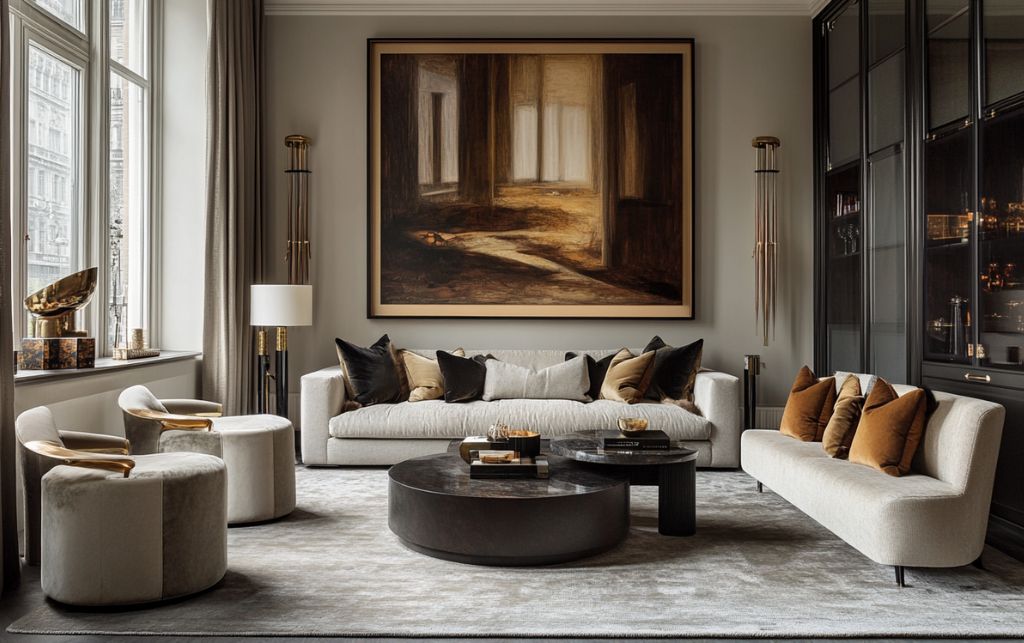
Transforming your living room doesn't require wholesale renovation. Often, the most impactful changes involve repositioning existing elements, improving lighting, or editing rather than adding. Start with one area - perhaps the main seating arrangement - and refine it until it truly serves your lifestyle.
The most successful transformations result from understanding your space's unique characteristics and your own lifestyle requirements. Cookie-cutter solutions rarely create the sophisticated, personalised environments that truly enhance daily life.
If you're ready to create a living room that genuinely reflects your discerning taste whilst serving your practical needs, our design team can guide you through the process. We specialise in creating bespoke solutions that transform spaces into environments you'll genuinely love living in, rather than simply admire from afar.
We help designers & clients transform mundane spaces into extraordinary ones.


Book a video consultation and we'll advise you on furniture, space planning, colour schemes and much more.
Book A ConsultationBook a visit to our stunning, multi award-winning, 30,000 sqft.
Over 700 brands under 1 roof.
Most Popular on FCI London: Fitted Wardrobes | Luxury Designer Rugs | Luxury Sofas | Luxury Furniture Store | Luxury Interior Designers | Luxury Bedroom Furniture | Luxury Modern Chairs | Luxury Coffee Tables | Luxury Designer Kitchens | Luxury TV Units | Luxury Dining Tables | Luxury Storage Solutions | Luxury Sideboards | Luxury Stools & Bar Stools | Luxury Bespoke Joinery | Luxury Modern Hallway Furniture | Furniture Showroom Appointment | Luxury Lighting | Modern Luxury Outdoor Furniture
Transparency isn’t a policy. It’s a principle.
Have a peek at what our clients really have to say.