
Published Date: Jun 30, 2026
Written by: Emma Cyrus, Senior Copy, Content & Editorial Writer
Reviewed by: Shahnaz Hashim, Architectural Designer at FCI London
Edited by: Zoona Sikander, Head of Content
Estimated Reading Time: 19 minutes
TL;DR: Sculptural bronze clusters, oversized single pendants, and handblown glass dominate the kitchen pendant lighting ideas our designers keep specifying for high-end London homes this year. We've moved past matching sets towards curated, gallery-style installations that genuinely anchor a room rather than simply illuminate it. This guide breaks down the five trends worth your attention, the kitchen pendant lighting copper finishes still holding their value, a recent case study from one of our own projects, and exactly how to match scale, ceiling height, and material to your own space.
Table of Contents
If you're a London homeowner specifying a kitchen island that needs to do more than just sit there, this expert guide is for you. Design-led clients across the Home Counties, along with the architects and interior professionals working alongside them, will find these kitchen pendant lighting ideas particularly useful when briefing a project. We've handpicked five directions specified repeatedly by the designers we work with regularly, each chosen for genuine staying power rather than seasonal noise.
When only the best will do, these fixtures deliver the considered, quietly confident finish your kitchen deserves.
Most guides on kitchen lighting pendant options just catalog what's available at retail. We took a different approach.
At FCI London, we work daily with interior designers specifying for high-end residential projects across London and the Home Counties. These are the five trends appearing repeatedly in their specifications, the ones clients request by name, and the styles we see anchoring kitchens that will still feel current in a decade.
Every trend here meets three tests: specified regularly in projects where budget isn't the constraint, offered by reputable European makers, and demonstrates staying power beyond seasonal fads.
We excluded plenty. Mass-market industrial styles are oversaturated. Trendy finishes like rose gold lack longevity. Designs requiring excessive maintenance don't survive in working kitchens, no matter how striking they look in showrooms.
Key Takeaway: The strongest pendant choices aren't the loudest ones at the trade show. They're the ones designers keep specifying years after the trend cycle has moved on.
| Trend | Best Suited For | Investment Level | Design Flexibility | Maintenance |
|---|---|---|---|---|
| 3-D Bronze Clusters | Large islands, period properties | £1,200-3,500 | High (customisable arrangements) | Low (develops patina naturally) |
| Oversized Single Pendants | Minimalist schemes, high ceilings | £800-2,800 | Medium (statement piece sets tone) | Low to medium |
| Handblown Glass | Transitional kitchens, natural light | £600-2,200 | High (works with most styles) | Low (dust occasionally) |
| Matte Black with Gold Interior | Contemporary spaces, contrast seekers | £400-1,600 | Medium (bold choice) | Medium (shows fingerprints) |
| Sculptural Pendants | Warm-toned schemes, living finishes | £500-1,800 | Medium (patina develops) | High (requires acceptance of change) |
Key Takeaway: Investment level rarely tracks longevity in pendant lighting. The bronze clusters and handblown glass at the higher end of this table are also the styles least likely to look dated by 2030.
What Defines This Trend
Multiple pendants hung at varying heights over kitchen islands, typically three to five pieces in organic, asymmetric arrangements. The finishes are warm metals (bronze, aged brass, antique gold) often hand-patinated to create depth. Think gallery installation rather than matching set.
Why Designers Specify Them
Clusters create a focal point without overwhelming the room's proportions. They distribute visual weight while providing excellent task lighting across the work surface.
The warm metal finishes bridge contemporary and period architecture beautifully. We've installed bronze clusters in Georgian townhouses and new-build penthouses with equal success. The finish ages gracefully, developing character rather than looking worn.
This approach particularly suits open-plan spaces where the kitchen flows into living areas. The sculptural quality holds its own when viewed from multiple angles.
Best For
Large islands requiring multiple light sources. Clients wanting warmth in modern schemes. Kitchens with ceiling heights between 2.7m and 3.5m where you have room to play with drop lengths.
Honest Limitations
Clusters require careful planning of drop heights and spacing. Ceiling heights under 2.4m don't provide enough vertical space for the arrangement to breathe. Installation costs run higher than single pendants due to multiple electrical points and design time.
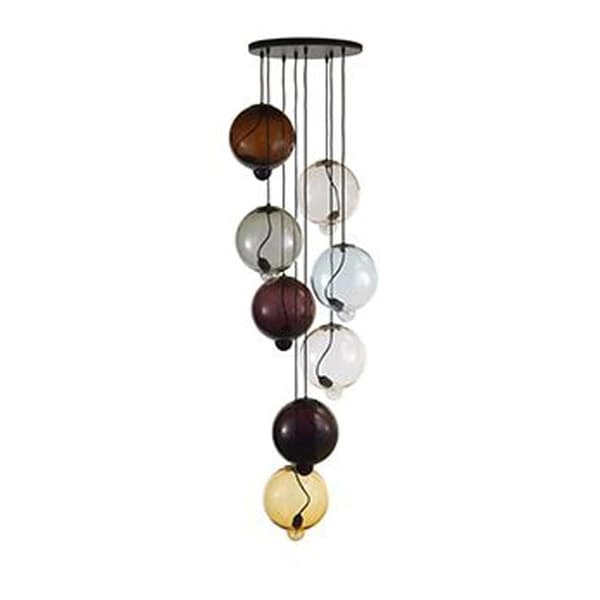
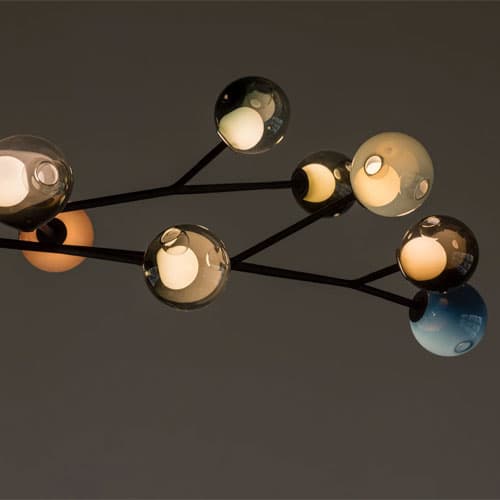
The piece we point clients towards for this look is the Meltdown Suspension Lamp by Cappellini. Designed by Johan Lindstén, it's built around spherical diffusers of mouth-blown pâte de verre glass, available in amber, tobacco, dove grey, amethyst and a softer green introduced more recently. The hanging cluster version can be specified with four or eight diffusers, and any small air bubbles in the glass are part of the artisanal process rather than a flaw. You can read more about the full Meltdown collection on Cappellini's own site, including the floor and table lamp versions.
Key Takeaway: A cluster only earns its place if your island is large enough to need multiple light sources. On a smaller surface, it reads as clutter rather than craft.
The Move Toward Singular Impact
One substantial piece instead of multiples. We're seeing diameters exceeding 60cm, sometimes reaching 80cm for particularly grand islands. The best examples balance scale with lightness through handblown glass or perforated metal.
Why This Approach Works
Minimalism in lighting creates breathing room in busy kitchens. When cabinetry, appliances, and worktops already compete for attention, a single pendant provides focus without adding clutter.
From a practical standpoint, one large fixture often delivers better light distribution than several small ones. Modern LED arrays inside oversized shades can illuminate a 2.5m island evenly.
This works particularly well in kitchens with strong architectural features (exposed beams, vaulted ceilings) where the pendant becomes part of the structural dialogue.
Limitations to Consider
Scale is unforgiving. Too large and it overwhelms; too small and it looks like a mistake. Not ideal for kitchens under 20 square metres. The pendant needs surrounding space to register as intentionally oversized rather than awkwardly big.
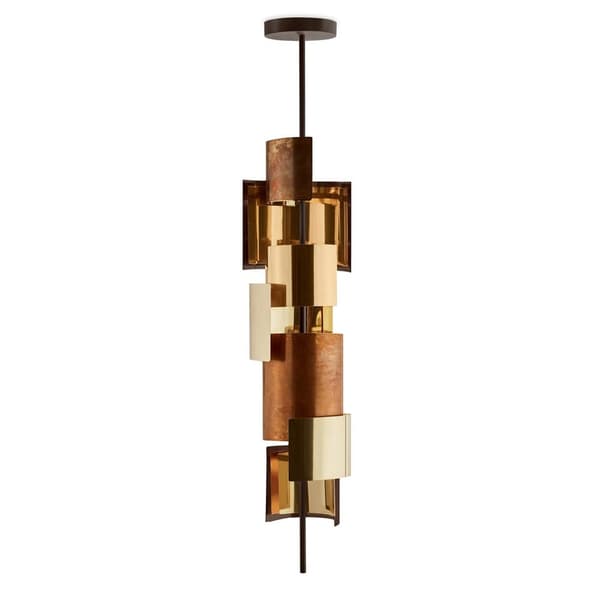
For this trend, we work with the Eris Pendant Lamp by Gallotti & Radice. Designed by Massimo Castagna, it pairs a black bronzed structure with bright, satin and hand-burnished brass parts, and the LED light source runs the length of a slender 35cm diameter tube available in five drop lengths from 180cm up to 320cm. The proportions are exactly what make this read as oversized without ever feeling heavy.
Key Takeaway: One oversized pendant only works if the rest of the kitchen has been kept deliberately quiet. Pair it with a busy backsplash or patterned worktop and the effect collapses.
Artisan Craft Over Factory Precision
The luxury kitchen island lighting market has shifted toward celebrating handmade irregularities. Bubbles in the glass, slight asymmetry in the form, variations in thickness. These aren't defects; they're signatures of human craft.
We're seeing this in clear glass, amber, smoke grey, and occasionally pale blue. The imperfections catch light differently throughout the day, creating subtle visual interest that machine-made glass can't replicate.
Why Designers Choose Them
Authenticity. In an age of perfect digital renderings and CNC-machined everything, handblown glass offers tangible connection to traditional making. The visible imperfections also diffuse light more interestingly than uniform glass, reducing glare while maintaining transparency.
These pendants work beautifully in kitchens with natural materials (stone worktops, timber floors) where the handmade quality echoes other organic elements.
What to Expect
Each piece will be unique. If you order three pendants, they'll be similar but not identical. Leading times run longer than factory-made alternatives, typically 8-12 weeks.
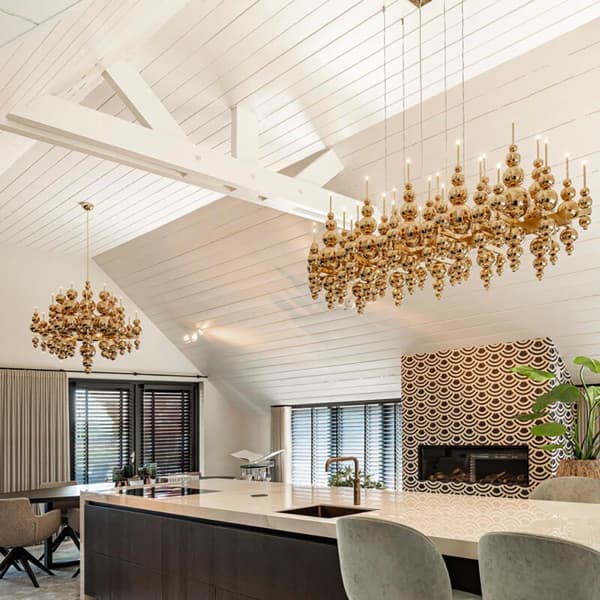
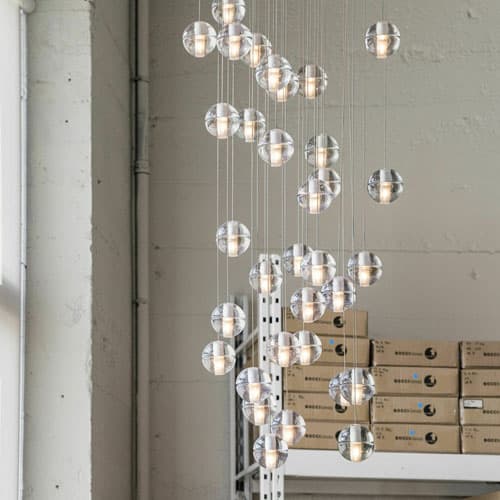
Our reference piece here is the Tears From Moon H34+4 by Ilfari, part of the brand's wider Tears From Moon collection, which is built specifically around mouth-blown glass balls combined with refined metalwork. This configuration carries 34 small glass spheres on the base alongside four integrated LED downlights, and it's available in white, black, silver and gold glass finishes so you can lean warmer or cooler depending on the rest of the scheme.
Key Takeaway: If you want a pendant that photographs differently depending on the time of day, handblown glass is the only trend on this list that genuinely delivers it.
The Sophisticated Industrial Evolution
Kitchen pendant lighting industrial styles have matured. The raw, warehouse aesthetic has given way to refined matte black exteriors paired with warm metallic interiors (brass, copper, gold leaf).
The contrast is the point. When lit, the warm interior glow softens the black exterior, creating depth and preventing the fixture from reading as a flat silhouette.
Why It Endures
Black grounds a scheme without competing with other elements. In kitchens with statement stone, bold cabinetry colors, or dramatic tile work, black pendants provide visual rest. The matte finish is more forgiving than gloss in working kitchens.
This finish particularly suits kitchens with black-framed windows or doors, creating a cohesive material language.
Where It Falls Short
Matte black can feel heavy in north-facing kitchens with limited natural light. It absorbs rather than reflects, which works against you in darker spaces. The finish shows dust and requires regular attention to maintain its velvety appearance.
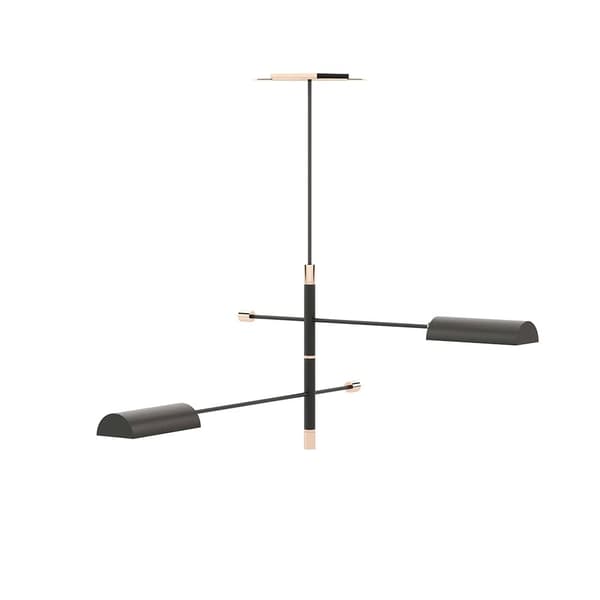
We specify the Randolph Suspension Lamp by Laskasas regularly for this look. It's built from black iron with polished metallic lampshade detailing, with two shades pointing in opposite directions rather than the usual single drum, which gives it more sculptural presence over a run of worktop than a conventional matte black pendant. At roughly 118cm wide and 71cm high, it suits a generous island rather than a compact one.
Key Takeaway: Matte black with a warm interior only earns its keep with good ambient light elsewhere in the room. Treat it as a sculptural accent, not your primary light source.
When Lighting Becomes Installation
The line between lighting fixture and art object has dissolved. We're seeing pendants that function as three-dimensional sculptures: abstract forms, organic shapes inspired by nature, geometric compositions that shift appearance as you move around them.
These aren't decorative flourishes added to a standard pendant structure. The entire piece is conceived as sculpture first, with the lighting element integrated seamlessly. Materials range from hand-formed metal and carved wood to cast resin and woven textiles.
Why Clients Request Them
For collectors and design enthusiasts, the kitchen has become as important a space for artistic expression as any other room. A sculptural pendant transforms the island into a gallery moment without sacrificing function.
These pieces create conversation. Guests notice them immediately, and they often become the most memorable element of the kitchen. In open-plan homes where the kitchen is constantly visible, that impact matters.
The best sculptural pendants also solve a practical challenge: they provide excellent ambient light while reading as art rather than utilitarian fixture. You get both beauty and function without compromise.
Best For
Clients who collect art or design. Kitchens with minimalist cabinetry where the pendant can truly shine. Spaces with high ceilings (3m+) that allow the sculpture to be appreciated from multiple angles. Open-plan layouts where the kitchen is viewed from living areas.
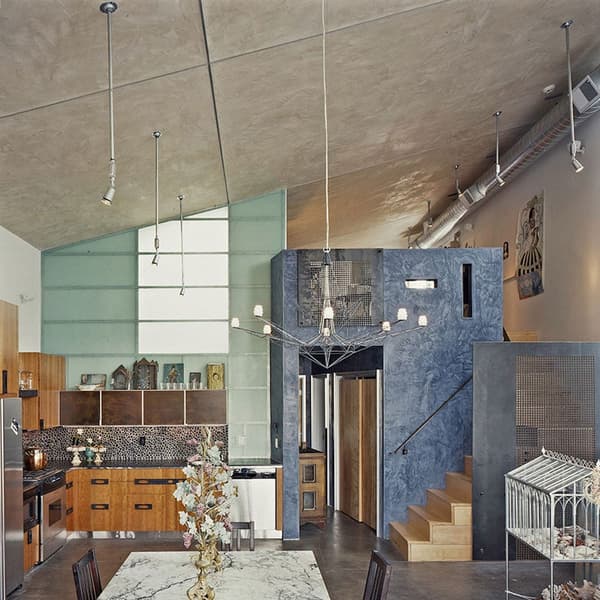
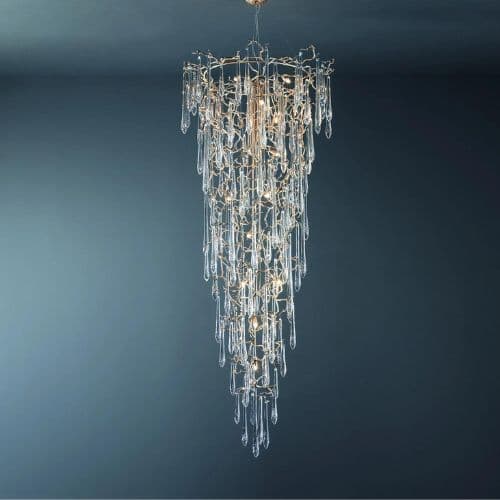
The clearest example of this trend in our range is the Lightweight Suspension Lamp by Foscarini, designed by Tom Dixon. It strips the classic chandelier silhouette back to its bare skeleton, hand-welded from hundreds of individual metal elements and finished with an electrochemical anodising process that protects the surface from corrosion. It's dimmable, weighs just 7.6kg despite its scale, and reads as sculpture from every angle rather than having a single "front" view.
Key Takeaway: Sculptural pendants demand confidence elsewhere in the kitchen be kept minimal. This is the one trend on this list that genuinely needs a quiet backdrop to work.
Match Pendant Style to Kitchen Architecture
Period properties with original features generally suit warm metals (bronze clusters, copper) that reference historical materials. New builds with clean lines can carry oversized single pendants or matte black finishes more easily.
Ceiling height determines what you can install. Under 2.4m, avoid clusters and oversized pendants; opt for handblown glass or compact matte black styles. Above 3m, you have freedom to explore dramatic scale and multiple drop heights.
Island proportions matter. A 1.5m island can't support three large pendants. A 3m island looks odd with a single small fixture. Match the lighting scale to the surface it illuminates.
Consider Your Lighting Layers
Pendants provide task lighting over islands but rarely illuminate the entire kitchen adequately. You need additional layers: under-cabinet lighting for worktop tasks, recessed ceiling lights for general illumination, possibly wall sconces or strip lighting in alcoves.
The pendant's role is to anchor the island while contributing to overall light levels. Specify dimmable fixtures so you can adjust intensity for different activities.
Investment and Longevity
Handblown glass and bronze clusters offer the best value over time. They age beautifully, suit multiple design directions, and won't look dated in ten years. Matte black with gold interior is riskier; it feels very 2026 and may not endure.
When budget is finite, invest in quality over quantity. One exceptional pendant beats three mediocre ones. Material quality, finish execution, and design integrity matter more than price alone.
Key Takeaway: Ceiling height and island proportion will rule out three of these five trends before style preference even enters the conversation. Measure first, fall in love second.
 (2).jpeg)
I worked on this open plan living and dining space at Warbank Lane recently alongside Jaden Interiors, and it's become one of my favourite recent briefs precisely because the lighting did so much of the heavy lifting. The brief called for a single statement piece above a raw edge dining table, something that could hold its own against a marble-topped bar, a striped timber sideboard, and a run of bronzed mirror panelling without competing with any of it.
The piece we landed on was the Melt Large Chandelier by Tom Dixon, specified in a customised mix of finishes rather than a single uniform tone. Clustered amber, smoke and copper-toned blown glass forms hang at deliberately varied heights, catching the surrounding mirrored surfaces and the warm brass detailing on the kitchen pendants beyond. It reads less like a fixture and more like a piece of suspended sculpture sitting directly over the table, which was exactly the brief.
What I'd flag to anyone considering something similar: a cluster this size only works because the table beneath it is equally confident. A live-edge slab in solid timber and a run of woven orange upholstery gave the chandelier something substantial to anchor visually. Drop a piece like the Melt over a delicate glass table and the proportions stop making sense.
Key Takeaway: The Melt chandelier proves that a sculptural cluster doesn't need to match your other metalwork exactly. Mixed bronze, amber and smoke tones sit comfortably alongside brass and copper accents elsewhere in an open plan scheme, provided the furniture beneath earns its place.
Q. How many pendants should hang over a kitchen island?
For islands under 2m, one large pendant or two medium pendants work best. Islands between 2m and 2.5m suit two to three pendants. Islands exceeding 2.5m can accommodate three to five pendants. Space them 60-80cm apart for even light distribution.
Q. What height should kitchen pendant lights hang?
75-85cm above the island surface is standard. This provides adequate task lighting without obstructing sight lines. If your household is particularly tall (multiple people over 190cm), consider 85-90cm.
Q. Are copper pendant lights still in style in 2026?
Unlacquered copper remains current, particularly in warm-toned, natural material schemes. Polished, lacquered copper feels dated now. The key is embracing copper as a living finish that develops patina, not a permanently bright metallic accent.
Q. Can I mix different pendant styles over one island?
Mixing styles works when there's a unifying element (finish, scale, or material). We've successfully combined handblown glass with bronze metalwork, but mixing matte black with copper rarely succeeds. The key is intentional curation, not random variety.
Q. Do these trends work in small kitchens?
Handblown glass and single oversized pendants (scaled appropriately) work well in compact kitchens. Clusters and multiple pendants can overwhelm small spaces. Focus on one quality piece rather than trying to incorporate multiple trends.
Q. Is kitchen pendant lighting copper a high-maintenance choice for a busy family kitchen?
Not in the way most people assume. Unlacquered copper will mark and tarnish on contact, which is the point rather than the problem. If you want it to stay bright and even, lacquered copper is the more sensible specification for daily kitchen use.
Q. Can I retrofit a sculptural pendant onto an existing single electrical point?
Often, yes, provided the existing point can take the fixture's weight and you're happy with a single drop rather than a cluster. Anything heavier than a few kilograms genuinely needs a proper ceiling fixing assessed before ordering.
Q. How do I avoid my pendant looking dated in five years?
Choose proportion and material quality over the finish that's loudest this season. Handblown glass and bronze, in our experience, age rather than expire.
Q. Should pendant lighting match my other kitchen metalwork exactly?
Not exactly, no. A close cousin in tone, rather than an identical twin, tends to read as considered rather than coordinated by a checklist.
Address & Hours:
FCI London, Rays House, North Circular Road, London, NW10 7XP
Monday - Saturday: 10am - 6pm
Sunday & Bank Holidays: 11am - 5pm
Contact Details:
Phone: +442081531235
Email: [email protected]
What to Bring:
The kitchen pendant lighting over island choices you make will anchor your space for years. Choose based on how you actually use your kitchen, not just how it photographs.
We've seen too many clients select pendants for their Instagram appeal, then live with inadequate task lighting or fixtures that don't suit their ceiling height. The best pendant is the one that works practically while elevating your kitchen's design.
If you're specifying for a luxury kitchen project and want guidance on which trend suits your specific space, our team at FCI London works with the makers behind these trends. We can source pieces that aren't available through standard retail channels and ensure your lighting genuinely reflects the quality of your overall kitchen investment. Explore our curated lighting collections or visit our London showroom to experience the quality difference in person.
"FCI London did a fantastic job in locating some Flos lighting and arranged collection from the showroom in a matter of a few days. Very competitive pricing too."
John Plummer
"The sales team helped me placing the order - including emailing me pictures of fabric samples and different lights. I was kept updated during all the time and the delivery was perfect."
Ana Oliveira
"FCI provide an excellent service to design professionals and the trade. Their expertise, helpful 'can-do' approach, assistance and attention to detail is second-to-none."
Mike Jenkins
We help designers & clients transform mundane spaces into extraordinary ones.

Book a video consultation and we'll advise you on furniture, space planning, colour schemes and much more.
Book A ConsultationBook a visit to our stunning, multi award-winning, 30,000 sqft.
Over 700 brands under 1 roof.
Most Popular on FCI London: Fitted Wardrobes | Luxury Designer Rugs | Luxury Sofas | Luxury Furniture Store | Luxury Interior Designers | Luxury Bedroom Furniture | Luxury Modern Chairs | Luxury Coffee Tables | Luxury Designer Kitchens | Luxury TV Units | Luxury Dining Tables | Luxury Storage Solutions | Luxury Sideboards | Luxury Stools & Bar Stools | Luxury Bespoke Joinery | Luxury Modern Hallway Furniture | Furniture Showroom Appointment | Luxury Lighting | Modern Luxury Outdoor Furniture
Transparency isn’t a policy. It’s a principle.
Have a peek at what our clients really have to say.