
Published Date: Aug 20, 2025 | Last Updated: Jun 30, 2026
Written by: Emma Cyrus, Senior Copy, Content & Editorial Writer
Reviewed by: Saran Razzaq, Senior Interior Designer at FCI London
Edited by: Zoona Sikander, Interior Design Writer & Social Media Content Creator
Estimated Reading Time: 8 minutes
TLDR: The finest TV media storage units transcend mere functionality to become architectural statements that anchor sophisticated interiors. Success lies in mastering proportion and scale, selecting durable materials such as natural stone and fine hardwoods, integrating lighting for a dramatic effect, and balancing open display with concealed storage. When crafted with proper attention to detail, these pieces become permanent architectural features that enhance your home's character while accommodating evolving technology and lifestyle needs. The result? A refined focal point that feels both invisible and unmistakably present.
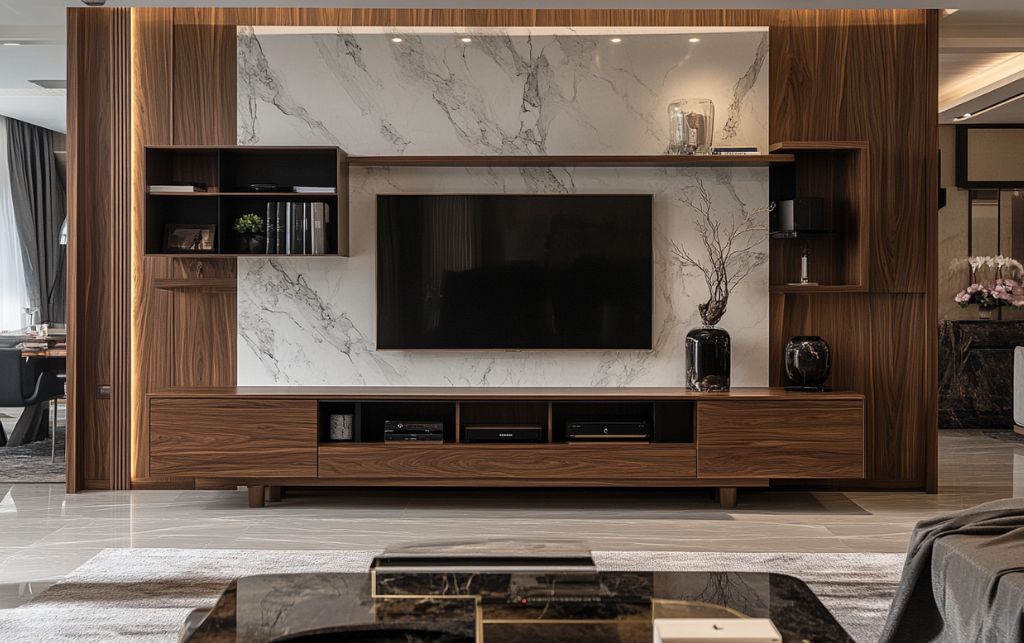
Table of Contents
People usually get media storage entirely wrong. They fixate on concealment or display, missing the more sophisticated question: how does this piece shape the room's architecture? For discerning homeowners in London and the Home Counties seeking solutions that command genuine presence, this expert guide reveals what separates functional furniture from transformative design. Interior designers working on premium residential projects will find these principles equally valuable when creating statement pieces that anchor sophisticated living spaces.
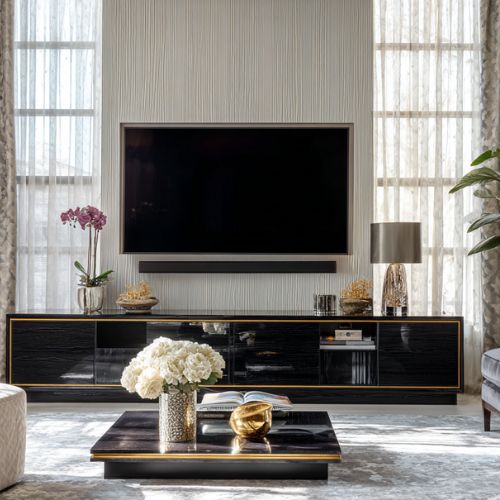
The truly well-designed television unit doesn't announce itself. Walk into any seriously considered interior, and you'll notice something curious: the media storage feels inevitable, as though the room were always meant to house it precisely there. That sense of rightness stems from treating these pieces not as furniture, but as architecture. For those who understand that luxury begins with restraint, luxury TV units become exercises in subtle authority rather than decorative excess.
Most homeowners approach media storage backwards. They select a unit, then attempt to integrate it. The result, however expensive, reads as an addition rather than an intention. After years of designing bespoke solutions for London's most exacting clients, I've observed a pattern: the pieces that genuinely elevate a space begin with the room itself. Proportion dictates form. Materials reference the existing palette. Craftsmanship speaks to permanence. When these elements align, you create something rather more valuable than storage. You create architecture.
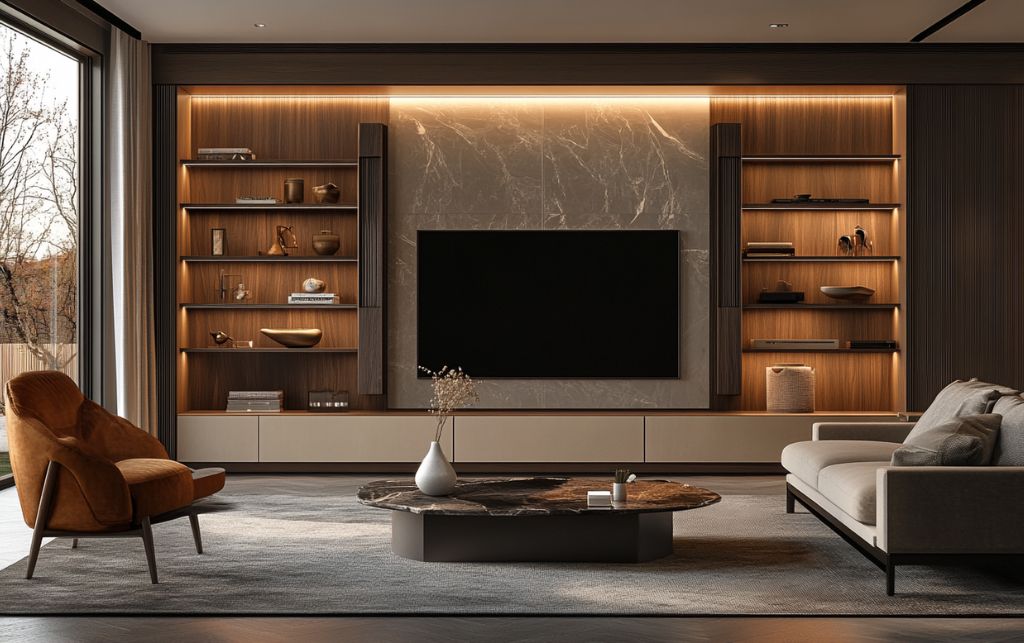
Creating a TV media storage unit with genuine architectural presence means moving beyond simply mounting a screen above a console. One must see the entire wall as a design canvas, blending storage, display and technology into a unified whole that adds to your interior's sophistication.
The most successful media units I've designed for Chelsea townhouses and Surrey estates have common threads. They command visual weight, weave together varied textures and materials, and play with light and shadow through sculptural depth. Such pieces double as room dividers, display galleries and entertainment centres all at once.
Think of the media unit as an architectural intervention, a built-in feature conceived alongside the room's original design. This approach ensures timelessness, both aesthetically and functionally, as it becomes part of your home's identity.
When designing for statement spaces, scale must be generous enough to anchor substantial rooms, yet proportionate to surrounding architectural elements. A media wall that feels cramped or oversized can never achieve the poised presence your interior deserves, no matter how fine the materials.
Key Takeaway: Treat your media unit as architecture, not furniture. The most successful pieces command visual weight through varied materials, sculptural depth, and integrated lighting that transforms them into permanent features anchoring sophisticated interiors.
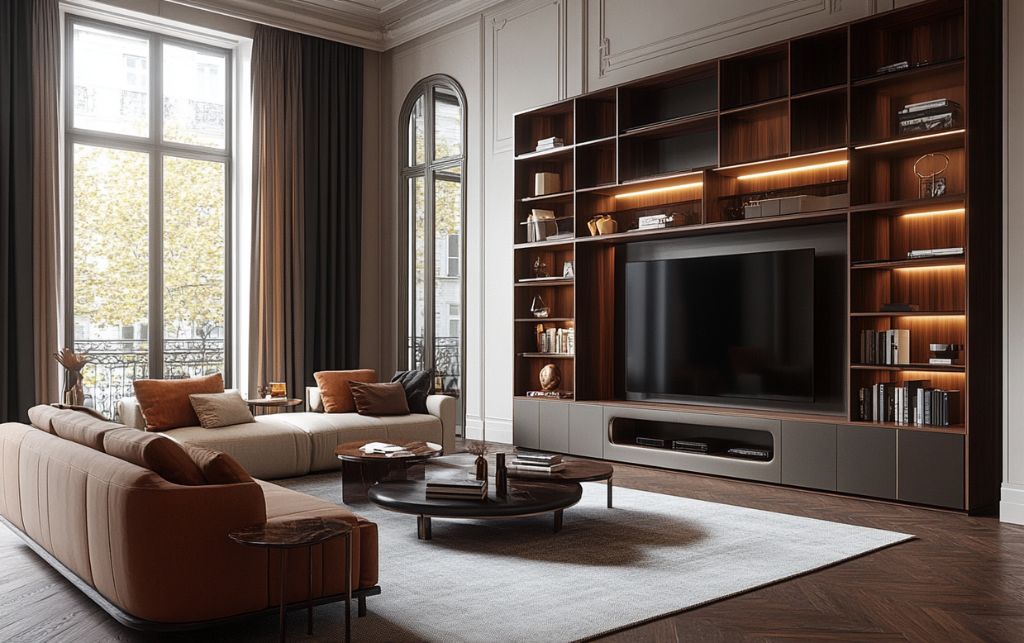
The backbone of any remarkable TV media unit is scale. Many clients underestimate the visual weight required to create true architectural presence, settling for units that appear insignificant in grander settings.
In rooms with ceiling heights around 2.7 to 3 metres, the media unit should ideally occupy a third of the wall's height to establish proper grounding. Where ceilings soar higher as in converted Victorian properties throughout Kensington, this proportion often extends closer to half the wall height, balancing scale with elegant detailing.
Width should echo your room's architectural features. In a recent Belgravia project, we spanned a media wall between two period pilasters, creating the sense that it had always belonged. Done right, the unit feels intrinsic rather than imposed.
Depth lends the sculptural quality that turns functional storage into an architectural moment. A TV media storage unit must balance generous scale with fine detailing to achieve a genuine architectural presence. Shallow units might suffice for storing devices, but lack the substance to become a statement. Varying depths, recessed niches, subtle projections, and flush-mounted sections add intrigue through shadow and highlight.
Key Takeaway: Scale determines whether your media unit grounds the room or gets lost within it. Aim for units that occupy one-third to half the wall height depending on ceiling proportions, with generous depth and width that echo existing architectural features for that sense of inevitability.
The materials you select for your TV media units with storage will determine not only their immediate visual impact but also their ability to age gracefully within your evolving interior. I consistently recommend combining a maximum of three primary materials to maintain sophisticated restraint whilst creating sufficient interest to sustain attention over time.
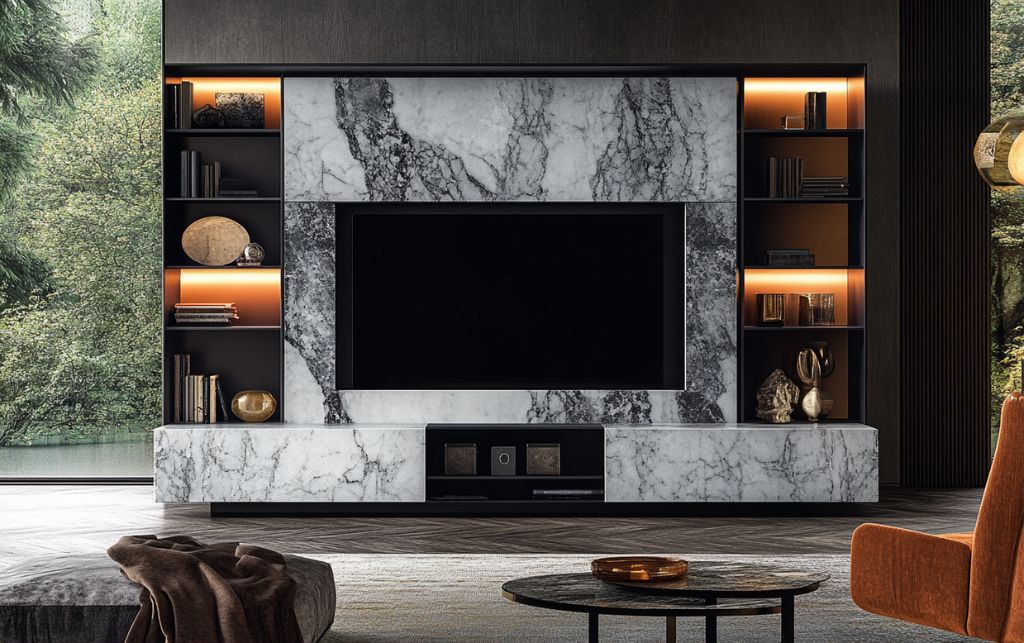
Natural stone provides unmatched architectural gravitas. Carrara marble creates luminous sophistication, whilst darker stones like Nero Marquina offer dramatic contrast against lighter wall treatments. The key lies in using stone strategically - perhaps as accent panels or shelving rather than overwhelming the entire unit.
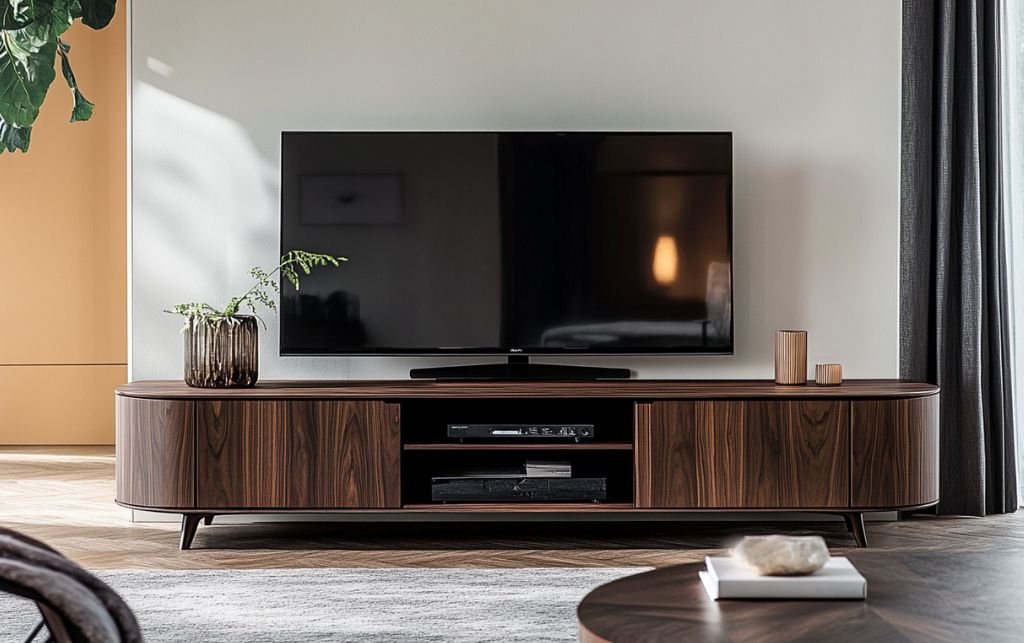
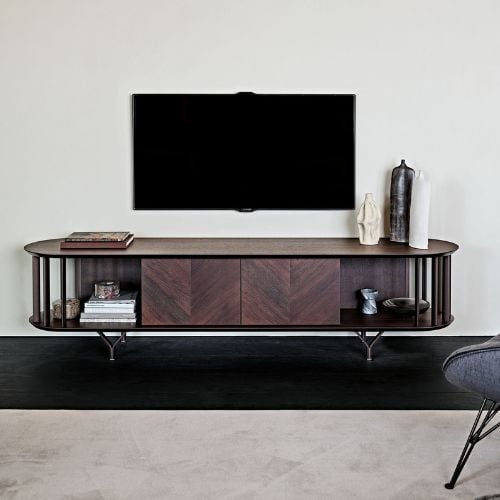
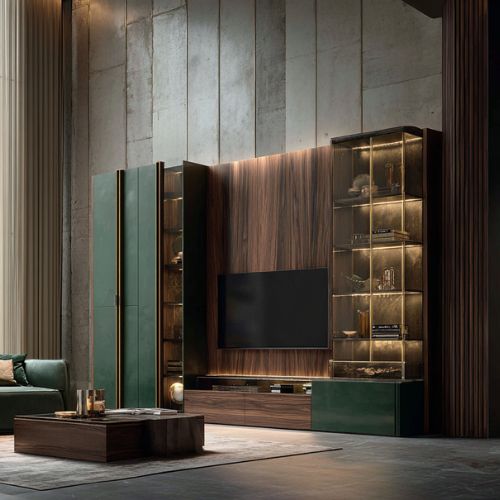
Fine hardwoods bring warmth and craftsmanship to media storage solutions. American walnut offers rich chocolate tones that complement both traditional and contemporary settings, whilst bleached oak provides subtle texture without competing with other design elements. The grain direction and book-matching of veneers require careful consideration to create cohesive visual flow.
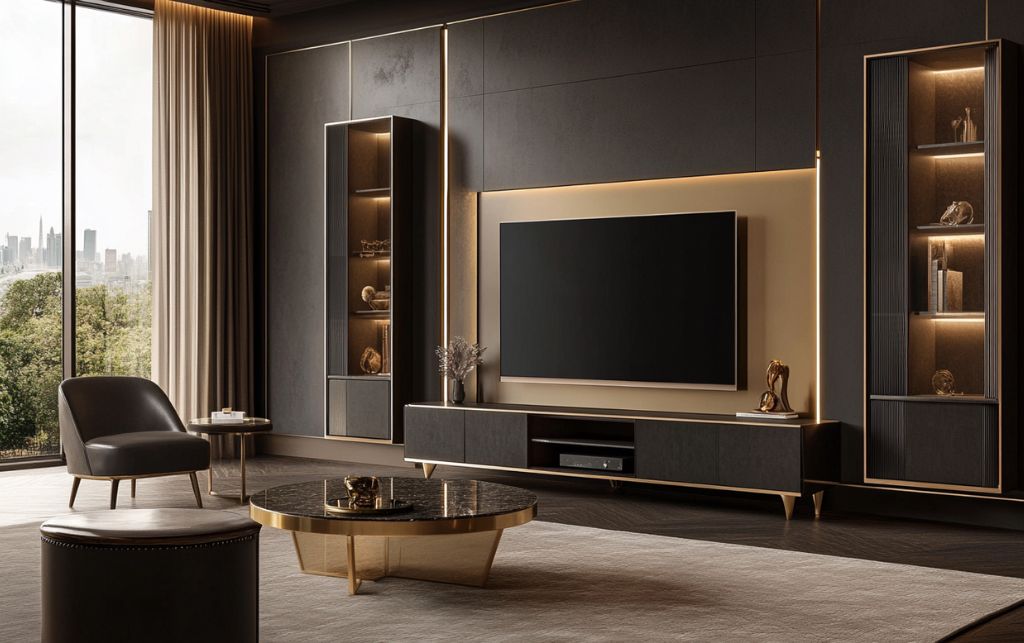
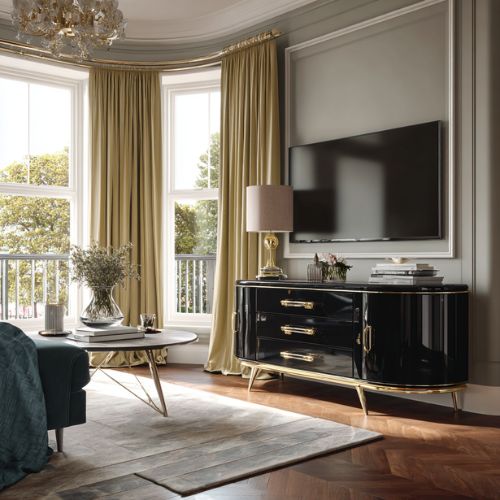
Metal elements introduce a contemporary edge whilst providing structural integrity for large TV and media storage units. Brushed brass adds warmth and luxury, whilst blackened steel creates a sophisticated contrast. These materials work particularly well as structural frames or hardware details rather than dominant surface treatments.
Key Takeaway: Limit your palette to three primary materials for sophisticated restraint that ages gracefully. Natural stone provides gravitas, fine hardwoods bring warmth, and metal accents introduce contemporary edge without overwhelming the composition.
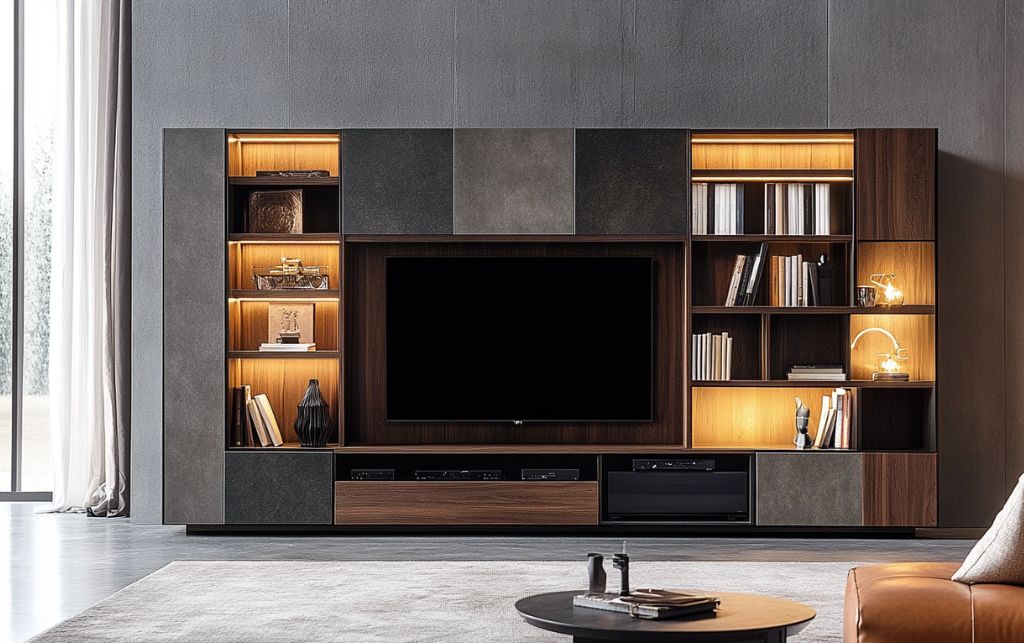
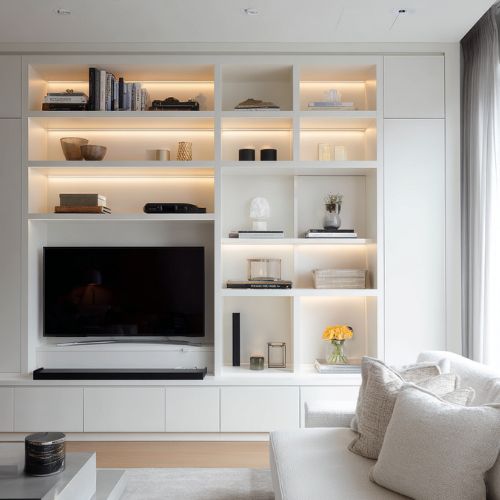
Balanced display and concealment define the most successful TV media units. The best TV media units with storage combine concealed compartments and elegant open displays for curated living. The goal is to highlight curated pieces while hiding cables, remotes and tech clutter.
Open shelving creates space for books, art and decorative pieces that reflect your taste. These should be proportioned wisely, too many small openings cause clutter; overly large ones feel sparse without statement objects. A mixture of shelf heights keeps the arrangement organic.
Concealed storage maintains the unit's architectural poise. Remotes, gaming equipment and media libraries need accessible yet discreet homes. Soft-close drawers with tailored compartments keep daily items close at hand yet invisible to guests.
Cable management is an often underestimated challenge. Routed channels allow wires to pass unseen between components, while discreet grommets maintain clean lines. A seasoned designer knows this detail can make or break the unit's architectural presence.
Key Takeaway: Balance curated display with strategic concealment to maintain architectural poise. Varied shelf heights prevent clutter, whilst concealed compartments with proper cable management ensure technology serves the design rather than compromising it.
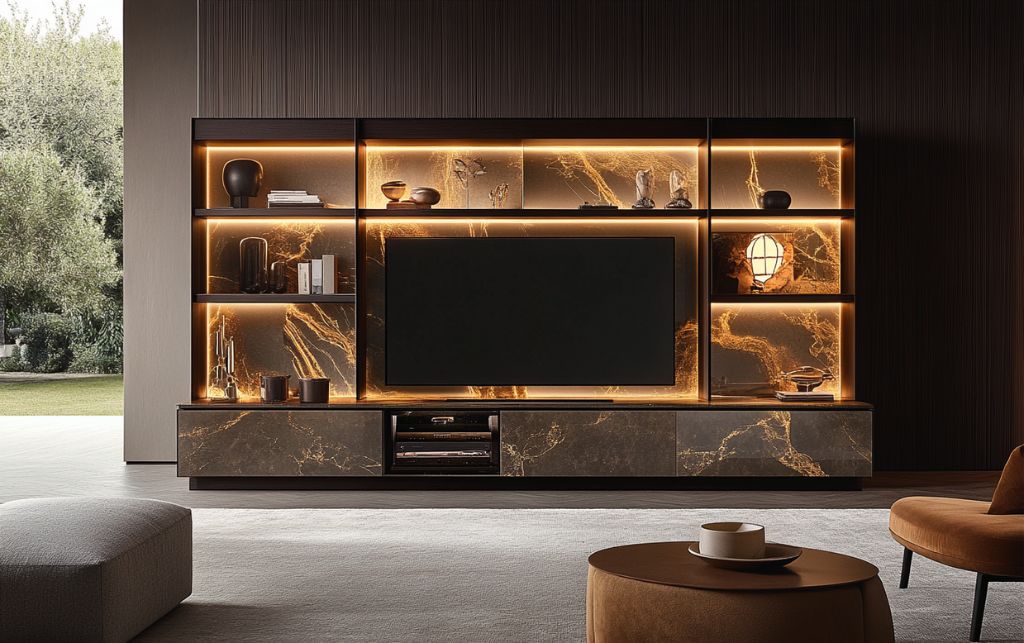
Thoughtful lighting transforms a TV media unit from functional furniture to a dramatic focal point. The dance between natural and artificial light brings depth that static cabinetry alone cannot provide.
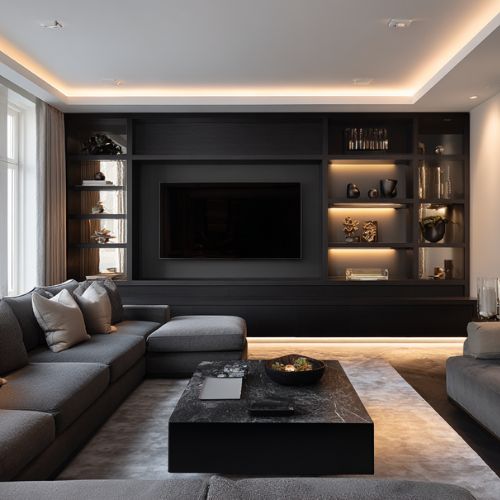
LED strip lighting tucked within shelving casts a gentle glow, revealing the textures of displayed objects without harsh shadows. Dimmable systems let you adjust the ambience to suit the moment.
Targeted accent lights highlight your most treasured items while allowing lesser pieces to recede. This technique is especially prized in Hampstead homes, where fine art collections demand appropriate illumination.
Consider backlighting translucent surfaces like reeded glass or thin stone. This creates a gentle radiance, lending the entire unit a subtle architectural glow that elevates the mood of the whole room.
Key Takeaway: Thoughtful lighting transforms functional storage into a dramatic focal point. LED strips within shelving, targeted accent lights, and backlighting for translucent materials create depth and ambience that static cabinetry simply cannot achieve.
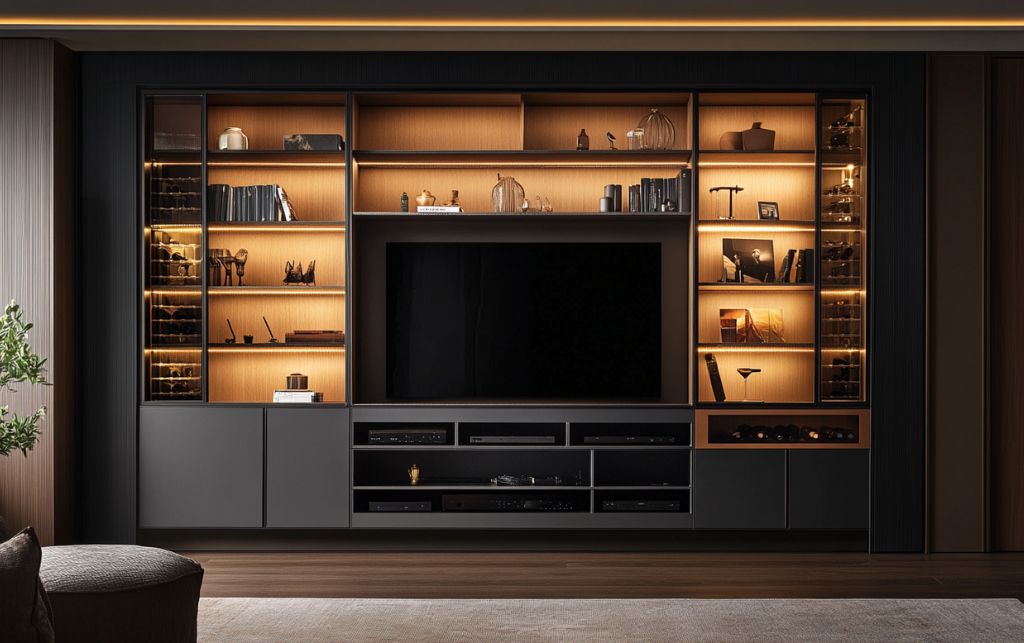
The beauty of bespoke media units lies in reflecting your life as well as your taste. Entertainment habits, collections and lifestyle all shape the final result.
Storage needs differ greatly. Wine collectors may wish to integrate climate-controlled sections, while art collectors benefit from adjustable shelves to accommodate evolving displays. Avid readers appreciate fixed shelving scaled for their library.
Technology must blend seamlessly while staying flexible for future updates. Dedicated compartments for streaming devices, sound systems and gaming gear keep the overall look sophisticated. Concealed drawers can double as charging hubs for portable devices.
Your collections, be they ceramics, photography or sculpture, deserve proper display. Adjustable shelving with integrated lighting ensures your arrangement evolves as you do, keeping your media unit relevant for years to come.
Key Takeaway: Bespoke design reflects your lifestyle whilst maintaining architectural integrity. Storage for wine collections, adjustable shelving for evolving displays, and concealed technology hubs ensure your media unit remains relevant as your life changes.
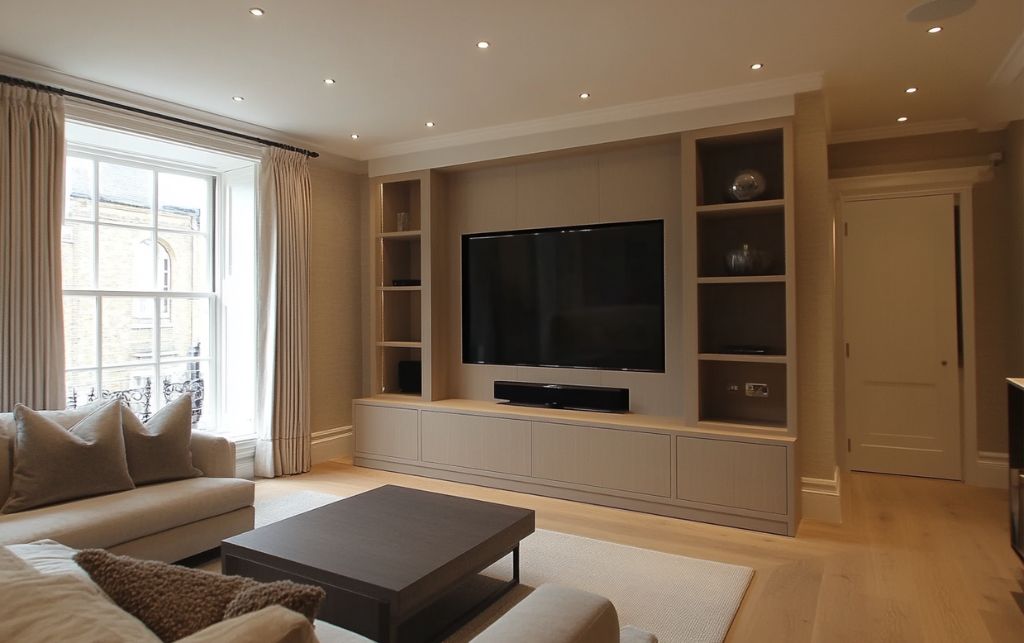
Flawless installation distinguishes a luxury media unit from ordinary furniture. A bespoke TV media storage wall unit demands precise installation to maintain clean lines and architectural cohesion. Structural requirements for heavy screens and generous storage must be addressed up front for both safety and elegance.
Wall-mounted elements need substantial backing and precise fixings to bear combined weights. In Marylebone's period homes, hidden structural reinforcement is often necessary to maintain an uninterrupted design.
Services integration, power, data, and ventilation must be planned alongside the design to avoid last-minute compromises. When executed well, these technical elements become invisible, preserving the unit's refined appearance.
Finally, floor protection is crucial. Substantial units can damage delicate flooring during installation, so protective measures and meticulous handling are non-negotiable.
Key Takeaway: Flawless installation distinguishes luxury from ordinary furniture. Substantial wall reinforcement, invisible services integration, and meticulous handling preserve the refined appearance that makes bespoke media units worthy investments.
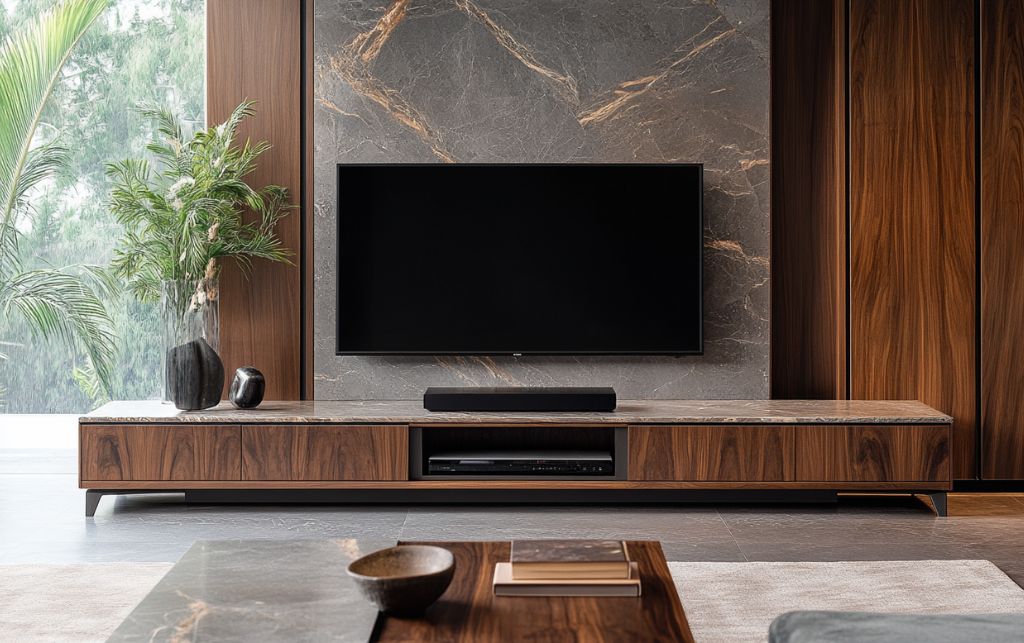
A bespoke media unit is an investment in long-term architectural beauty; thoughtful upkeep preserves this legacy. Premium materials and construction reduce ongoing maintenance demands. A large TV and media storage unit, built with premium materials, rewards regular upkeep with lasting beauty and function.
Each material has specific care needs. Natural stone responds best to gentle, specialised cleaners, while fine hardwoods benefit from periodic conditioning to maintain depth and protect against humidity changes.
Hardware needs occasional attention, too. High-quality soft-close hinges may require light adjustment over time to keep operation seamless. Metal accents should be wiped clean to avoid tarnishing or corrosion.
Finally, technology evolves. Modular designs allow discreet upgrades or replacements without disturbing the unit's architectural integrity, a detail the discerning homeowner will appreciate for decades to come.
Key Takeaway: Premium materials and thoughtful construction reduce ongoing maintenance demands. Gentle, material-specific care and modular designs for technology upgrades ensure your media unit maintains its architectural beauty for decades.
What minimum depth should I specify for a TV media storage unit to achieve proper architectural presence?
For genuine sculptural quality, specify a minimum depth of 45-50cm for the main body of your unit. This allows for varying depths, recessed niches, and flush-mounted sections that create the interplay of shadow and highlight essential for architectural distinction. Shallower units might accommodate equipment but lack the substance to anchor substantial rooms properly.
How do I determine the appropriate scale for my media unit in relation to ceiling height?
In rooms with standard ceiling heights of 2.7-3 metres, your media unit should occupy approximately one-third of the wall's height to establish proper visual grounding. Where ceilings extend beyond 3.5 metres, as in many period conversions throughout Kensington and Chelsea, this proportion often increases to half the wall height whilst maintaining elegant detailing to prevent overwhelming the space.
What's the most effective way to integrate lighting without compromising the unit's refined appearance?
LED strip lighting tucked discreetly within shelving recesses creates gentle illumination that reveals texture without harsh shadows. Combine this with targeted accent lights for prized objects and consider backlighting translucent materials like reeded glass or thin stone. Dimmable systems allow you to adjust intensity throughout the day, transforming the unit from a subtle presence to a dramatic focal point as needed.
How should I approach material selection to ensure my media unit ages gracefully over decades?
Limit your palette to three primary materials for sophisticated restraint, natural stone for architectural gravitas, fine hardwoods for warmth, and metal accents for contemporary edge. Select timeless combinations rather than trendy pairings, for instance, American walnut with Carrara marble and brushed brass creates enduring elegance that transcends fleeting design fashions, whilst requiring only gentle maintenance to preserve its beauty.
Address & Hours:
FCI London, Rays House, North Circular Road, London, NW10 7XP
Monday - Saturday: 10am - 6pm
Sunday & Bank Holidays: 11am - 5pm
Contact Details:
Phone: +442081531235
Email: [email protected]
What to Bring:
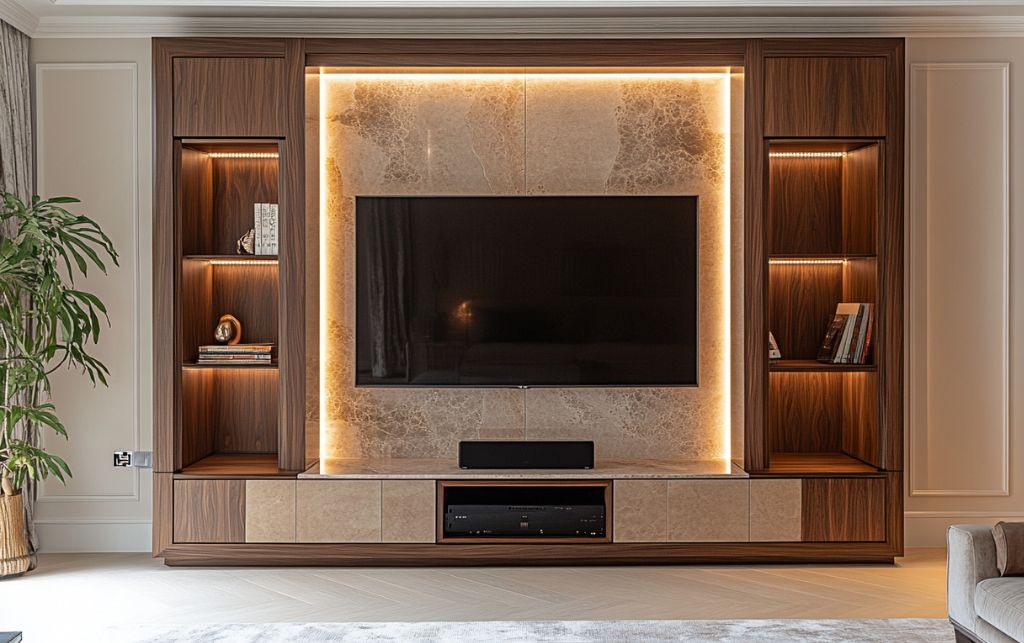
A well-designed TV media storage unit should never feel like an afterthought. It's an architectural element that elevates your interior while meeting everyday practical needs. These pieces are investments in immediate enjoyment and enduring value focal points that define sophisticated living spaces. True architectural presence arises from proportion, materiality, lighting and craftsmanship, never fleeting trends. Done right, your media unit will feel as though it was always meant to be there. We invite you to visit our London showroom to explore bespoke media storage solutions that balance your lifestyle with your refined aesthetic.
Nedelia Martin
"I discovered FCI London almost 5 years ago, and I keep going back to them when I need to buy furniture. The team is fantastic, both the sales staff and the in-house designer were knowledgeable, helpful, and really took the time to understand my style."
Chava Kahn
"Service was personalised and excellent. Sanjay saw us through the process from start to end, ensuring that we were happy with our choices. The delivery guys were amazing and went the extra mile."
Mike Jenkins
"FCI, and Kasia in particular, provide an excellent service to design professionals and the trade. Their expertise, helpful 'can-do' approach, assistance and attention to detail are second-to-none."
We help designers & clients transform mundane spaces into extraordinary ones.


Book a video consultation and we'll advise you on furniture, space planning, colour schemes and much more.
Book A ConsultationBook a visit to our stunning, multi award-winning, 30,000 sqft.
Over 700 brands under 1 roof.
Most Popular on FCI London: Fitted Wardrobes | Luxury Designer Rugs | Luxury Sofas | Luxury Furniture Store | Luxury Interior Designers | Luxury Bedroom Furniture | Luxury Modern Chairs | Luxury Coffee Tables | Luxury Designer Kitchens | Luxury TV Units | Luxury Dining Tables | Luxury Storage Solutions | Luxury Sideboards | Luxury Stools & Bar Stools | Luxury Bespoke Joinery | Luxury Modern Hallway Furniture | Furniture Showroom Appointment | Luxury Lighting | Modern Luxury Outdoor Furniture
Transparency isn’t a policy. It’s a principle.
Have a peek at what our clients really have to say.