
Published Date: Dec 02, 2025 | Last Updated: Jun 27, 2026
Written by: Emma Cyrus, Senior Copy, Content & Editorial Writer
Reviewed by: Aziz, Interior Architect at FCI London
Edited by: Zoona Sikander, Head of Content
Estimated Reading Time: 5 minutes
TL;DR - Styling a black TV unit requires deliberate attention to contrast, texture, and restraint. Rather than fighting the darkness, embrace it as a sophisticated canvas that rewards thoughtful composition. Through layered lighting, metallic accents, natural materials, and intentional negative space, a black unit transforms from a potential visual void into an elegant architectural statement that anchors your room with quiet authority.
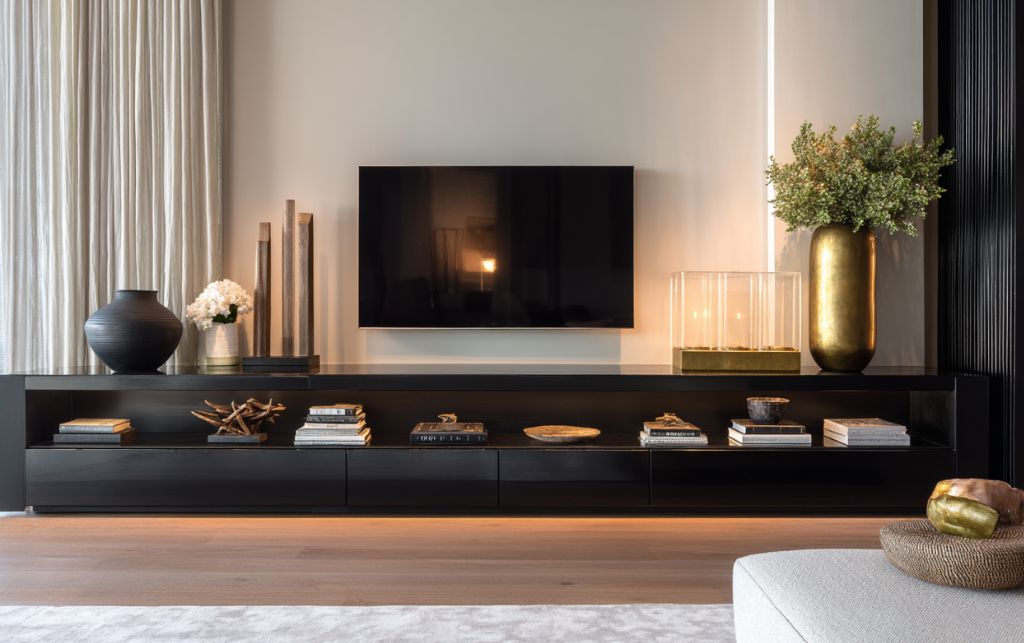
Table of Contents
A black TV unit commands attention in ways few pieces of furniture can, yet most sit underutilised, displaying only the television itself.
The difference between merely housing electronics and creating a considered focal point lies entirely in how you dress the space around it. For discerning homeowners across London, and the interior designers who serve them, we've distilled decades of showroom experience into ten proven styling techniques that transform black TV units from practical necessities into considered design statements. Each transforms dark cabinetry from a practical necessity into the kind of understated anchor that makes a room feel complete rather than simply furnished.
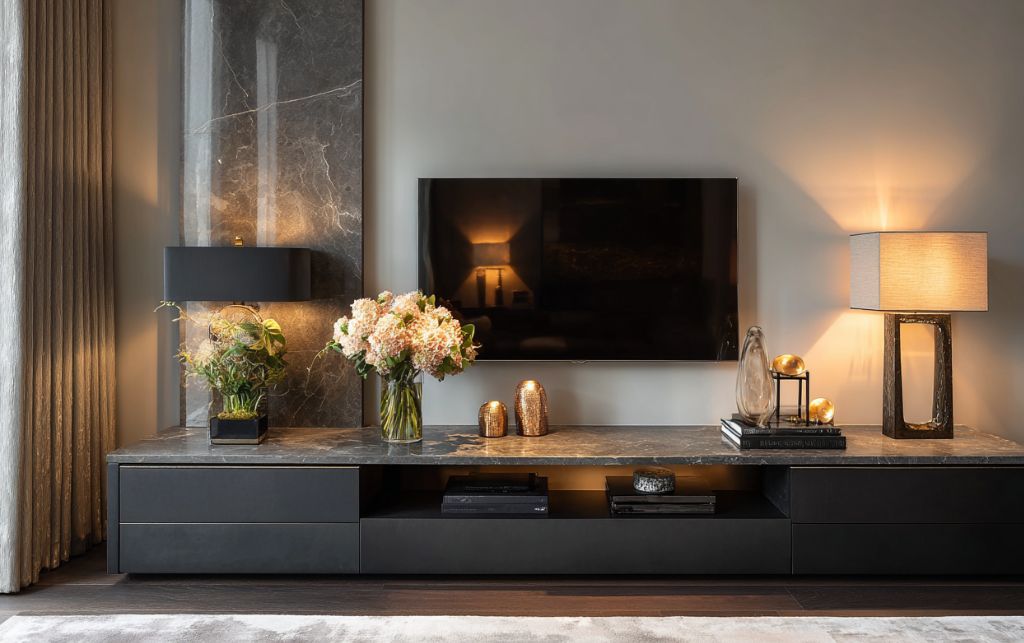
A black TV unit presents a distinctive design challenge - one I encounter often when working with clients across London's most discerning neighbourhoods. The appeal is undeniable: its sophistication, its visual grounding, its architectural authority. Yet, without considered styling, that allure can easily turn into a visual void.
Over the years, I've noticed a familiar pattern. Clients select a stunning black wooden TV unit, position it perfectly, mount the television, and then pause. Across our showroom, we've observed an uncountable number of clients approach luxury TV units with a mix of confidence and caution, eager to harness their architectural presence, yet uncertain where to begin. The question follows: "How do I make this feel natural rather than simply dark?"
The answer isn't about countering the darkness but embracing it as a canvas.
When styled thoughtfully, a black TV unit becomes a study in balance, contrast, texture, and proportion, transforming a practical piece into a sculptural statement. Because black absorbs light and attention, every surrounding element must earn its place.
Key Takeaway: Black TV units demand deliberate styling attention because they absorb rather than reflect light, creating a powerful visual presence that can either anchor a room beautifully or create an unintentional void without thoughtful composition.
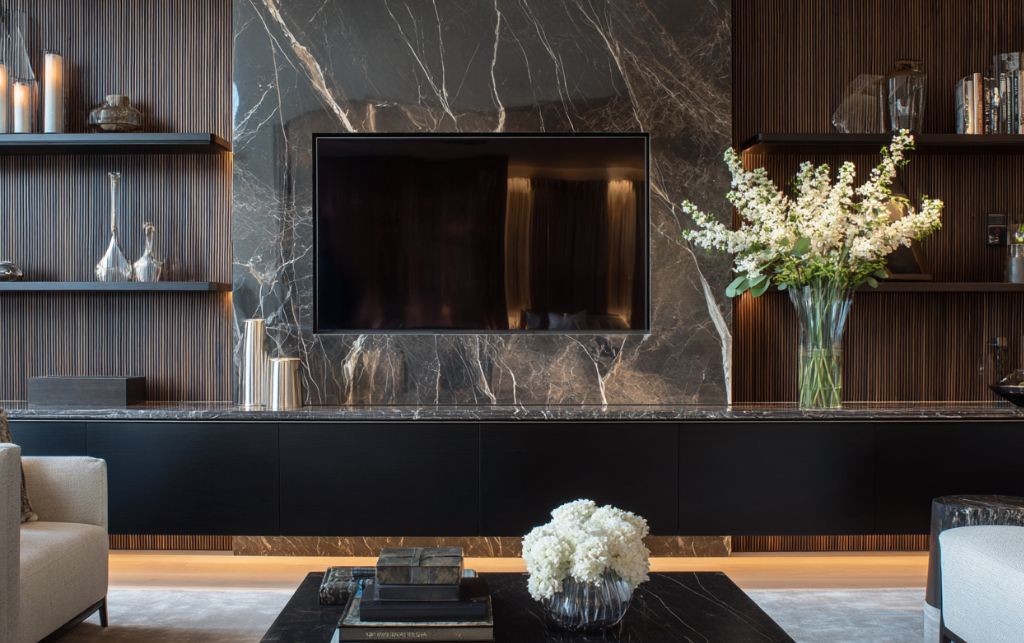
Before exploring specific techniques, it's worth considering why black TV units demand deliberate attention. Unlike lighter furniture that reflects light and recedes, black commands presence. It creates a visual full stop - powerful when handled well, heavy when not.
The goal is to establish a clear visual hierarchy.
The television already draws the eye; paired with a substantial black unit, it can easily create a "black hole" effect. Effective styling introduces focal points that guide the gaze while honouring the unit's inherent drama.
Finish also matters.
A gloss surface reflects light and surrounding detail, amplifying space but showing every fingerprint. A matt black unit feels grounded and elegant, but can appear denser in compact rooms.
Meanwhile, black and white TV unit designs already offer internal contrast through pattern or two-tone finishes, requiring less external intervention to achieve visual balance. Recognising your starting point defines your styling direction. The modern TV unit black finish, whether achieved through lacquer, veneer, or powder-coated metal, establishes immediate architectural authority that lighter woods cannot match.
When shopping for black TV units, understanding finish and scale before purchase prevents many styling challenges later, a consideration we emphasise during every showroom consultation.
Key Takeaway: Understanding your unit's finish, gloss, matte, or patterned, determines your styling approach, as each surface treatment interacts differently with light and surrounding elements.
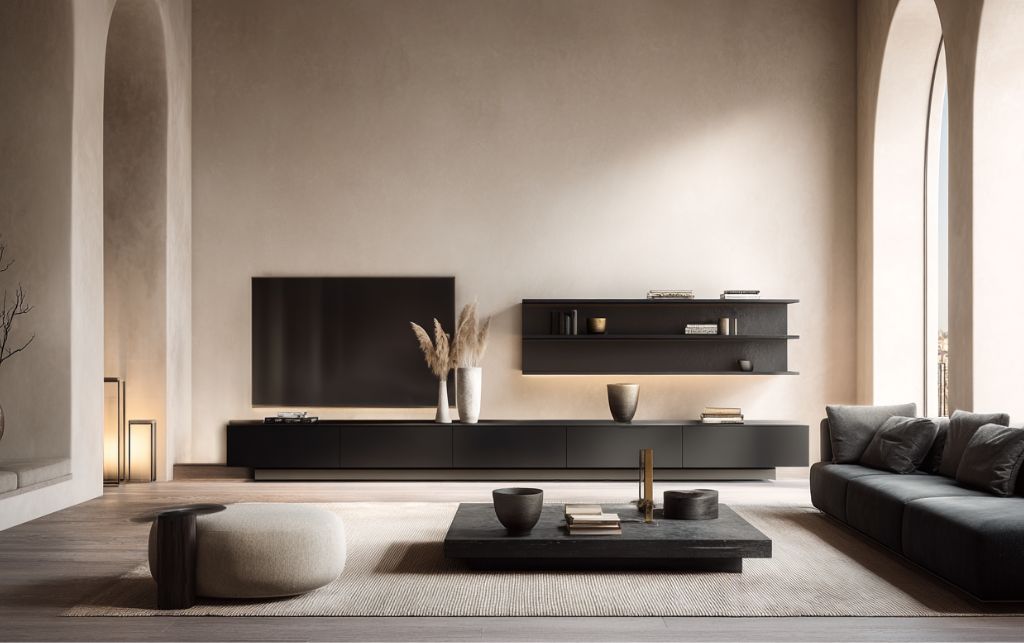
Contrast is the simplest and most powerful tool. In a Notting Hill townhouse, we set a sleek black unit against warm ivory plaster, and the shift was transformative - the piece read as sculpture rather than furniture.
Texture makes the difference. Venetian plaster, lime wash or raised-pattern wallpaper introduces subtle movement and prevents the surface from feeling flat. For black floating TV units, a light, tactile backdrop enhances that sense of weightlessness.
Warm neutrals - putty, mushroom, greige - soften the strength of black far better than cold greys. In one Hampstead home, a shifting greige wall allowed a large black wooden unit to breathe beautifully throughout the day.
Key Takeaway: Textured, warm-toned backgrounds transform black furniture from heavy to sculptural by providing visual relief and allowing the piece to stand as an intentional design element.
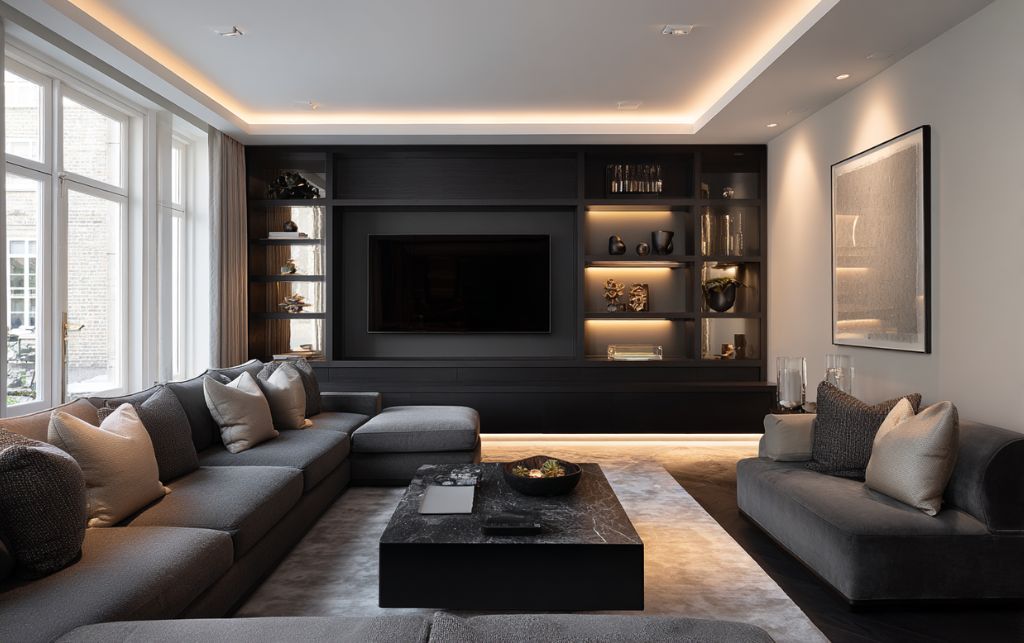
Lighting determines whether black feels bold or oppressive. Under harsh overheads, dark furniture looms. Introduce layers - ambient, accent and task - and suddenly it becomes architectural.
Recessed dimmable lights keep shadows soft, while wall washers or picture lights behind the unit create a gentle halo that lifts it from the wall. Integrated LED strips along a floating base or within glass compartments add subtle glow and sophistication.
In one apartment I worked on, adjustable reading lights positioned beside a high-gloss divider created multiple light zones, ensuring the piece contributed atmosphere rather than dominance.
Key Takeaway: Layered, adjustable lighting - combining ambient, accent, and integrated LED elements - transforms black furniture from potentially oppressive to architecturally refined by creating depth and gentle illumination.
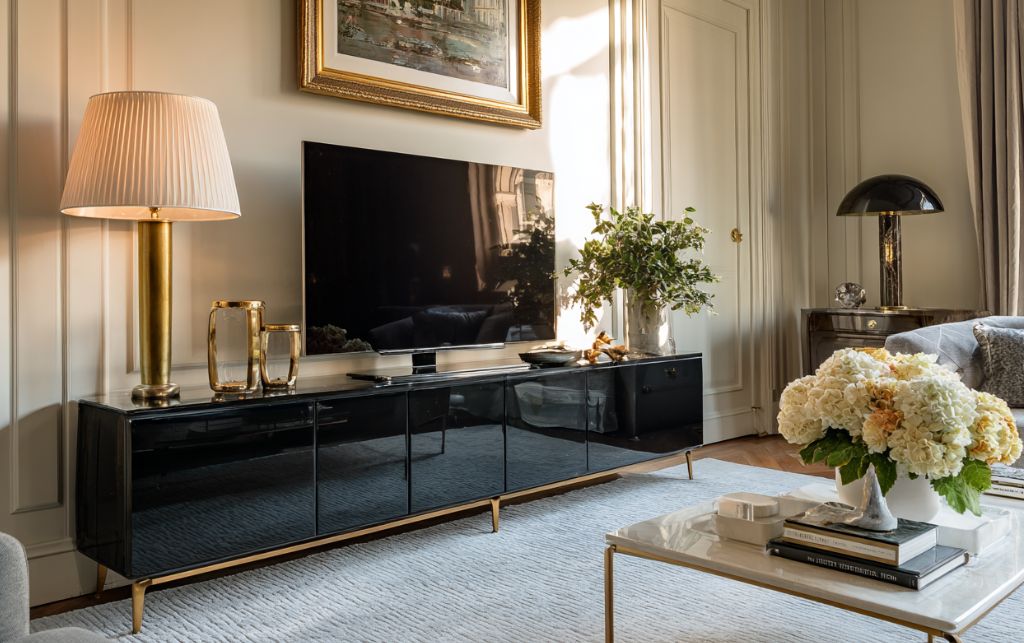
Black and metallic finishes share a language of luxury. Used with restraint, metal introduces rhythm and reflection.
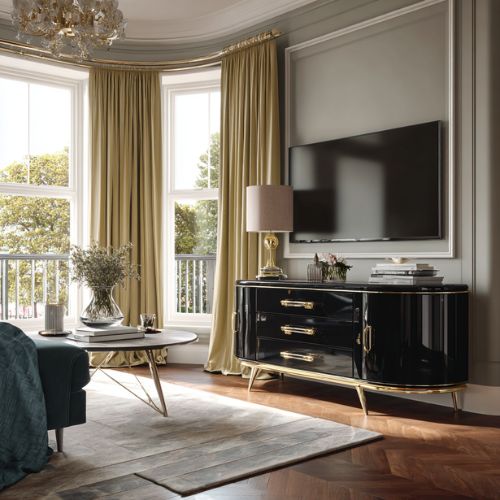
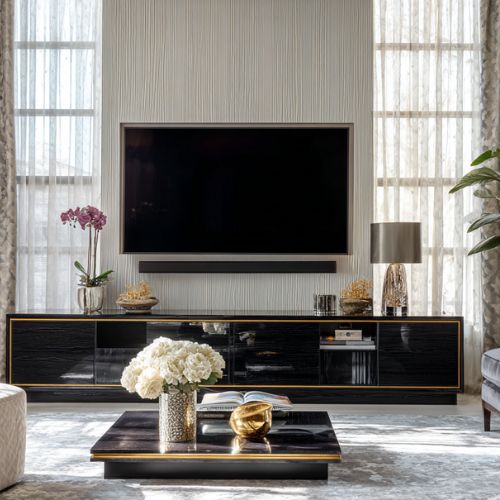
A black high gloss TV unit already carries theatrical presence through reflective surfaces; echoing metallic finishes elsewhere, in lamp bases or picture frames, creates cohesion without competition. With pure black pieces, brushed brass or aged bronze add warmth, while chrome or nickel bring crisp modernity.
Key Takeaway: Strategic metallic accents in brass, bronze, or chrome create visual rhythm through reflection, echoing the inherent luxury of black furniture when applied with restraint.
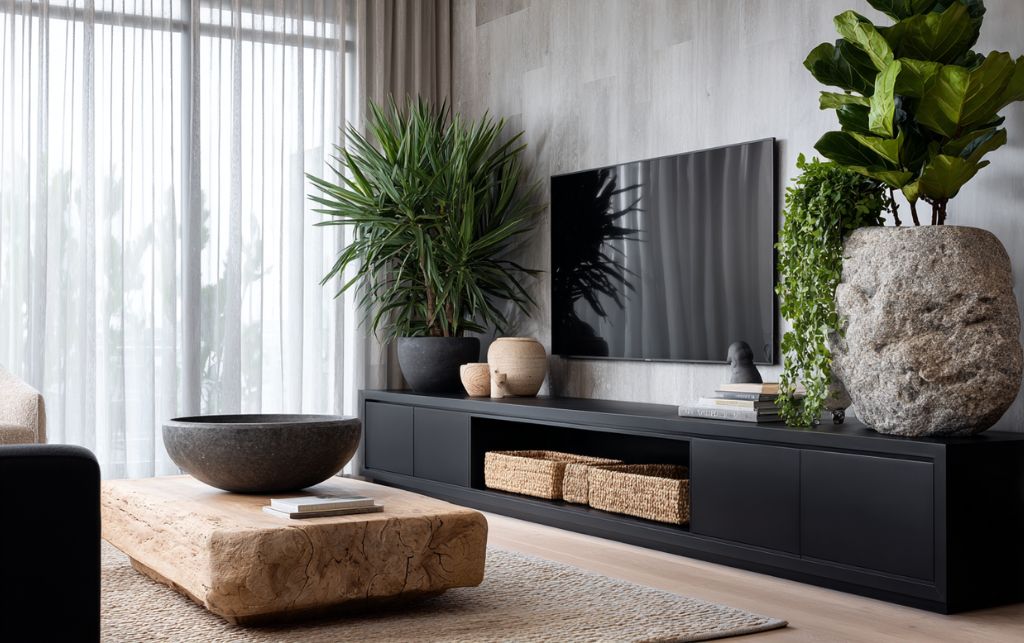
Without natural materials, black can feel austere. Wood, stone, foliage and woven fibres restore warmth and tactility.
Generous plants such as fiddle-leaf figs or kentias introduce scale and softness. Smaller greenery often looks apologetic; larger forms balance black's visual gravity. Woven baskets within open shelving - crafted from rattan or seagrass - add functional texture.
A sculptural stone bowl or ceramic vessel on the console draws the eye even when the screen is off. Choose objects substantial enough to stand proud against the dark background - delicate pieces disappear.
Key Takeaway: Substantial natural elements - generous plants, sculptural ceramics, woven textures - provide essential warmth and tactility that prevent black furniture from feeling cold or austere.
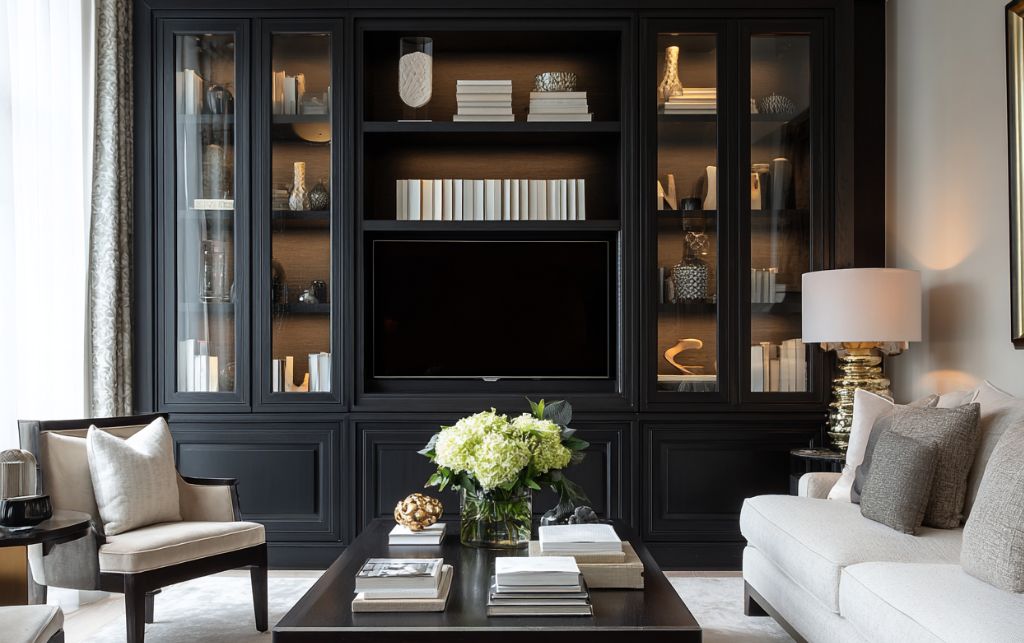
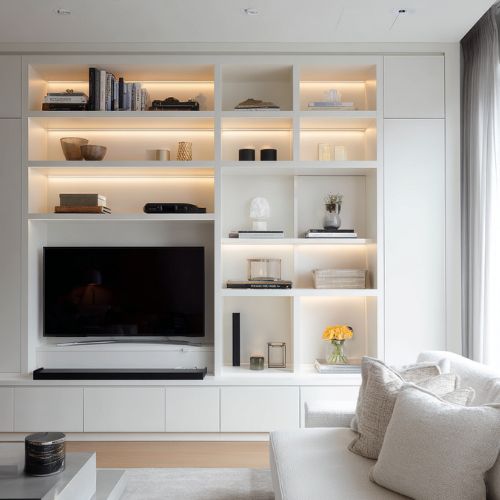
Open shelving in black units rewards disciplined styling. The dark interior absorbs light, so arrangement and spacing are everything. The compartments within a TV storage unit's black interior absorb light dramatically, making disciplined editing and strategic spacing non-negotiable for visual clarity.
Apply the rule of thirds: group objects in odd numbers, vary height, and leave breathing space. Books can anchor or elevate displays - white or cream spines offer striking contrast, while muted tones bring subtle depth.
Key Takeaway: The rule of thirds - odd-numbered groupings with varied heights and generous spacing - creates visually compelling arrangements that prevent dark shelving from feeling heavy or cluttered.
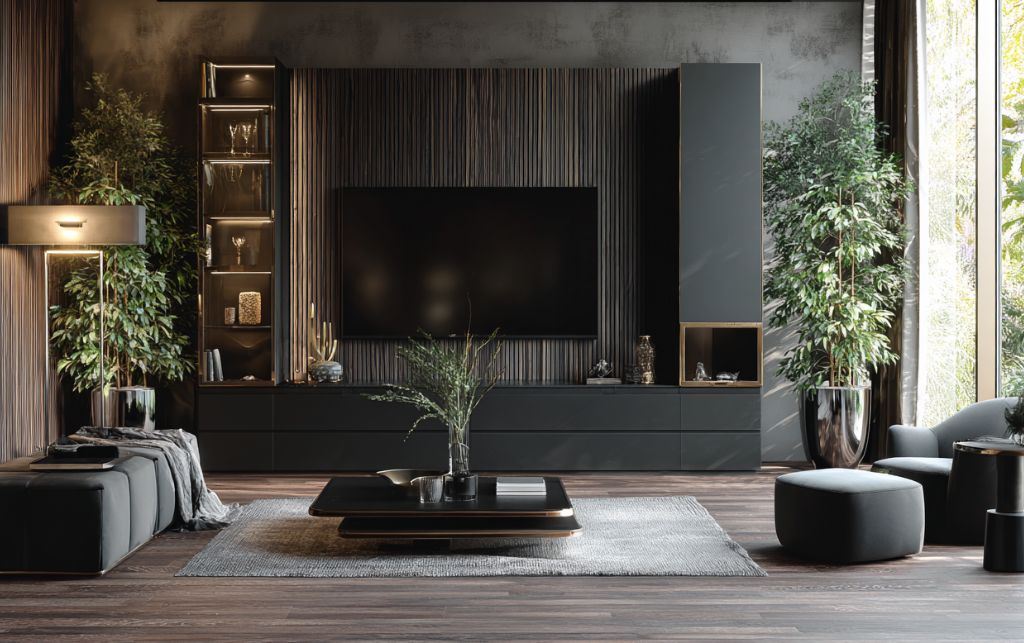
Black furniture holds visual weight; balance prevents it from overwhelming. Symmetry offers stability without rigidity.
Floor lamps, tall cabinets or shelving towers on either side create an intentional frame. Choose complementary finishes - matte wood with matte units, reflective metals with gloss. When using plants as flanking elements, mirror the containers rather than the foliage - nature's irregularity keeps the symmetry alive.
Key Takeaway: Symmetrical flanking elements - matching lamps, shelving, or planters - create intentional framing that balances black furniture's visual weight without introducing rigidity.
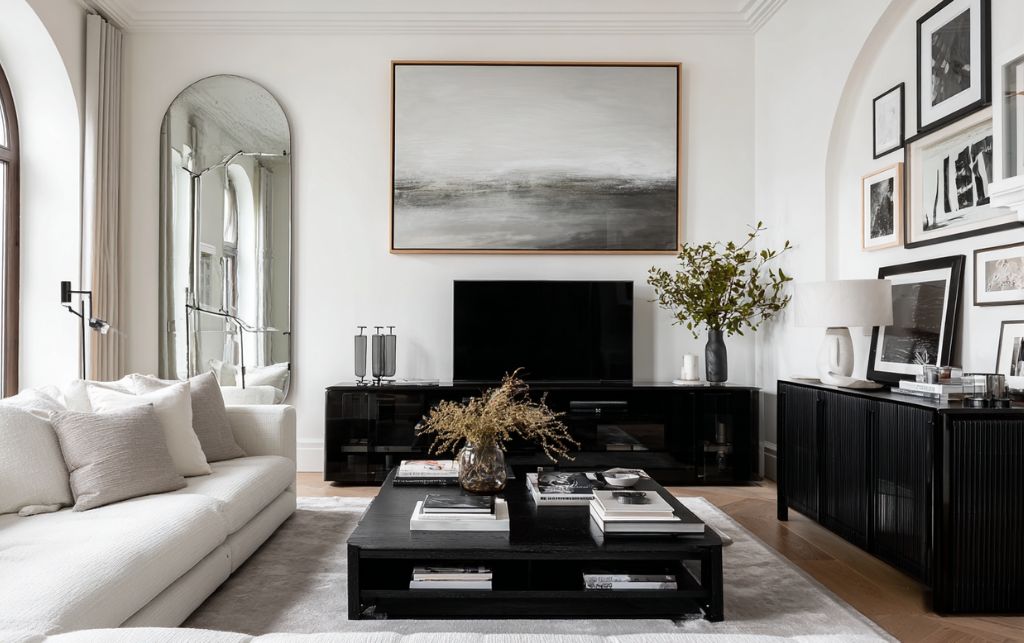
What surrounds a TV unit shapes how it's perceived. Art and mirrors lift the eye and relieve visual density.
Hanging large artwork above the unit introduces hierarchy; lighter-toned pieces expand the space. Gallery walls that extend beyond the unit's width also work beautifully, provided they're planned with care. Mixing frame colours - black, white, natural wood - balances cohesion and contrast.
Mirrors deserve special thought, especially with gloss finishes. Placed to catch natural light, they reflect brightness and movement. In one project, a mirror opposite a window doubled the room's glow, offsetting the black unit's gravitas.
Key Takeaway: Strategically positioned art and mirrors lift the eye upward and reflect natural light, counterbalancing black furniture's density while expanding perceived space.
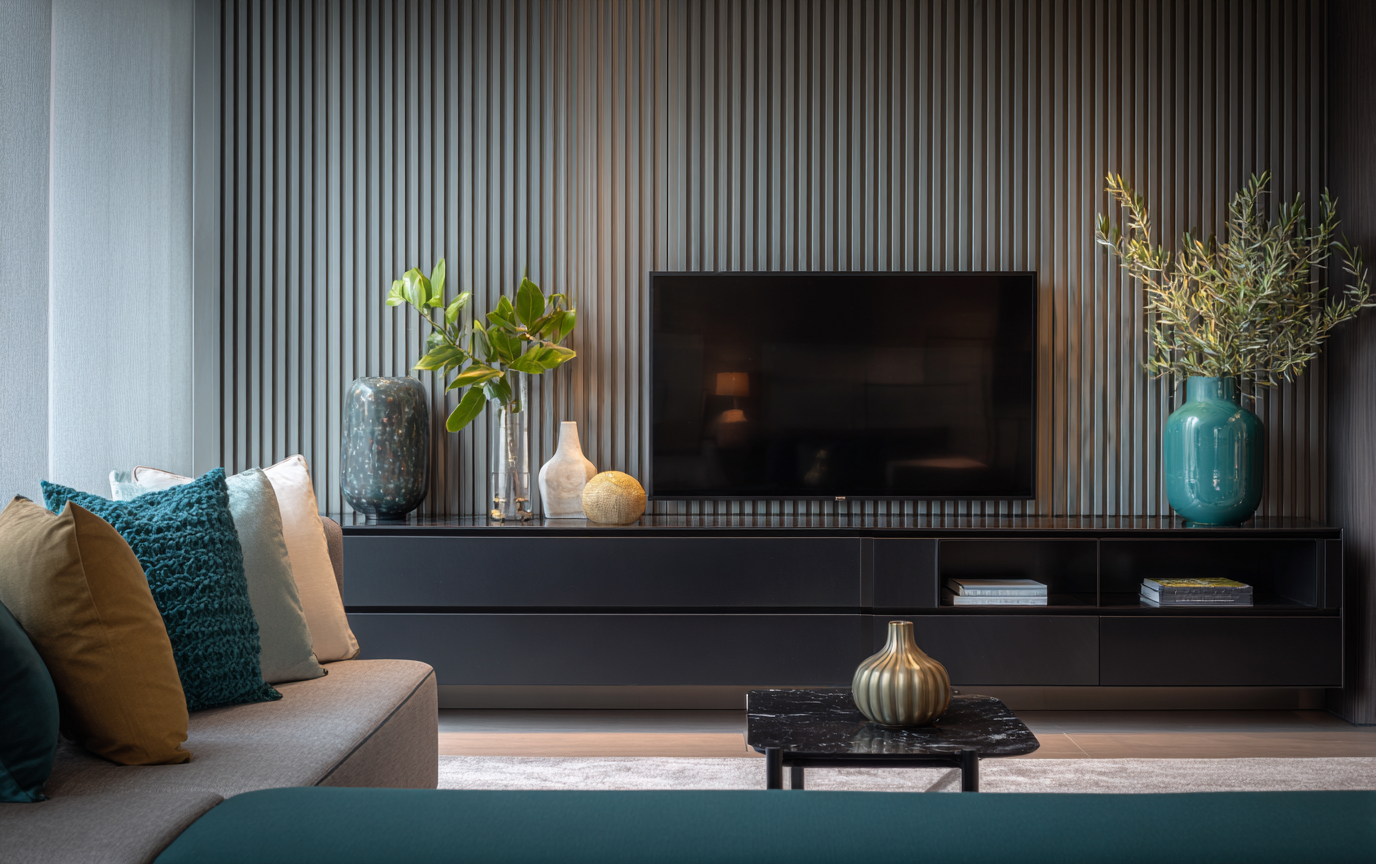
Restraint defines luxury, but a controlled use of colour prevents monotony.
One accent tone repeated sparingly - a vase here, a cushion there - creates unity. Deep jewel tones such as emerald or sapphire sit beautifully against black; earthy ochres add warmth, while pastels generally fade away.
In a Soho loft, deep teal accents woven through art and accessories enlivened a black-and-white unit without compromising its refined composure. And of course, greenery - whether lush tropical or silvery olive - remains the most timeless accent of all.
Key Takeaway: A single accent colour repeated sparingly - particularly deep jewel tones or earthy hues - introduces vitality without overwhelming black furniture's sophisticated restraint.
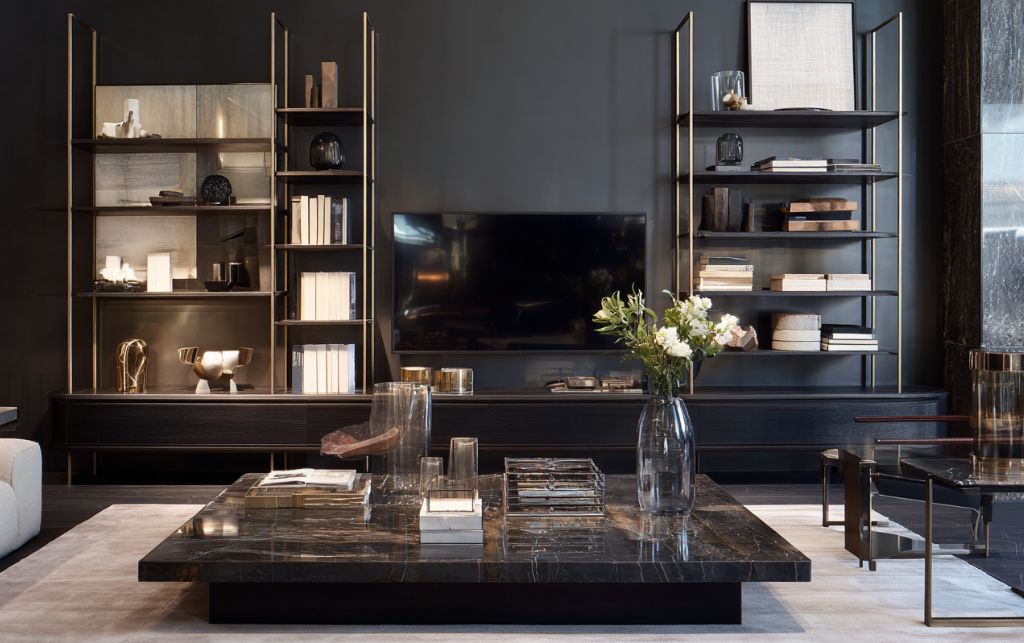
Flat displays lack intrigue; layering builds depth and movement.
Lean smaller artworks in front of larger ones, or stack books and marble risers to vary height. In a Surrey home, staggered tiers of sculptural pieces invited the eye to travel through the composition rather than skim across it.
Glass or acrylic accessories further this effect, allowing glimpses of the black background and creating lightness through transparency. For a black TV unit glass shelving, transparent accessories and acrylic risers create visual lightness while maintaining the sophisticated dark framework.
Key Takeaway: Layered displays with staggered heights and transparent elements create visual depth that encourages the eye to explore rather than simply scan across dark surfaces.
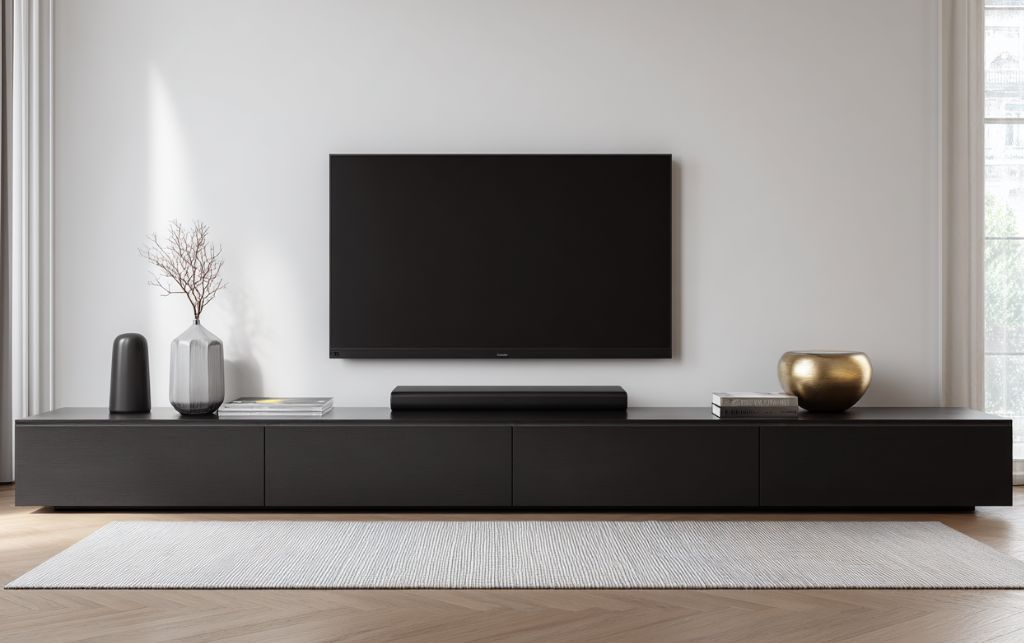
Perhaps the most refined gesture is restraint. Black furniture already speaks strongly - crowding it with décor mutes that voice.
Leave portions of the surface clear to let the form and finish shine. In minimalist settings, a single statement object can achieve more than an entire vignette.
Cable concealment is equally critical. Wires instantly undermine a luxurious aesthetic. Whether hidden within the wall or channelled through the unit, tidy wiring preserves the purity of the design.
In one project, we styled a matt black TV unit with only three pieces - a sculptural brass form, an oversized art book, and a ceramic bowl. The simplicity was quietly powerful.
Key Takeaway: Generous negative space and concealed cabling allow black furniture's inherent form and finish to command attention, proving that restraint often speaks louder than abundance.
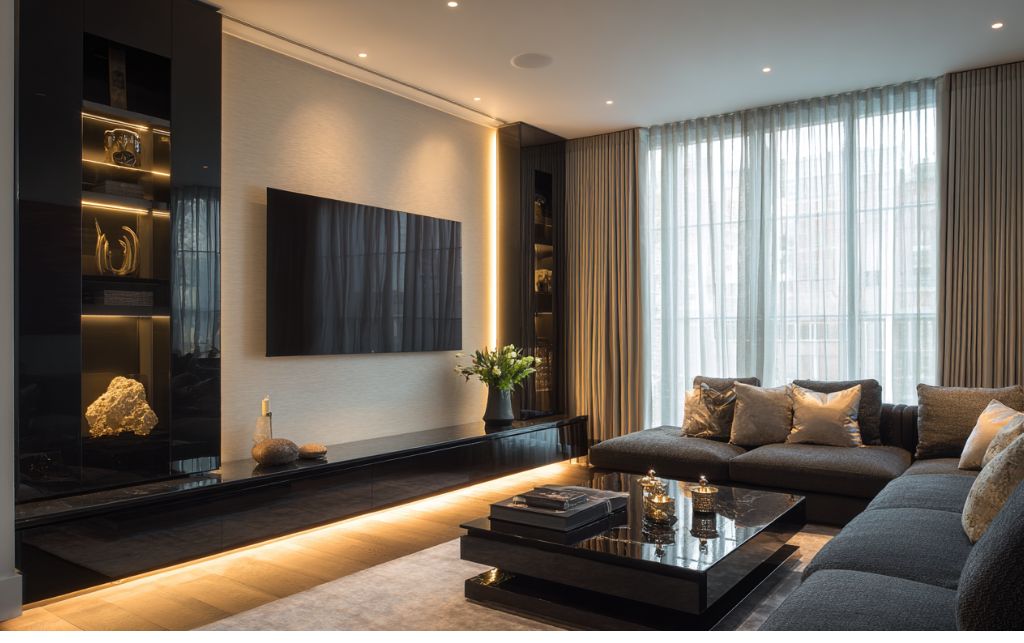
Even the most design-literate clients stumble on a few recurring missteps. Overcrowding tops the list; filling every shelf or surface makes black furniture feel heavy and chaotic.
Scale matters too. Tiny trinkets vanish against dark backdrops, while overly large objects can feel cumbersome. Aim for balanced proportions and clear visual breathing space.
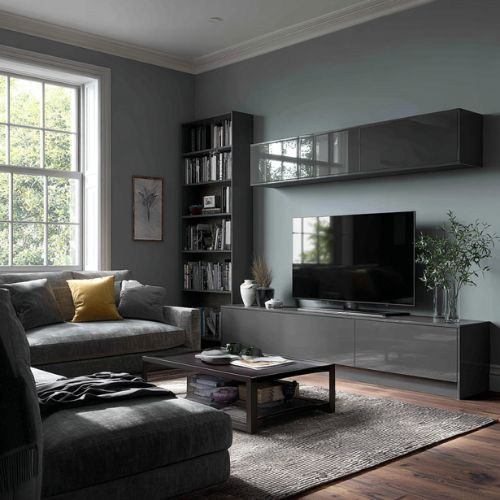
Maintenance is another consideration. Gloss black TV units particularly demand rigorous cable management; their reflective surfaces amplify visual clutter far more than matte alternatives. Gloss and glass finishes highlight every fingerprint; matte alternatives demand less upkeep. And above all, ensure the unit relates to the wider scheme - echoing materials or colours elsewhere creates cohesion and calm.
Key Takeaway: Avoid overcrowding, mismatched scale, and isolated styling - ensuring your black unit connects harmoniously with the wider room scheme through repeated materials and thoughtful restraint.
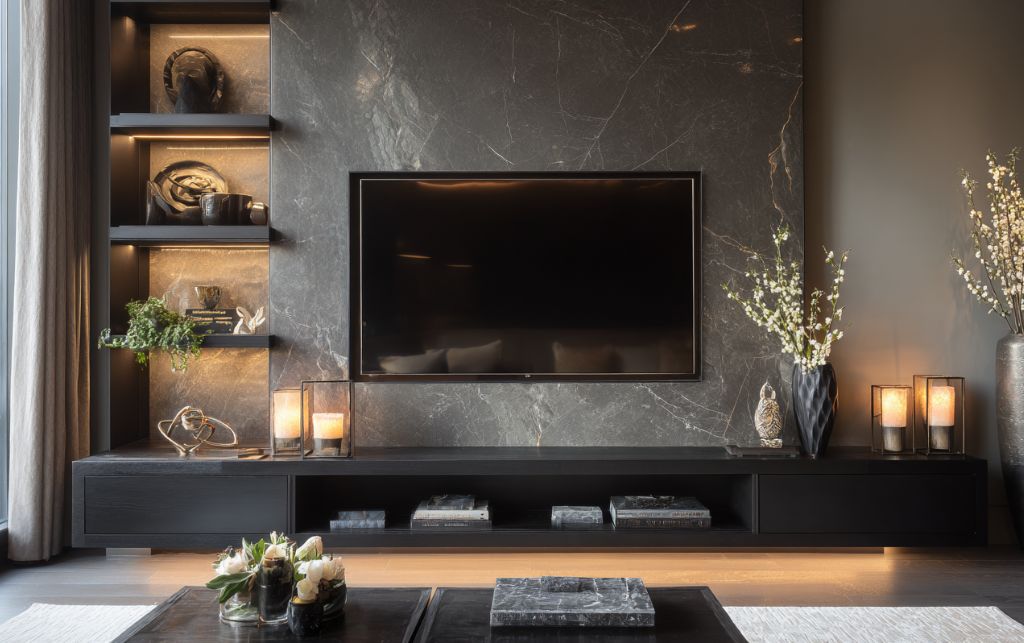
Styling black TV units is ultimately about harmony - balancing depth with light, strength with subtlety. By introducing contrast, warmth, and controlled restraint, a dark piece becomes not a void but a statement.
From opulent black and gold TV unit designs that echo Art Deco glamour to timeless matt finishes, these principles remain constant: acknowledge the drama, control the composition, and give the eye somewhere to rest.
At FCI London, we see black furniture not as a challenge but as an opportunity - a sophisticated foundation upon which art, light, and texture can perform. Visit our showroom, and our design consultants will help translate these principles into your own space. After all, a television unit should never merely serve a function; styled with intention, it becomes the quiet anchor of a beautifully balanced home.
Key Takeaway: Black TV units reward intentional styling with sophisticated visual impact - embrace their inherent drama while balancing darkness with light, texture, and thoughtful restraint for enduring elegance.
What colours work best with a black TV unit?
Warm neutrals such as greige, mushroom, and ivory provide the most flattering contrast, allowing black furniture to read as sculptural rather than heavy. Deep jewel tones like emerald and sapphire introduce controlled drama, while metallic accents in brass or bronze add reflective interest. Pastels tend to fade against dark backgrounds, so opt for stronger, more saturated hues if introducing colour.
How do I prevent a black TV unit from making my room feel smaller?
Layered lighting is genuinely transformative - recessed dimmables, wall washers behind the unit, and integrated LED strips create depth rather than density. Position mirrors to reflect natural light, choose a pale textured backdrop, and maintain generous negative space on surfaces. Floating units appear lighter than floor-standing alternatives, particularly when backlit.
Should I match my TV unit to other black furniture in the room?
Matching finishes creates cohesion, but varying textures prevent monotony. A high-gloss TV unit pairs beautifully with matte black dining chairs or textured black lampshades. The key is to echo the darkness without replicating it identically - introduce contrast through material rather than colour. Natural wood, metallics, and soft textiles provide essential relief.
How much décor should I display on a black TV unit?
Less is genuinely more with dark furniture. Apply the rule of thirds when styling shelves, grouping objects in odd numbers with varied heights and generous spacing. A single sculptural piece often achieves more impact than multiple smaller items. Leave at least one-third of surfaces clear to allow the unit's form and finish to command attention, and always conceal cables for a refined aesthetic.
Visit Our Showroom
Address & Hours:
FCI London, Rays House, North Circular Road, London, NW10 7XP
Monday - Saturday: 10am - 6pm
Sunday & Bank Holidays: 11am - 5pm
Contact Details:
Phone: +442081531235
Email: [email protected]
What to Bring:
Black TV units demand intentional styling but reward thoughtful composition with sophisticated, enduring elegance. By embracing contrast through pale textured backgrounds, layering ambient and accent lighting, introducing metallic and natural elements, and maintaining generous negative space, dark furniture transforms from a potential visual void into an architectural statement. Whether your piece features high-gloss shine, timeless matt finish, or opulent black-and-gold detailing, these principles ensure it anchors your room with quiet authority rather than overwhelming presence.
Customer Reviews
Zlata Rybchenko
"I had an excellent experience with FCI. Their showroom offers an impressive selection of high-quality furniture and top international brands. The team provided outstanding service - knowledgeable, attentive, and genuinely helpful."
Chava Kahn
"Service was personalised and excellent. Sanjay saw us through the process from start to end, ensuring that we were happy with our choices. The delivery guys were amazing and went the extra mile."
Mike Jenkins
"FCI, and Kasia in particular, provide an excellent service to design professionals and the trade. Their expertise, helpful 'can-do' approach, assistance and attention to detail are second-to-none."
We help designers & clients transform mundane spaces into extraordinary ones.


Book a video consultation and we'll advise you on furniture, space planning, colour schemes and much more.
Book A ConsultationBook a visit to our stunning, multi award-winning, 30,000 sqft.
Over 700 brands under 1 roof.
Most Popular on FCI London: Fitted Wardrobes | Luxury Designer Rugs | Luxury Sofas | Luxury Furniture Store | Luxury Interior Designers | Luxury Bedroom Furniture | Luxury Modern Chairs | Luxury Coffee Tables | Luxury Designer Kitchens | Luxury TV Units | Luxury Dining Tables | Luxury Storage Solutions | Luxury Sideboards | Luxury Stools & Bar Stools | Luxury Bespoke Joinery | Luxury Modern Hallway Furniture | Furniture Showroom Appointment | Luxury Lighting | Modern Luxury Outdoor Furniture
Transparency isn’t a policy. It’s a principle.
Have a peek at what our clients really have to say.