
Published Date: Jan 31, 2026 | Last Updated: Jun 30, 2026
Written by: Emma Cyrus, Senior Copy, Content & Editorial Writer
Reviewed by: Cristina Chirila, Senior Interior Designer at FCI London
Edited by: Zoona Sikander, Head of Content
Estimated Reading Time: 9 minutes
TL;DR:The choice between round and square dining tables hinges on your room dimensions, entertaining style, and spatial flow rather than arbitrary preference. Round tables excel in smaller spaces and encourage intimate conversation, whilst square tables offer structured seating for larger gatherings and work well in formal settings. The decision should reflect how you actually use your dining space, not just how you imagine using it.
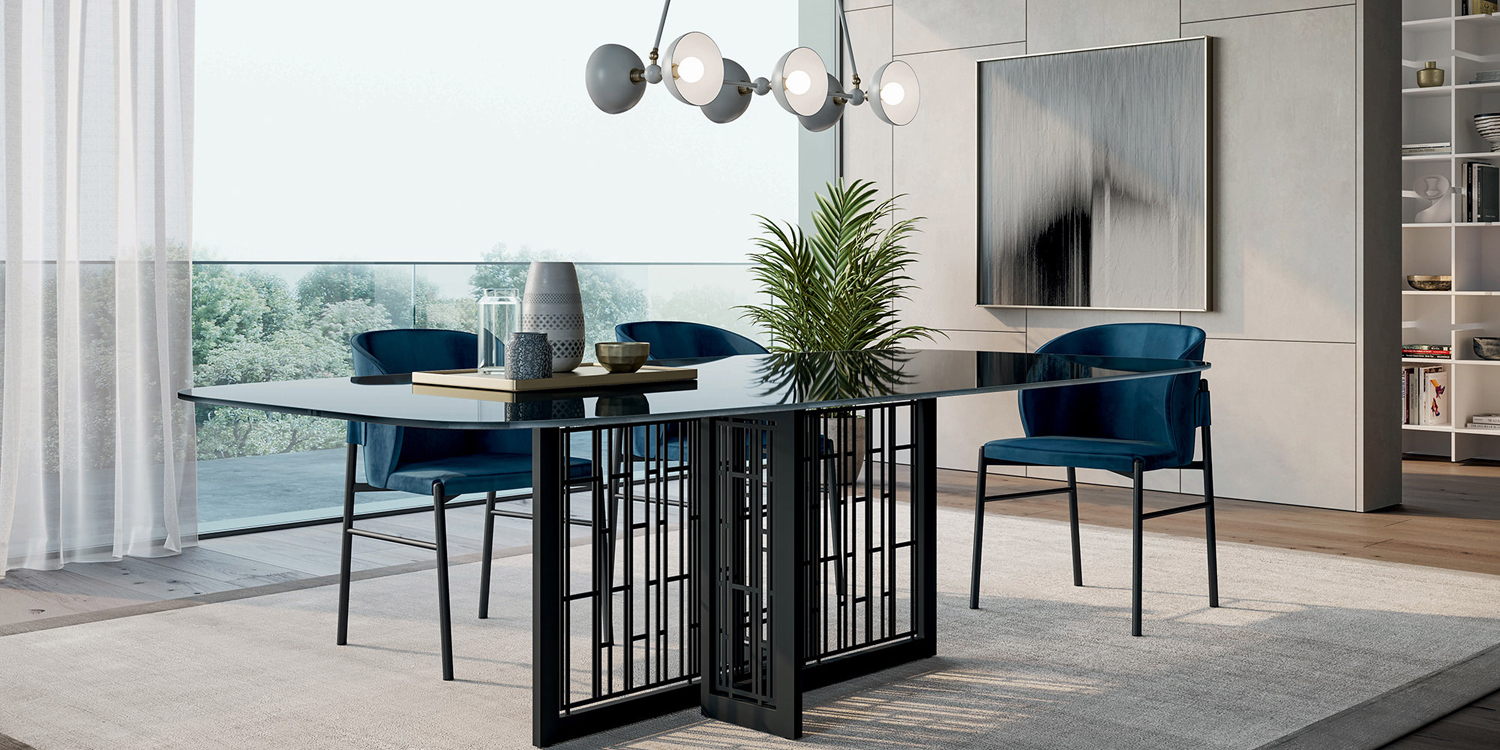
After two decades of designing dining spaces for clients across London, I've observed a recurring pattern: people fall in love with a table shape in theory, only to discover it doesn't serve their actual lifestyle. A client recently admitted her stunning round marble table, whilst beautiful, left four guests perched awkwardly during dinner parties because she'd underestimated her typical guest count.
The round versus square debate isn't truly about which shape is "better" in absolute terms. It's about understanding how each configuration affects movement, conversation, and the spatial dynamics of your particular room. In my experience, the most successful dining spaces aren't those featuring the most fashionable shape, but those where the table's geometry complements both the room's architecture and the household's genuine patterns of use.
This isn't a purely aesthetic decision masquerading as a functional one. The shape of your luxury dining tables fundamentally alter how people interact within the space, how traffic flows around it, and ultimately, whether your dining room becomes a gathering place or an underutilised showpiece.
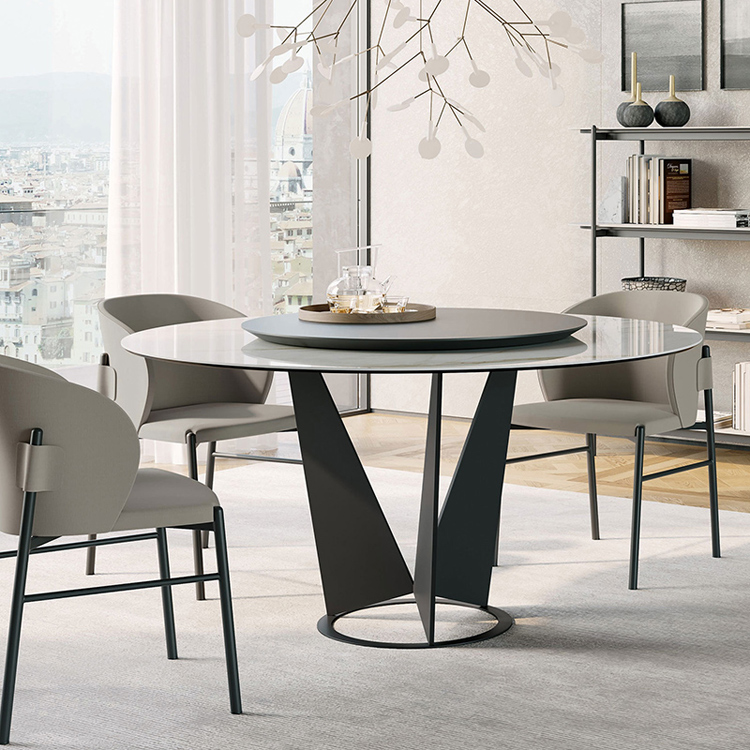
Round tables create what I call "democratic seating" - no hierarchy, no head of table, just equidistant sight lines that naturally encourage inclusive conversation. This isn't merely a charming design theory; it's geometry at work. When six people sit around a round table, each person is approximately the same distance from every other person, making cross-conversation effortless rather than requiring raised voices across a rectangular expanse.
I recently specified a 150cm round walnut table for a Notting Hill townhouse where the clients host regular dinner parties of six to eight. The circular configuration transformed their dining dynamic entirely. Previously, with a rectangular table, conversation naturally split into two separate groups at either end. The round table unified the group, creating precisely the convivial atmosphere they'd been seeking.
Key Considerations:
The absence of corners makes round tables genuinely more space-efficient in smaller dining areas, though not for the reason most people assume. It's not about fitting the table itself into the room - it's about circulation. Without protruding corners, you can navigate around a round table more easily in tight spaces, creating better flow in rooms where every centimetre matters.
For a West Brompton flat with a modest dining area, we selected a 120cm round glass table that seats four comfortably. The same floor area with a square table would have felt considerably more cramped due to the corner projections interrupting the natural traffic pattern between kitchen and seating area.
Key Takeaway: Round tables don't necessarily seat fewer people than square tables of similar footprint - a 150cm round table seats six as comfortably as a 150cm square table. The difference lies in how the space around the table functions, not the seating capacity itself.
Square tables bring architectural order to dining spaces, creating clear zones and defined relationships between diners. This formality isn't a limitation - it's a feature that serves particular purposes beautifully. When you're hosting eight people, a square table provides stable, predictable seating arrangements that round tables struggle to match.
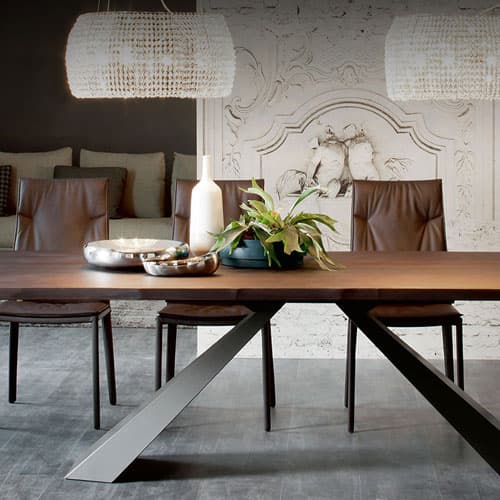
The practicality becomes evident with extension mechanisms. Square tables typically extend to rectangular configurations, adding genuine usable length whilst maintaining straight edges that work efficiently in most room shapes. I specified a Cattelan Italia square extending table for a Kensington client who regularly hosts both intimate dinners for four and larger gatherings of ten. The extension system transforms the table from a 140cm square to a 240cm rectangle - a versatility round tables simply cannot offer without becoming awkwardly oval.
There's an undeniable formality to square geometry that suits certain contexts beautifully. In a traditional Belgravia dining room with period features, a square table reinforces the room's classical proportions, whilst a round table might feel incongruously casual against panelled walls and ornate cornicing.
However, I've also used square tables to introduce structure into very contemporary spaces. For a minimalist Shoreditch loft conversion, we selected a substantial square smoked oak table that anchored an otherwise fluid, open-plan area. The table's geometry created a psychological dining zone within the larger space without requiring physical barriers.
Key Takeaway: Square tables excel when you need your dining furniture to define space or create visual order. They're particularly effective in large rooms where a round table might appear lost, lacking the linear presence needed to command the area.
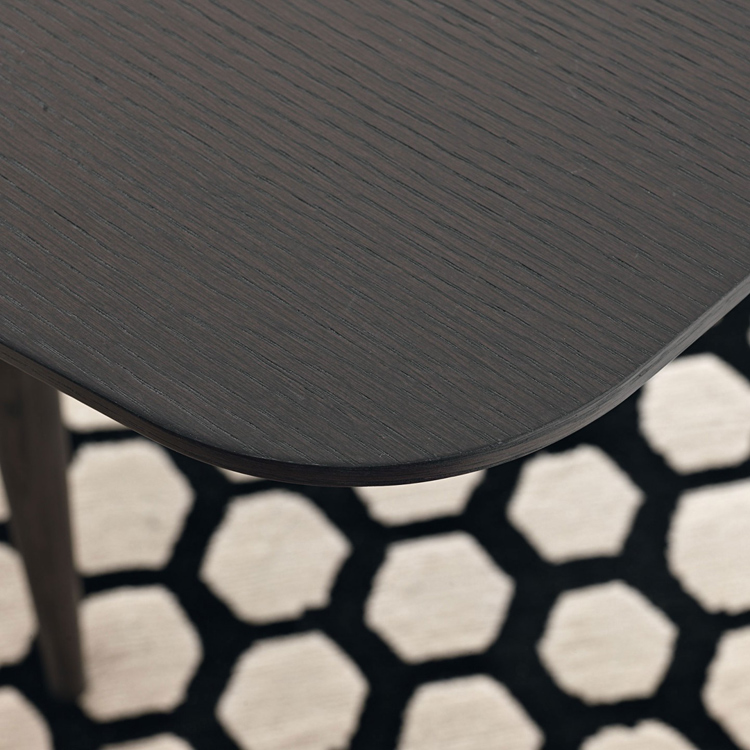
Rather than debating abstract merits, let's focus on the practical realities that should guide your decision:
Be honest about actual usage, not aspirational entertaining. If you consistently dine with four people but occasionally host eight, that's a different requirement than regularly seating six with occasional parties of twelve. Round tables have a fairly fixed capacity, whilst square tables with extension mechanisms offer genuine flexibility.
Rectangular rooms generally accommodate square or rectangular tables more efficiently, maximising usable floor area. Square rooms offer more flexibility, though very small square rooms (under 3.5m per side) often work better with round tables to preserve circulation space.
This is consistently underestimated. If your dining area serves as a thoroughfare to other rooms, the ability to navigate around the table becomes paramount. Map the natural walking paths through your space before selecting a shape. Round tables with their absence of corners create significantly better flow in rooms with multiple doorways or heavy foot traffic.
If you're carrying dishes from an adjacent kitchen, consider how each shape affects the approach to the table. Square tables offer four logical serving sides, whilst round tables require you to navigate between seated guests regardless of approach angle.
Some households genuinely benefit from designated head positions - family dinners where parents naturally anchor each end, for instance. Others prefer the egalitarian quality of circular seating. Neither is superior; they serve different social dynamics.
I cannot count the number of clients who've fallen for a spectacular round dining table in our showroom, only to discover it doesn't accommodate their actual entertaining patterns. A Hampstead client recently returned after purchasing a beautiful 140cm round table elsewhere, asking us to find a square alternative because she routinely hosts eight for dinner, a number that round table struggled to seat comfortably despite its generous diameter.
The solution: Before falling in love with any table, document your typical and maximum guest counts over the past year. If the numbers consistently exceed what your preferred shape can gracefully accommodate, you're setting yourself up for compromise.
The table's footprint is only part of the spatial equation. You need approximately 110cm of clearance on all sides for comfortable chair movement - more if you want to walk behind seated guests whilst they're dining. I've seen numerous installations where a table fits the room's dimensions on paper but creates an uncomfortably tight space in reality.
Measure your room, subtract 220cm from both length and width, and the resulting dimensions represent your maximum table size. Anything larger will make the space feel cramped and restrict movement unacceptably.
Modern homes with open-plan layouts require different approaches than traditional rooms with defined boundaries. A square table can help delineate a dining zone within a larger space, whilst a round table might appear to float aimlessly without clear spatial definition. Conversely, in a contained dining room, a round table can soften the rectilinear architecture beautifully.
Not all extension systems are created equal. Round tables that extend to oval often create awkward proportions - too elongated to feel round, too curved to feel properly rectangular. Quality square extending tables, by contrast, maintain clean lines and proportional balance. If flexibility matters, square tables typically offer more successful solutions.
The relationship between table shape and material choice deserves more attention than it typically receives. Round glass tables create a sense of spaciousness through visual lightness, making them particularly effective in smaller rooms. However, a round solid wood table brings substantial presence that can anchor a large space beautifully - the Bontempi Casa round tables we stock demonstrate this perfectly.
Square tables in reflective materials like lacquer or polished stone can emphasise their geometric precision, creating a sculptural quality that works particularly well in contemporary interiors. Conversely, a square table in richly grained wood brings warmth to formal spaces whilst maintaining structural clarity.
Practical Observation: Glass and lacquer surfaces show fingerprints and require more maintenance regardless of shape, but round tables accumulate marks less noticeably because there's no linear edge to create obvious contrast. Consider this if you have young children or prefer low-maintenance surfaces.
Rather than declaring one shape superior, use this decision framework:
The shape that serves your actual patterns of use, rather than your idealised vision of entertaining, will ultimately provide greater satisfaction. I've guided clients toward choices that contradicted their initial preferences because the practical realities of their space and lifestyle pointed clearly toward a different solution - and invariably, they've later thanked me for the honest counsel.
The most beautifully designed dining spaces I've created share a common characteristic: the table's shape emerged from thoughtful analysis of how the space would actually be used, not from following current trends or abstract aesthetic preferences.
Your dining table will serve you for years, likely outlasting several rounds of decorative updates. Choosing based on how it functions within your specific space, with your particular patterns of use, ensures this substantial investment enhances rather than compromises your daily living experience.
I invite you to visit our London showroom, where you can experience both round and square configurations in properly scaled room settings. Seeing tables in context, understanding how clearances feel in practice, and discussing your specific requirements with our design team provides invaluable perspective that photographs and descriptions cannot convey.
The right table isn't the one that looks best in isolation - it's the one that transforms your dining space into exactly the environment your household needs, whether that's intimate and conversational or structured and adaptable.
Customer Reviews
Khyati Karelia
"Amazing designs, quality material. Very helpful staff, particularly Bhaven. Ordered customised Capri sofa-cum-bed and they have managed to deliver during lock down. Great efforts."
Ana Oliveira
"I bought two armchairs for our garden and could not be happier. Kasia (sales) helped me placing the order - including emailing me pictures of fabric samples at different lights! - and managed the production / delivery waiting time. I was kept updated during all the time and the delivery was perfect. The armchairs are stunning (the quality is absolutely incredible) and my experience at FCI was fantastic. Highly recommend!"
Paul Adams
"We went to FCI after having done a thorough tour of quite a few of London's "good" furniture shops. They were polite and efficient and, very importantly, the prices were significantly better than some of the fancy places but for exactly the same thing. Two beautiful sofas and a lovely table arrived yesterday and we are very pleased with how they look in our flat. I have already recommended FCI to friends and family and we may revisit soon."
We help designers & clients transform mundane spaces into extraordinary ones.


Book a video consultation and we'll advise you on furniture, space planning, colour schemes and much more.
Book A ConsultationBook a visit to our stunning, multi award-winning, 30,000 sqft.
Over 700 brands under 1 roof.

Most Popular on FCI London: Fitted Wardrobes | Luxury Designer Rugs | Luxury Sofas | Luxury Furniture Store | Luxury Interior Designers | Luxury Bedroom Furniture | Luxury Modern Chairs | Luxury Coffee Tables | Luxury Designer Kitchens | Luxury TV Units | Luxury Dining Tables | Luxury Storage Solutions | Luxury Sideboards | Luxury Stools & Bar Stools | Luxury Bespoke Joinery | Luxury Modern Hallway Furniture | Furniture Showroom Appointment | Luxury Lighting | Modern Luxury Outdoor Furniture
Transparency isn’t a policy. It’s a principle.
Have a peek at what our clients really have to say.