
Published Date: Apr 06, 2025 | Last Updated: Jun 30, 2026
Written by: Emma Cyrus, Senior Copy, Content & Editorial Writer
Reviewed by: Andrei Lee, Senior Interior Designer at FCI London
Edited by: Zoona Sikander, Interior Design Writer & Social Media Content Creator
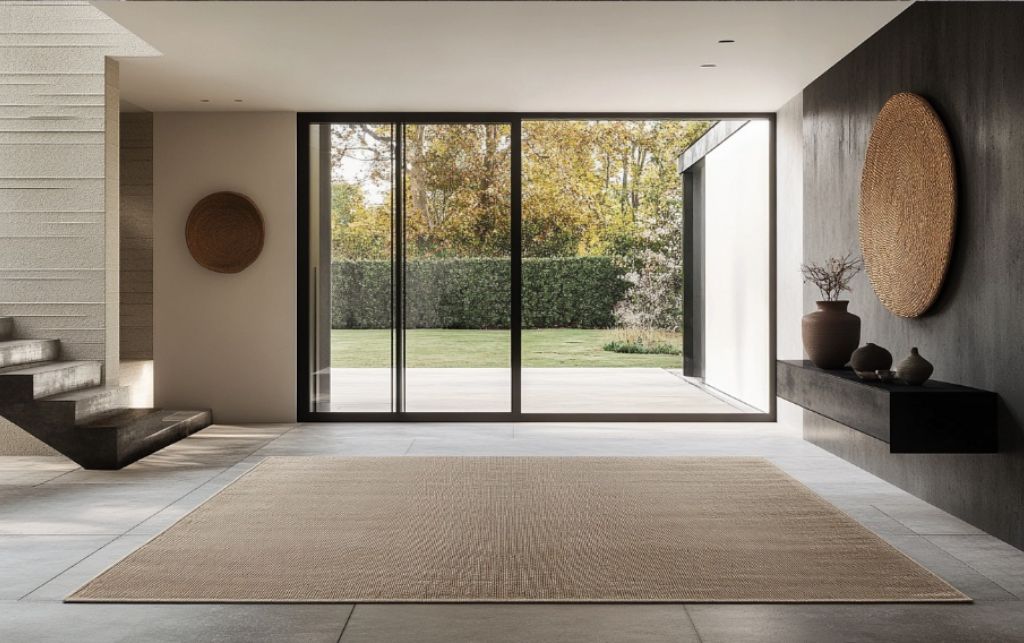
Over two decades crafting entrances for London's most distinguished homes has taught me something rather unexpected: the door rug - that most overlooked element of design, actually warrants serious consideration. It deserves, I'd argue, the same thoughtful attention we lavish on statement lighting or bespoke joinery.
The transition from outdoors to indoors represents a magnificent opportunity for both practical protection and making a statement of intent about what awaits beyond.
Luxury rugs strategically placed at thresholds serve as both guardians of your interior floors and ambassadors of your personal style.
And Large rugs, especially those designed for entryways, provide that critical first impression—a sartorial handshake, if you will—that sets the tone for your entire home. The large door rug is quite literally where the story of your home begins.
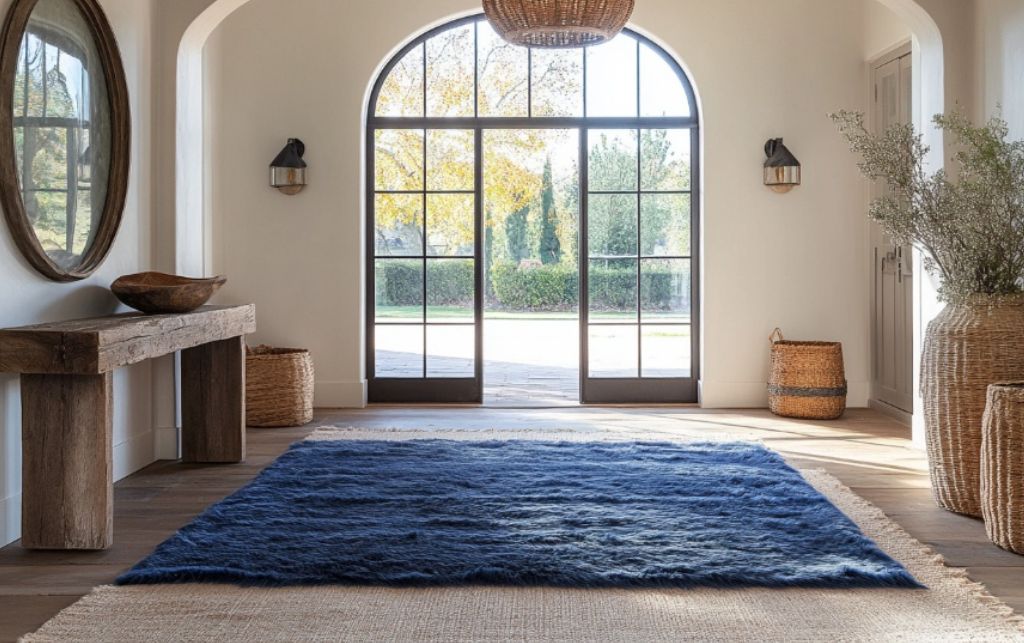
Perhaps the most sophisticated approach to entryway styling involves creating a deliberate progression of textures that transition the visitor from the rugged outdoors to the refined interior. This layering technique creates visual interest while simultaneously performing the practical function of graduated cleaning.
Begin with a large outdoor front door rug in a robust, weather-resistant material that can withstand the elements while capturing the initial influx of debris.
Within the vestibule or immediately inside the door, position a large indoor front door rug in a more refined texture—perhaps a flat-weave wool or a low-pile design that continues the cleaning process while introducing a more sophisticated aesthetic.
The textural progression creates a sensory experience that subtly signals the transition from public to private space.
A few of my tried-and-tested tricks will help you achieve this feat in a seamless manner.
Try to maintain a cohesive colour story between the layers while varying textures for interest. Calculate the precise spacing between them to create a harmonious visual rhythm. You can also consider maintaining alternative indoor layers that can be rotated to reflect seasonal changes.
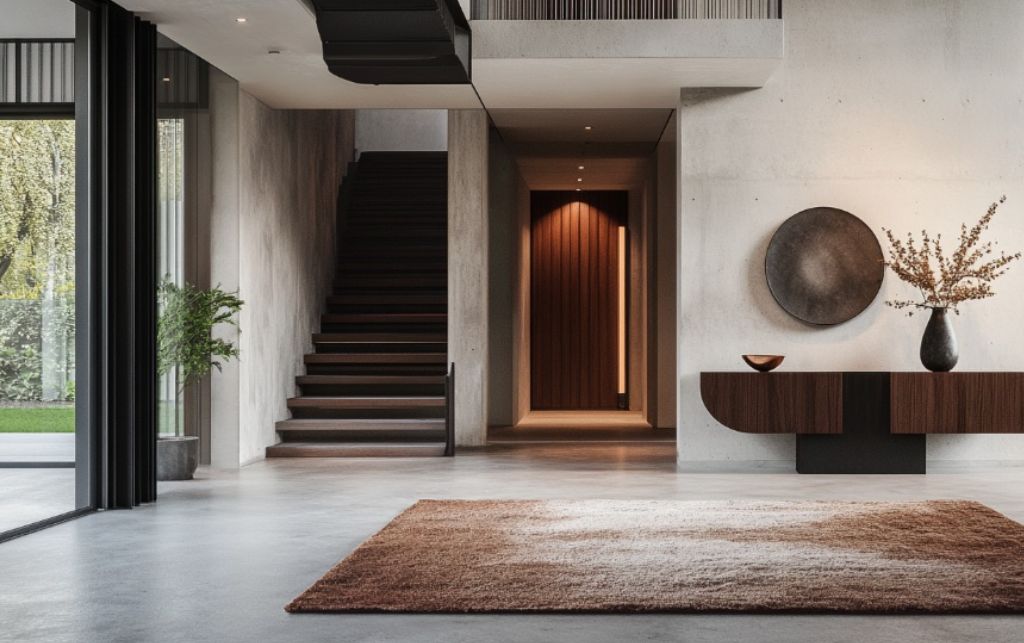
The dimensions of large door rugs can be masterfully employed to define entry zones, particularly in open-plan designs where architectural delineation may be minimal. Rather than settling for the typical postage stamp-sized doormat, consider how a generously proportioned piece can establish a proper entrance even in spatially challenging situations.
In London's typical townhouse configurations - where front doors often open directly into living spaces - I've found that a substantial rug can effectively create an implied vestibule where no architectural one exists.
The boundary established by the rug's edge signals a transition zone that psychologically separates the act of arrival from the activities of the home.
A little proportional planning can never do you harm, size the rug to accommodate at least two people standing side by side during the arrival ritual.
Extend the rug to cover the natural path from door to interior circulation routes. It's important to be very mindful of the space you're decorating so choose a scale appropriate to the door's dimensions and surrounding wall space.
Alternatively, you may use larger rugs in smaller entrances to create a sense of expansiveness.
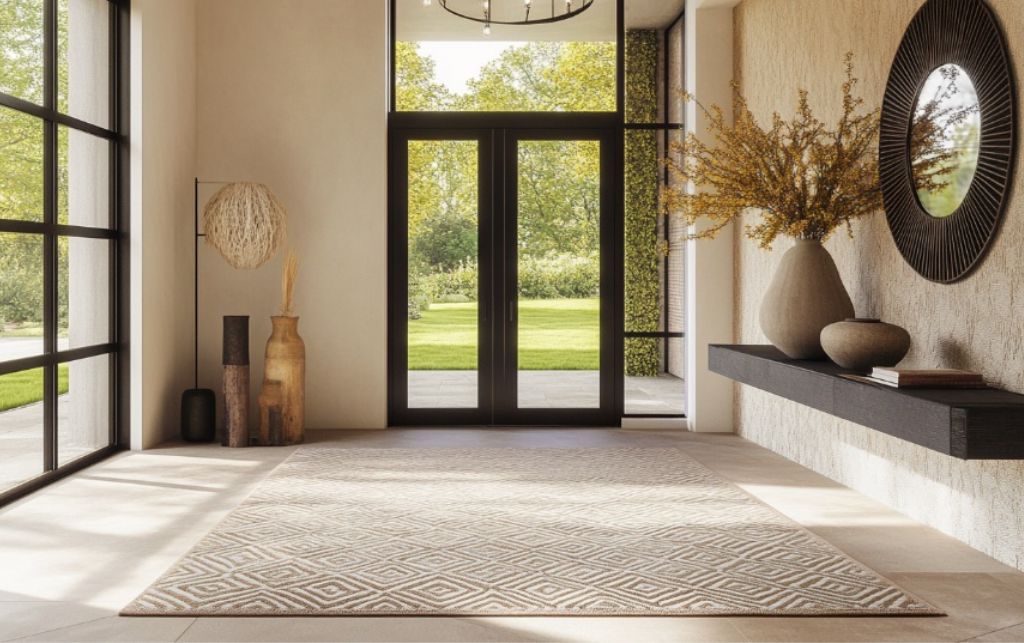
In the often chaotic coming-and-going of daily life, a geometrically precise large indoor door rug can introduce a sense of order and intentionality to the entryway.
Strong, clean patterns with mathematical regularity create a sense of calm and control that can subtly influence the behaviour and mindset of those crossing the threshold.
Consider stripes that direct movement, concentric patterns that suggest centrality, or grid designs that reference the ordered elegance of Georgian architecture.
The regularity provides a visual framework that feels inherently civilised—something particularly welcome in the transition from the unpredictable outdoors to the controlled environment within.
Create a directional flow by employing linear patterns that subtly direct traffic toward interior destinations. Opt for symmetrically balanced patterns that respect the architectural symmetry of traditional entrances. You can further enhance this sense of cohesion by referencing architectural details in the pattern selection—herringbone for parquet floors, for instance.
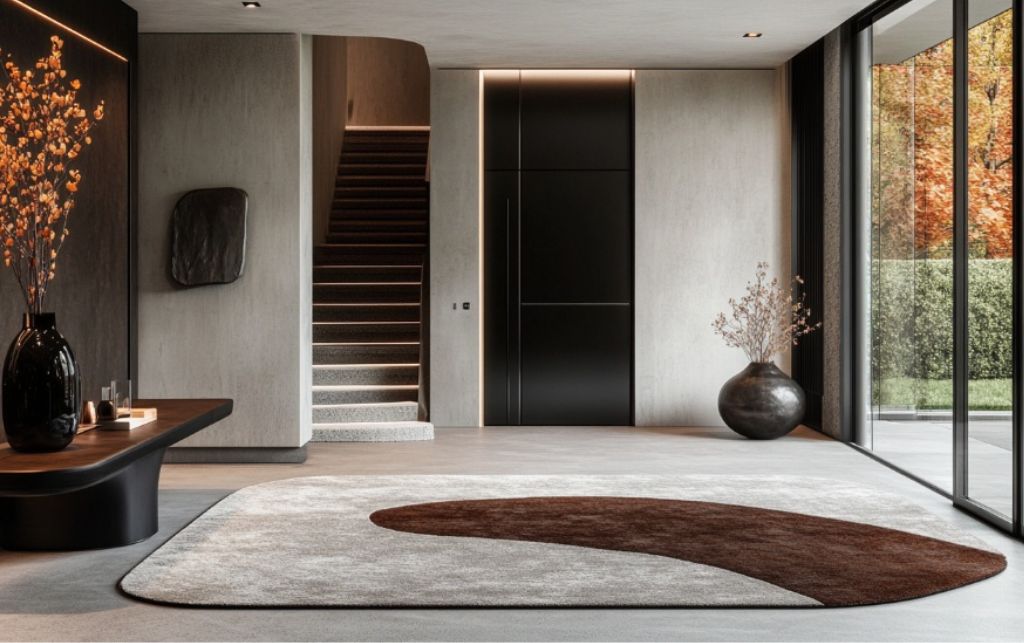
While conventional wisdom often suggests restraint in entryway design, there's a compelling case for chromatic boldness at your threshold.
A large front door rug in an unexpected hue can serve as a colour statement for the home beyond, particularly when it references tones that will reappear throughout interior spaces.
This approach feels particularly relevant for London homes, where exterior conservation requirements often limit expression on facades.
If you're on the threshold when it comes to going bold, you can try rotating your rug seasonally to reflect their palettes. The door plays an integral part in your entryway, so select hues that either harmonise with or intentionally contrast its colour.
Another factor that can't be ignored in your space is the light.
Choose colours that perform well in your specific entryway light conditions—compensating for north-facing darkness or managing harsh direct sunlight.
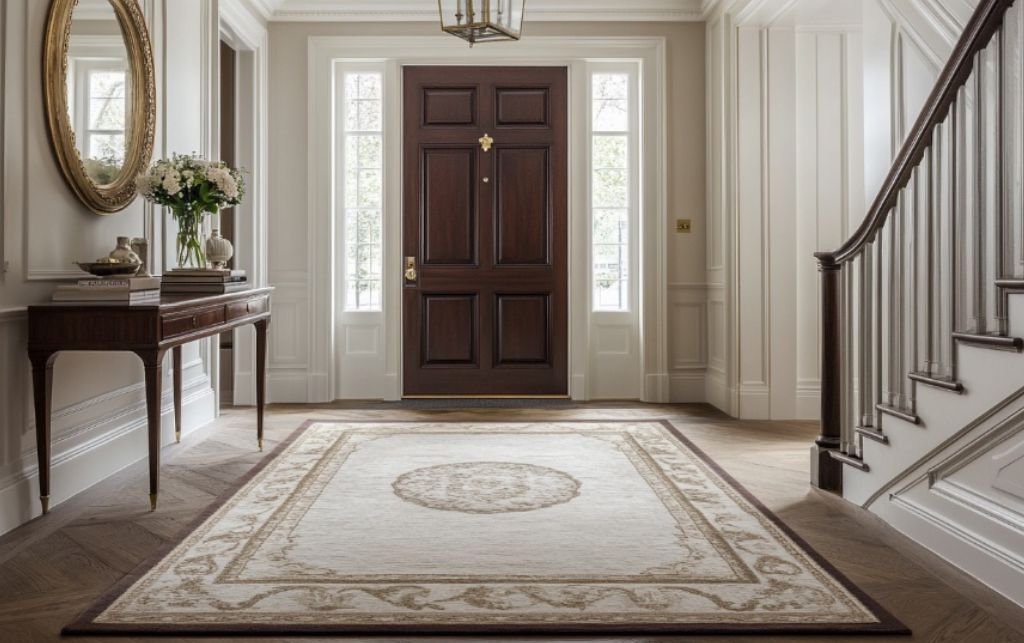
The most successful entryway designs acknowledge the architectural vernacular of the property, creating a dialogue between the building's character and the styling elements within.
A large door rug provides an ideal opportunity to reference architectural details in pattern, texture, or colour. For a Georgian property, perhaps a rug with classical motifs reinterpreted in a contemporary way.
For a mid-century home, geometric patterns that reference the period's design language. The goal is not historical recreation but rather a sophisticated acknowledgment of context that feels both respectful and fresh.
Here are some tips that will guide you in selecting and styling the rug to best complement your architectural values:
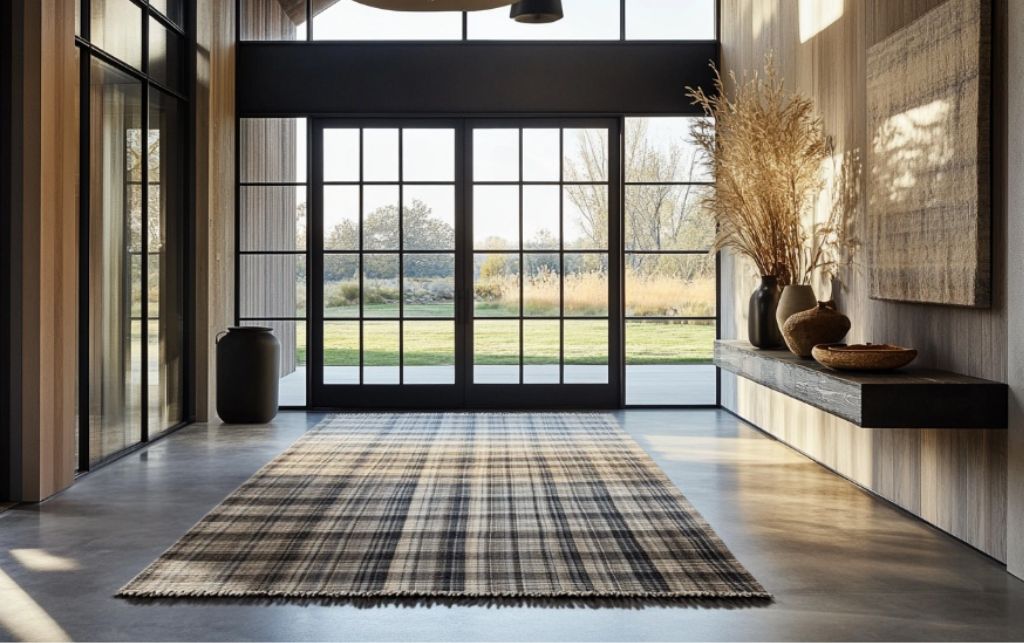
The entryway faces the most dramatic seasonal variations in traffic patterns, soil types and weather conditions.
Rather than compromising with a single solution, consider establishing a seasonal rotation of large door rugs that addresses the specific challenges of each period while refreshing your entrance aesthetically.
This approach is not only practical but offers the opportunity to subtly transform your entrance throughout the year. Winter might call for deeper piles and darker tones that disguise inevitable moisture and salt, while summer allows for lighter hues and flatter weaves.
The effect is rather like a well-planned garden that offers different pleasures as the seasons progress.
Select specific constructions engineered for seasonal precipitation challenges.
Employ more robust materials during inclement months, transitioning to finer constructions in fair weather. Be mindful of seasonal palettes and move from darker, more forgiving tones in winter to lighter, brighter options in summer.
Another key tip that many seem to undermine in value, is to develop proper cleaning and storage protocols for off-season rugs to maintain condition.
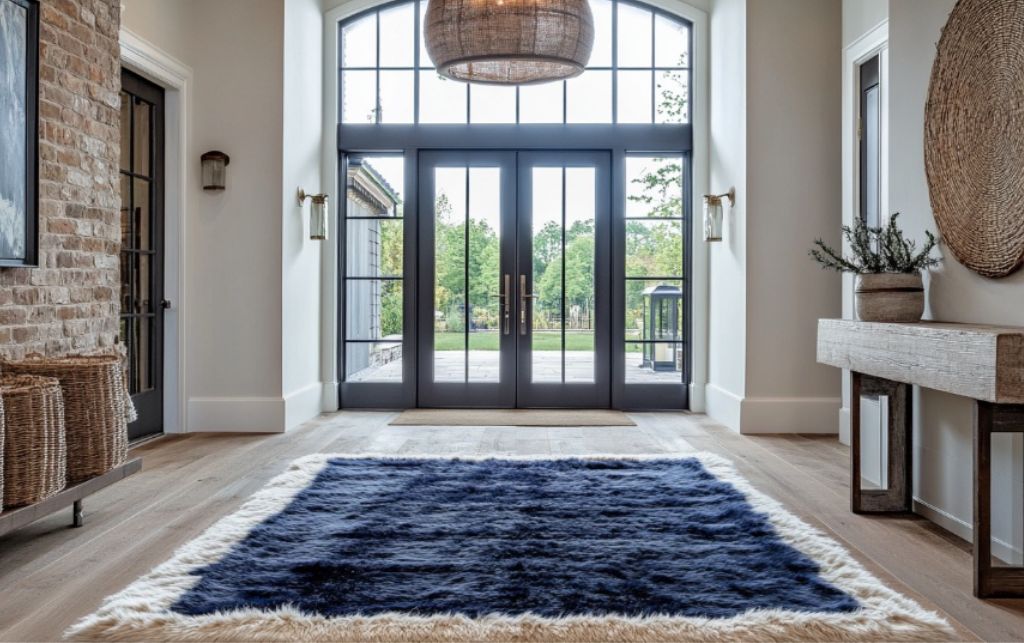
The relationship between large indoor door rugs and entryway lighting creates opportunities for elegant design integration that enhances both elements. Strategic lighting can transform an ordinary rug into a textural canvas, while the rug itself can serve as a reflective surface that softens and diffuses illumination.
Consider how directional lighting might highlight the texture of a flat-weave design, or how the sheen of certain fibres might capture and play with light from overhead fixtures.
You can build up on this effect by maximising side lighting to create dimensional shadows that enhance pattern perception. It's also a good idea to start out with fibres that have appropriate light-reflective properties for your specific lighting.
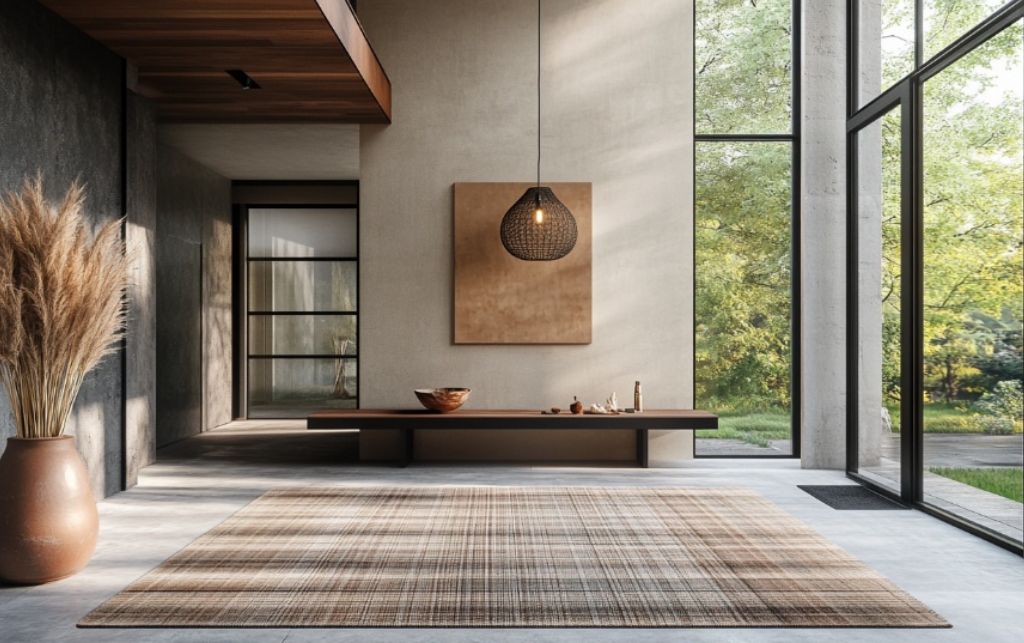
While readily available large front door rugs offer numerous possibilities, the truly discerning client might consider the bespoke route for entryways with unusual configurations or for those seeking absolute precision in design integration.
Bespoke commissioning allows for exact dimensional tailoring to architectural features - accommodating unusual door swings, irregular spaces, or specific traffic patterns.
It also permits complete creative control over pattern scale, colour matching and material selection. The result is an entryway that feels considered, down to the millimetre.
When selecting your customisations, be mindful to develop precise templates that account for all architectural intrusions and features. With bespoke creations, you control everything including the material. Specify the exact fiber combinations engineered for your entrance conditions, weather conditions, foot traffic, etc.
Adjust pattern scales that respond perfectly to your entrance proportions. You can incorporate elements and designs directly inspired by the architectural features of your entrance.
It's also important to specify the colour of your rug when you're going for a made-to-order approach. Factor in the existing colours, colour palette and interior style along with your personal tastes.
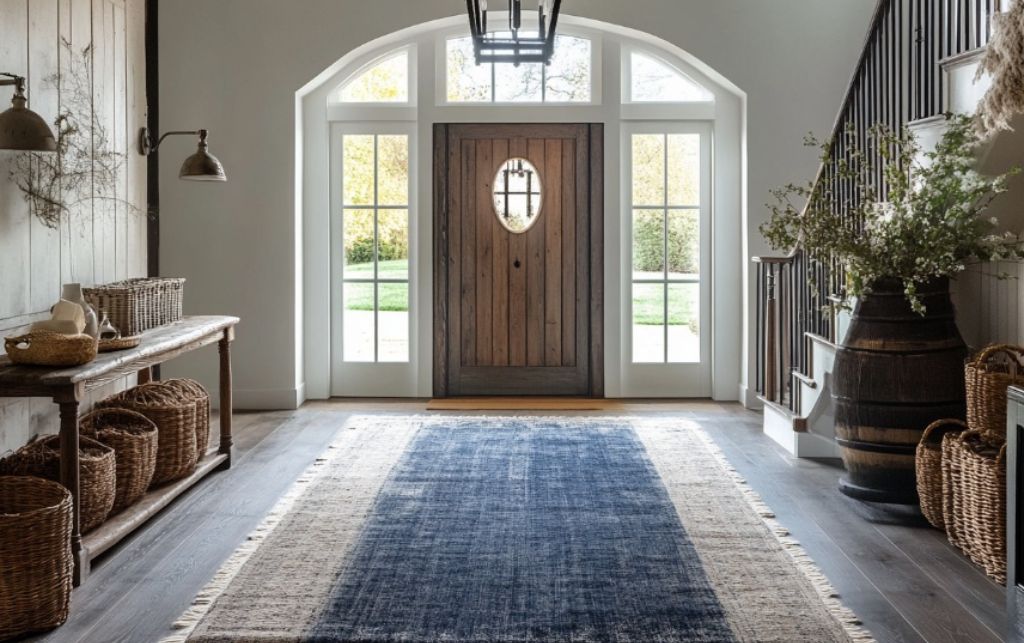
The large door rug must withstand significant traffic and soil while contributing to the home's design narrative—a demanding brief indeed. Fortunately, contemporary textile technology offers materials that bridge this divide admirably.
Solution-dyed acrylics offer remarkable fade resistance and cleanability while providing a hand-feel close to natural fibres. Wool-synthetic blends combine natural beauty with enhanced performance.
The key is selecting materials with a clear-eyed assessment of the specific demands of your entrance.
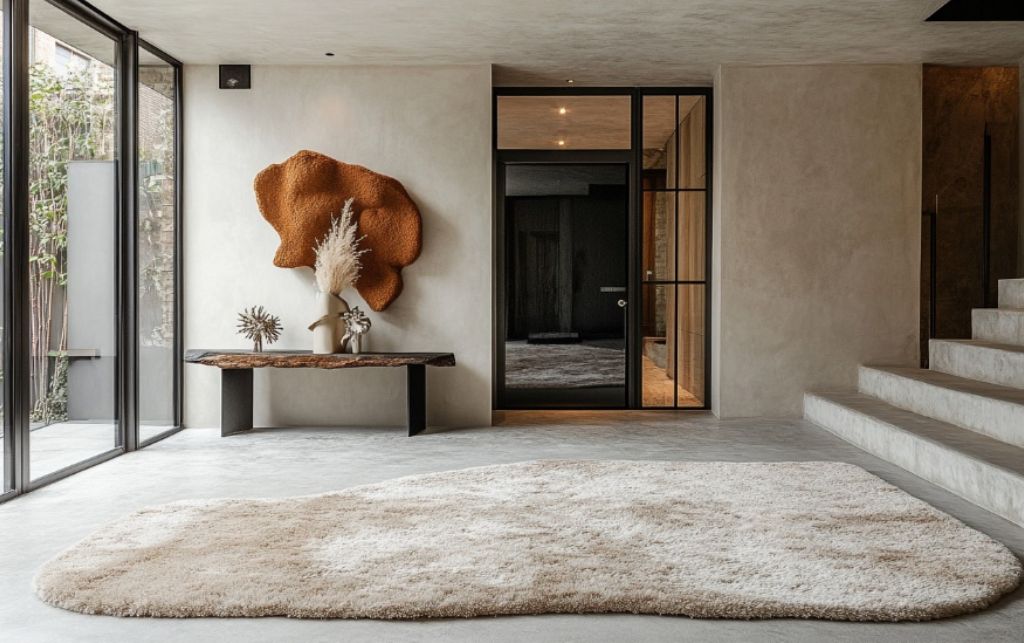
The most sophisticated entryway designs acknowledge that the large outdoor front door rug doesn't exist in isolation but serves as an introduction to spaces beyond.
Creating thoughtful transitions between entrance rugs and adjacent floor coverings requires consideration of how these elements will be experienced in sequence. This might involve selecting entrance rugs with subtle colour connections to living areas beyond, or choosing patterns that establish themes elaborated in subsequent spaces.
The goal is a sense of considered progression rather than abrupt transitions between zones.
The large door rug represents that critical juncture where practical necessity meets aesthetic opportunity.
When approached with appropriate consideration, these essential elements can transcend their humble origins to become key contributors to the protection of your interior as well as the expression of your design vision.
Whether you're selecting a robust large outdoor front door rug to weather the UK's notoriously fickle climate or a refined large rug to grace your interior threshold, the principles remain consistent: thoughtful integration of practical requirements with aesthetic intent, considered relationship to architectural context and attention to the sensory experience of crossing from public to private realm.
The most successful entryways acknowledge the door rug's dual nature as both workhorse and design element. By embracing both aspects rather than privileging one over the other, you create an entrance that feels both thoroughly practical and aesthetically intentional—a fitting introduction to a home where every element has been accorded equally thoughtful attention.
When done well, these often-overlooked elements become the opening chapter that sets expectations for the story that unfolds beyond.
We help designers & clients transform mundane spaces into extraordinary ones.


Book a video consultation and we'll advise you on furniture, space planning, colour schemes and much more.
Book A ConsultationBook a visit to our stunning, multi award-winning, 30,000 sqft.
Over 700 brands under 1 roof.
Most Popular on FCI London: Fitted Wardrobes | Luxury Designer Rugs | Luxury Sofas | Luxury Furniture Store | Luxury Interior Designers | Luxury Bedroom Furniture | Luxury Modern Chairs | Luxury Coffee Tables | Luxury Designer Kitchens | Luxury TV Units | Luxury Dining Tables | Luxury Storage Solutions | Luxury Sideboards | Luxury Stools & Bar Stools | Luxury Bespoke Joinery | Luxury Modern Hallway Furniture | Furniture Showroom Appointment | Luxury Lighting | Modern Luxury Outdoor Furniture
Transparency isn’t a policy. It’s a principle.
Have a peek at what our clients really have to say.