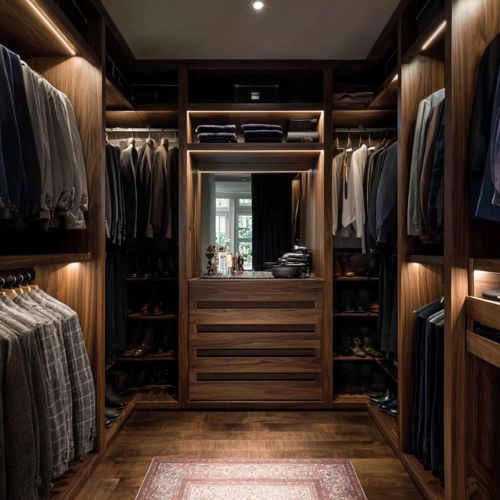
Published Date: Feb 23, 2026 | Last Updated: Jun 30, 2026
Written by: Emma Cyrus, Senior Copy, Content & Editorial Writer
Reviewed by: Aziz, Interior Architect at FCI London
Edited by: Zoona Sikander, Head of Content
Estimated Reading Time: 10 minutes
Something rather interesting has been unfolding across London's most coveted postcodes over the past decade. Whilst technology continues to reshape how we live, there's a growing recognition amongst discerning homeowners that certain elements of residential design cannot be replicated by machines or mass production. Custom joinery represents precisely this intersection of traditional craft and contemporary living.
In my two decades working with London's property elite, I've witnessed a fundamental shift in how people approach interior spaces.
The appetite for bespoke joinery in London has evolved from occasional indulgence to essential expectation. Clients who once might have settled for high-street alternatives now understand that truly exceptional interiors require pieces conceived specifically for their spaces, their needs, and their aesthetic sensibilities.
Table of Contents
This transformation reflects something deeper than mere fashion.
In an era of global sameness, where identikit developments proliferate across cities, commissioning custom work has become an assertion of individuality. It's about creating environments that cannot be replicated elsewhere because they're fundamentally tied to a specific property's architecture, proportions, and character. The craftspeople delivering this work aren't simply executing designs; they're solving spatial challenges that off-the-shelf solutions cannot address, whilst creating pieces that will outlive trends and retain their relevance across decades.
London's relationship with fine woodworking stretches back centuries, rooted in guild traditions that established exacting standards for craftsmanship.
The workshops of Clerkenwell and Shoreditch once supplied the great houses of Mayfair and Belgravia with furniture that now commands extraordinary prices at auction. This heritage hasn't disappeared; rather, it's evolved to meet contemporary requirements whilst maintaining those foundational principles of quality and precision.
Today's joinery services that London offers build upon this legacy.
The craftspeople working across the capital have typically trained through traditional apprenticeships before refining their skills with modern technologies. They possess an understanding of timber behaviour, jointing techniques, and finishing methods that can only be acquired through years of hands-on experience.
This combination of historical knowledge and contemporary capability creates work that honours tradition whilst embracing innovation.
The substantial investment in residential property market over recent years has created unprecedented demand for bespoke joinery services in London. New developments in areas such as Nine Elms and King's Cross attract buyers who expect interiors that match the architectural ambition of the buildings themselves.
Standard fittings simply won't suffice when you're investing several million in a residence.
Equally significant is the refurbishment market. Period properties across prime central London are being meticulously restored, often with contemporary insertions that require joinery capable of bridging historical and modern design languages. This work demands craftspeople who understand both traditional techniques and current aesthetic expectations.
Certain London neighbourhoods have become particular hotspots for custom joinery.
Kensington's grand Victorian houses frequently require library installations, panelled studies, and bespoke storage solutions that respect period architecture whilst incorporating modern conveniences. Chelsea's townhouses present similar challenges, with clients often seeking pieces that maximise space without compromising the elegant proportions of these historic homes.
Hampstead's substantial properties allow for more expansive joinery projects, from dressing rooms that rival luxury boutiques to kitchen installations featuring furniture-quality cabinetry. The common thread across these areas is clients who understand that value extends beyond the initial cost to encompass longevity, functionality, and the intangible qualities that distinguish truly exceptional work from merely adequate alternatives.
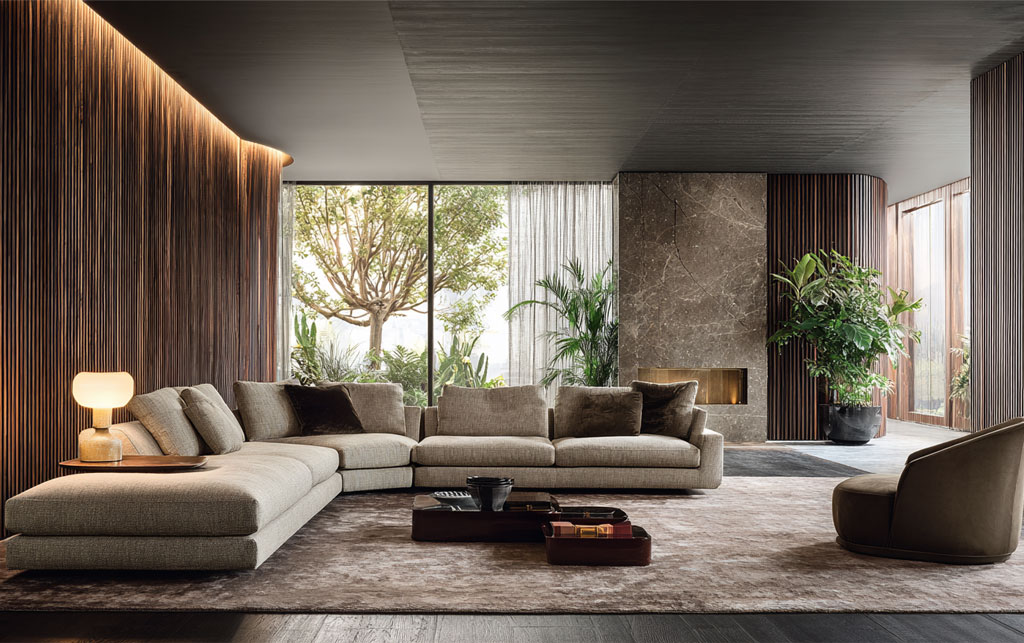
One of the most intellectually satisfying aspects of bespoke joinery work involves reconciling historical architecture with contemporary living requirements. A Georgian townhouse demands respect for its proportions and detailing, yet the owners require hidden technology, abundant storage, and spaces that function for modern family life.
Recent projects have included libraries where traditional joinery conceals sophisticated media systems, kitchens where period-appropriate cabinetry incorporates appliances that would astonish those original craftspeople, and bedroom suites where hidden dressing areas emerge from what appear to be simple panelled walls. This work requires joinery that honours architectural heritage whilst serving current needs seamlessly.
The challenge lies in achieving invisibility.
The most successful interventions feel inevitable rather than imposed, as though they've always existed within the space. This demands an understanding of historical design principles combined with meticulous attention to detail in execution.
Contemporary developments present different opportunities.
Without historical constraints, bespoke joinery can make bold architectural statements that define a space's character. Floating staircases in walnut with integrated lighting, sculptural room dividers that create visual interest whilst maintaining openness, and kitchen islands that function as both workspace and social hub represent the kind of commissions that showcase what's possible when design isn't constrained by existing architecture.
These pieces often become the focal point around which the remainder of the interior is conceived. In a recent penthouse project of mine, a curved walnut credenza stretching nearly five metres provided the design anchor for the entire reception area. Its flowing lines and exquisite detailing established an aesthetic language that informed every subsequent decision.
London's property prices create intense pressure to optimise every centimetre.
Luxury joinery services that London specialists deliver become invaluable when confronting these spatial challenges. Under-stair storage that utilises awkward geometries, wardrobes that navigate sloping ceilings, and multi-functional furniture that transforms to serve different purposes throughout the day represent practical applications of custom work.
These solutions require careful analysis of how spaces are actually used. A home office might need to accommodate video conferencing equipment, extensive book collections, and filing systems whilst maintaining the aesthetic coherence of a living space. Standard furniture cannot address such specific requirements effectively.
London's position as a global design capital attracts exceptional talent. The craftspeople working across the city have often trained internationally, bringing diverse influences and techniques to their work. This concentration of expertise means clients can find specialists in everything from traditional French polishing to cutting-edge CNC machining, often within the same postcode.
The competitive environment elevates standards. When your work is constantly measured against the best in the world, complacency isn't viable. This drives continuous improvement and innovation, benefiting clients who receive work that represents the current state of the art.
London's connectivity to European timber suppliers and hardware manufacturers provides access to materials and components unavailable elsewhere in the UK. Rare timber species from sustainable sources, precision hinges from German manufacturers, and specialist finishes from Italian suppliers all arrive more readily in London than in other cities.
This access matters because exceptional joinery requires exceptional materials. The difference between adequate hardware and truly refined examples becomes apparent over years of use. Being able to source the finest components ensures that custom work will perform as beautifully as it appears.
London's concentration of interior designers, architects, and design-conscious clients creates an environment where innovation flourishes. Ideas circulate rapidly, with successful solutions in one property informing approaches elsewhere. This cross-pollination of concepts means joinery services London provides often pioneer techniques and aesthetic directions that subsequently spread nationally.
Working in this environment pushes craftspeople to continually refine their capabilities. What seems cutting-edge today becomes standard practice tomorrow, driving the entire sector forward.

A recent project in Hampstead illustrates how thoughtful joinery transforms properties. The living room joinery is, quite simply, the backbone of the entire space and it earns that status. Designed and crafted by FCI, the bespoke wall unit runs the full width of the room in a deep charcoal finish with tactile vertical fluting - a detail that adds rhythm and depth without ever tipping into fussiness. To the left, a fully integrated home bar combines open, back-lit shelving against a gold textured panel with generous closed storage below, all finished with a dark stone worktop and warm brass edging. It's the sort of bar unit that makes a bottle of single malt look like a design object. The fireplace sits centrally between the two wings, framed by a striking geometric brass surround, with the TV positioned above and flanked by illuminated open shelving for books and curios on the right-hand side.
The same fluted detailing carries through to the dining room, where slim vertical joinery columns frame the statement wallpaper panel - lit from behind with a warm gold glow that anchors the entire wall composition. It's a masterclass in using joinery not merely as storage, but as architecture; a design language that moves through the home with quiet confidence, tying each space together without ever becoming repetitive.
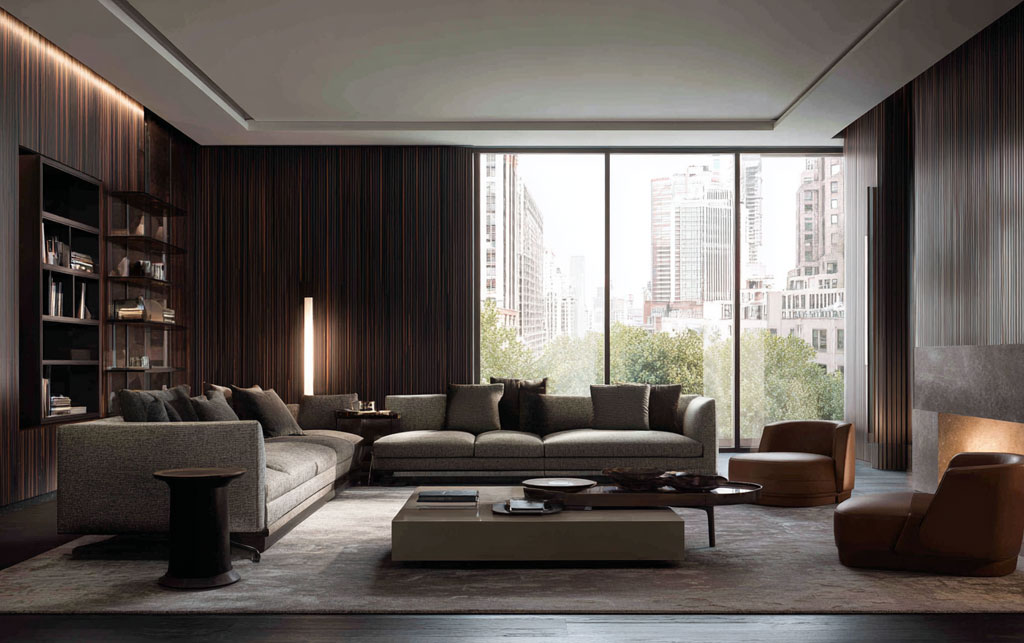
The concentration of expertise, materials, and discerning clients in London creates a unique environment for custom woodworking. When you commission bespoke joinery in London, you're accessing not just individual craftspeople but an entire ecosystem of specialists, suppliers, and design professionals who collectively maintain standards difficult to replicate elsewhere.
This matters because exceptional joinery requires more than technical competence. It demands understanding of architecture and proportion, knowledge of materials and their behaviour, and the aesthetic judgement to make countless decisions that collectively determine whether a piece merely functions or genuinely enhances a space.
London's joinery services represent an investment in quality that transcends immediate cost considerations. Custom work conceived specifically for your property and crafted to the highest standards will retain its functionality and appeal across decades, adapting to changing needs whilst maintaining its fundamental integrity.
If you're considering joinery for a London property, the decision extends beyond selecting a contractor to choosing a collaborator who understands your space's unique challenges and opportunities. At FCI London, our experience with the capital's most discerning clients has taught us that truly successful joinery balances technical excellence with aesthetic sensitivity, creating pieces that feel inevitable within their context.
We invite you to visit our showroom to discuss how bespoke craftsmanship might enhance your property. Whether you're restoring a period townhouse or commissioning statement pieces for a contemporary development, the right joinery transforms spaces from merely functional to genuinely exceptional.
Visit Our Showroom
Address & Hours:
FCI London, Rays House, North Circular Road, London, NW10 7XP
Monday - Saturday: 10am - 6pm
Sunday & Bank Holidays: 11am - 5pm
Contact Details:
Phone: +442081531235
Email: [email protected]
What to Bring:
Customer Reviews
Valentina Simone
"Our experience with FCI London has been flawless. The table and chairs we purchased are of excellent quality, and there was a great variety to choose from. Monica and Perla helped both with the original purchase and the delivery."
Carol O'Regan
"Ricardo at FCI provided great customer service with his expertise and advice. The quality of the chairs and bar stools is excellent and fits in with our kitchen/diner well."
Nedelia Martin
"I discovered FCI London almost 5 years ago, and I keep going back to them when I need to buy furniture. The team is fantastic, both the sales staff and the in-house designer were knowledgeable, helpful, and really took the time to understand my style."
We help designers & clients transform mundane spaces into extraordinary ones.


Book a video consultation and we'll advise you on furniture, space planning, colour schemes and much more.
Book A ConsultationBook a visit to our stunning, multi award-winning, 30,000 sqft.
Over 700 brands under 1 roof.
Most Popular on FCI London: Fitted Wardrobes | Luxury Designer Rugs | Luxury Sofas | Luxury Furniture Store | Luxury Interior Designers | Luxury Bedroom Furniture | Luxury Modern Chairs | Luxury Coffee Tables | Luxury Designer Kitchens | Luxury TV Units | Luxury Dining Tables | Luxury Storage Solutions | Luxury Sideboards | Luxury Stools & Bar Stools | Luxury Bespoke Joinery | Luxury Modern Hallway Furniture | Furniture Showroom Appointment | Luxury Lighting | Modern Luxury Outdoor Furniture
Transparency isn’t a policy. It’s a principle.
Have a peek at what our clients really have to say.