Published Date: Feb 13, 2023 | Last Updated: Jun 30, 2026
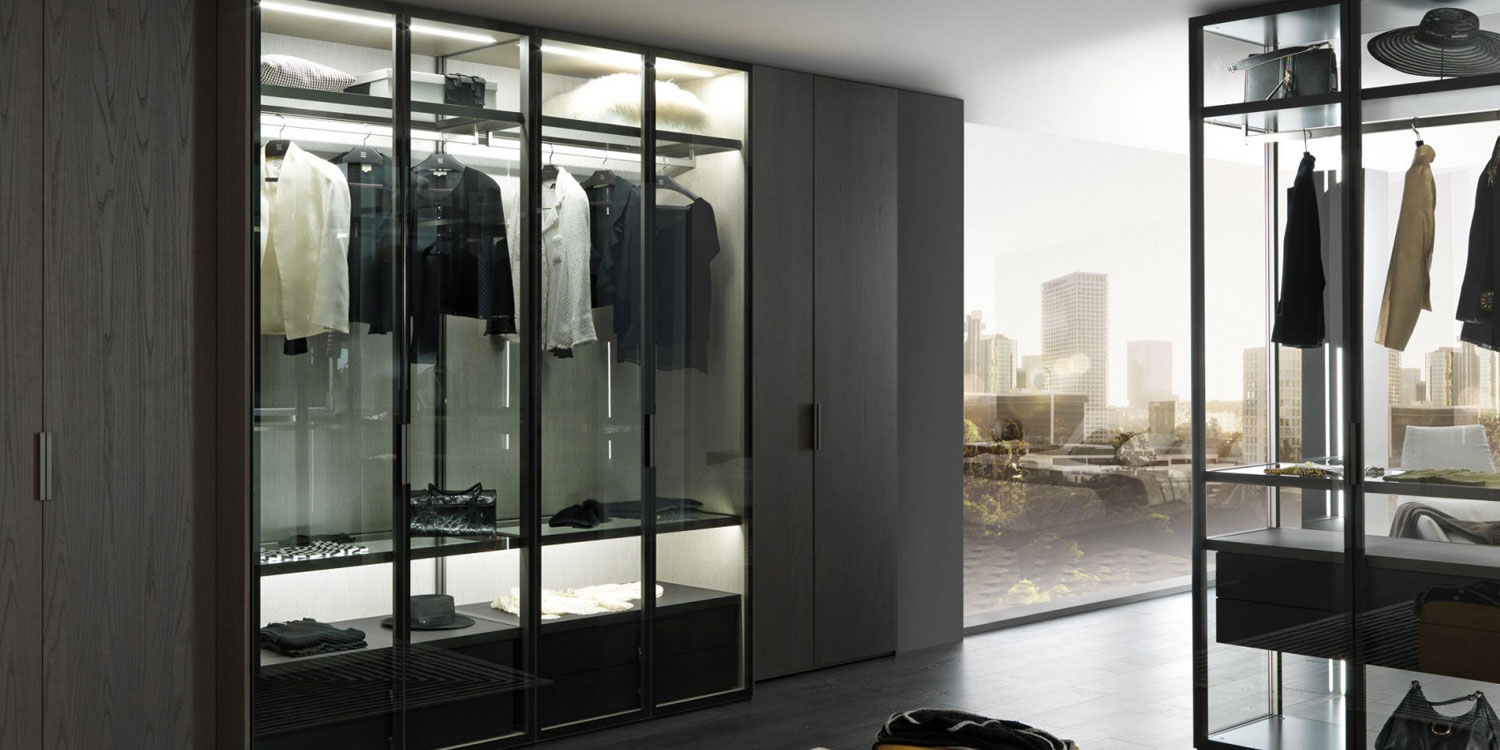
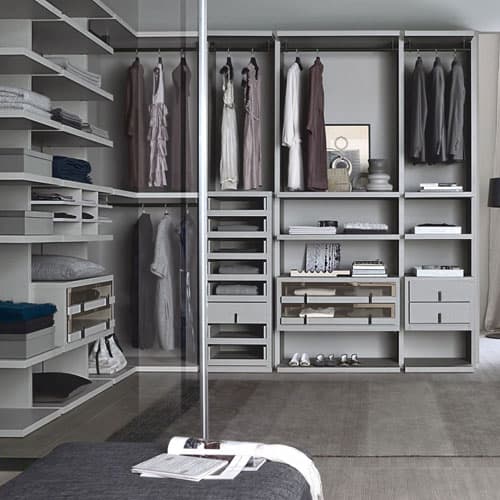
Now a pivotal piece of modern furniture that comes in many forms from custom-designed walk-ins to a simple stand-alone, the FCI London design team got to thinking about the history of luxury wardrobes and their evolution through the centuries.
Why? Because, let’s face it, not only have they been bursting at the seams with our precious fashion collections for hundreds of years, but they’ve given rise to some rather interesting associations.
“A skeleton in the closet”, for example, conjures up some rather chilling imagery of foul play, Old Mother Hubbard famously used hers for dog treats all the way back in the 1800s and then, of course, there’s the part they played as a mysterious portal in the book and film title, “The Lion, the Witch and the Wardrobe”. All in all, a pretty stellar track record, don’t you think?
So, as experts in custom-made wardrobe design, we thought we’d dig a little deeper and see where they came from and how they developed through the ages.
Talk to a wardrobe expert now or book an appointment.

Book A Video Chat
Book a zoom consultation and we’ll advise you on furniture, space planning, wardrobes and more.
Book A Video Chat
Book A Showroom Visit
Let our experts guide you through our 30,000 sq. ft. showroom with over 700 brands under 1 roof.
Book A Consultation
Email, call or book a virtual video chat with our sales team. Ask questions with no obligations.
Chat NowAlthough there is not much information about their existence in ancient Egyptian times, the people of the day certainly valued personal grooming and wardrobes were thought to be an important piece of furniture in the homes of the wealthy.
Made from wood, the luxurious versions were ornately carved, painted and often inlaid with ivory, precious metals and stones, while the poorer communities kept their clothing in simple reed baskets.
Egyptian wardrobes exuded functionality, symmetry and balance, all features that are important in the clean lines of modern-day cabinetry. They were also often sectioned to accommodate different items - another correlation that would make today’s designers proud.
However, their history was derived from far more basic forms in other ancient civilisations.
At this point, it’s interesting to take a peek at how the word “wardrobe” was derived because it paints a much clearer picture of its journey through the ages.
Initially, Roman soldiers were amongst the first to use a closet, requiring a more practical storage solution for the transportation of weapons and armour, particularly on longer expeditions. These containers were known as “armouriums”, which later evolved into what we now call an “armoire”.
The term first emerged in the English language at the beginning of the 14th century, taking its origins from the French words “garderobe”, “wardereube” and “warderobe”. “Warder” meaning “to guard or keep” and “robe” meaning “garment”.
“Garderobe” was also used as a term for a toilet, but this 14th-century misnomer occurred simply because, at the time, clothes were often hung in a loo shaft to rid them of fleas. Supposedly the ammonia found in urine was an effective repellent, so this was a means of personal hygiene – and one that we’re glad is over.
It wasn't until the Renaissance, when wealthy nobles reached a certain level of opulence, that an alternative means of storing one’s clothing was required and the term “wardrobe” was applied to an entire chamber filled with an assortment of cupboards and lockers in which to store things. Not such a far throw from the wonderful walk-in wardrobes that grace the homes of the rich and famous today.
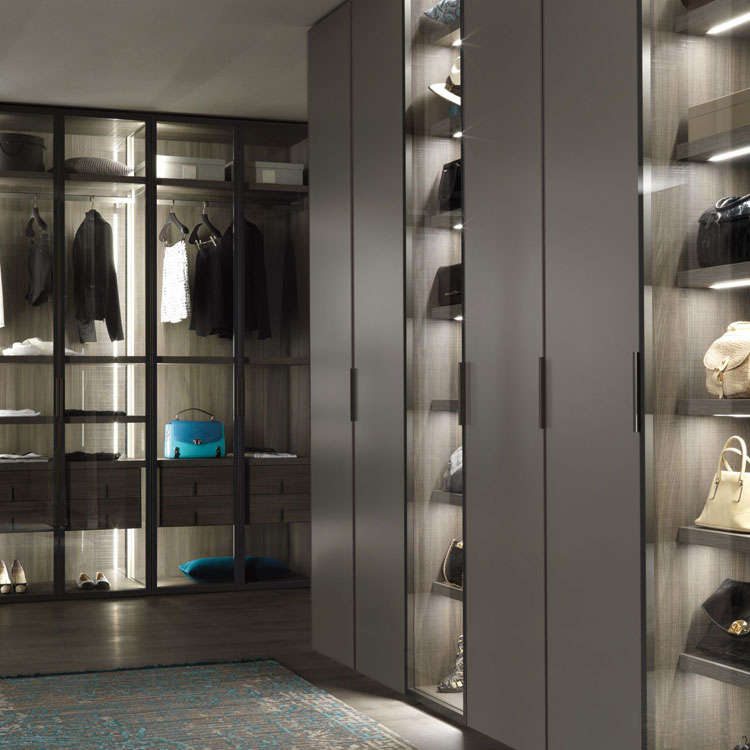
Antique wardrobes were both decorative and functional, and as various styles unfolded from the Queen Anne era right through to the end of Edwardian times, so their influences on modern design took form. Let’s take a look at the more significant landmarks:
This produced a distinct style distinguished by exquisite, delicate furnishings that featured soft curves, domed tops and elegant panelling.
They were usually made from lighter woods like walnut, but cherry and maple were also used. Top designers of the day included Daniel Marot and Jean Barein.
This period lasted more than a century, and furniture was influenced by numerous styles including Baroque, Rococo, Chinoiserie and Neoclassical. A common thread throughout was their use of high-quality materials to create wardrobes that were both robust and reflective of Neo-Palladian architecture.
Mahogany surpassed walnut as the preferred wood and Andrea Palladio, William Kent, Thomas Chippendale and George Hepplewhite were amongst the famed designers of the time.
The 17th century also gave rise to the American-based “hanging cupboard” made from oak. Despite being both enormous and heavy, it was exported to Britain for over a century.
They were notably built using the “eight tiny men” method, which meant that they could fit exactly that quantity of bodies inside them (hopefully all very much alive), making them the biggest wardrobes of their time.
Although this era falls within the Georgian timeframe, it attained exotic influences from Japan, Turkey, India and Persia and featured panelling that was adorned with detailed embellishments, setting it apart from other styles.
Also largely designed in mahogany, the craftsmen of the day included John Nash, Thomas Hope, William Moore and Morel & Hughes.
Probably one of the most significant periods for wardrobes and their design, this era began with a flurry of revivals. Older styles from the Greek, Gothic, Rococo and Renaissance times were enthusiastically revisited and embellished with exquisite carvings that displayed the skill of each craftsman.
They are now abundantly available in antique stores and were made in a wide variety of woods including rose, walnut, mahogany and pine.
Amongst the revolutionary features of the time were mirrors, typically inserted on the front centre panel, and the inclusion of full-length doors used to cover the drawers or shelves at the bottom part of the wardrobe.
Machines also began to find a place in furniture manufacturing during the 1860s, which distinguishes older Victorian pieces from more modern ones.
In the 1870s, the hanging rod was introduced for the first time and the invention of hangers soon followed. This was a pivotal moment for clothing and how to keep it well organised.
The Dakota, a magnificent apartment building in New York, also broke ground in the 1800s by featuring some of America’s first reach-in wardrobes, specifically designed for garments. A trend that took off amongst the affluent and wealthy.
The various fashion trends that emerged from the beginning to the end of the century also had a significant impact on the design of these wardrobes, with earlier pieces being spectacularly extravagant to suit the style and later editions taking a simpler approach. Modern genres like Eastlake, Aesthetic and Arts & Crafts emerged and top designers included Sir Charles Lock, William Morris and A. W. N. Pugin.
This saw a shift away from tradition and an interest in a fresher, more modern approach that has its roots in Art Nouveau.
Edwardian wardrobes were lighter, in both colour and weight, simpler in design and felt less extravagant and ornate. A definite step towards the clean lines and elegance of our built-ins of today.
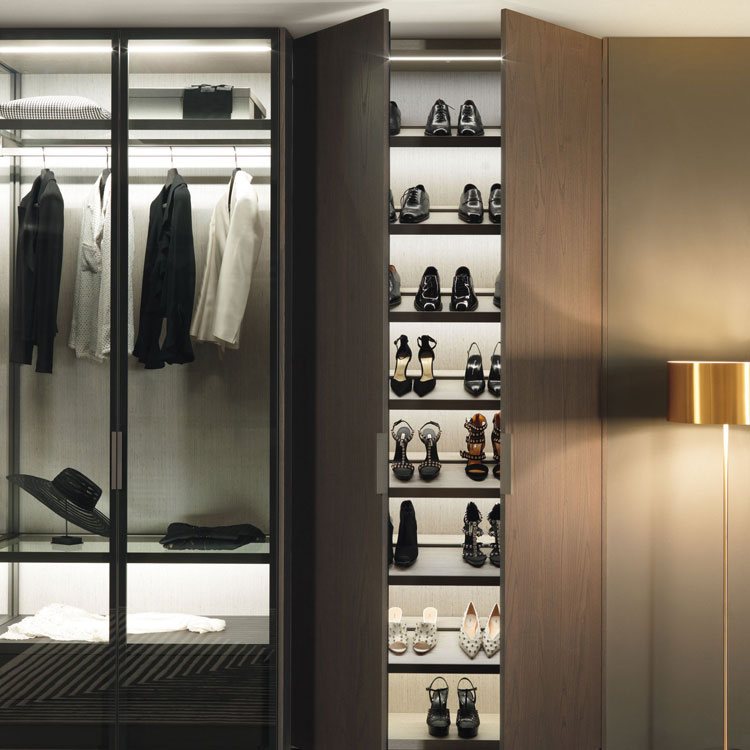
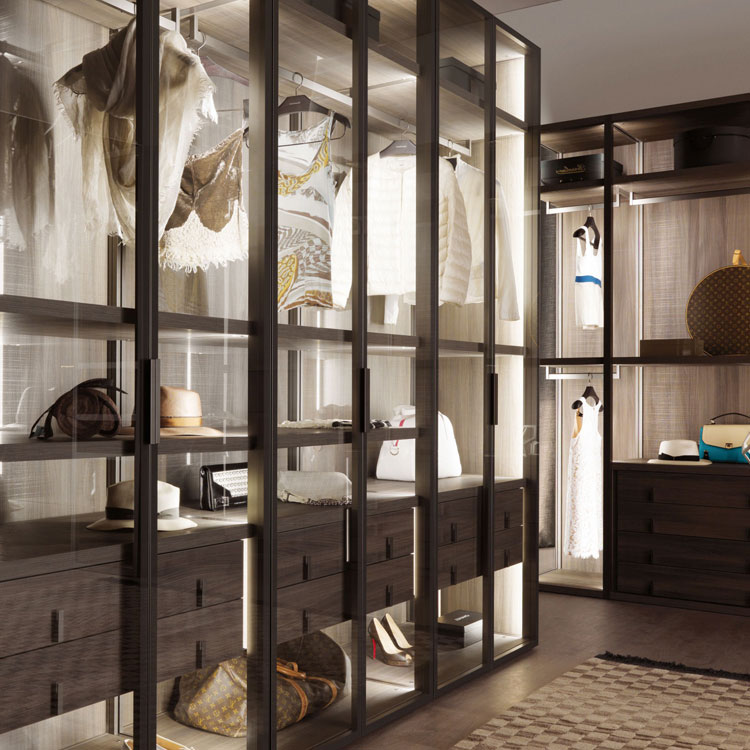
Art Deco was first established in France in 1910 and boomed in both Europe and America in the 1920s and ‘30s. All about unashamed grandeur, it employed daring geometrics and sleek lines to create designs that have become timeless, even today.
Polished mahogany, glass and brass were all fashionable materials when it came to wardrobe manufacturing, infusing the previously simplistic styles with glamour and modernity. And who doesn’t love to feel glam when they’re getting ready for a chic night out?
With the perfect balance of intricate patterns, bold lines and simplistic symmetry, Art Deco wardrobes encapsulated everything that we strive to achieve in the custom designs of modern cabinetry making.
Wardrobes had become far more widespread by the 1950s, with many middle- and even lower-class homes featuring them as a standard fixture. According to some sources, a mass move to the suburbs during this period was fuelled, in part, by larger closets being more readily available in the expansive homes that comprised suburban lifestyles.
By 1983, built-in wardrobes were standard features in most opulent houses and custom wardrobe manufacturers, similar to FCI London, began creating designs that were crafted to customers’ unique specifications, making them more luxurious than ever before.
Luxury wardrobes have now become a notable feature in any home and will up its value significantly should you ever decide to sell. They are also an ideal way of keeping your spaces both organised and maximised, and add to the aesthetic value of any room.
Bespoke customisation options now allow you to design your wardrobes to your exact needs and specifications in accordance with what you wear most often. Belts have belt drawers; ties have tie racks and shoes can be displayed in a myriad of clever ways that will turn anyone trying to keep up with the Joneses green with envy.
From motion-activated lighting and pull-down rails to revolving shelves and mirror doors, using technology in every custom build is the new way forward.
Of course, fashion and design are ever-changing, and despite the ingeniousness of today’s hot trends, tomorrow will always bring something new. So what of the future of luxury wardrobes?
It goes without saying that the latest advancements and gadgets have undoubtedly made their way into your custom cabinetry, meaning that the classic childhood fantasy of snapping our fingers to automatically arrange clothing into colour codes isn’t far from reality.
The greatest minds in interior design are constantly working on the construction of wardrobes that match the needs of today’s consumers and this includes both new tech and sustainable practices and resources.
Using reclaimed wood, bamboo, laminates and cork all go a long way towards creating an environmentally friendly home, as does repurposing old materials or buying antiques.
And as for the “smart” aspect? Well, here are just a few of the features that allow us to look our best without turning a hair:
And that’s just the tip of the iceberg!
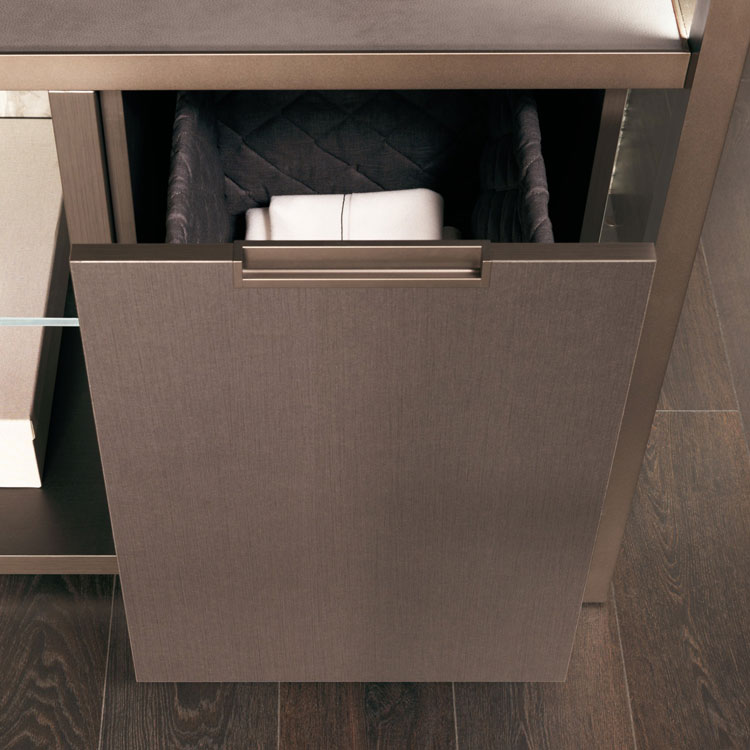
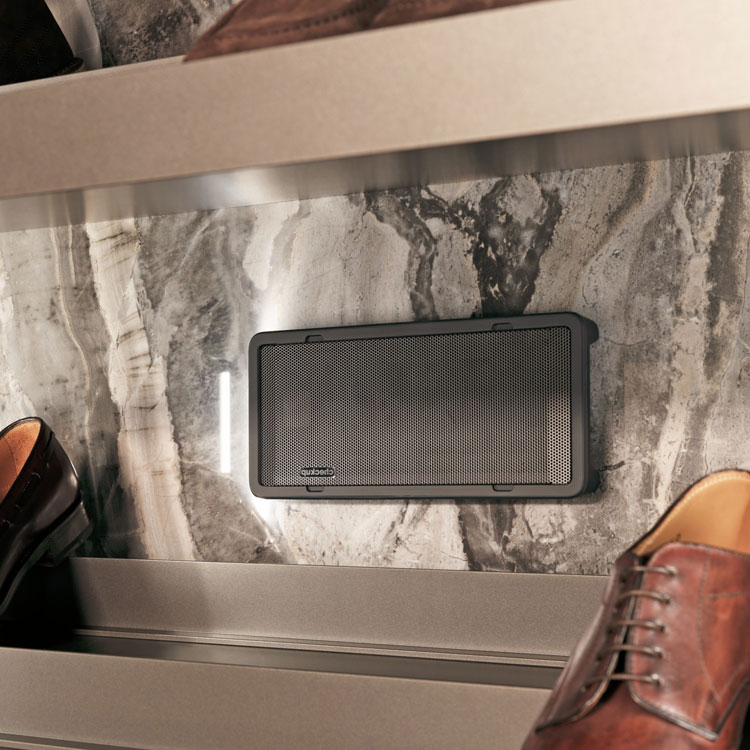
Custom-built wardrobes are a one-of-a-kind expression of style and elegance, created to match the individual demands of every discerning client.
Unlike mass-produced furnishings, hand-craftsmanship brings unique creativity and expertise to every item, making them personalised, exclusive and exceptional in every way.
To create beautifully distinct cabinetry, artisanal wardrobe manufacturers like FCI London painstakingly pick their materials and stress over designs, making their work impassioned, diversified and able to tell a story.
It also gives clients the opportunity to select the colour palette, materials, finishings, fittings and fixtures of their choice, ensuring that everything from their bedroom aesthetics to the expansiveness of their clothing is perfectly accommodated.
Find out more about our bespoke services by contacting our design team today.
The public's fascination with celebrity walk-in wardrobes has become a frenzied obsession in the past two decades.
In 2006, Mariah Carey exposed her 12 000 square foot masterpiece in an episode of MTV’s celebrity lifestyle show, Cribs, and a whole slew of show-and-tells from the likes of Kim Kardashian, Catherine Zeta-Jones and Mark Zuckerburg ensued.
When Sex and the City’s famous character, Carrie Bradshaw, was proposed to in her lux wardrobe, it was the cherry on top and cemented its place in pop culture for good.
Yes, with all this exposure, walk-in wardrobes have now become a status symbol amongst the rich and famous, but it might surprise you to know that they are also an accessible option for just about anyone who has the available space.
Why? Because they can be customised to suit a multitude of budgets, thereby allowing the humbler home-owner to pick out selective features to suit their purse strings.
So, if they’re something that you dream about having, read our article on how much it costs to have a walk-in wardrobe - it’s sure to give you a nudge in the right direction.
The FCI London team specialise in custom-built cabinetry and can design bespoke wardrobe configurations to suit your exact needs.
Our dynamic interior designers will sit with you and discuss your ultimate creation, give you advice on any home refurbishment project and will walk you through your options when it comes to luxury furnishings that will fit in beautifully with any genre.
To find out more, connect with us today or pop into our spectacular showroom for a chat and a glass of bubbly.
You can also take a peek at all our latest projects – they’re sure to inspire some fabulous new ideas.
We help designers & clients transform mundane spaces into extraordinary ones.


Book a video consultation and we'll advise you on furniture, space planning, colour schemes and much more.
Book A ConsultationBook a visit to our stunning, multi award-winning, 30,000 sqft.
Over 700 brands under 1 roof.
Most Popular on FCI London: Fitted Wardrobes | Luxury Designer Rugs | Luxury Sofas | Luxury Furniture Store | Luxury Interior Designers | Luxury Bedroom Furniture | Luxury Modern Chairs | Luxury Coffee Tables | Luxury Designer Kitchens | Luxury TV Units | Luxury Dining Tables | Luxury Storage Solutions | Luxury Sideboards | Luxury Stools & Bar Stools | Luxury Bespoke Joinery | Luxury Modern Hallway Furniture | Furniture Showroom Appointment | Luxury Lighting | Modern Luxury Outdoor Furniture
Transparency isn’t a policy. It’s a principle.
Have a peek at what our clients really have to say.