
Published Date: Apr 18, 2025 | Last Updated: Jun 30, 2026
Written by: Emma Cyrus, Senior Copy, Content & Editorial Writer
Reviewed by: Perla Mignanelli, Senior Interior Designer at FCI London
Edited by: Zoona Sikander, Interior Design Writer & Social Media Content Creator
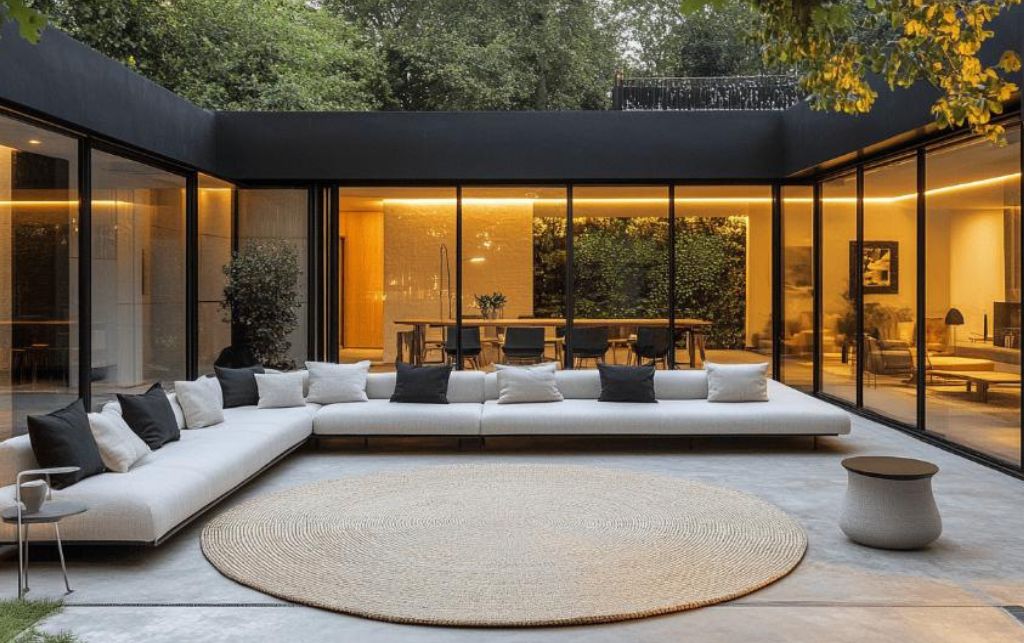
Table of Contents
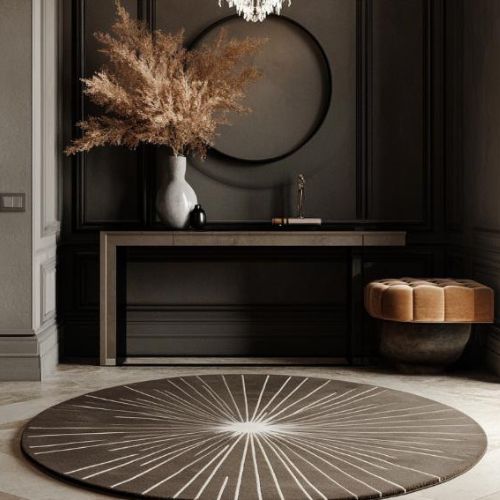
When curating distinguished exterior spaces, the thoughtful selection of luxury rugs can transform an ordinary patio into a breathtaking outdoor sanctuary. Among our most requested items at FCI London, round rugs offer a distinctive aesthetic.
The perfect luxury outdoor rugs introduce texture, definition and sophistication to exterior environments while withstanding the demands of outdoor placement.
As discerning clients increasingly view their gardens, terraces and poolside areas as extensions of their interior living spaces, round outdoor rugs have emerged as essential elements for those seeking to create cohesive, luxurious environments that transition seamlessly from inside to out.
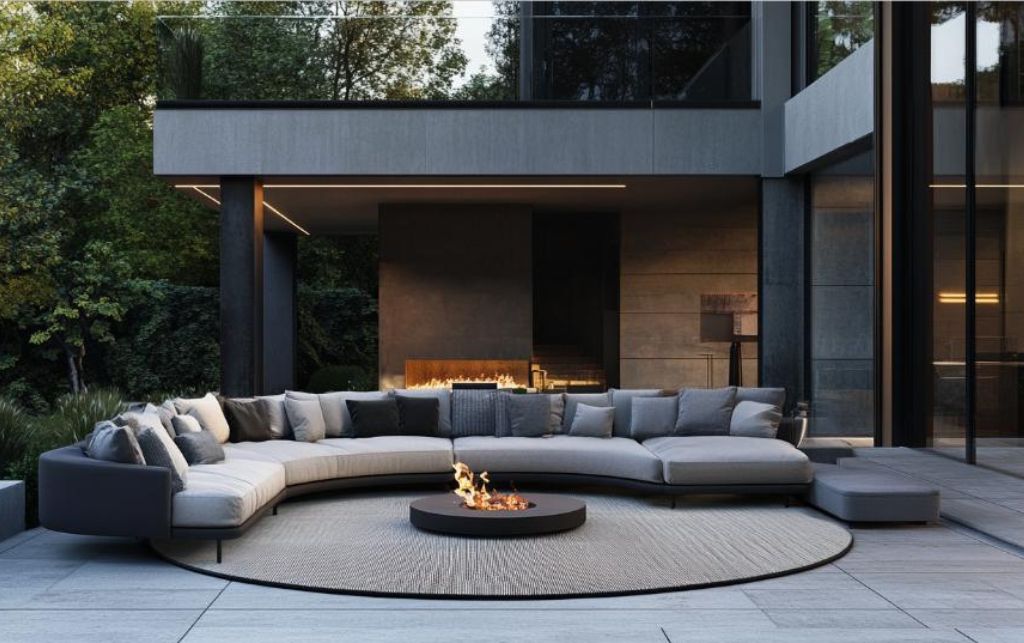
The circular form of round exterior rugs creates an entirely different spatial dynamic than their rectilinear counterparts. While rectangular rugs reinforce the architectural lines of most outdoor areas, round shapes introduce a softening element that counterbalances the inherent angularity of terraces, decking, and paved spaces.
This geometric contrast immediately adds visual interest and a layer of design sophistication that speaks to deliberate, thoughtful curation. Round shapes also create natural gathering points.
The circular perimeter subtly encourages connection and conversation, making these rugs particularly well-suited for seating areas where interaction is prioritised. The absence of corners removes visual barriers, creating a more inviting and fluid environment.
Additionally, the perfect symmetry of a round rug establishes a clear focal point, drawing the eye and anchoring furniture groupings with elegant simplicity.
The finest outdoor rugs round out exterior design schemes while standing up to environmental challenges. The material selection for these pieces represents a crucial balance between aesthetic refinement and practical performance.
Polypropylene with UV stabilizers offers perhaps the most versatile option, providing exceptional resistance to fading, moisture damage and mildew while maintaining a luxurious hand-feel that belies its remarkable durability.
Solution-dyed acrylic is favoured for its cotton-like softness combined with superior colorfastness; these fibers contain pigments integrated during manufacturing rather than applied as surface treatments, ensuring lasting vibrancy even in direct sunlight.
PET from recycled materials offers exceptional performance characteristics while appealing to environmentally conscious clients. These rugs clean easily and resist staining while maintaining their structural integrity across temperature extremes.
While interior rugs might prioritise delicate colourways or intricate patterns, outdoor rugs round their design approach to accommodate the unique lighting conditions and surroundings of exterior spaces.
Several principles guide successful colour selection. Exterior spaces receive dramatically different lighting throughout the day, making colours appear significantly more intense in direct sunlight than they would indoors.
This natural amplification means that slightly subdued colourways often achieve the perfect visual balance. The most sophisticated exterior rugs complement rather than compete with the surrounding landscape
Colourways that echo natural elements - the blue-grey of water features, the varied greens of plantings, the warm tones of wooden decking create cohesion between designed elements and natural surroundings.
Beyond physical performance, patterns should offer visual durability - designs that disguise the inevitable minor soiling that occurs in outdoor settings. Multi-tonal patterns, particularly those incorporating earth tones or textural elements, maintain their appearance with minimal maintenance.
Pattern scale should respond to both the rug's dimensions and the viewing distance typically experienced in outdoor settings. Larger-scale patterns often prove more effective in expansive exterior spaces, where intricate details might be lost.
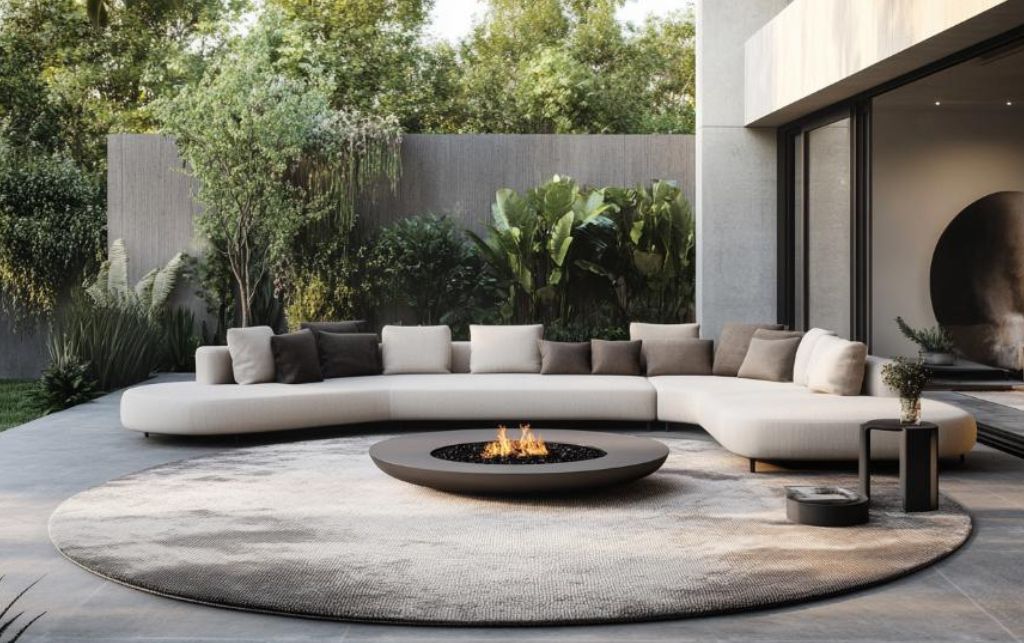
One of the most valuable functions of outdoor rugs round spaces is their ability to delineate distinct functional areas within larger exterior environments. Much as interior designers use area rugs to define conversation or dining zones within open-plan living spaces, exterior rugs create visible but permeable boundaries that organise outdoor areas into purposeful sections.
This zoning function proves particularly valuable in contemporary properties where the trend toward expansive, minimally interrupted exterior spaces might otherwise result in amorphous, underutilised areas.
The circular form of these gems excel in this zoning capacity because it creates a complete, self-contained area while maintaining an open, inviting perimeter.
When you compare rectangular vs. round rugs, the former can create corridors or pathways by virtue of their linear edges, while round ones establish centralised activity areas that invite approach from all directions.
The symmetrical nature calls for thoughtful furniture placement that either respects or intentionally contrasts with this perfect geometry. Perhaps the most intuitive approach is centered arrangements, which place a central element - typically a coffee table, fire pit, or occasionally a dining table - at the exact center of the rug, with seating elements arranged in a perfect circle or oval around this focal point.
This creates classical balance and facilitates equal interaction among all seating positions. More contemporary designs might employ asymmetrical groupings that deliberately offset furniture placement. This approach creates more dynamic visual interest while maintaining a unifying element.
For a more relaxed aesthetic, consider partial placement. In some contexts, positioning furniture to overlap the rug's perimeter - some elements fully on the rug, others straddling its edge, still others positioned just beyond it - creates an intentionally casual, evolved atmosphere suggesting that the space has developed organically rather than through rigid planning.
Successful exterior designs create thoughtful colour relationships between outdoor rugs around seating areas and their surrounding elements. Rather than matching colours exactly, aim for nuanced harmony that acknowledges the full spectrum of exterior components.
Consider the colours present in the home's exterior, adjacent walls, pergolas, or permanent structures. The rug might extract a secondary or tertiary colour from these elements rather than attempting to match dominant tones.
Stone pavers, timber decking, decorative aggregates and other hardscaping materials establish a colour foundation that round rugs should acknowledge. Look for complementary rather than matching tones to create sophisticated tension.
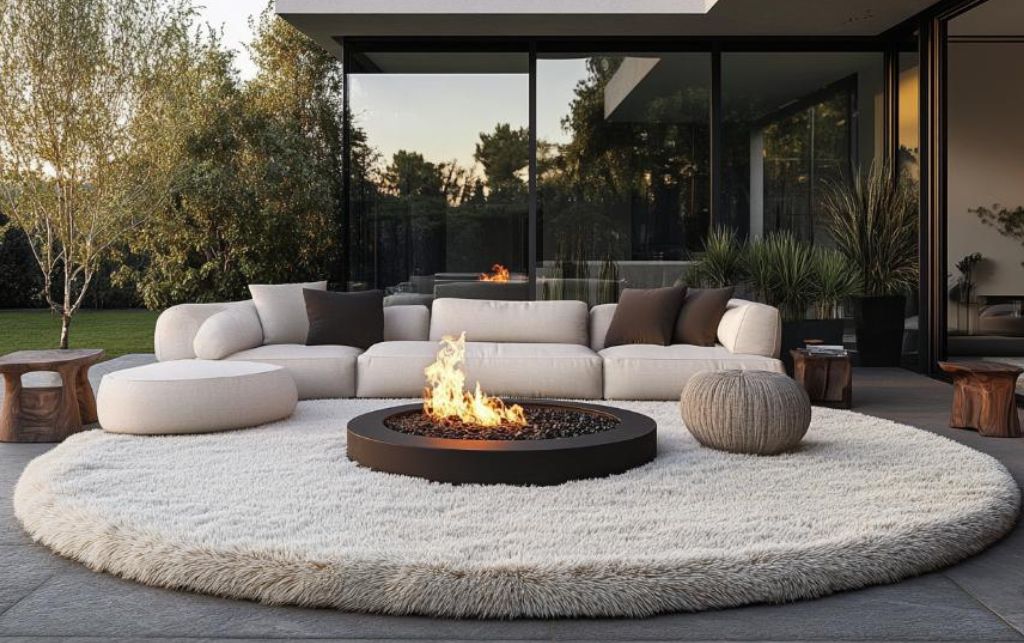
The investment in fine outdoor rugs necessitates careful consideration of their resilience across changing weather conditions. While all quality exterior rugs offer some degree of weather resistance, their specific performance characteristics vary significantly.
Extended sun exposure represents perhaps the greatest challenge to exterior rug longevity. Look for materials specifically engineered with UV stabilisers that prevent fading and fiber degradation.
The finest examples maintain their colour integrity for five or more years even in locations with intense sun exposure. Superior outdoor rugs offer more than simple water resistance; they actively manage moisture through engineered drainage capabilities.
The construction should allow water to pass through rather than pooling on the surface, while the fibers themselves resist water absorption to prevent mildew and bacterial growth.
Quality exterior rugs maintain their dimensional stability and tactile properties across extreme temperature variations. Inferior products may become brittle in cold conditions or excessively pliable during heat waves, while premium options maintain consistent performance regardless of ambient temperature.
Truly discerning exterior design approaches this project with the same seasonal sensitivity applied to interior textiles. Rather than selecting a single rug expected to serve across all seasons, consider establishing a rotation that responds to both practical considerations and aesthetic preferences:
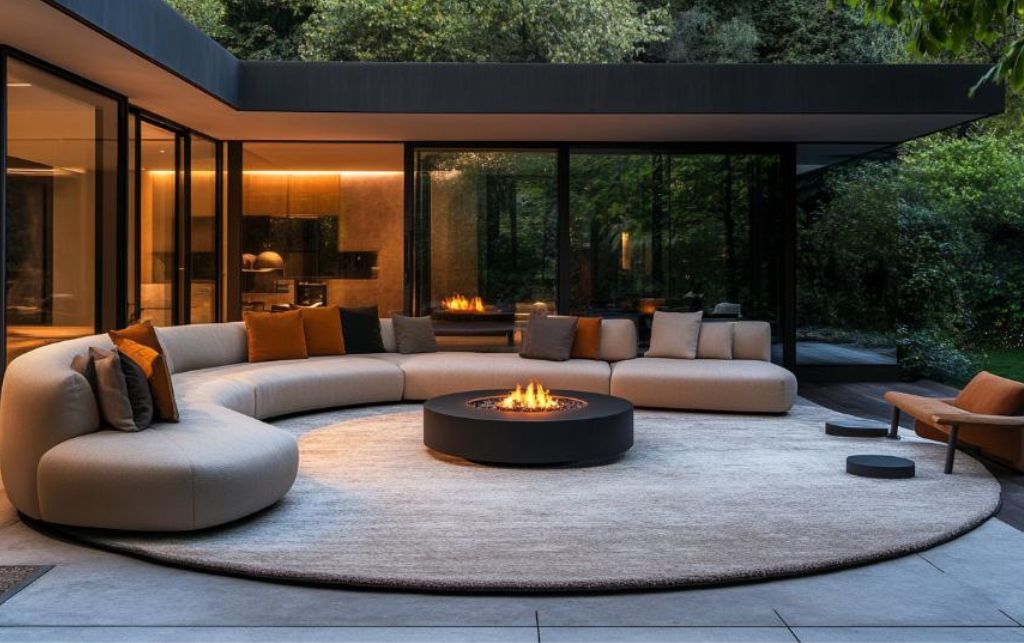
The diameter selection for round exterior rugs fundamentally determines their practical functionality and visual impact. For conversation areas arranged for interaction rather than media viewing, diameters between 240 cm and 300 cm typically accommodate four to six seating positions.
Round dining arrangements require rugs sized to extend approximately 60 - 75 cm beyond the table's edge in all directions. For a standard 120 cm round table seating four, this translates to a minimum 240-270 cm rug diameter.
Smaller round rugs (150-180 cm) function effectively as accent pieces, perhaps highlighting a specimen planting, sculpture, or individual chaise lounge. In exceptionally spacious exterior environments, oversized round rugs (350cm+) create dramatic impact while accommodating larger furniture groupings that might otherwise require multiple smaller rugs.
The most common error in rug sizing involves selecting diameters that prove too small for their intended function. When uncertain, opt for the larger option - a rug that reads as slightly oversized creates a more luxurious impression than one that appears undersized and insufficient.
Beyond basic sizing guidelines, consider how the visual weight of outdoor rugs round areas contributes to the overall balance of exterior spaces. More substantial architecture typically requires rugs with corresponding visual weight, whether through larger dimensions, deeper colorways, or more pronounced patterns.
Rugs positioned at transitions between interior and exterior spaces should acknowledge both contexts, perhaps through colorways that reference both environments or patterns that echo interior design elements while embracing exterior durability.
The amount of visible flooring or ground surrounding the rug significantly impacts its perceived scale. Rugs appear more substantial when positioned with minimal surrounding space, while the same piece placed within a vast expanse might appear undersized.
Consider the height and visual substance of surrounding vertical elements—whether pergolas, plantings, walls, or screens—when selecting appropriate rug scale. Higher vertical elements typically balance more comfortably with larger rug diameters.
The circular form represents perhaps the most ancient and universally recognized symbol of perfection, unity, and wholeness. When thoughtfully selected and positioned, round outdoor rugs bring these symbolic qualities into literal form within exterior spaces:
When these considerations guide selection, your rug can transcend mere decorative accessories to become essential, foundational elements of sheer sophistication.
We help designers & clients transform mundane spaces into extraordinary ones.


Book a video consultation and we'll advise you on furniture, space planning, colour schemes and much more.
Book A ConsultationBook a visit to our stunning, multi award-winning, 30,000 sqft.
Over 700 brands under 1 roof.
Most Popular on FCI London: Fitted Wardrobes | Luxury Designer Rugs | Luxury Sofas | Luxury Furniture Store | Luxury Interior Designers | Luxury Bedroom Furniture | Luxury Modern Chairs | Luxury Coffee Tables | Luxury Designer Kitchens | Luxury TV Units | Luxury Dining Tables | Luxury Storage Solutions | Luxury Sideboards | Luxury Stools & Bar Stools | Luxury Bespoke Joinery | Luxury Modern Hallway Furniture | Furniture Showroom Appointment | Luxury Lighting | Modern Luxury Outdoor Furniture
Transparency isn’t a policy. It’s a principle.
Have a peek at what our clients really have to say.