
Published Date: May 11, 2026 | Last Updated: Jun 30, 2026
Written by: Emma Cyrus, Senior Copy, Content & Editorial Writer
Reviewed by: Cristina Chirila, Senior Interior Designer at FCI London
Edited by: Zoona Sikander, Head of Content
Estimated Reading Time: 18 minutes
TL;DR: Coordinating dining chairs and bar stools is less about matching and more about intention. The most sophisticated interiors rarely feature identical pieces - they feature pieces that share a design language. This blog covers when matching makes sense, how to coordinate without replicating, a bar stool height reference guide, a material and style pairing matrix, and 20 curated sets from the world's leading luxury furniture brands. Whether you're working with an open-plan kitchen-diner or a dedicated bar area, the principles here will help you commission with confidence rather than compromise.
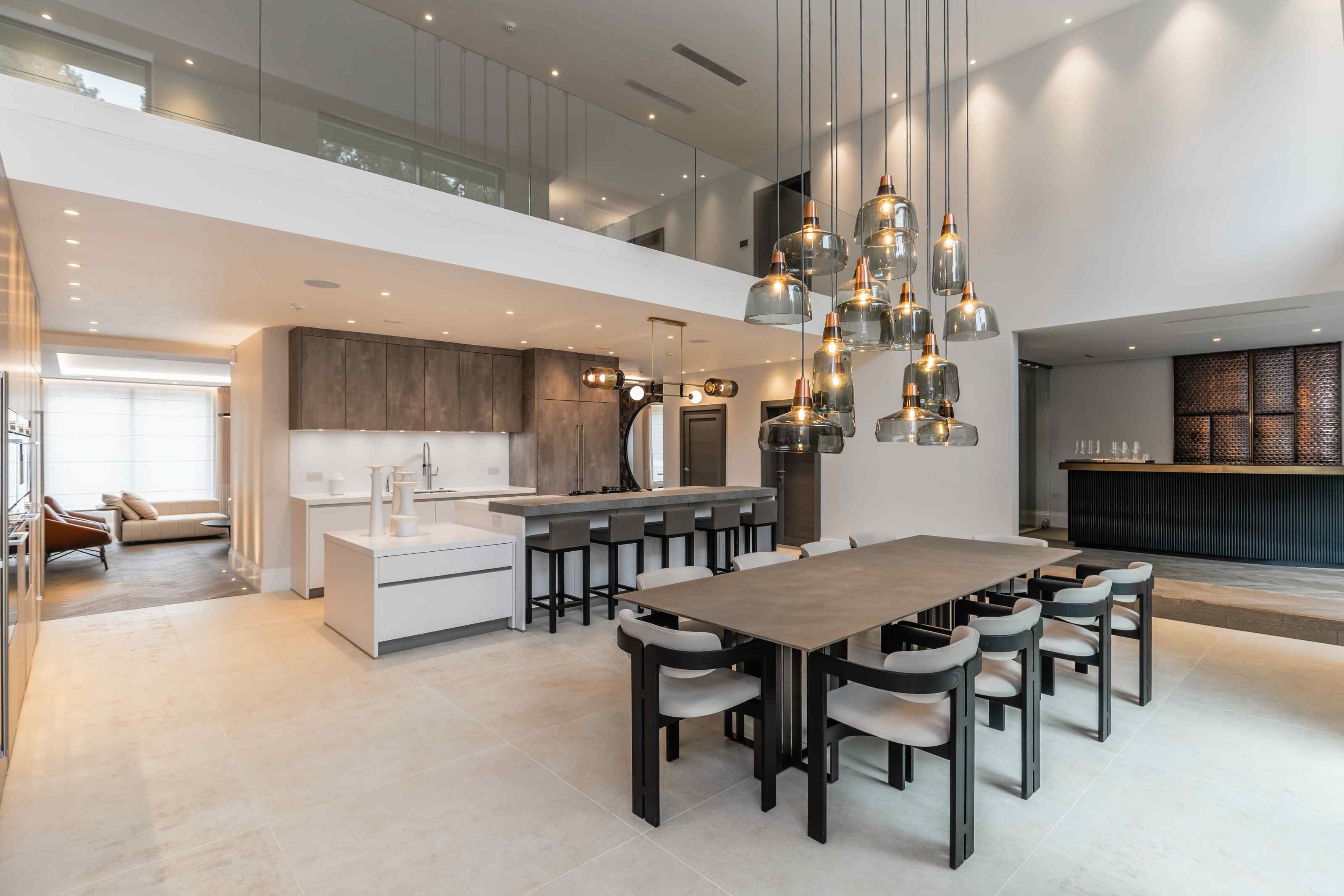
Table of Contents
If you're a design-conscious person, planning an open-plan kitchen-dining space, this expert guide is for you. Interior designers coordinating seating across multiple zones will also find the pairing principles and product curation rather helpful. We've examined when matching dining chairs and bar stools makes sense, when it doesn't, and how to achieve a result that feels curated rather than catalogue-ordered. When only the finest craftsmanship will do, these guidelines ensure every piece earns its place through both function and beauty.
The art of creating a harmonious kitchen-dining space lies not in rigid matching, but in understanding the subtle dance between cohesion and character. While many assume that identical dining chairs and bar stools represent the pinnacle of coordination, today's most sophisticated interiors tell a rather different story. The discerning homeowner recognises that true elegance emerges when pieces complement rather than mirror each other, creating visual conversations that feel both intentional and effortlessly refined.
Gone are the days when successful design meant purchasing furniture sets in matching trios.
Modern luxury embraces a more nuanced approach, where your dining chairs and luxury stools differ dramatically in form whilst sharing an invisible thread of design DNA. This evolution reflects not just changing tastes, but a deeper appreciation for how different seating elements serve distinct purposes whilst contributing to a cohesive narrative that speaks to your personal style and sophisticated understanding of space.
For the astute homeowner seeking to elevate their open-plan living areas, mastering this balance becomes essential.
The following principles will guide you through creating kitchen-dining spaces that feel curated rather than catalogue-ordered, ensuring every piece earns its place through both function and beauty.
It's one of the most common questions I'm asked during showroom consultations, and the honest answer is: it depends entirely on how your space is configured. The question of whether bar stools should match dining chairs isn't a design rule with a single correct answer - it's a spatial and aesthetic judgement call that requires understanding the relationship between your seating zones.
In an open-plan kitchen-diner where the island stools and dining chairs occupy the same sightline, some degree of visual coordination is genuinely helpful. The eye naturally seeks relationships between elements in shared space, and without any connecting thread, the result can feel fragmented rather than composed. That connecting thread, however, doesn't need to be identical pieces - it might be a shared material, a complementary finish, or a proportional echo that ties the two zones together without making them interchangeable.
.jpeg)
The image above is from one of my recent projects and it's the perfect illustration of the principle in action. The dining chairs and bar stools are matching - same terracotta upholstery, same gold legs - creating an immediate visual connection across the kitchen island and dining table within the same sightline. The living zone doesn't attempt to replicate the seating; instead, the tan leather sofas pick up the warm tonal register of the chairs, and the accent cushions echo the terracotta directly. The result is a space that reads as designed rather than assembled, with each zone contributing to a coherent whole without being identical.
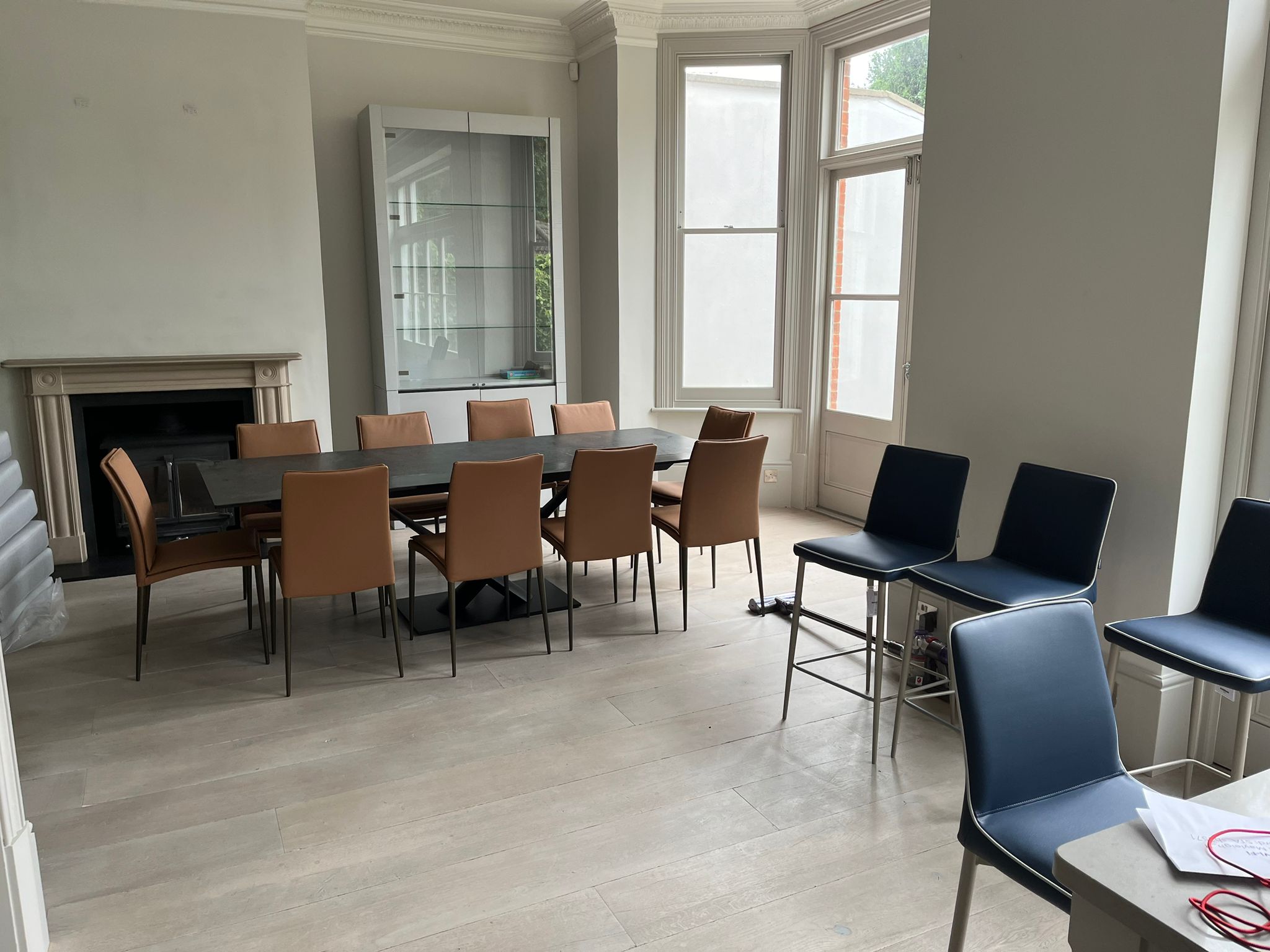
This second project makes the contrasting case just as convincingly. The dining chairs are tan leather; the bar stools are navy. They are not matching - and they are not trying to be. What connects them is the material language: both are leather, both are clean-lined with slim metal frames, and both belong to the same considered register. The Georgian room with its original cornicing and fireplace provides a neutral backdrop that lets the contrast read as a design choice rather than an oversight. This is precisely the scenario where identical pieces would have been the lesser decision.
Where the dining room and kitchen bar are in entirely separate zones - divided by a wall, a level change, or simply significant distance - the case for matching bar stools and dining chairs becomes considerably weaker. Each area can develop its own visual identity, and in many of the most accomplished interiors I've worked on, the deliberate contrast between zones is precisely what makes the whole scheme feel considered rather than repetitive.
The real question isn't should bar stools match dining chairs - it's whether the pieces you're selecting have been chosen with the same intentional design logic.
Our bespoke European brands like Cattelan Italia, Porada, and Bonaldo offer collections where dining chairs and bar stools are designed as genuine companions - sharing proportions, materials, and construction logic - without being identical. That is the standard worth aiming for.
Key Takeaway: Whether bar stools and dining chairs need to match depends on their spatial relationship. Shared sightlines in open-plan spaces call for visual coordination; separate zones allow for more distinct identities. The standard to aim for is intentional design logic, not identical pieces - and the best European collections are designed with exactly that distinction in mind.
If you want to give your home a luxurious or designer look, the aim should be to make it look interesting, and this can be achieved both with and without matching pieces. The most common scenario in which designers recommend matching chairs and stools is when they are both placed in an open-plan concept or if they are both visible in your line of sight (for example, if the dining chairs can be seen from the kitchen and vice versa). In these situations, visual continuity becomes rather important because the eye naturally seeks relationships between elements within the same sightline.
That said, matching doesn't necessarily mean identical. You might choose pieces from the same collection but in different heights, or select entirely different silhouettes that share a common material or finish. The key is whether the pieces feel as though they belong to the same design conversation, even if they're speaking different dialects.
For clients who are also choosing a dining table alongside their seating, the table's material and proportion will significantly shape which coordination approach feels most natural. Our guides to natural wood dining tables and marble top dining tables both touch on how seating materials respond to different table surfaces - worth reading before committing to an upholstery or frame finish.
Key Takeaway: Visual continuity matters most when pieces share sightlines in open-plan spaces, but matching doesn't require identical designs. The real objective is creating pieces that belong to the same design conversation, whether through shared materials, finishes, or subtle aesthetic threads that feel intentional rather than prescriptive.
One of the most practically consequential decisions in coordinating bar stools and dining chairs is getting the height relationship right - both between the stool and the surface it serves, and between the stool and the dining chair it sits alongside. In my experience, height mismatch is one of the most common errors in open-plan seating schemes, and it's entirely avoidable with a clear reference framework.
The three height categories below cover the standard ranges used by European manufacturers. All measurements refer to seat height - the distance from the floor to the top of the seat pad.
| Stool Type | Seat Height (mm) | Seat Height (inches) | Suitable Surface Height | Typical Knee Clearance |
|---|---|---|---|---|
| Counter Height | 600-650mm | 23.6-25.6" | 850-900mm (33.5-35.4") | 250-300mm |
| Bar Height | 650-750mm | 25.6-29.5" | 950-1050mm (37.4-41.3") | 250-300mm |
| Extra-Tall / Poseur | 750-800mm | 29.5-31.5" | 1050-1100mm (41.3-43.3") | 250-300mm |
| Dining Chair (for reference) | 440-480mm | 17.3-18.9" | 720-760mm (28.3-29.9") | 200-250mm |
The standard rule of thumb is to allow 250-300mm between the seat surface and the underside of the table or counter. Too little and the sitter feels cramped; too much and they're perching rather than sitting. For adjustable-height stools - available across several collections from Connubia Calligaris and Italforma - this calculation becomes more forgiving, which is rather useful in kitchens where the island height doesn't conform to a standard.
When coordinating bar stools with dining chairs in the same open-plan space, visual height continuity also matters: a bar stool at 750mm alongside dining chairs at 450mm creates a significant scale contrast that can feel either dynamic or discordant depending on the room. Our designers assess this relationship during every showroom consultation, and it's one of the reasons we encourage clients to bring floor plans and measurements rather than relying on digital references alone.
For clients also considering table configurations for the dining zone, our guide to the best round extendable dining tables covers how table dimensions interact with chair height and seating capacity - a rather helpful read for open-plan projects where the dining table needs to flex for entertaining.
Key Takeaway: Getting bar stool height right is a precise calculation, not an approximation. The 250-300mm knee clearance rule applies consistently across counter, bar, and extra-tall configurations. When coordinating stools with dining chairs in the same sightline, consider the visual scale relationship as well as the functional one - both matter to the finished result.
One of the most practical frameworks I use with clients when working through matching barstools and dining chairs is what I call a style pairing matrix - a way of mapping the aesthetic DNA of a space against the coordination approach most likely to succeed. The matrix below covers the four most common interior styles we encounter at FCI, and the coordination logic that works best within each.
| Interior Style | Recommended Pairing Approach | Connecting Thread | What to Avoid | Suggested Collections |
|---|---|---|---|---|
| Contemporary Minimalist | Same collection, different heights | Shared material and silhouette | Competing finishes; over-decoration | Sila (Sovet Italia), Sharky (Kristalia), Tuka (Connubia Calligaris) |
| Warm Contemporary | Same upholstery, complementary bases | Fabric or leather family; warm metal tones | Cold chrome against warm wood | Sofia (Cattelan Italia), Lisa (Italforma), Cleo (Misura Emme) |
| Eclectic Luxury | Different designs, shared colour palette | Colour family or accent finish (e.g. gold) | Identical pieces - too safe for this style | Nuka (Brabbu), Camille (Domkapa), Bastide (Reflex Angelo) |
| Classic / Transitional | Same collection, same upholstery | Upholstery family; wood species | Industrial materials (exposed steel, raw concrete) | Ester (Porada), Estoril (Laskasas), Wind (Aria) |
The matrix is a starting point rather than a prescription. In practice, the most successful schemes often combine elements from two adjacent categories - a warm contemporary base with an eclectic accent, for instance, or a minimalist silhouette in a classically warm material like walnut. Our designers work through this mapping process during every consultation, using physical material samples and scale drawings rather than screen references.
Key Takeaway: Successful coordination between matching chairs and bar stools is determined by interior style logic as much as individual product preference. Using a style pairing matrix - mapping aesthetic DNA against coordination approach - removes the guesswork and ensures the final scheme feels deliberate rather than assembled by chance.
The material you choose for your dining chairs and bar stools with matching dining chairs determines not just the aesthetic but the daily experience of the piece - how it feels to sit in, how it responds to light, how it ages. The comparison below covers the primary upholstery and frame materials available across our European brand range, with honest notes on longevity and suitability.
| Material | Aesthetic Quality | Durability | Maintenance | Best Suited To |
|---|---|---|---|---|
| Full-grain leather | Rich, ages beautifully with patina | Excellent - 15-20+ years with care | Occasional conditioning; wipe-clean | Classic, warm contemporary, eclectic luxury |
| Velvet | Tactile, rich colour depth | Good - requires care in high-use zones | Brush regularly; treat spills immediately | Eclectic luxury, statement dining rooms |
| Performance fabric | Wide colour range; clean-lined | Very good - resistant to staining | Easy clean; high repeat-use tolerance | Family homes, open-plan entertaining spaces |
| Solid wood | Natural grain; warm and grounded | Excellent - develops character over time | Periodic oiling; avoid prolonged moisture | Classic, transitional, Scandi-influenced interiors |
| Lacquered metal | Crisp, graphic, holds colour well | Very good - chip-resistant finishes | Wipe-clean; avoid abrasive products | Contemporary minimalist, industrial-luxe |
| Polypropylene | Lightweight, wide colour range | Excellent for outdoor and high-use | Wipe-clean; UV-stable grades available | Outdoor dining, casual open-plan spaces |
One principle worth applying here: when coordinating bar stools and dining chairs to match, the material relationship between the two pieces is usually more important than the silhouette relationship. Two chairs of very different profiles can feel harmonious if they share a leather family; two chairs with near-identical profiles can jar if one is in matte velvet and the other in high-gloss lacquer. Our showroom holds physical samples across all material categories - experiencing them in person before committing is, in my experience, considerably more reliable than working from digital references.
Key Takeaway: Material choice determines how dining chairs and bar stools age, perform, and relate to each other visually. When coordinating across two seating zones, the material thread is usually the strongest connecting element - more so than silhouette or colour alone. Full-grain leather and solid wood both offer the combination of aesthetic longevity and physical durability most appropriate for a luxury long-term investment.
Key Takeaway: Successful coordination hinges on proportional harmony and lifestyle considerations rather than rigid design rules. Prioritise measurements, consider longevity over trends, and remember that luxury upholstery withstands daily life beautifully, whilst thoughtful material mixing prevents visual monotony and creates sophisticated layering.
To make your search and your decisions easier, we have made a list of some of the most perfectly matched dining chairs and bar stools from our favourite luxury furniture brands. Each set below represents a considered coordination - pieces designed as genuine companions, not afterthoughts.
Inspired, of course, by the light and airy elements of nature, the Wind dining chair and bar stool boast a minimalistic look and an enveloping seat. The seat and backrest for both the chair and the bar stool are completely covered in soft leather, which offers maximum comfort.
All Aria products are manufactured completely in Italy with the uncompromising quality that our Italian brands are known for.
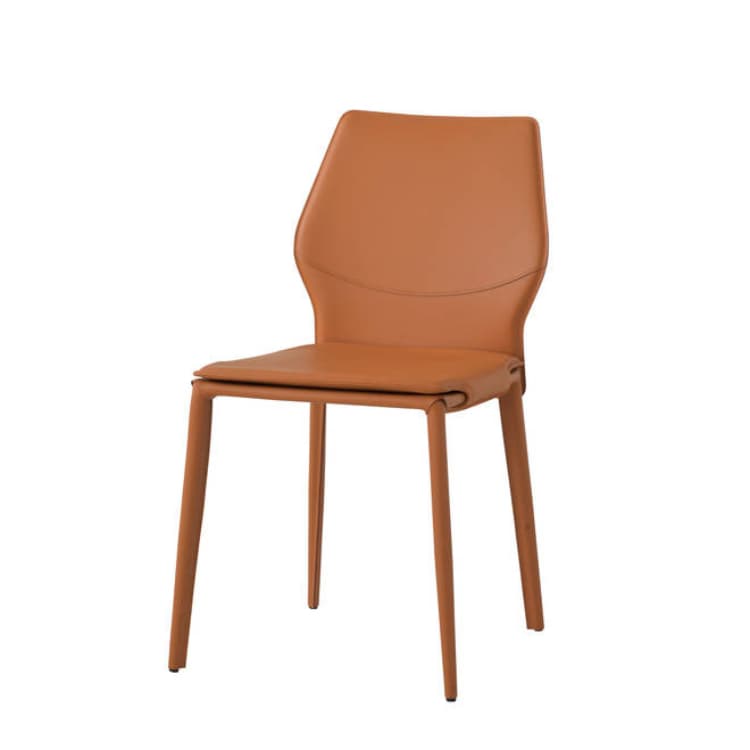
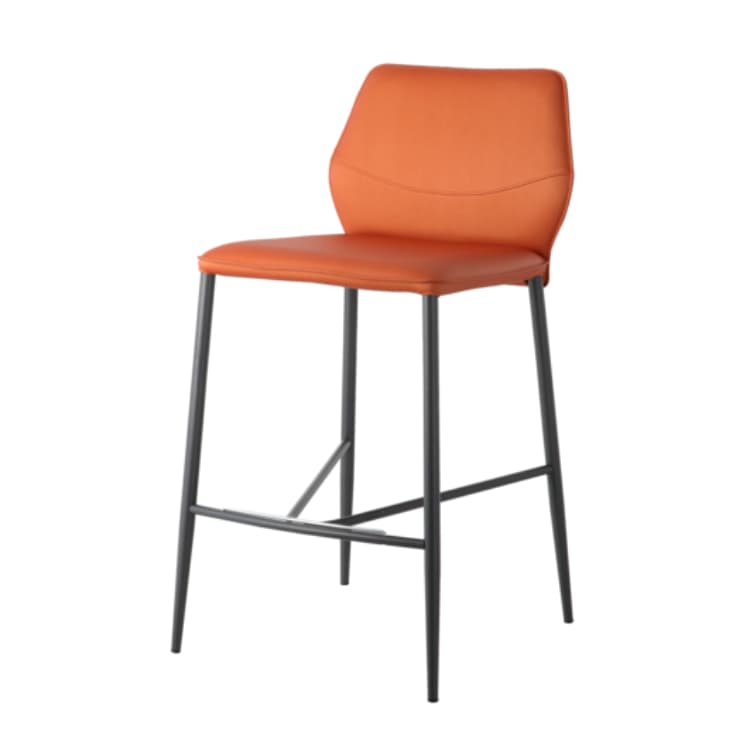
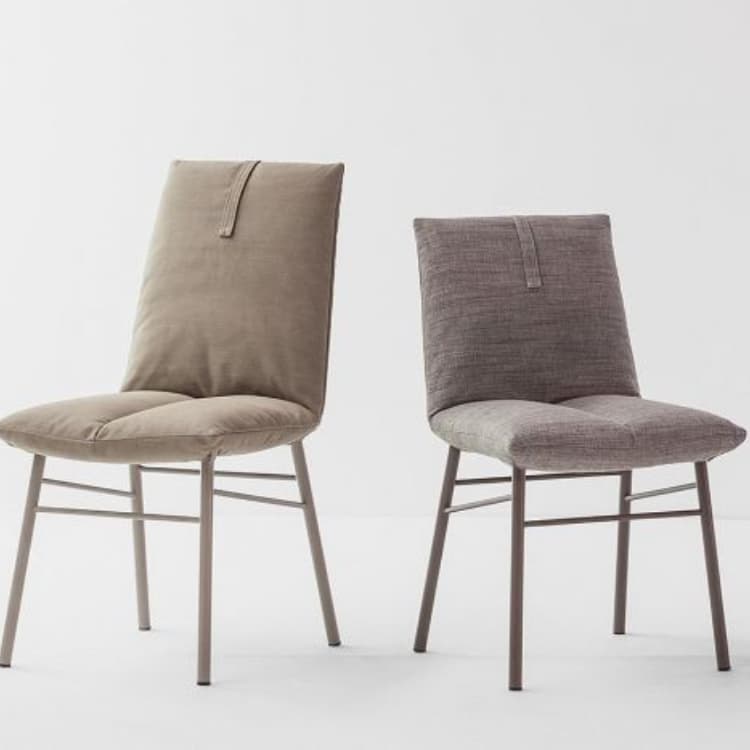
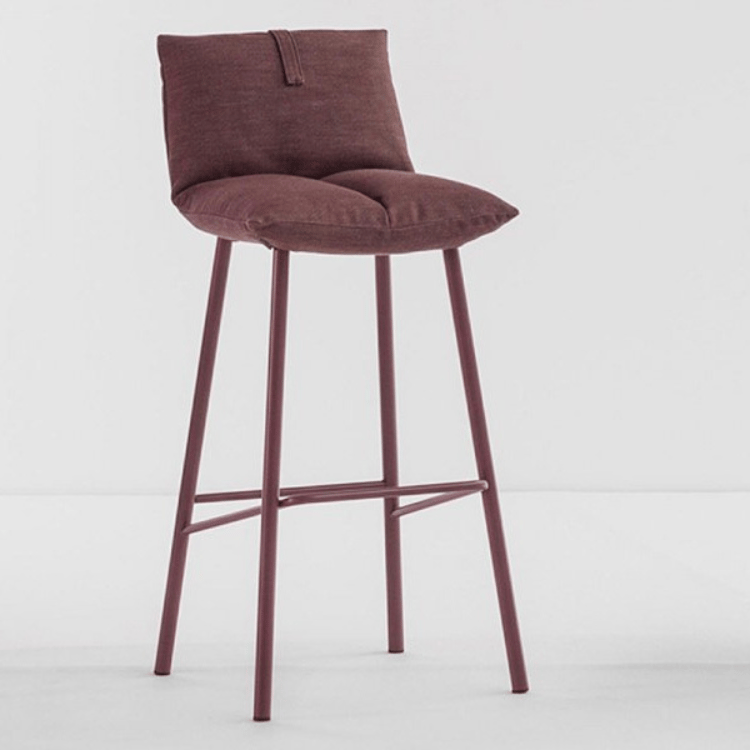
If you're looking for truly modern bar stools, then Pil is the answer to your search as its unique design instantly catches your eye. The angled legs, curved back, and soft cushioning all come together wonderfully to make them an elegant addition to any modern kitchen, bar or dining room.
If you haven't guessed yet, the pillow collection is indeed inspired by the shape of a pillow, which means that all the products in this range are designed with a focus on softness, relaxation and comfort. You can also choose the Pil lounger for your living room to match your dining chairs and stools.
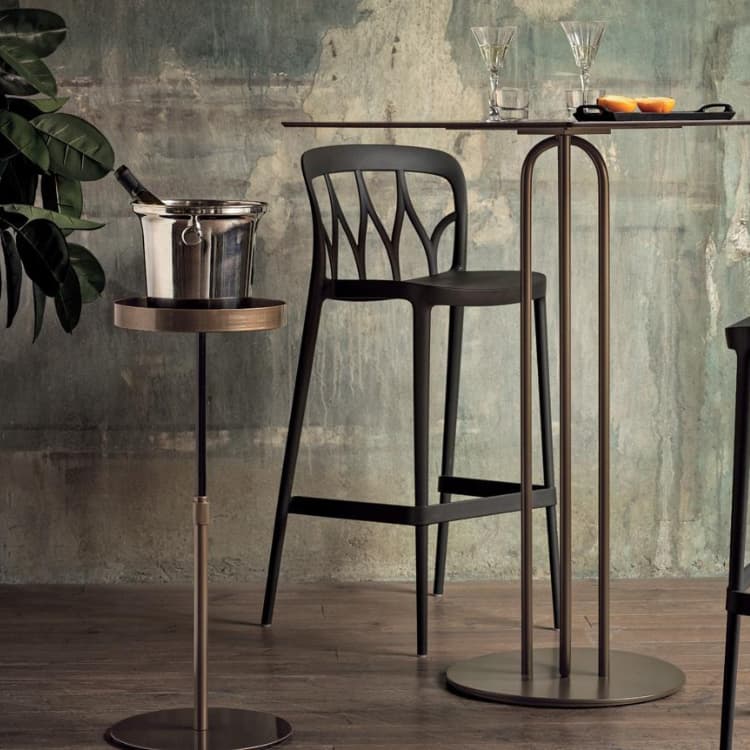
This outdoor dining chair and bar stool duo by Bontempi Casa bring both stylish and fun elements to your outdoor space. It's the geometric, cut-out pattern of the backs that makes them stand out in any setting. Both the chair and the stool can be customised in a range of colours, including the most vibrant ones. They're made from high-quality, all-weather-friendly material, and they can also be stacked, making them practical, space-saving options.
Since they are manufactured from high-quality polypropylene, they're not just lightweight and waterproof but also incredibly durable, so they'll easily be a part of your garden or patio for years to come.
Our designers highly recommend pairing the Galaxy bar stools with either the Alter bar table or the Rail high table by Bontempi Casa.
.png)
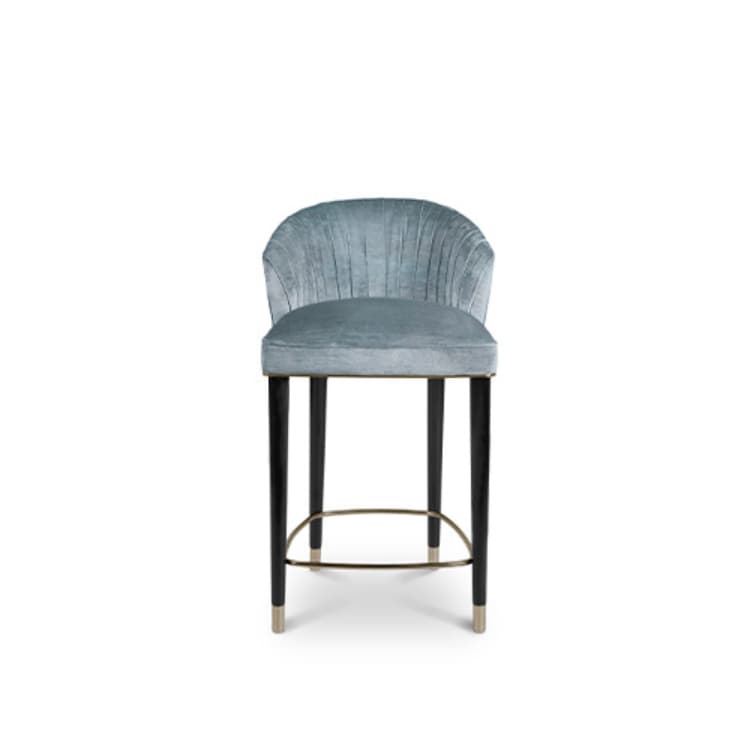
Inspired by the mesmerising Nuka glacier of Alaska, these velvet upholstered dining chairs and bar stools are magnificent additions to contemporary homes. The legs of the chair are a glossy golden colour, while the bar stool comes in a glossy black finish with gold detailing.
The high curved back of both the chair and the stool is further enhanced by the addition of gold nails that run along the back stitching. The upholstered fabric or leather can be customised in your choice of material and colours that you can select from the samples at our showroom.
.png)
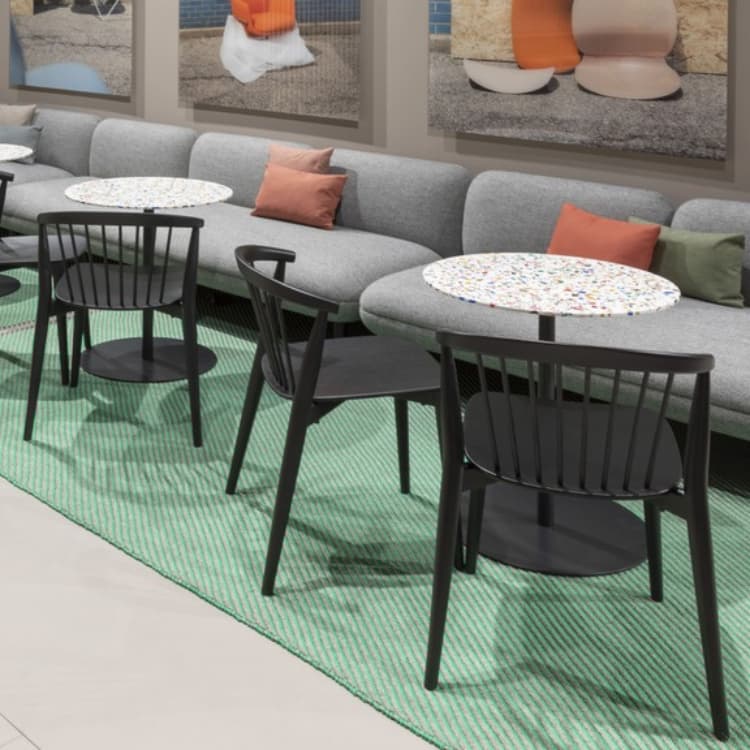
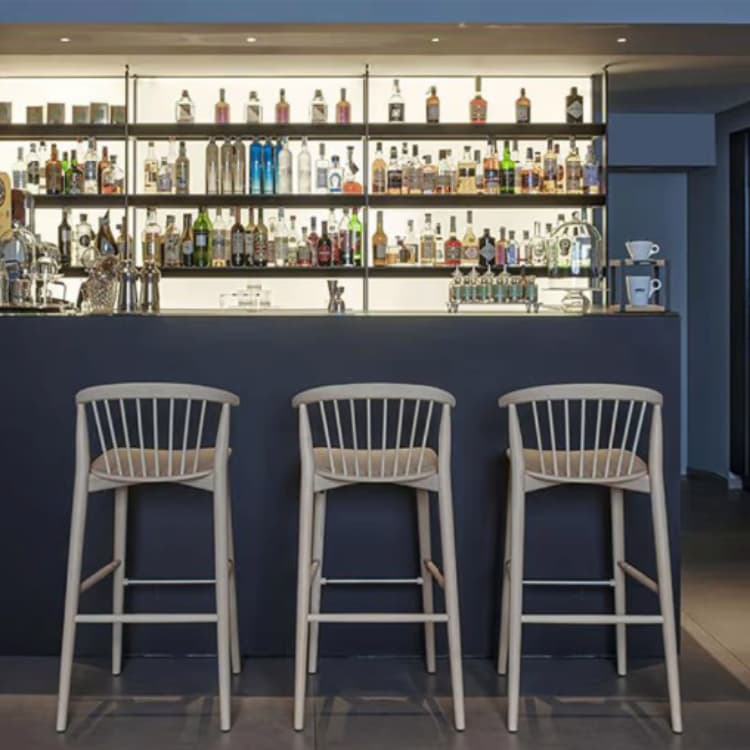
Alberto Brogliato and Federico Traverso are the renowned designers behind the Newood series, which is a reinterpretation of the classic Windsor chairs, as they've given them a contemporary upgrade in this version.
Made from solid, curved wood, this chair truly highlights the natural charm and beauty of wood. It's a stackable chair that is available in two versions, with and without backrest detailing.
The Newood stool shares the same classic appeal and old-world aesthetics as the Newood chair, but with a contemporary touch that makes it perfect for modern homes. While the structure is in solid wood, a stainless steel footrest has been added to make the stool more durable for everyday use.
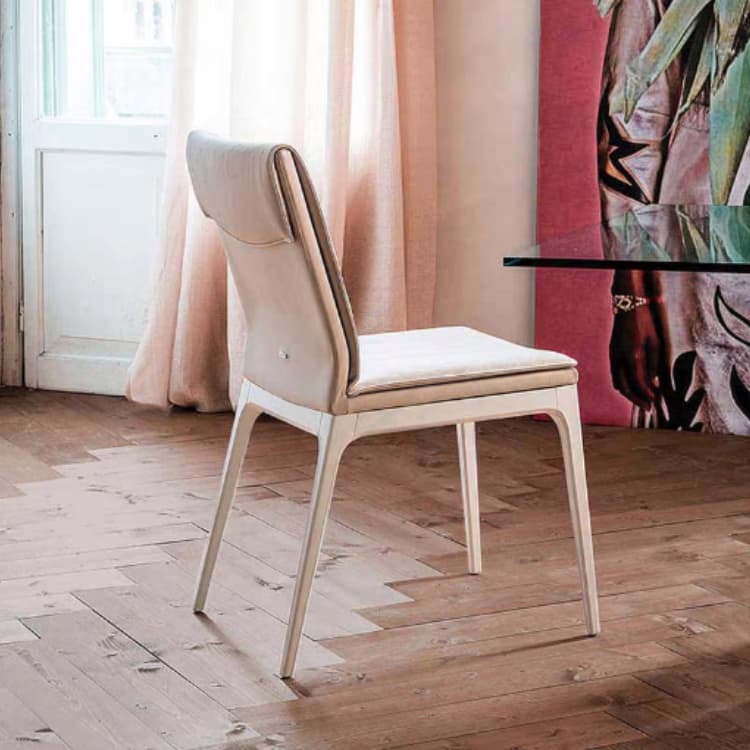
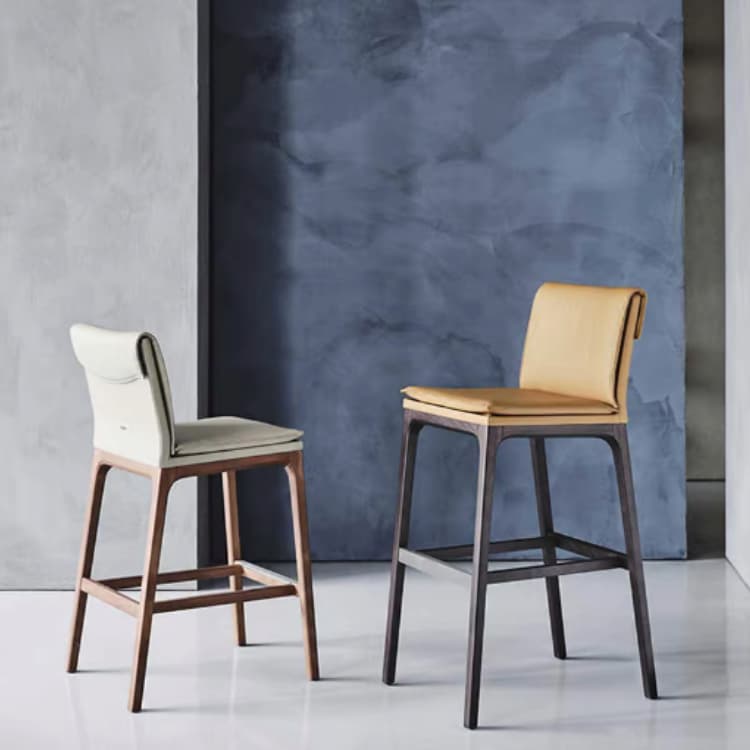
Another masterpiece by one of our favourite Italian furniture brands, Cattelan Italia. The Sofia chair and bar stool have been designed by Paolo Cattelan himself, and they're one of the most elegant options you can find. The simple yet timeless design is enhanced by the comfortable cushioning and ergonomic support that this upholstered chair and bar stool offer.
Both the Sofia chair and the bar stool are available in two different heights, and a chair version with armrests is also available. These chairs pair exceptionally well with any of the Cattelan Italia dining tables, making them a particularly refined choice as dining chairs with matching bar stools for the contemporary home.
Designed by Archirivolto for Cattelan Italia, the Dumbo dining chair is like a designer's interpretation of the iconic Disney character, Dumbo, in the form of a chair. And of course, just like the character that it's inspired by, this chair is simply impossible to ignore for anyone who sets their eyes on it.
The dining chair features a thick wooden base with an upholstered seat and backrest that can be customised in leather or fabric. The nontraditional silhouette and high level of comfort that this chair offers allow it to be used as not just a dining chair but also an office chair or an accent chair in the living room.
The Dumbo bar stool is as versatile as its counterpart, as it's suitable for use in both kitchens and bar areas. The Italian craftsmanship and high-quality materials truly shine through in both these products.
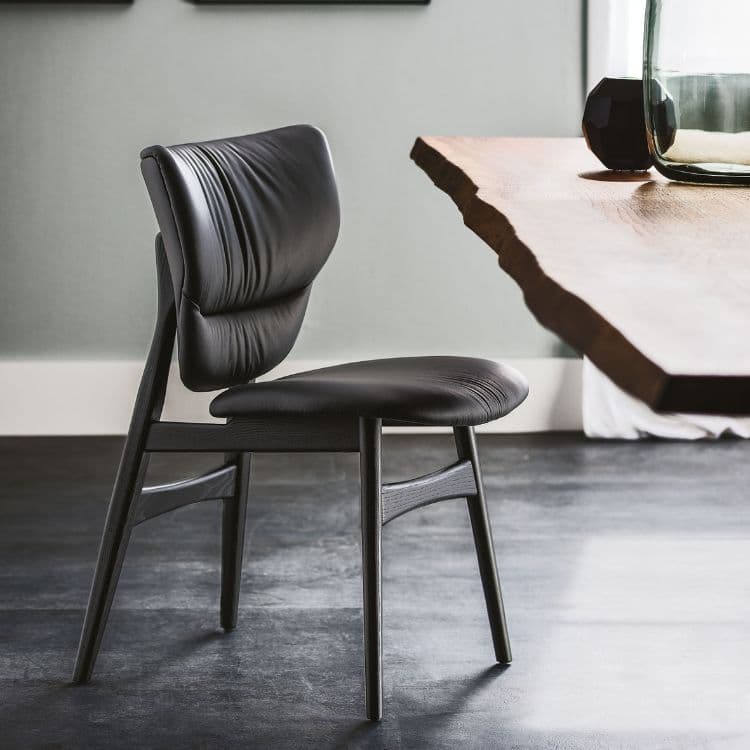
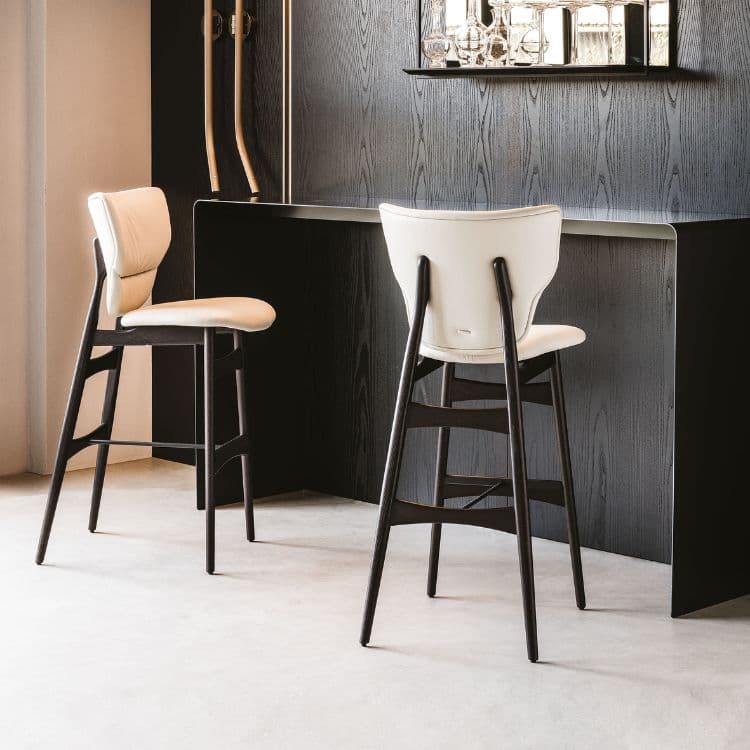
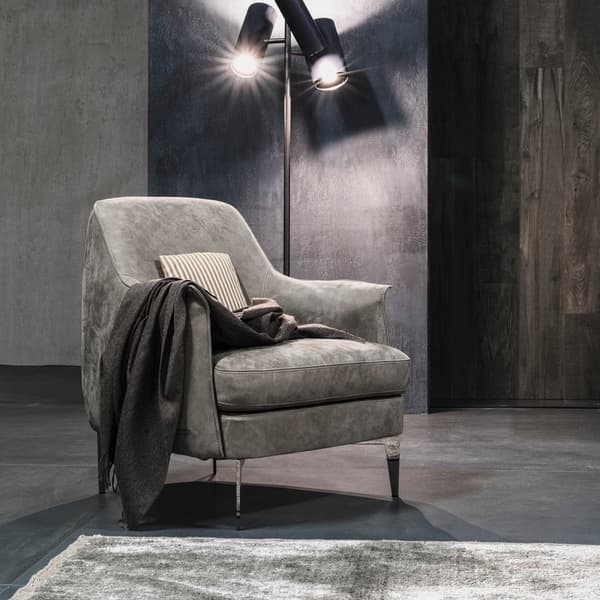
The Boheme series is probably one of the most comfortable ones on our list today, as sitting in this chair or bar stool feels like you're getting a warm embrace. And isn't that what we all need!
The chair and bar stool share the characteristic tufted stitching in the form of checkered seams on the back, making them ideal for modern interiors.
As a brand, Cierre is known for taking care of the tiniest details to ensure that customers get unmatched comfort and functionality from their purchase. For instance, this can be observed in the attached footrest on the bar stool or the ultrasoft cushioning on both products.
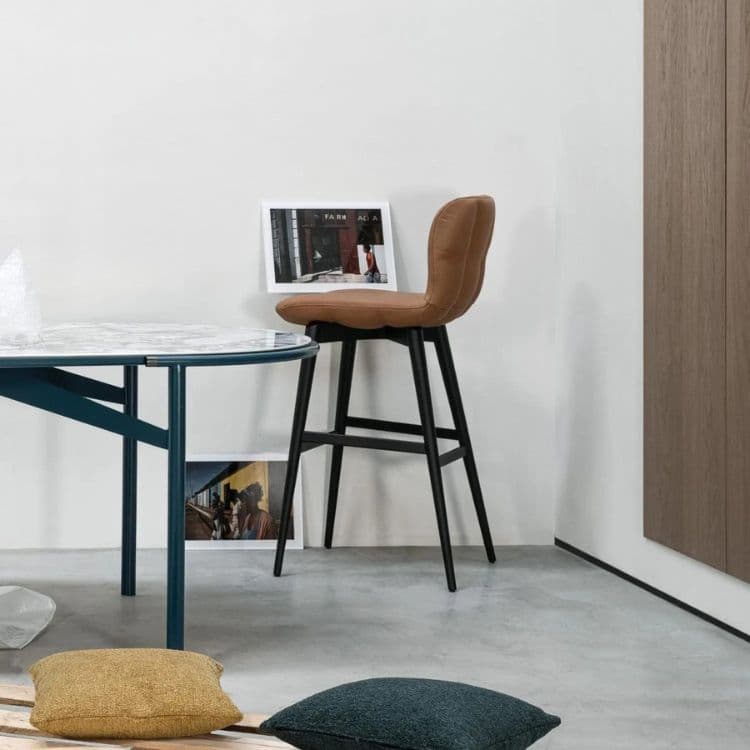
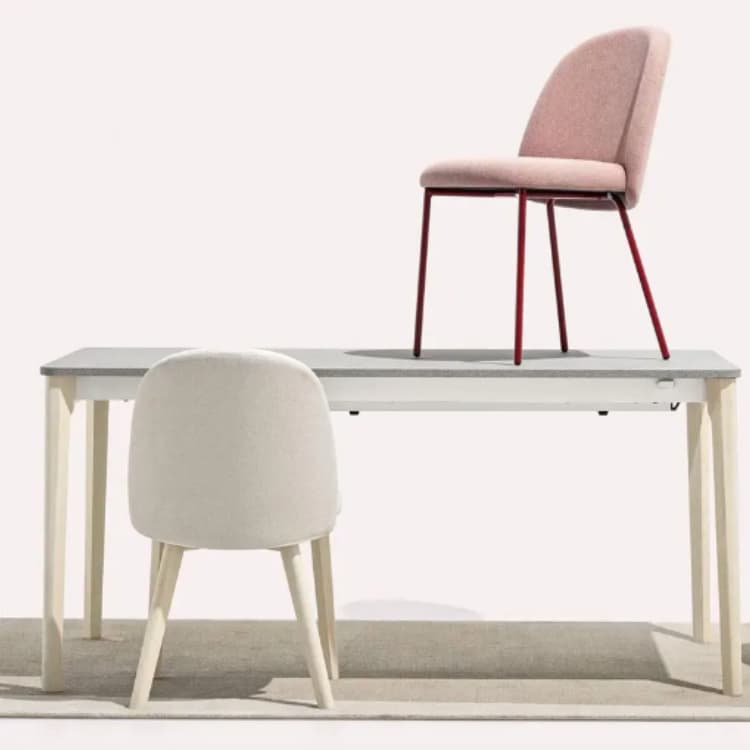
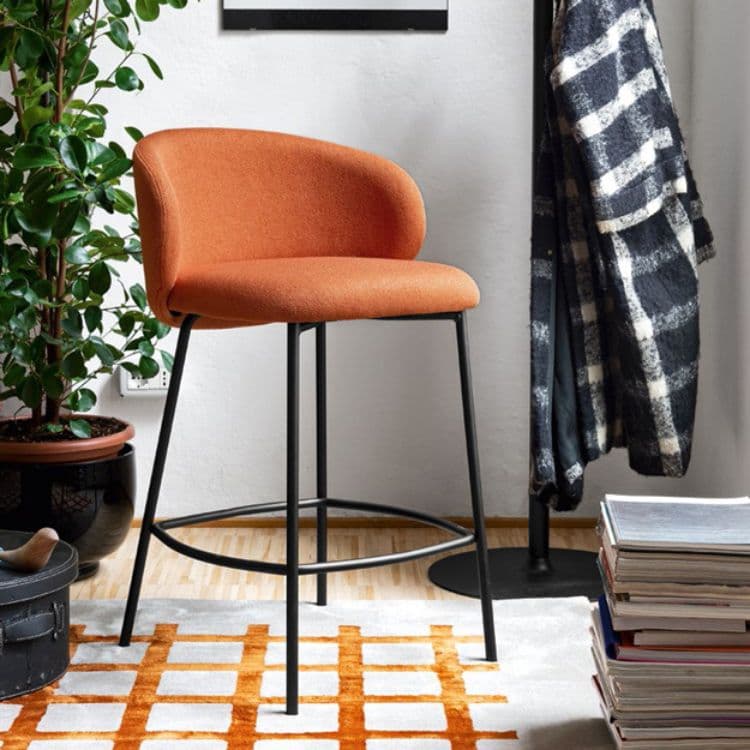
Bold and beautiful! The Tuka chair and stool feature a unique, enveloping, C-shaped back supported by the sleekest legs we've ever seen. Both the legs and the upholstery are customisable in a huge range of colours, so the clients can create a special version of the chair or bar stool that best suits their tastes.
The frame of the Tuka family is made from recycled polypropylene to offer high quality without impacting the environment. The Tuka bar stool also includes a tubular footrest and is available in two heights.
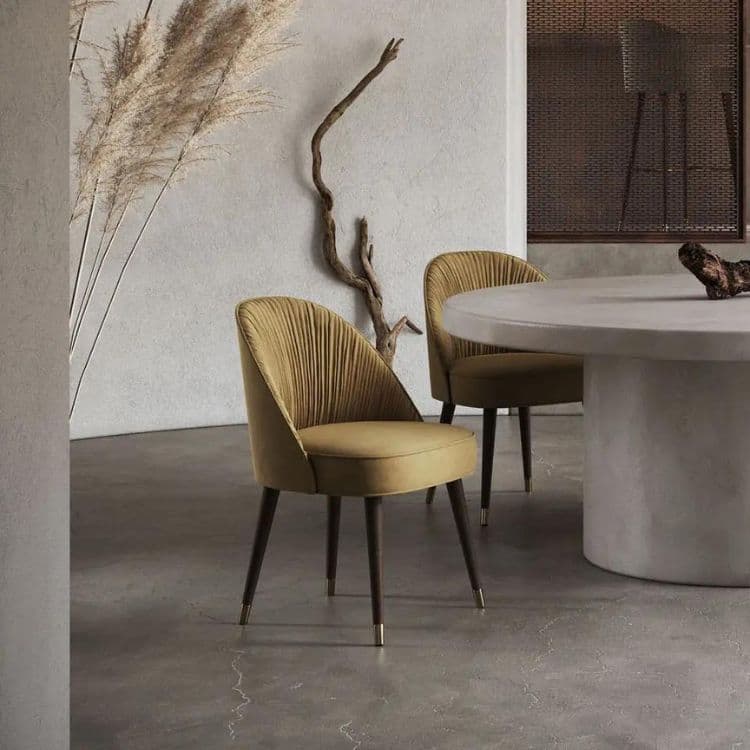
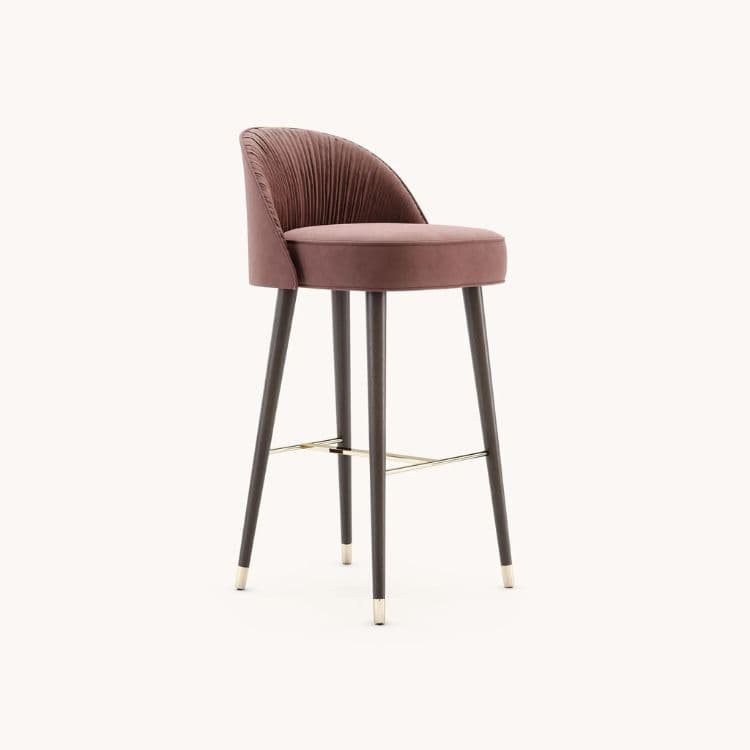
Available in leather and velvet, Camille features the most strikingly beautiful pleats on its backrest and a comfortable seat that is supported by elegant metal legs. This is the set we recommend for those who want to add a touch of luxury to their interiors.
Both the chair and the bar stool are enhanced by the golden tips, and the footrest of the bar stool is also highlighted by the same golden finish, creating a stunning combination of dining chairs with matching bar stools.
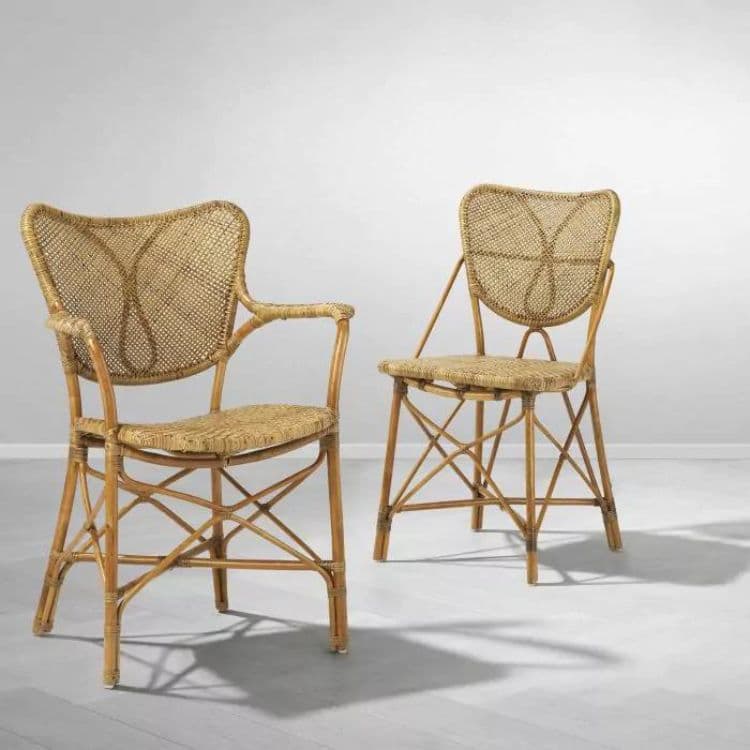
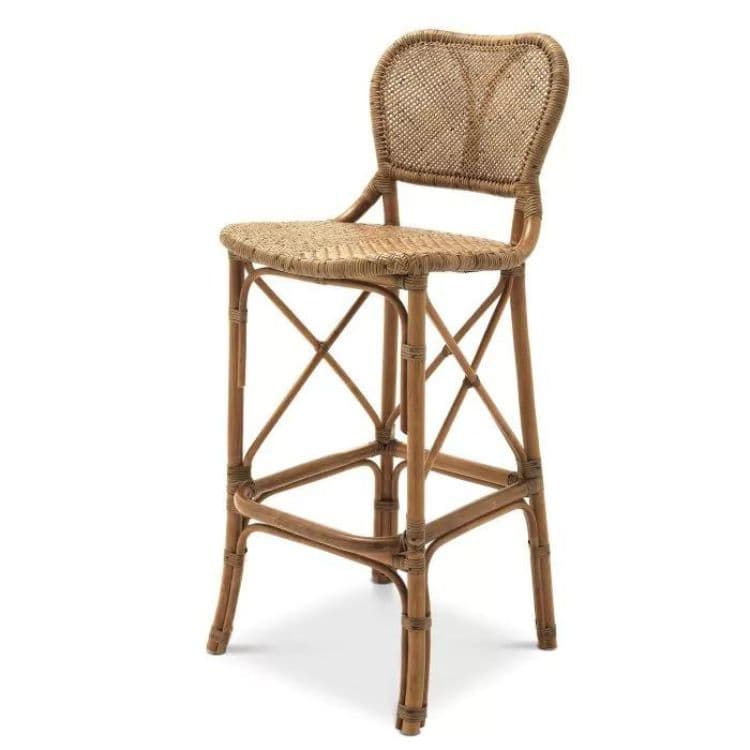
This honey-coloured matching rattan dining chair and stool draw inspiration from vintage colonial furniture and are perfect for adding warmth and beauty to any space.
Both the dining chair and bar stool can be used indoors as well as outdoors, bringing a warm country element to your decor.
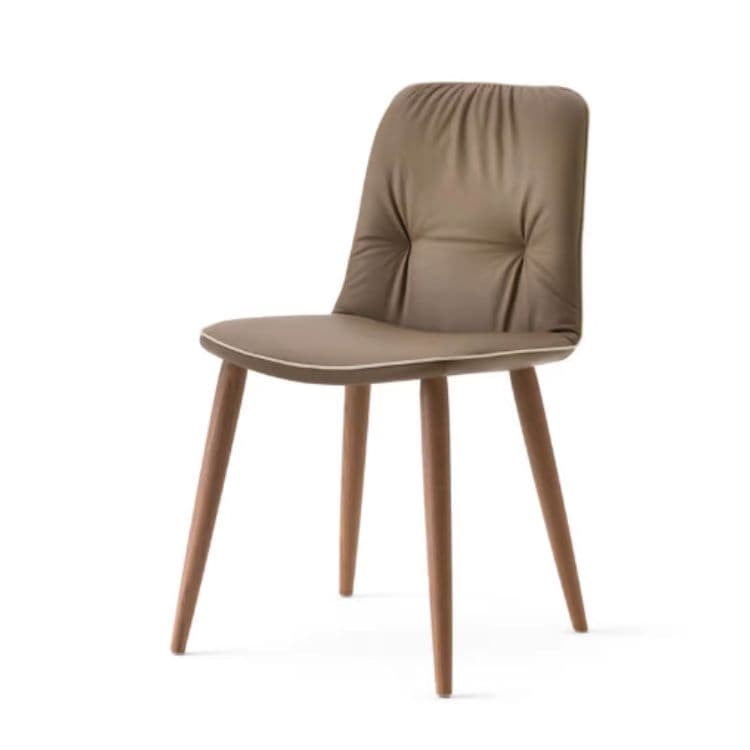
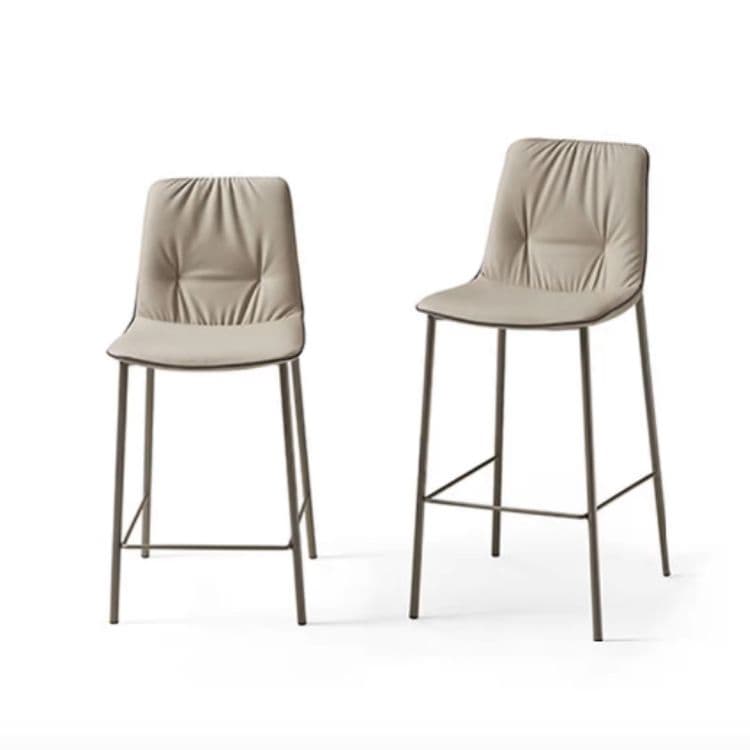
This swivel chair and stool duo have been designed for relaxation without compromising aesthetics and craftsmanship. Both the chair and the bar stool are available in different base versions and in different heights.
The metal legs version gives the dining chairs a light and airy look, the wood version brings a refined style to the space, while the swivel base makes the chair versatile enough to be used as an office chair.
The stool too is available in two versions, with and without a swivel base, and both products can be customised in leather, fabric or eco-leather.
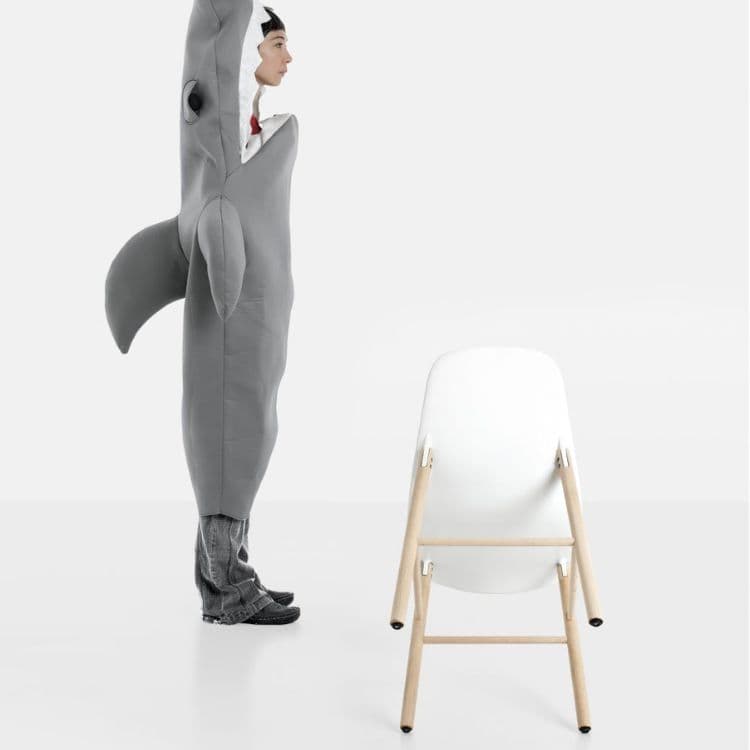
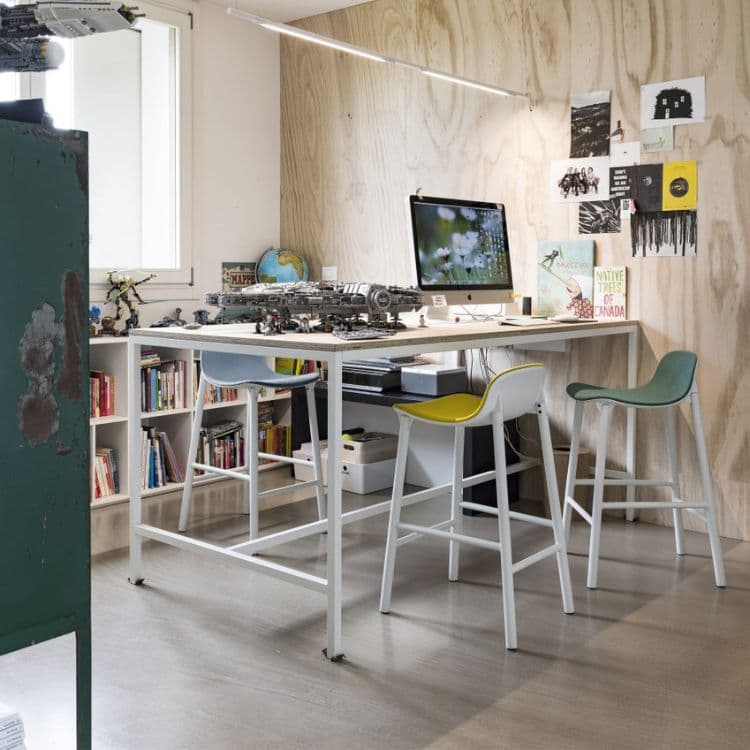
Conceived by the multi-award-winning designer Michael Geldmacher for Kristalia, the Sharky series is light yet incredibly strong, just like a shark's fins.
The Sharky chair is also the winner of the Interior Innovation Award, which says a lot about how unique, beautiful and comfortable this chair is. The success and popularity of the chair pushed the designer to extend the collection and add two stools in different shapes and heights.
The high stool almost completely replicates the main concept of the Sharky chair, while the low stool has been given a more compact look.
Both the chair and the stools are easy to clean and maintain, and they can even be customised for outdoor use, making them ideal matching dining chairs and bar stools for versatile spaces.
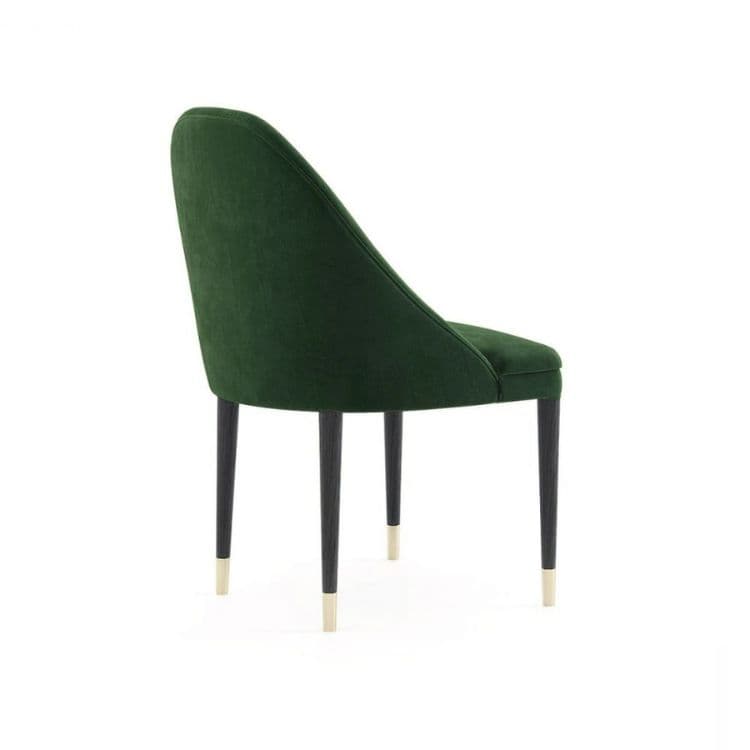
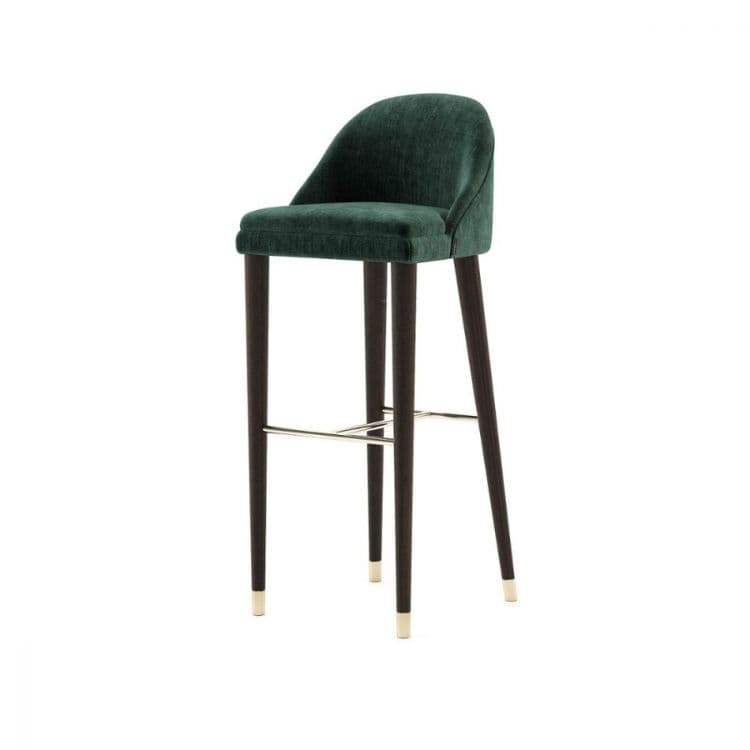
Handcrafted in Portugal from the finest materials, the Estoril chair by Laskasas is so magnificent and versatile that it can be used in any space, be it as a dining chair, an accent chair in the living room, a corner chair in the bedroom or a reading chair in the library.
The crescent-shaped back and comfortable seat of the chair and the bar stool can be customised in over 100 materials and colours. The wooden legs are embellished with a golden cap for an added luxe factor. Our designers recommend pairing these dining chairs with the Darc dining table by Laskasas because of the harmonious interplay between metal and wood.
Cleo collection strikes the perfect balance between classic and contemporary designs in the shape of the Cleo dining chair and bar stool. The quality of craftsmanship is visible in every detail, such as the elegant stitching of the seams on the armrests, which truly enhances this seat.
Both the dining chair and the stool feature a linear base in solid wood and a padded seat and backrest. The backrest and arms are also slightly curved to give Cleo an elegant and refined look.
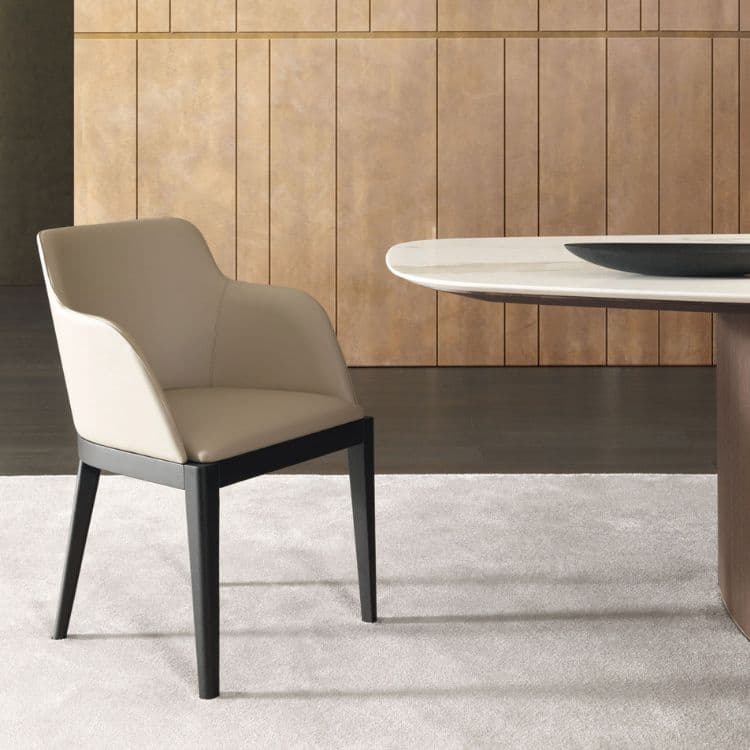
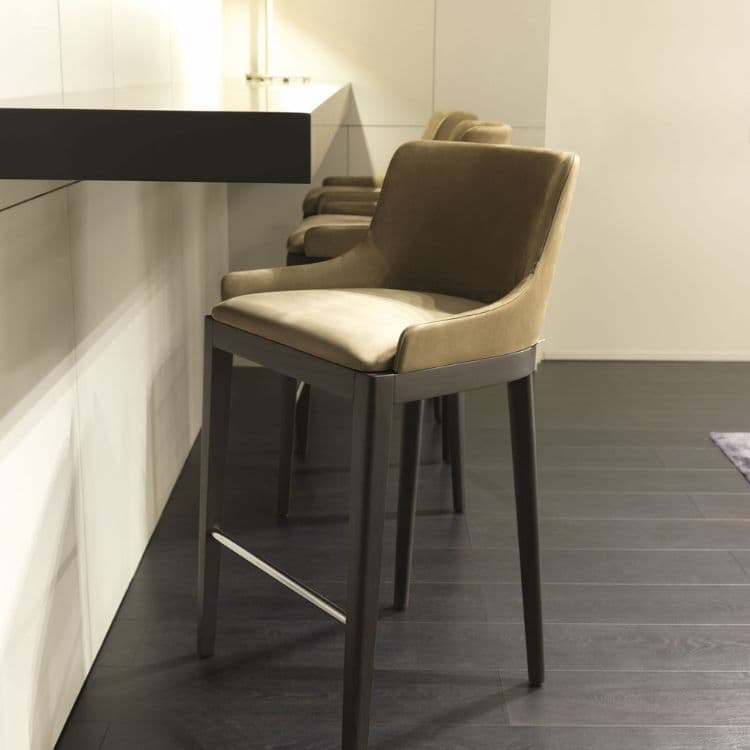
Two-seater bar stools are not very common, but they're often needed to complete a bar area, a coffee corner or a refined living room. The Velis bar stool is thus an exceptional product as it's available as both a single and double-seater.
The Velis collection has been designed by Mario Ferrarini to satisfy many different seating demands through a single collection. All products from this collection are characterised by the ever-so-slightly open space on the sides of the backrest, which gives them a light and airy presence.
Other products in the collection include the Velis footstool, lounger and armchair - most of which are available in multiple versions to meet the client's needs.
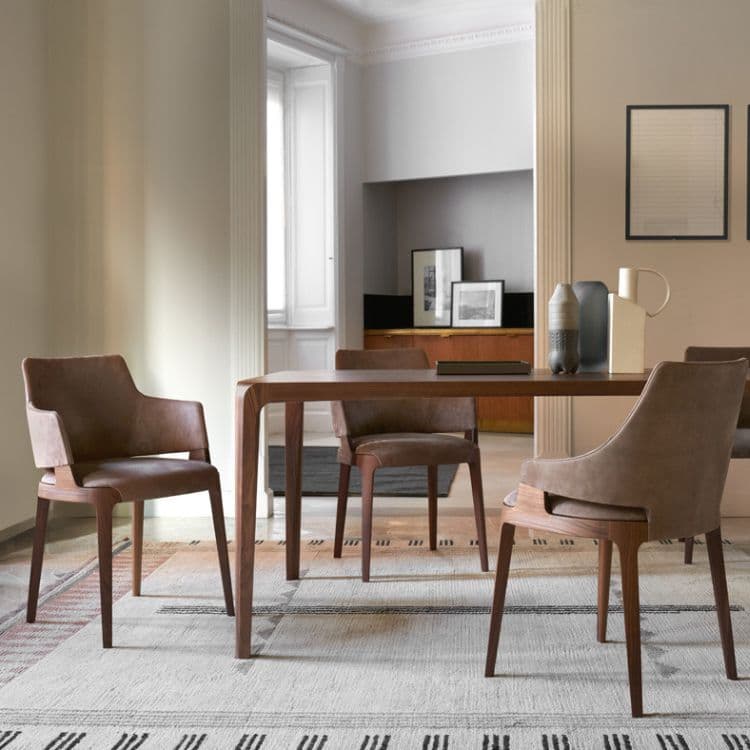
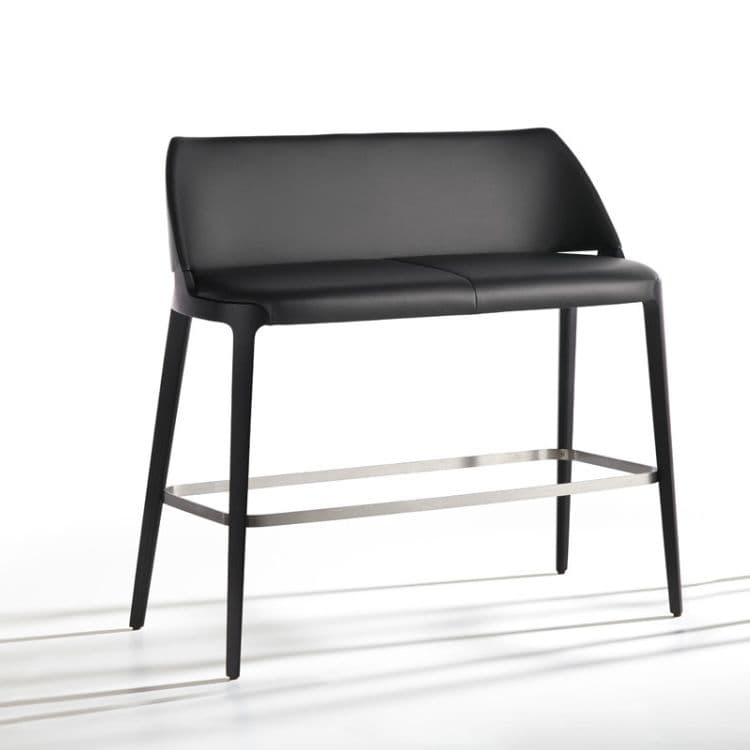
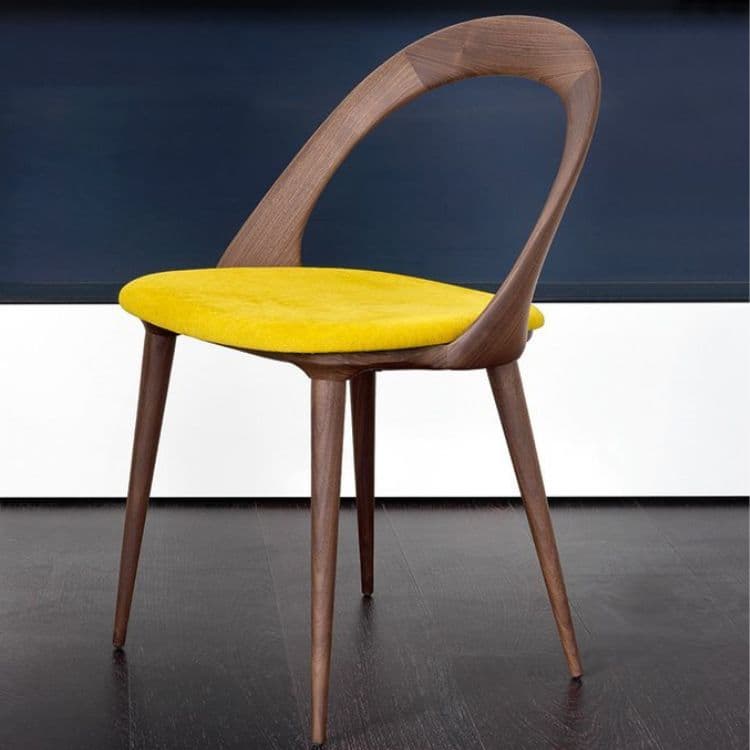
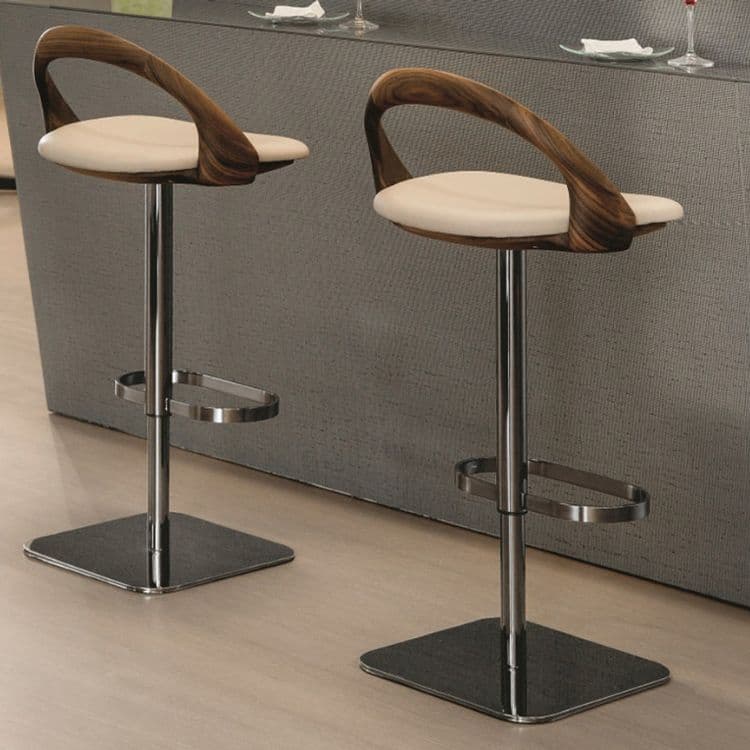
Designed by Stefano Bigi for Porada, Ester is one of the most uniquely designed dining chairs and bar stool sets that we offer.
Porada is an Italian brand that was born out of a love for wooden furniture, but with the Ester collection, Porada has wonderfully merged its love for wood with contemporary design elements.
The Ester dining chair features a wooden frame with a gently arched back and upholstered seat. This unique and sculptural design makes this chair the perfect match for Porada's Infinity table.
The Ester stool too shares the same semi-circular back design, but an oblong-shaped footrest has been added to the swivelling metal base. Both these products are best suited for modern interiors.
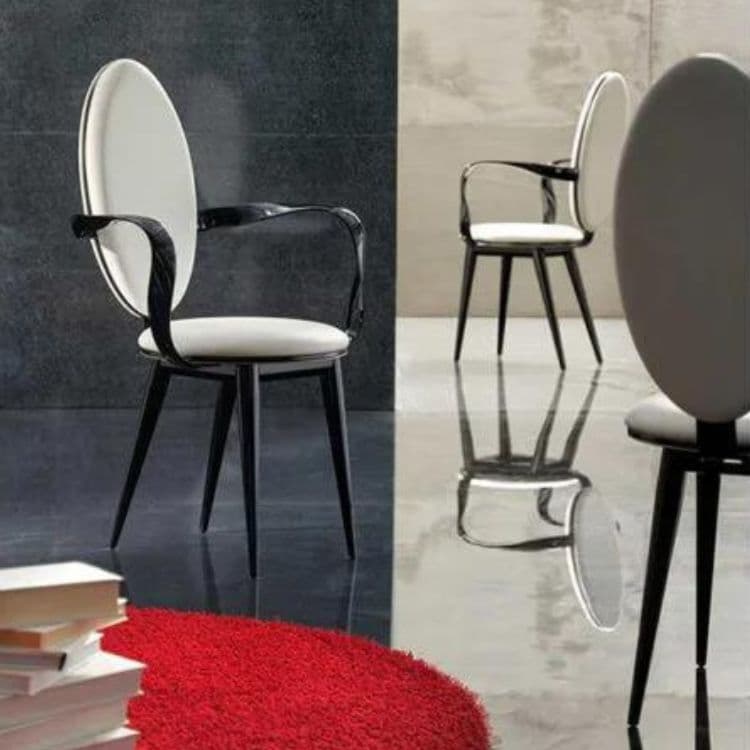
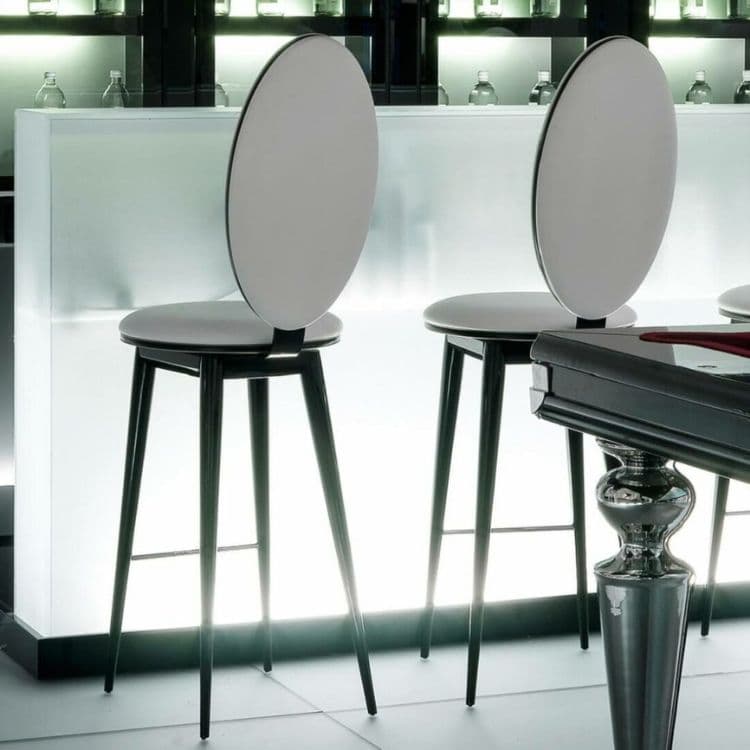
Designed by Andree Putman, the Bastide dining chair and stool are all you need to bring old-school charm to your space.
Not many bar stools come with a high back that is not just supportive but also comfortable, which is why we highly recommend Bastide to clients looking for high back stools. To further add to the comfort and for those who want to turn their bar areas into conversation corners, these bar stools also come in a version with armrests.
The upholstery for both the chair and the bar stool can be customised by choosing from a range of samples available at our showroom.
Sila exemplifies how even the simplest materials and shapes can come together to create unique and eye-catching products. Supported by a slim metal base, the Sila chair and stool are also available in covered and padded versions.
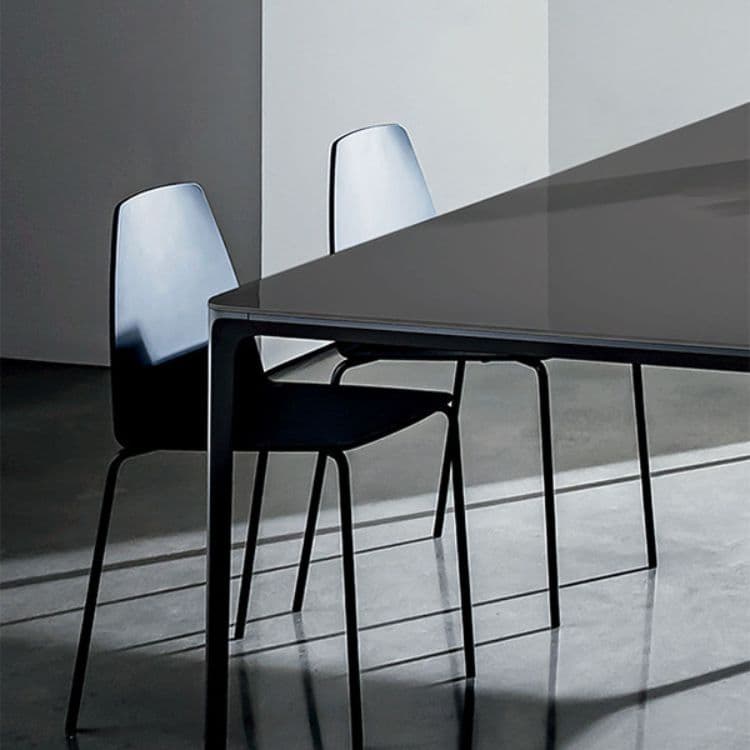
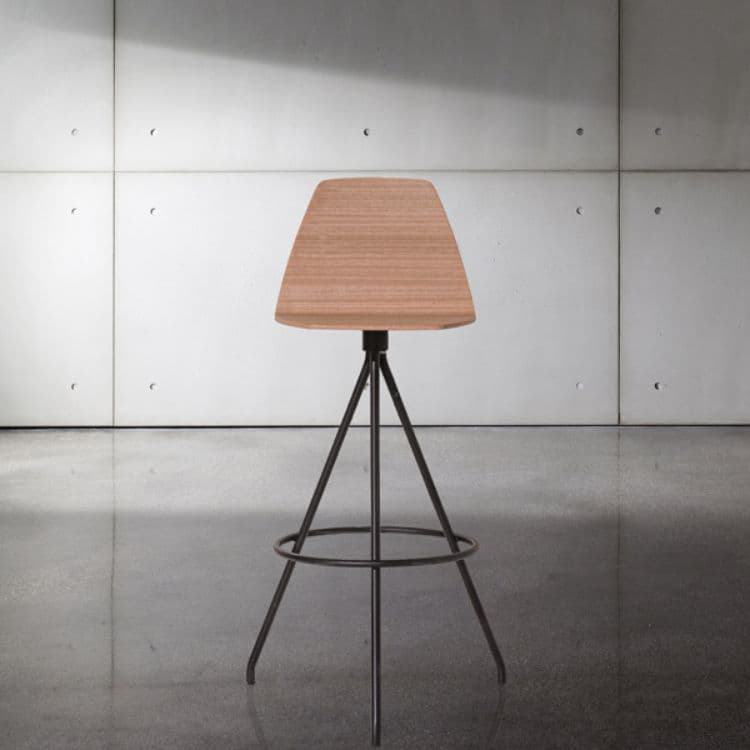
Simple lines never looked so good! The Manta by Rugiano plays with geometrical shapes to create a stunning dining chair and stool that are completely upholstered in customisable leather. The bar stool looks spectacular when matched with a minimalistic kitchen island. As for the dining chairs, we highly recommend pairing them with the Absolute dining table as they share a similar sculptural design.
The soft and sinuous backrests of all these products are enriched by vertical stitchings that give them a warm and welcoming look. You can also buy the Manta armchair, Manta pouffe, Manta sofa or the Manta chaise lounge to complete your collection.
Key Takeaway: From minimalist Italian leather to statement-making geometric patterns, the right pairing balances aesthetic ambition with functional comfort. Each of these 20 curated sets demonstrates how bar stools and matching dining chairs can range from perfectly matched siblings to complementary design cousins - all whilst maintaining the cohesive narrative your space deserves.
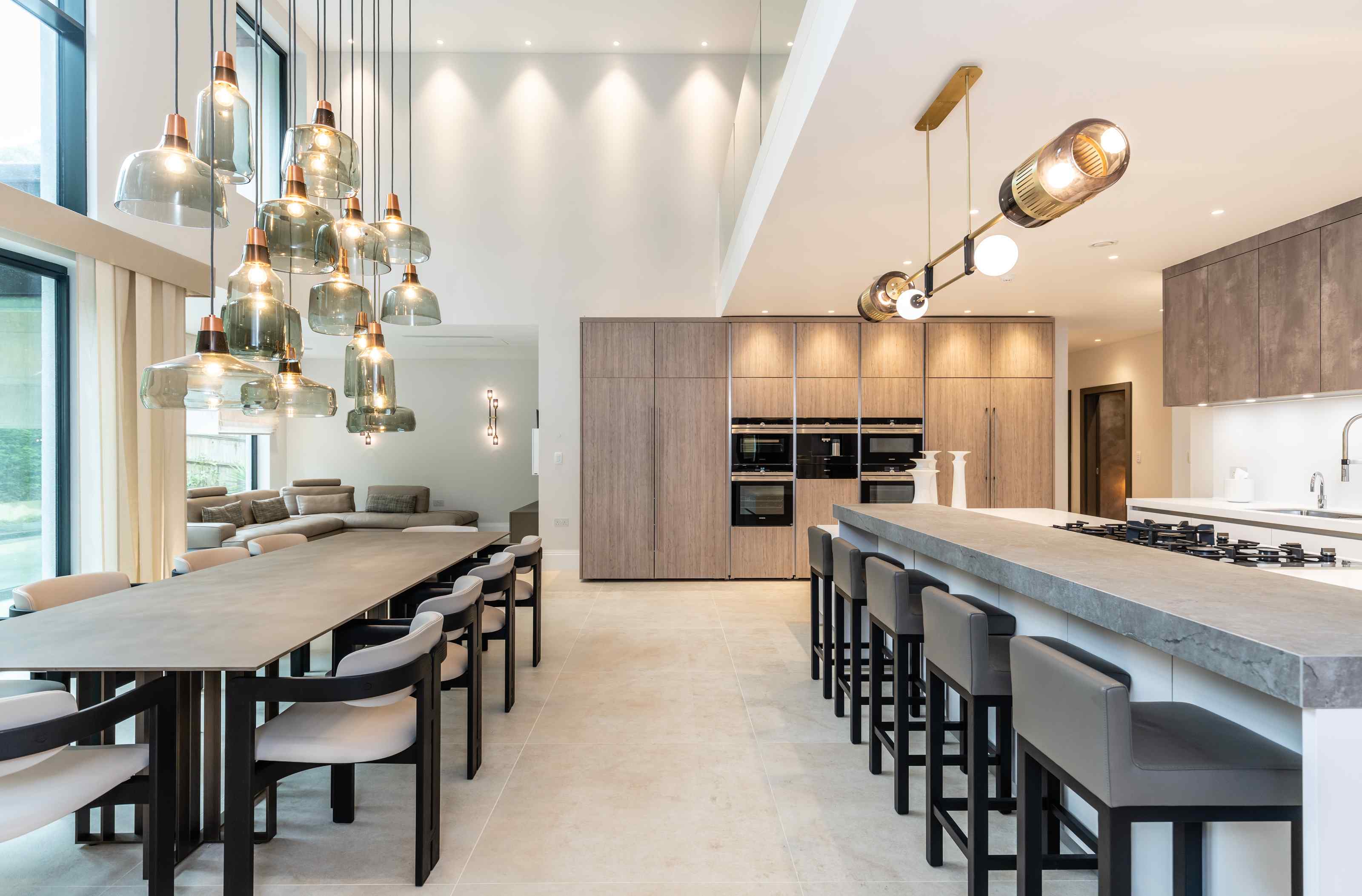
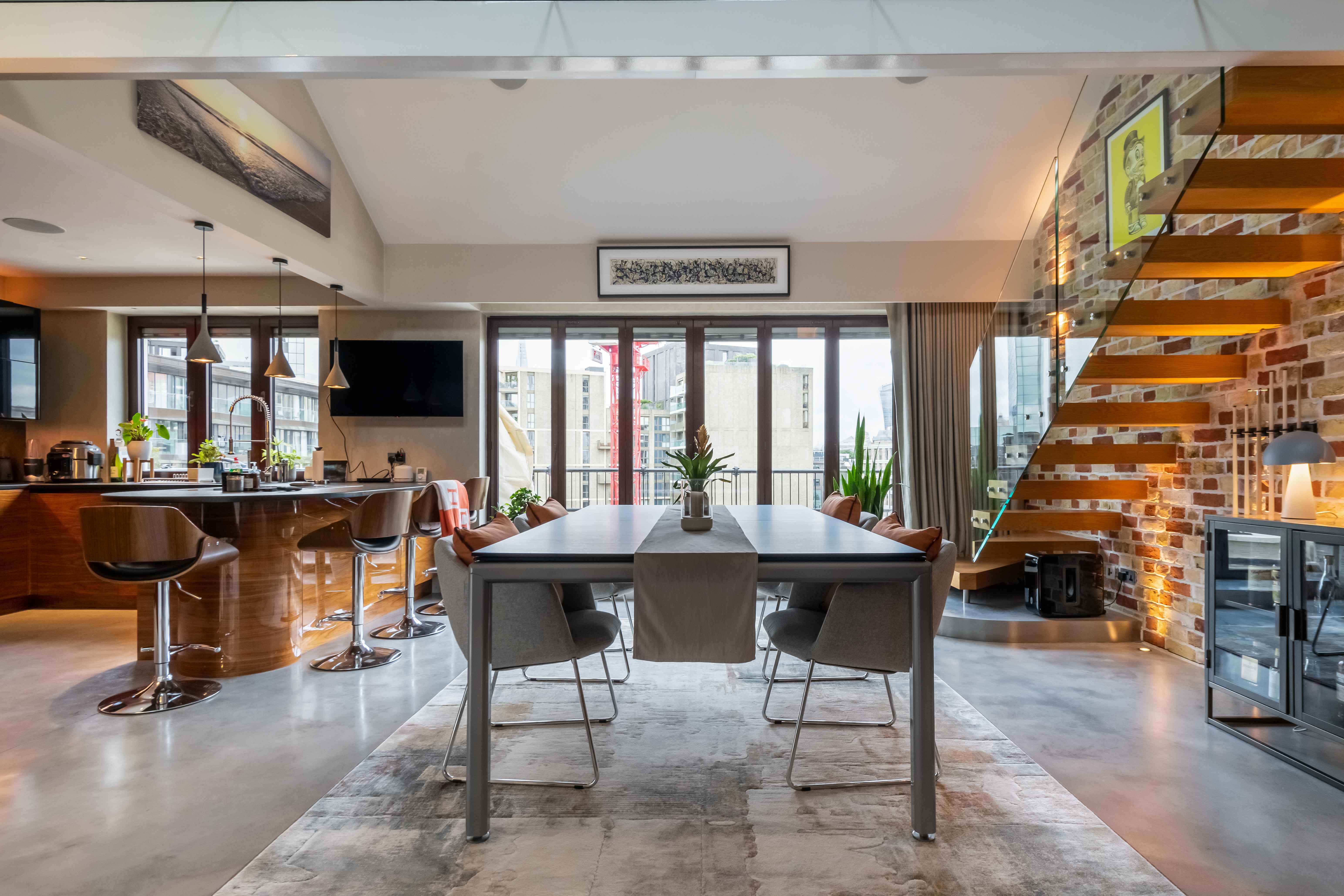
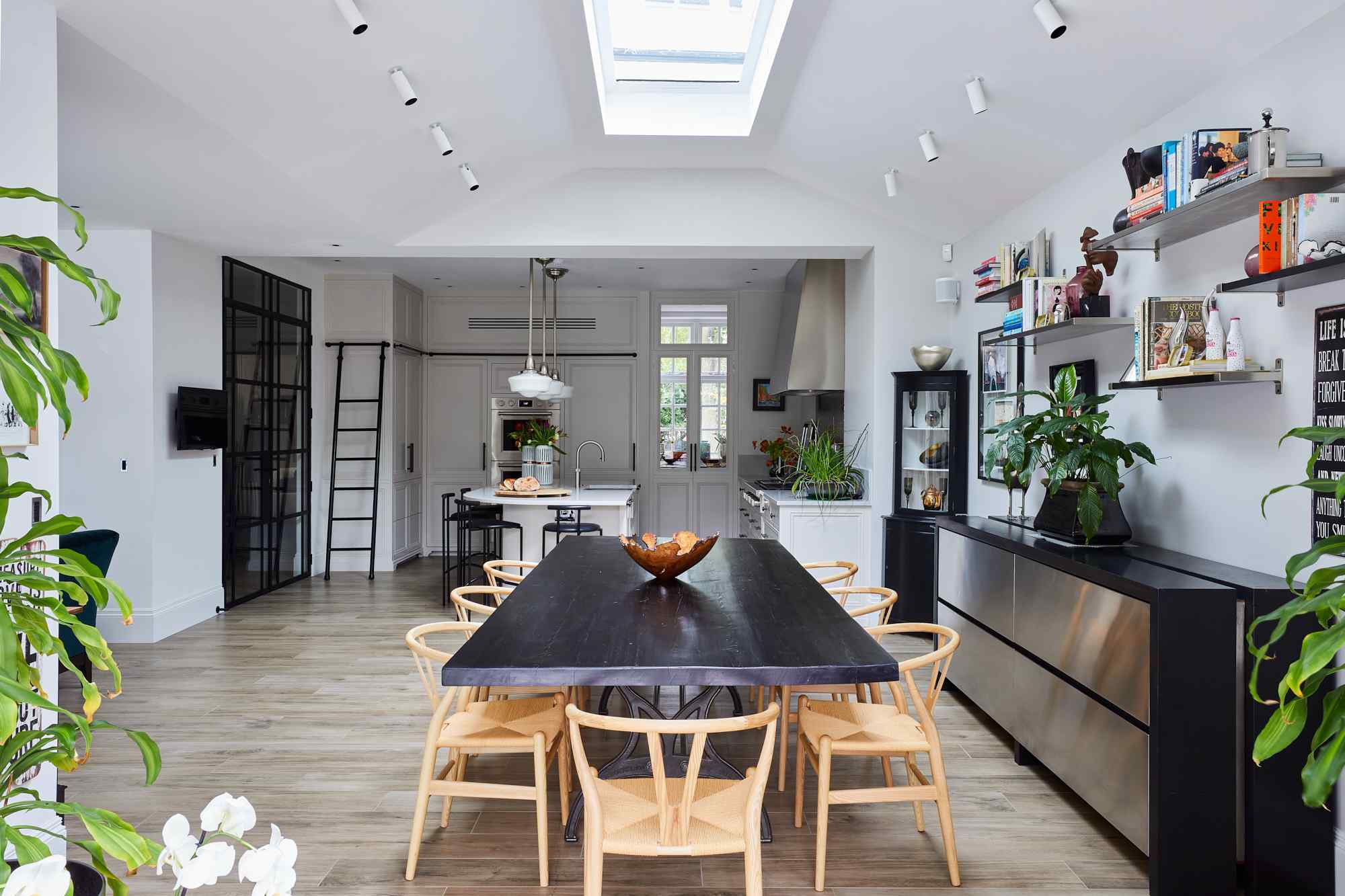
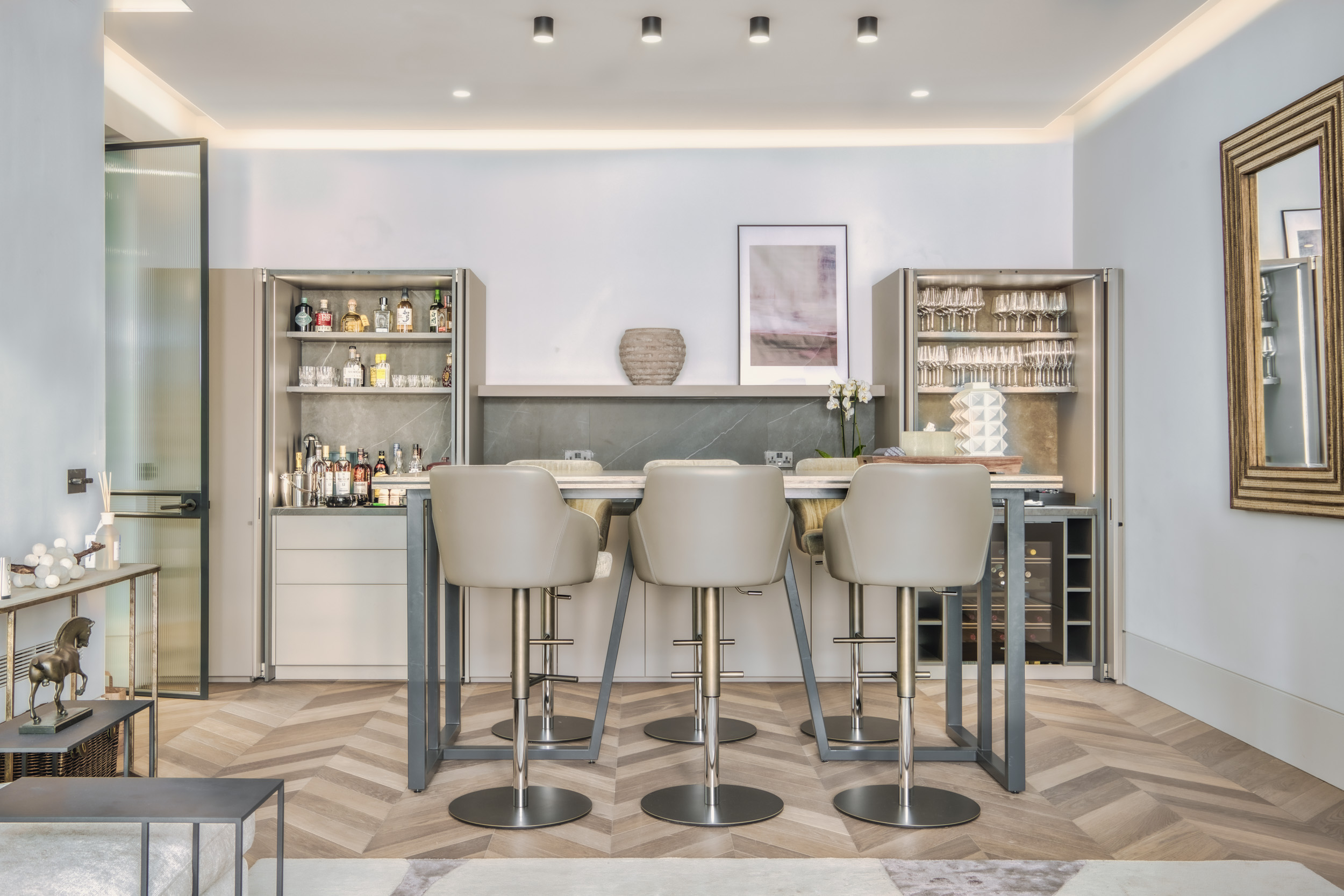
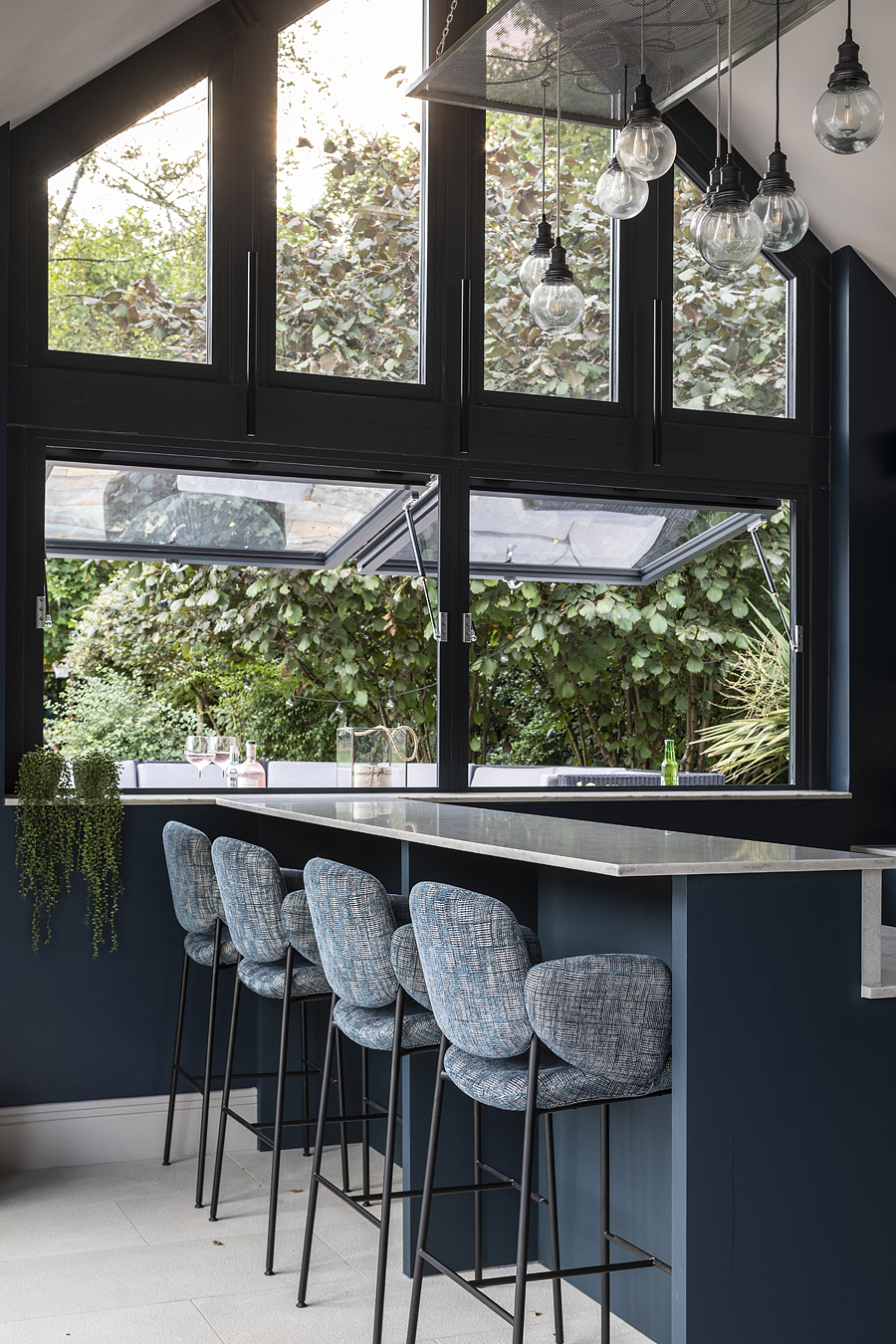
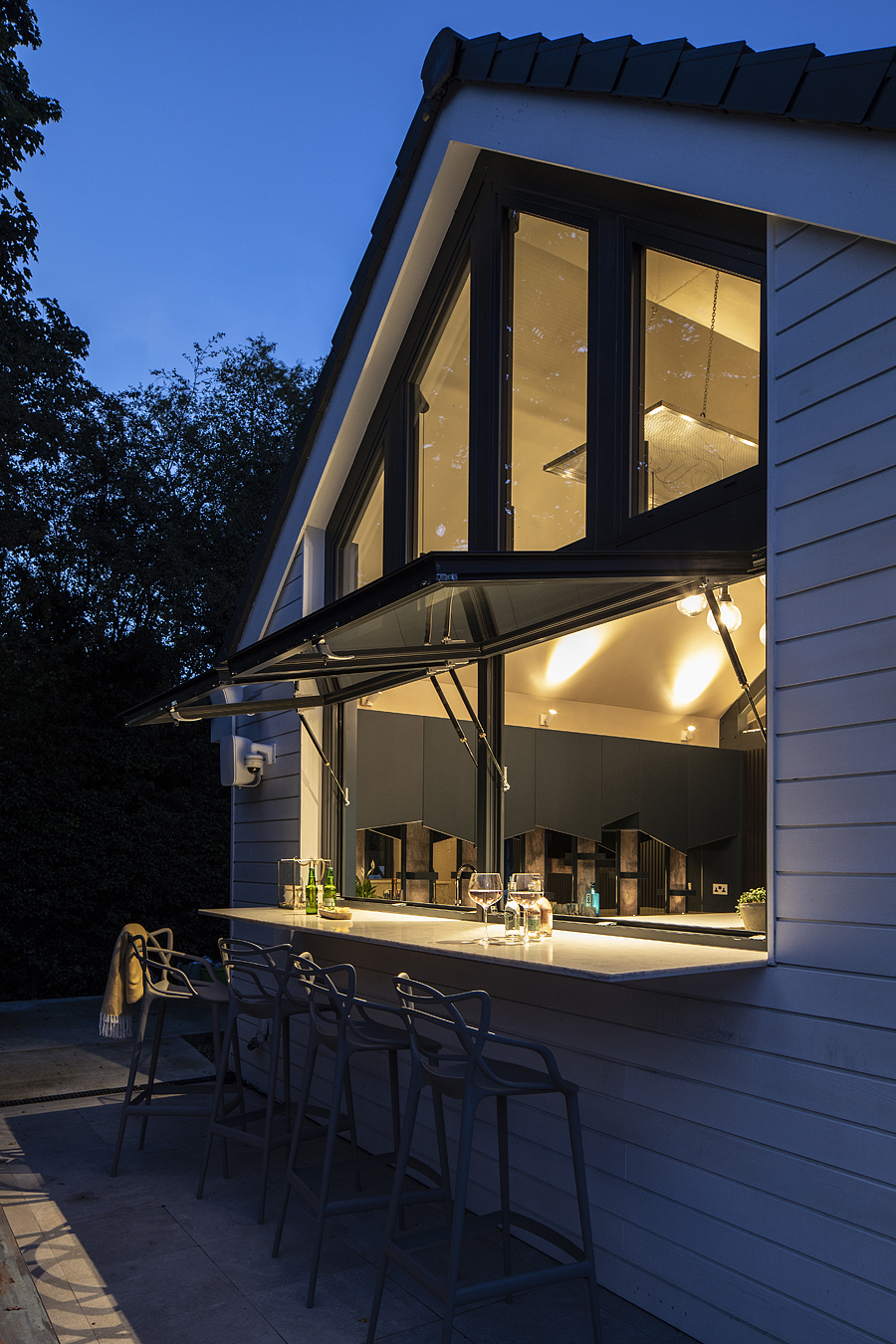
Kitchens, dining areas and bars are some of our favourite spaces to work with, so here's some inspiration from projects that our team has worked on:
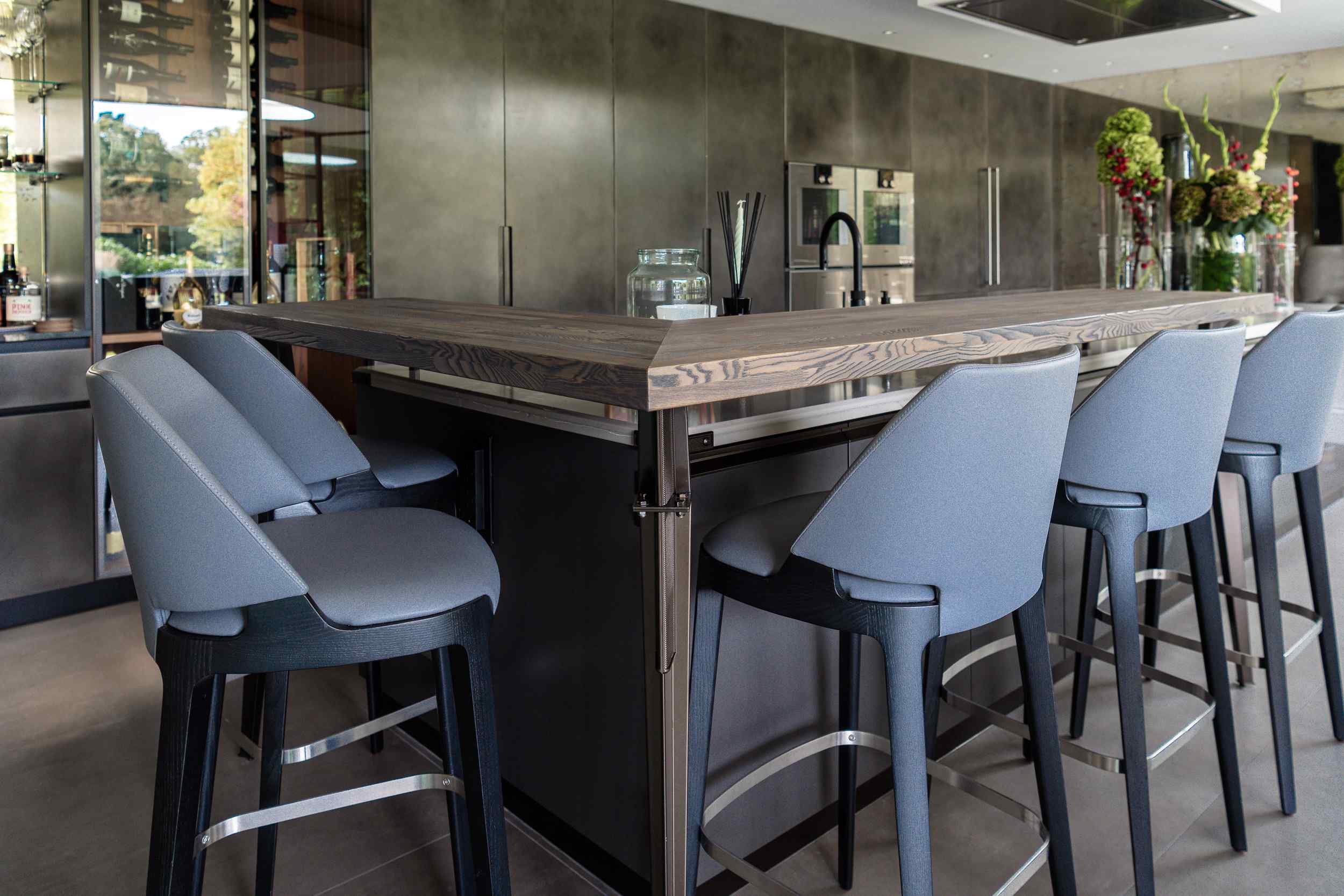
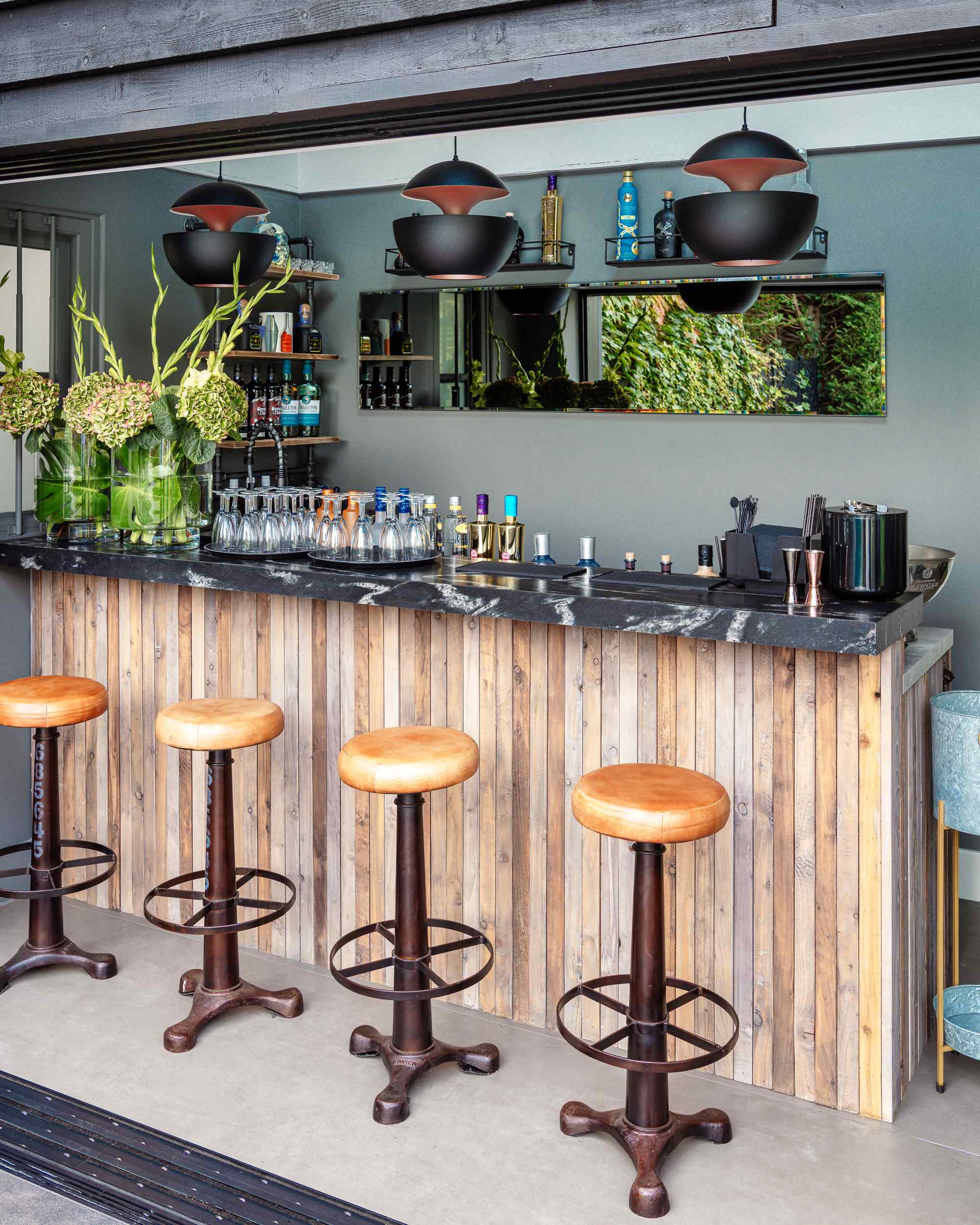
For clients still refining their dining table selection alongside their seating, our guides to space at round or rectangular tables and natural wood dining tables offer a useful spatial and material reference before committing to a full scheme.
Key Takeaway: Real project photography is considerably more instructive than product shots in isolation. These spaces show how matching bar stools and dining chairs perform within complete room schemes - the proportional relationships, material combinations, and sightline dynamics that make the difference between a room that looks assembled and one that looks designed.
Q. Do bar stools and dining chairs have to match?
No, they definitely don't have to match, and this is more of a personal preference than a rule. However, most designers recommend having some visual coherence in your interiors, so it is often a good idea to go for coordinated dining chairs and bar stools. The final decision also depends on the location or the proximity of your dining chairs and stools. If they're both in the same room, such as the kitchen or in an otherwise open-plan space, it makes sense for them to be coordinated. But if your bar stools are in the kitchen and the dining chairs are in a completely separate dining room, then they do not have to match.
Q. How can I achieve visual harmony without identical matching pieces?
Sensible coordination can be achieved through shared materials, complementary finishes, or unified proportions. Consider using the same upholstery fabric in different colours, or selecting pieces with similar metal accents. The key is creating intentional design relationships that feel both sophisticated and natural to your space's overall aesthetic. The Style Pairing Matrix earlier in this guide offers a practical framework for mapping the right approach to your interior style.
Q. What factors should I consider when selecting coordinated seating for open-plan spaces?
Open-plan areas require particularly thoughtful coordination since both pieces occupy shared sightlines. Focus on proportional harmony, ensuring neither element overwhelms the other. Consider your lifestyle needs - bar stools might require different comfort features than dining chairs. Scale and visual weight become quite important in these genuinely interconnected spaces. The bar stool height guide in this article covers the dimensional relationships in detail.
Q. How do I know if my dining chairs and bar stools are properly proportioned for my space?
Bring your room dimensions and existing furniture measurements when consulting with our design team - professional measurement is refreshingly straightforward. Consider both the physical scale relative to your dining table and kitchen island, as well as the visual balance within the overall space. As a starting point: allow 250-300mm between the stool seat height and the underside of the counter, and ensure the visual scale contrast between bar stools and dining chairs feels intentional rather than accidental. For round table configurations specifically, our guide on space at round or rectangular dining tables covers the seating capacity and spacing principles in detail.
Address & Hours:
FCI London, Rays House, North Circular Road, London, NW10 7XP
Monday - Saturday: 10am - 6pm
Sunday & Bank Holidays: 11am - 5pm
Contact Details:
Phone: +442081531235
Email: [email protected]
What to Bring:
The art of coordinating dining chairs and bar stools lies in understanding that harmony needn't mean uniformity. Whether you choose pieces from the same collection or thoughtfully related designs that share materials, finishes, or proportions, success emerges from intentional relationships rather than rigid matching. Your space deserves furniture that feels curated rather than catalogue-ordered. Visit our showroom to explore the full range of matching dining chairs and bar stools in person - where physical samples, scale drawings, and our design team's experience make the decision considerably easier than a screen can.
Divya Arora (Customer)
"We had an excellent experience with FCI, from entering the showroom to exploring different brands and receiving our Gamma sofa at home. Aziz was supportive and transparent, while Perla ensured quality and timely delivery. We were so happy with them that we ordered a dining table and a centre table too. Thank you, Perla and Aziz, for your wonderful service!"
Carol O'Regan (Customer)
"Ricardo at FCI offered excellent customer service with his expertise and helpful advice. We bought six dining chairs and three bar stools, and although delivery took a while, the quality was absolutely worth the wait. The furniture fits perfectly in our kitchen and dining area. A superb overall experience - we'll definitely return to FCI for future purchases."
Natasha Grossman (Customer)
"Our experience with FCI from start to finish was absolutely fantastic. We were searching for a new kitchen and dining table, complete with chairs, and Aziz guided us with exceptional care and attention throughout. The quality and design of the furniture are excellent, and we couldn't be happier with how it complements our home."
We help designers & clients transform mundane spaces into extraordinary ones.


Book a video consultation and we'll advise you on furniture, space planning, colour schemes and much more.
Book A ConsultationBook a visit to our stunning, multi award-winning, 30,000 sqft.
Over 700 brands under 1 roof.
Most Popular on FCI London: Fitted Wardrobes | Luxury Designer Rugs | Luxury Sofas | Luxury Furniture Store | Luxury Interior Designers | Luxury Bedroom Furniture | Luxury Modern Chairs | Luxury Coffee Tables | Luxury Designer Kitchens | Luxury TV Units | Luxury Dining Tables | Luxury Storage Solutions | Luxury Sideboards | Luxury Stools & Bar Stools | Luxury Bespoke Joinery | Luxury Modern Hallway Furniture | Furniture Showroom Appointment | Luxury Lighting | Modern Luxury Outdoor Furniture
Transparency isn’t a policy. It’s a principle.
Have a peek at what our clients really have to say.